Why did netbooks disappear?
In 2006, ASUS became the world's second-largest OEM manufacturer, mainly manufacturing computers and servers for Dell and HP.
After ranking second but aiming for first, ASUS didn't become complacent. Instead, it fell into anxiety about "an overly large proportion of OEM business".
Especially after the failure of testing the high-end market with a gaming laptop in 2005, ASUS urgently needed to break the situation with differentiation and achieve strategic transformation.
In 2007, ASUS attempted to launch a low-cost laptop - the ASUS Eee PC.
ASUS probably didn't expect that it not only created a new electronic product category but also sparked an industrial revolution.
This is the netbook.
At its peak, the annual global sales of netbooks were nearly 40 million units.
Surprisingly, it took less than six years from the birth of the netbook to its peak and then to its decline.
What did this shortest-lived electronic product bring to the entire industry?
01 Popularity
"Easy to Learn, Easy to Work, Easy to Play."
Easy to learn, easy to use, and easy to entertain.
This is the origin of the name of the ASUS Eee PC.
In October 2007, the first-generation Eee PC launched by ASUS featured a 7-inch screen, a 900MHz Intel Celeron processor, 2GB of memory, and a 4GB SSD, and came pre-installed with the Linux system (customized Xandros version).
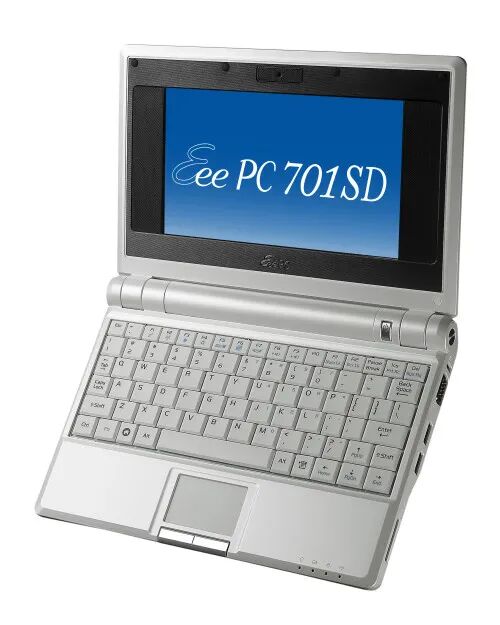
The first-generation Eee PC
Compared with the mainstream laptops at that time, the Eee PC had a small screen, low resolution, slow computing speed, and small storage capacity. It was simply a stripped-down version.
PC giants such as HP and Dell were not optimistic about it. Even though the Eee PC used Intel's processor, the latter didn't think highly of it either.
Unexpectedly, the Eee PC, which was not favored by all parties, became an instant hit after its launch.
In just four months, 300,000 units of the first-generation Eee PC were sold, making it a dark-horse product that year.
Acer, also from Taiwan region like ASUS, was the first to follow suit, and international giants such as Dell, HP, and Lenovo swarmed in.
For a while, the netbook market created by the Eee PC became popular.
Data shows that in 2008, the sales of netbooks reached 10.8 million units.
In 2010, the sales exceeded 39 million units, accounting for more than 10% of the PC market share.
Why did the netbook, which was not favored by the industry, sell so well?
The core reason is that it was cheap.
The first-generation ASUS Eee PC was sold for only $299, which was about one-third the price of an ordinary laptop at the same time.
The Acer Aspire One was once priced below $200, which was very competitive.
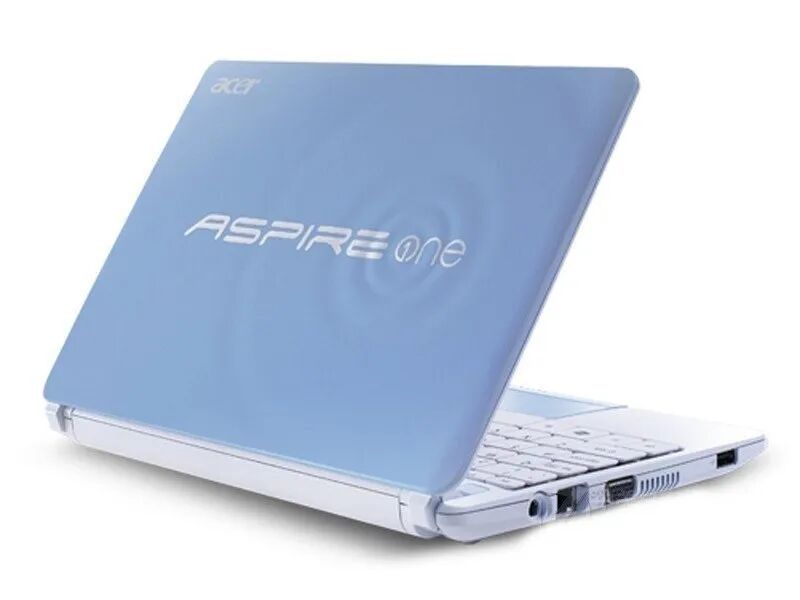
Acer Aspire One
After the sales volume increased, second-tier PC manufacturers, motherboard and graphics card manufacturers, and home appliance manufacturers joined the fray, further lowering the production threshold and supply chain costs.
One detail is that in Huaqiangbei, Shenzhen, a large number of manufacturers that used to make MP4s and counterfeit mobile phones started making counterfeit netbooks.
At its peak, there were more than 200 types of counterfeit netbooks in Huaqiangbei alone, and the prices were incredibly low, only a few hundred yuan.
The emergence of the netbook also coincided with a "good time".
In September 2007, the US subprime mortgage crisis broke out, which eventually affected the global financial system and led to a significant slowdown in global economic growth.
With the poor economic environment, people's consumption ability declined, and the low-price advantage of the netbook was further magnified, making it the best "affordable alternative" to ordinary laptops.
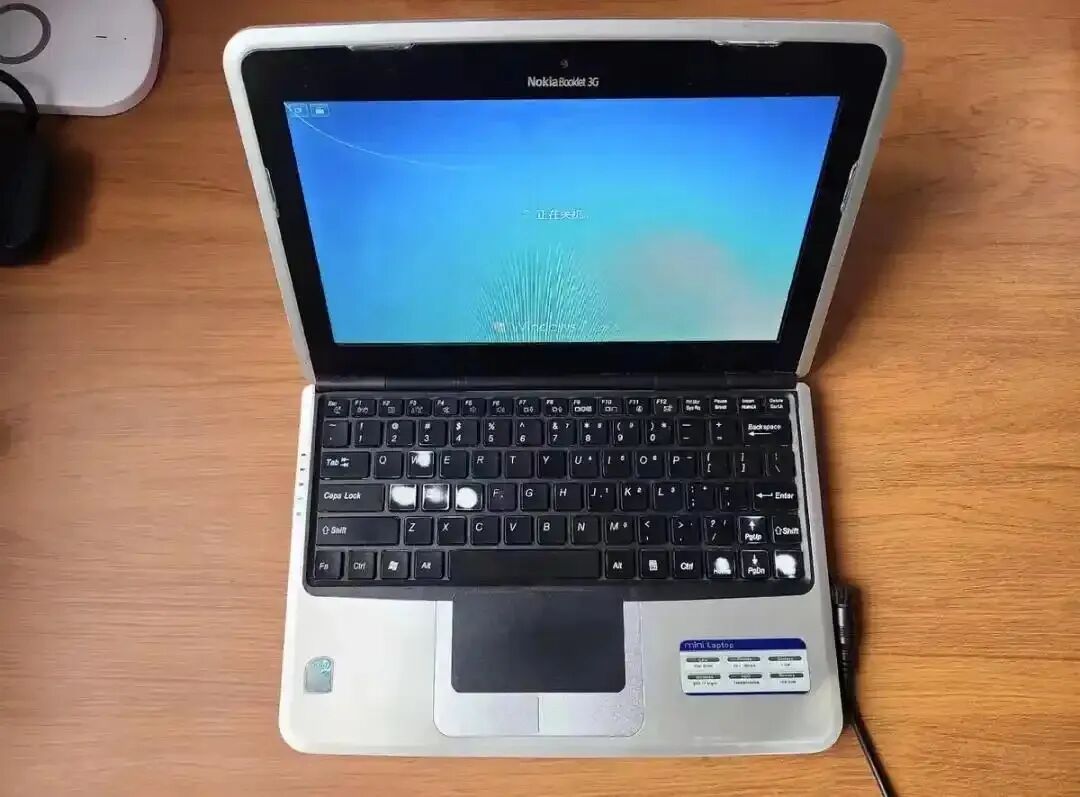
Counterfeit netbooks
What's more worth mentioning is that the netbook unexpectedly entered the education market.
At that time, governments around the world had begun to attach importance to education informatization, and by equipping students with computers, they aimed to optimize the allocation of educational resources and innovate teaching models.
For developing countries, computers that cost thousands of yuan were too expensive.
The cheap and usable netbook became the perfect choice.
Countries such as India, Vietnam, Brazil, and Turkmenistan began to purchase a large number of netbooks.
This also created a considerable market for netbooks.
02 Decline
The popularity of netbook sales also filled the industry with confidence.
The US market research firm ABI Research said that netbooks had opened a new era and predicted that the shipment volume in 2010 would reach 139 million units.
Just like when it first appeared, this time, the trend of netbooks again surprised everyone.
The sales volume was 39.4 million units in 2010, suddenly dropped to 29.4 million units in 2011, and only 14.13 million units remained in 2012. By 2013, it was hardly worth mentioning.
Actually, as early as 2011, industry giants such as Dell and Samsung were the first to stop producing netbooks.
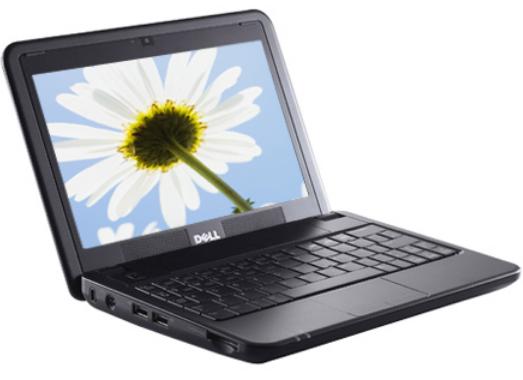
Dell netbook
As the biggest beneficiaries of netbooks, ASUS and Acer struggled to hold on but also announced in 2013 that they would no longer produce new models of netbooks.
That is to say, in 2013, netbooks had been eliminated.
Looking back at the life cycle of netbooks, from the rise (2007) → the peak (2008 - 2010) → the decline (2011 - 2012) → the elimination (2013), it only took about six years.
The life of the netbook was like a flash in the pan, making it the shortest-lived electronic product.
Who killed the netbook?
Many people think that there was a problem with the market positioning of netbooks.
Specifically, netbooks couldn't compete with laptops in terms of performance, and they couldn't compete with tablets and smartphones in terms of portability.
The vague market positioning put them in an awkward position.
In the view of Zhengjieju, on the contrary, the positioning of netbooks was very clear.
Here, we need to answer a question first: What are computers used for?
Many people's first reaction is to surf the Internet.
Even if someone answers "work", it also implies the need to surf the Internet.
In modern people's perception, computers and the Internet are naturally connected.
The truth is that the development of computers and the Internet is not synchronized.
One detail is that in 1994, in the US market, the sales volume of personal computers exceeded that of televisions and video recorders for the first time, making it the fastest-growing consumer electronic product.
At that time, there were only 2,700 websites globally.
This made the development of computers focus on hardware computing power for a long time rather than connecting to the Internet.
Even after the new millennium, when laptops began to become popular, it was still not easy to surf the Internet portably.
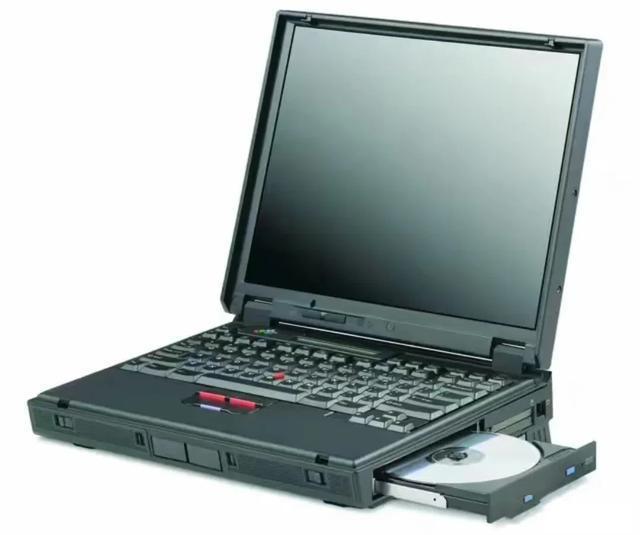
Early laptops
The emergence of netbooks was exactly to meet this need.
Low price is just one aspect of netbooks.
When comparing the two comprehensively, we will find that netbooks also have several advantages:
First, they are smaller and more portable. Ordinary laptops often weigh two or three kilograms, while netbooks only weigh a little over one kilogram.
Second, they have a longer standby time. Netbooks cut out excessive performance and are equipped with mid - and low - end hardware, resulting in lower power consumption and a longer standby time.
Third, they provide a better Internet - surfing experience. Ordinary laptops rely on wired networks, while netbooks have optimized both hardware and software for mobile Internet access.
Coupled with the low price, netbooks well met consumers' needs for low - cost and portable computer products.
It can be seen that the market positioning of netbooks was very clear.
It was precisely because they accurately filled a market gap that they quickly boosted sales.
03 Market Fragmentation
If so, why did netbooks decline so rapidly?
Mainly because the industry changed too fast.
In 1965, Gordon Moore, the co - founder of Intel, observed the changes in the number of transistors on integrated circuits and proposed the famous "Moore's Law":
When the price remains the same, the number of transistors that can be accommodated on an integrated circuit doubles approximately every 18 - 24 months, the performance improves synchronously, and the cost decreases accordingly.
Facts have also proven this law.
In 2000, the cost of producing one million transistors was about $1. By 2020, this cost had dropped to about $0.0000001.
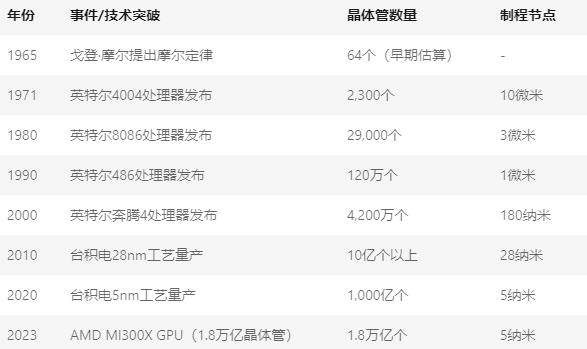
Changes in the number of transistors
Integrated circuits are the most core technological force driving innovation in consumer electronic products.
When the upstream technology iterates and the cost decreases, the performance improvement, form change, and popularization speed of downstream products also accelerate accordingly.
After the birth of netbooks, it happened to coincide with a period of rapid change in consumer electronic products.
Ultimately, Apple delivered a "double blow" to netbooks.
The first blow: In 2008, at the Apple MacWorld conference, Steve Jobs took out a laptop from an envelope.
The first - generation MacBook Air, with a weight of 1.36 kilograms and an extremely thin thickness of 0.4 centimeters at its thinnest point, broke the bulky image of traditional laptops.
