Traditional gold craftsmanship is booming: Is the arrival of Chinese luxury brands imminent?
Did you buy gold in the past year?
In the past year, with the crazy rise of gold prices, brand topics in the gold field have also started to heat up.
Last month, I participated in the "Brand Fast and Slow" podcast and had an interesting conversation with the host: the Chinese traditional gold brand [Baolan] received an investment from Kering Group. Hey? What's going on? Is a Chinese luxury brand about to be born?
After Lao Pu Gold became popular, there have been too many topics in the Chinese traditional gold circle: first, the president of LVMH visited Lao Pu's stores. Immediately afterwards, traditional gold brands such as Baolan, Linchao, and Junpei have successively emerged. Together with Lao Pu Gold, they are collectively called "The Four Sisters of Chinese Traditional Gold" by netizens.
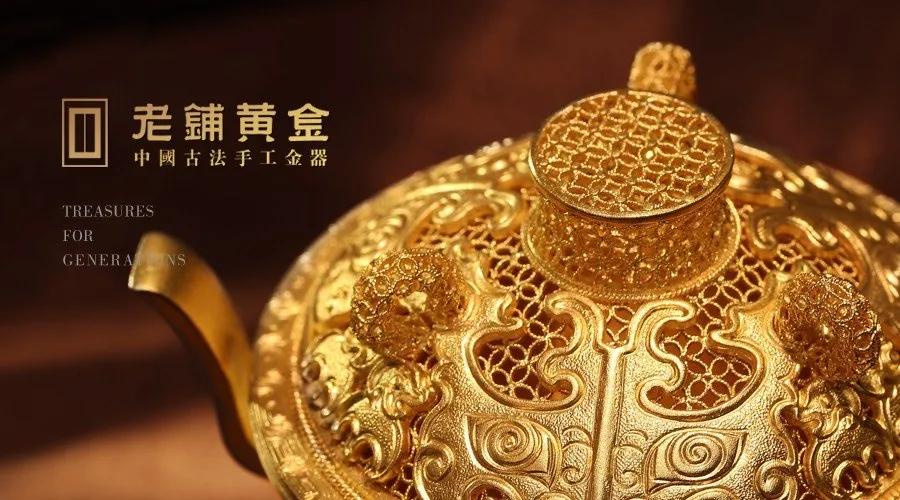
Lao Pu Gold: Chinese traditional handmade goldware
On December 1st last year, Baolan completed over 100 million yuan in Series A financing. This round was led by Challenger Capital, founded by Tang Binsen, the founder of Yuanqi Forest. Kering Group, the parent company of Gucci, and Shunwei Capital, under Lei Jun, followed the investment...
Seeing that the Chinese traditional gold track is getting hotter and hotter. Someone asked: Does this mean that the era of Chinese luxury goods is coming?
01 Chinese Traditional Gold: Luxury or Gold Bubble?
The popularity of Chinese traditional gold is the result of three things intertwined: gold, luxury goods, and investment.
The value - preservation attribute of gold, the aesthetic pursuit of luxury goods, and the investment enthusiasm of capital have all added fuel to this upsurge.
Let's start with the value of gold itself. In the past two years, the value - preservation attribute of gold as a hard currency has been continuously magnified, making it a "safe asset" for consumers to fight against uncertainty. Chinese traditional gold has jumped out of the single logic of "pricing by gram" of traditional gold. It endows products with value beyond the raw materials themselves through craftsmanship and design, upgrading gold from a "value - preservation tool" to a "wearable cultural asset."
Secondly, it is the superposition of the national trend aesthetic and the perception of luxury goods. Young consumers have become the main force, contributing more than one - third of the sales of gold jewelry. They are no longer satisfied with the "value - preservation label" of gold but pursue emotional value and cultural identity. Chinese traditional gold uses intangible cultural heritage techniques such as embryo - building, hammering, filigree, and engraving, which just meet the dual needs of young people for "loving the old self" and "cultural confidence."
Finally, it is the intensive betting of capital. Capital always has a sharp nose. Three of the "Four Sisters of Chinese Traditional Gold" have received hundreds of millions of yuan in financing: Baolan has attracted the support of Kering Group and Shunwei Capital. For Linchao, the founder of Richstone Capital visited more than ten times over a year before successfully entering the game. After Lao Pu Gold went public, its stock price soared more than ten times, and the annual sales of its 36 stores were nearly 10 billion yuan. What capital values is not only the stability of the gold track but also that Chinese traditional gold has achieved the dual - drive of "culture + craftsmanship," breaking through the limitation of "channel dependence" of traditional gold jewelry and having the potential to extend to high - end and luxury levels.
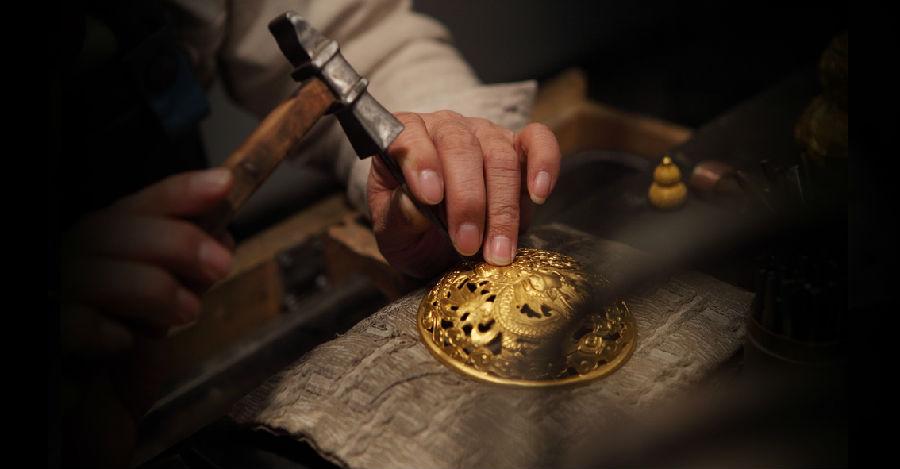
Handmade production of Chinese traditional gold
There are also problems under the upsurge: some brands follow the trend to gain popularity. Their craftsmanship lacks substance, but they raise the premium. The intensifying industry competition may lead to the dilution of brand value, and the doubts of the "bubble theory" have never stopped.
There are the "Four Sisters," so many other related brands want to take advantage of Lao Pu Gold. It is foreseeable that more brands with the word "Lao" or emphasizing "Chinese traditional" may appear in the future, and there may even be some shoddy imitation phenomena.
The current popularity is the superposition of cultural popularity, capital popularity, and gold popularity. When consumers buy a piece of Chinese traditional gold jewelry, their motives may be mixed: they think it looks good and has cultural connotations, and at the same time, they also think that "it's gold and can preserve value."
This kind of mentality can boost the market in the short term, but in the long run, if a brand wants to become a real luxury brand, it must detach its brand value from the fluctuation of gold prices and make consumers willing to pay for design, craftsmanship, and cultural stories, rather than just buying a lump of "gold that may be more valuable in the future."
02 What Exactly is a Luxury Good?
When talking about whether China can produce luxury goods, we have to go back and ask: what exactly is a luxury good? Are high - quality and high - priced goods luxury goods?
Many people have misunderstandings about this issue.
You can see that most of the world's recognized top luxury brands are from Europe. This is not accidental. The birth of a luxury brand is by no means the result of a brand working hard alone. It is the result of the co - dance of the brand, social culture, the spirit of the era, and a specific consumer group. It is the product of the right time, place, and people. The technological innovation after the Renaissance, the aesthetic leadership of the court nobility, and the maturity of brand - based operations after the Industrial Revolution have gradually built up the "hegemony" of Western luxury goods.
Has our business really reached the stage where luxury brands can be born?
Yes, China is the world's largest luxury goods consumer country, which proves that we have strong purchasing power. However, a consumer country does not equal a creative country. Consumption is "buying in," while creation is "giving birth." These are two completely different abilities.
Moreover, our understanding of the word "luxury" may have been a bit off from the start. In the Chinese context, "luxury" is often associated with "waste," "excess," and "vanity," with a bit of a derogatory meaning. This leads us to always ask "Is it worth it? Is it an IQ tax?" when discussing.
What exactly is a luxury good?
Last year, I had a chat with a very senior expert in the lifestyle field. He gave a wonderful re - translation of luxury - "Elegant Refinement."
Refinement lies in the painstaking refinement of craftsmanship and the extreme attention to details; elegance lies in the profound cultural heritage and the transcendent spirit. The core of a real "luxury" product should be the materialized manifestation of the spirit of "elegant refinement."
True elegant refinement cannot be measured by money. It may not have a specific material form. Maybe it's just watching the winter snow or listening to the wind. This is also elegant and luxurious, not just something made of gold, silver, or full of jewels. No, the attribute of all elegant and refined things is "rarity."
When Su Dongpo went to find Zhang Huaimin in the middle of the night to enjoy the moonlight together, the tacit understanding of "Huaimin was also awake" was the luxury of spiritual resonance. When Zhang Dai went alone to the Heart - Lake Pavilion to watch the snow on a snowy night in the fifth year of Chongzhen, the loneliness of "the sky, clouds, mountains, and water were all white" was the luxury of free state of mind. This kind of luxury has nothing to do with gold, jade, or jewelry. The core lies in "rarity" - rare craftsmanship, rare state of mind, and rare cultural resonance. And this is exactly the soil where Chinese luxury brands should take root.
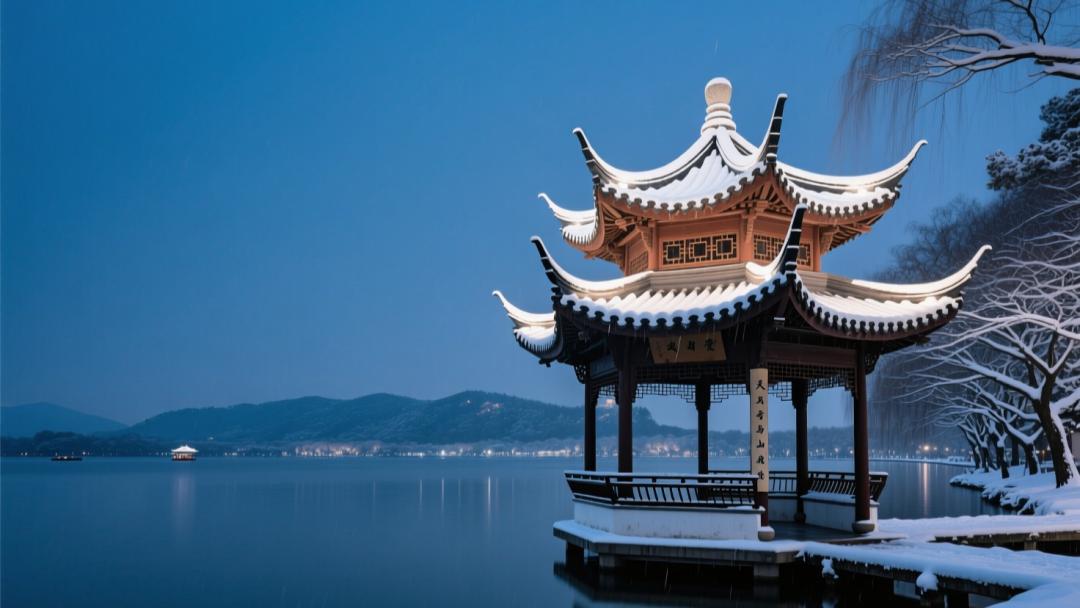
On a snowy night, the sky, clouds, mountains, and water were all white
China has a civilization of thousands of years, and actually, it is never short of the tradition of elegant refinement.
From the minimalist aesthetics of Song porcelain to the freehand realm of literati paintings, and then to various exquisite handicrafts. The problem is whether we can re - express this inherent elegant refinement in modern design language and brand narrative.
Speaking of luxury goods in our current context, they should at least originate from such elegant refinement. The common practices of current luxury brands, such as high - profile marketing, large - scale store opening, being very high - end and luxurious, are actually the latter - stage practices. Their early stage may very well originate from an elegant refinement, which becomes the real beginning of their brand building.
Without this beginning, the following stories are all false.
03 Can Real Luxury Brands Emerge in the Gold Field?
From the perspective of category logic, jewelry and watches are the core tracks of luxury goods. Cartier and Van Cleef & Arpels have both risen from this track. It is undoubtedly a wise choice for Chinese traditional gold to start on this track. However, the particularity of the gold category also sets up natural obstacles on its path to becoming a luxury brand.
The biggest challenge is the squeezing due to the transparency of raw material costs. The core premium of luxury goods comes from brand value, not raw material costs: the leather cost of an Hermès bag only accounts for 30% - 40%, and the premium from craftsmanship and brand accounts for more than 60%. The gross profit margin can reach 60% - 80%.
The price of gold materials for gold jewelry is publicly transparent. Even for a leading brand like Lao Pu Gold, its gross profit margin has always faced challenges. Although it is higher than that of traditional brands such as Chow Tai Fook, it is far lower than the international high - end luxury level. Although the premium from craftsmanship seems significant, the cost of gold materials still accounts for the majority of the pricing, and the real value - adding space that the brand can accumulate is severely compressed.
In order to break through this dilemma, many brands have begun to explore.
Lao Pu Gold was the first to adopt the "fixed - price" model, weakening the concept of gram weight and strengthening the value of craftsmanship and design; Linchao adheres to the slow - customization route, refuses large - scale distribution, and builds scarcity through "months of hand - polishing"; Baolan plans to use the financing funds to deeply cultivate brand value, upgrade the supply chain, and improve talent reserves.
Although these attempts can improve the premium ability, they still stay at the level of "craftsmanship empowerment" - and craftsmanship is only the foundation of luxury goods, not the soul.
A real luxury brand needs to make consumers forget the raw material cost and only recognize the spiritual value conveyed by the brand. Cartier's "love and commitment" and Van Cleef & Arpels' "romantic inheritance" are all emotional and cultural symbols that go beyond the product itself. If Chinese traditional gold wants to become a luxury good, it must rise from the level of "gold + craftsmanship" to the dimension of "culture + spirit," so that consumers are not just buying a piece of gold jewelry but also an oriental lifestyle.
Moreover, we should be calm about news such as the president of LVMH visiting Lao Pu and the CEO of Bulgari mentioning Chinese brands. This is more of a routine observation and intelligence - gathering of the largest market by international giants, which is their job. If we have to interpret it as "international giants certifying Chinese brands," it is a bit wishful thinking.
We have to take every step on our own and practice bit by bit. We don't need others' certification to build a brand.
04 Luxury is a Matter After the Maturity of Consumption Mentality
The matter of luxury goods is quietly changing right before our eyes.
Consumers' mentalities have changed.
Many people are not interested in luxury goods that almost print the logo all over the body. When they get a product now, their first thought is often: "Is this product really worth the price?" Note that this "worth" is different from before. It is no longer about whether the brand is well - known as before, but has become: Is your design unique? Does the craftsmanship have a threshold? Are the materials sincere? Is the brand really serious about making products? And so on.
You can see that the interest in luxury goods is declining. This decline means that I no longer focus my heart and money on a product but on an experience. Experience makes me feel more at ease than the product itself. This just reflects that people's taste in luxury goods is improving.
More and more people are moving the budget they originally planned to use to buy a bag or a watch to do other things. For example, saving up for a holiday to wait for the aurora in Iceland, or going on a deep - exploration trip to the Amazon rainforest. Some friends are seriously signing up for courses to learn diving or skiing.

The beautiful aurora in the Nordic winter
Why? Because in the process of experience, one can better understand the meaning of luxury itself rather than buying a luxury good. Material luxury goods can hardly make us experience the original meaning of luxury.
A story of a deep - exploration trip to an uninhabited area, a niche and professional skill, a memorable story, a unique lifestyle, and a spiritual satisfaction that belongs entirely to you... These are more precious.
Thousands of years ago, the great philosopher Socrates said a very thought - provoking sentence: "Luxury is man - made poverty." This sentence has a new interpretation today: when consumption becomes a tool for comparison, even if one has many luxury goods, their heart is still empty; while real luxury is the firm recognition of one's own preferences and the inner fulfillment and freedom obtained from things.
This change in mentality just provides fertile soil for the growth of Chinese domestic luxury brands - when consumers shift from "paying for others' opinions" to "paying for their own appreciation," those brands that deeply cultivate culture and adhere to craftsmanship have the possibility of breaking through the circle.
So you can see that true elegant refinement should bring inner fulfillment and freedom rather than the burden and shackles of comparison.
If China wants to grow healthy and vibrant luxury brands in the future, improving the "soil" is the key. This depends on the overall maturity of our consumption mentality: from "buying for what others think" to "paying for what we really appreciate."
05 Where is the Future of Domestic Luxury Brands?
Then, where exactly is the future of Chinese domestic luxury brands?
First of all, we have a rich cultural heritage. There are treasures everywhere. In addition to the currently popular Chinese traditional gold, there are also gentle jade carvings, simple purple sand pottery, brilliant cloisonné, profound lacquerware, and delicate woodwork... There are genes of elegant refinement in countless intangible cultural