True immersive viewing experience? Feedback on Apple Vision Pro's first live broadcast of the NBA is here.
Imagine this scenario: Without leaving your home, you can "sit" in the first row at the sidelines of the Crypto Tennis Arena in Los Angeles. Right in front of you is LeBron James making an amazing pass, and in your ears are the loud shouts of the fans. It's as if you've been instantly transported to the intense scene of an NBA game in the 2025 - 26 season.
This kind of immersive game - watching experience is not just a fantasy. On January 9th not long ago, NBA fans had the opportunity to be the first to experience this brand - new way of watching games. However, the prerequisite is that you need to own an Apple Vision Pro, which costs as much as $3,499 (approximately 24,000 RMB). As Apple's first spatial computing headset, it combines AR and VR technologies, aiming to provide an immersive digital interaction experience. Since its launch in 2023, the content ecosystem of Vision Pro has mainly consisted of documentaries and TV series.
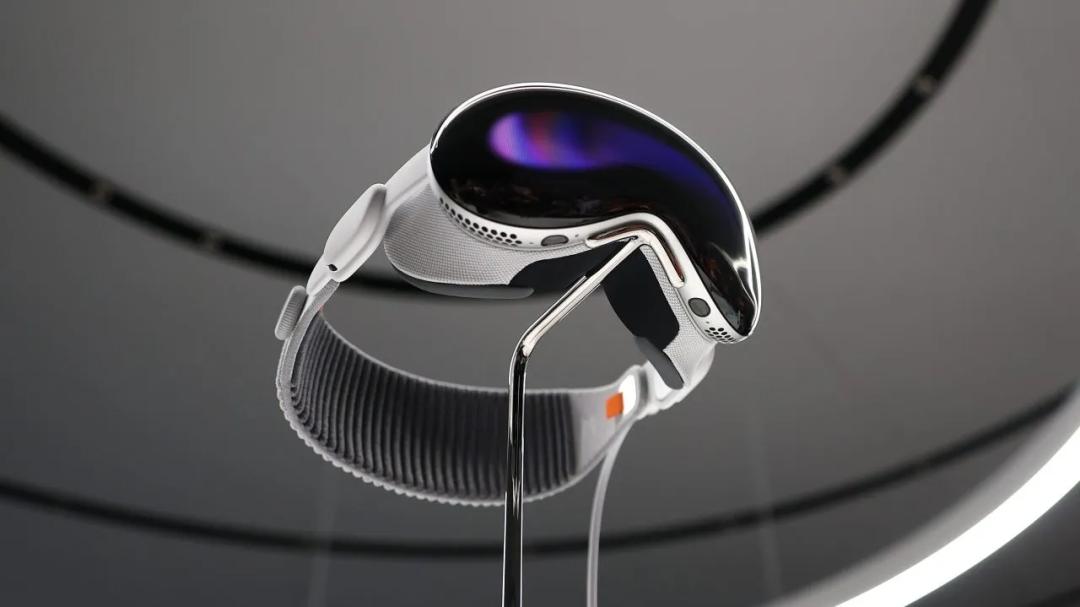
On January 5th this year, Apple, in collaboration with Spectrum, launched immersive NBA live - streaming content for Vision Pro for the first time. A total of six Lakers games were carefully selected, and the first live - stream was a game between the Lakers and the Bucks. This is not only the first time the device has ventured into the core area of sports event live - streaming but also the first 4K immersive live - stream of a game by a top - tier American sports league through Apple Vision Pro.
Currently, the usage rights for this live - streaming service are divided into two types: Apple Vision Pro users in the Lakers' broadcast area (Southern California, Nevada, or Hawaii) can directly watch the game live by subscribing to Spectrum SportsNet; users in other regions can watch the next - day replay with their NBA App accounts.
For loyal Lakers fans, compared to season tickets that can cost hundreds or even thousands of dollars, Vision Pro seems to offer a more cost - effective sideline view. But what is the actual experience like?
A Brand - New Game - Watching Experience
This live - stream is not simply casting traditional TV signals onto the headset. According to the tech media 9to5Mac, Spectrum SportsNet created a separate immersive broadcast stream specifically for Vision Pro users.
The core of the technology lies in three Blackmagic URSA Cine Immersive immersive live - streaming cameras, each costing as much as $32,995, which were set up on - site. The 3D video footage recorded by these cameras is calibrated to perfectly fit the optical display system of Vision Pro. The live - stream is filmed in 180 - degree panoramic view with an 8K resolution and is equipped with spatial audio. The images surround you in a dome - like shape. Therefore, compared with the existing 2D flat live - stream, multi - view switching, and even the NBA desktop animation view launched in early 2025 in the NBA App, the biggest difference of this live - stream is that it upgrades the game - watching experience from viewing flat images to a real - life sideline feeling.
Specifically, the live - stream offers seven unique viewing perspectives: the score table, the area under the basket, the high - altitude panoramic view of the stadium, the player tunnel, the commentator's booth, and a mobile sideline perspective for interviews and comments.
The images of the main game are mainly supported by two types of camera positions: one is the front - row perspective at the center line on the sidelines, with the camera installed above the scorer's table at the center line of the court, about 1.2 meters off the ground; the other is the under - the - basket position, with two cameras installed on the basket supports on both sides, about 2.7 meters off the ground. This camera setup in the center of the court allows users to directly feel the physical build, movement speed, and explosive power of NBA players, which the traditional 2D live - stream cameras hanging in the middle of the stands cannot convey.
The live - stream images mainly switch between these two perspectives. It's worth noting that Apple intentionally controlled the frequency of perspective switching this time. Many previous immersive video contents were often criticized for overly frequent camera switching, which made people dizzy. In this live - stream, most of the time, the view stayed at the front - row sideline perspective. Therefore, users need to turn their heads left and right following the attack - defense transitions, which is completely different from the top - down global view when watching traditional TV broadcasts.

In addition, there were no commercial ads during this immersive live - stream. This means that during the periods when ads and derivative shows are usually inserted in traditional live - streams, Vision Pro users could continuously see the real - time images inside the stadium. Before the game, the camera captured the performances of the Lakers' cheerleaders and the players' warm - up moments; during halftime breaks and time - outs, the images mainly switched to the commentator's booth, the panoramic view, or the player tunnel perspective.
Therefore, the details that are often overlooked in traditional live - streams become clearly visible in the immersive live - stream. The most obvious example is the subtle interactions between players, coaches, and referees during the free - throw preparation intervals. A specific example is that Lakers head coach JJ Redick didn't immediately walk towards the players during a time - out. Instead, he first had a brief discussion with the assistant coaches near the free - throw line and then walked towards the bench. These clips allow the audience to feel the more complete stadium atmosphere from multiple perspectives.
The live - stream also has a dedicated commentary team, consisting of Emmy - winning play - by - play announcer Mark Rogondino and three - time NBA champion and former Lakers forward Danny Green. The commentators will give targeted tips according to the immersive game - watching scenario. For example, "Apple Vision Pro users, look to the right. That's Lakers head coach JJ Redick." This customized plan also simulates the real sideline game - watching feeling for Vision Pro users, rather than just the feeling of watching on a large living - room screen.
In addition, the Ambisonic surround - sound microphone captures the spatial audio in the stadium, allowing users to clearly hear the friction of the sneakers on the court floor, the crisp sound of the basketball going through the net, and the wave of cheers from the on - site audience at critical moments.
The Immersion Still Falls Short
"The immersive sports experience of Vision Pro is somewhere between watching a TV broadcast and being present at the scene," as pointed out by Ben Thompson, the well - known tech editor - in - chief, business and media analyst, and founder of Stratechery. Although the immersive live - stream has many highlights in terms of real - life texture and innovation, this first - generation live - stream still exposes many limitations.
The most obvious problem is the blind spots in the field of vision. Since all three cameras are in fixed positions and are limited by the physical shooting limitations of the 180° panoramic camera, the camera at the center - line position has an obvious flaw: the blind spots in the corners near the baselines at both ends of the court are not covered. And this area is exactly where exciting moments such as three - point shots and sideline - ball tactics often occur. At the same time, the on - site coaching and emotional fluctuations of the coaches on the sidelines are often out of the picture. The perspectives of the two cameras behind the baskets are okay, but the baskets themselves sometimes block part of the stadium action.
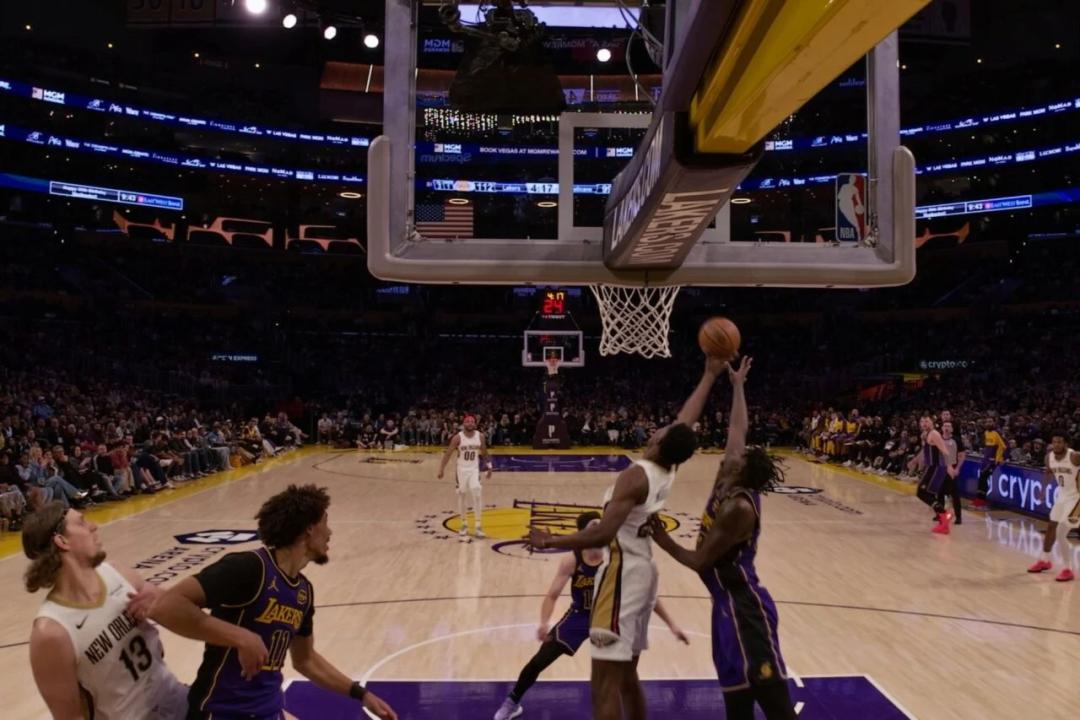
The logic of camera switching also needs to be optimized. Just like in traditional live - streams, the behind - the - scenes director team decides when to switch to which camera according to the progress of the game. But for users watching the immersive live - stream, this switching sometimes seems abrupt. Users may want to stay at a certain perspective continuously or actively switch to a distant - view camera to see the whole court, but currently, Apple does not provide any manual control options. In this regard, the content played on Vision Pro is essentially a passive media playback, just with a panoramic view. In addition, if users turn their heads too much while following the game and go beyond the range of the picture, the area outside the range will turn black; in high - speed movement scenarios such as fast breaks, there will be noticeable motion blur in the picture (especially in the distant view), which breaks the immersive continuity.
There is a scoring pop - up window on the out - of - bounds area at the bottom of the picture, on the court floor, which shows the score, quarter, remaining time, and number of time - outs in real - time. However, users usually instinctively look up to find the big screen above the court or the 24 - second timer on the basket. They need to deliberately look for this pop - up window, and this interaction design is a bit counter - intuitive.
The replay function also needs to be improved. As the game progresses, the number of replay shots increases, but the durations are generally short, and there aren't many replays of exciting shots. In addition, limited by the number of cameras, all replay shots are played at normal speed, lacking the slow - motion replay function, making it difficult for users to review the exciting goals or passes on the court in time. For hardcore fans who are keen on studying tactics, the immersive live - stream also lacks in - depth tactical analysis content. Moreover, the rapid switching when the replay clips come in and out can sometimes make people feel dizzy.
Compared with traditional sports live - streams, the immersive live - stream is almost blank in terms of social interaction. In the past, the experience of watching a game while swiping through social media, browsing expert comments, and sharing with friends in real - time is difficult to achieve with Vision Pro. Even though when wearing Vision Pro, users can use the headset's perspective camera function to directly operate their phones on the virtual interface, this will immediately break the created virtual immersion. Even the sound quality is a bit thin. Due to the lack of more diverse on - site environment sounds such as on - site announcements, the expected surround - immersion feeling is not fully achieved.
The Experiment Is Just Beginning
"This is more like another experiment by Apple in the field of immersive video live - streaming. After all, the company is still looking for a real blockbuster application for Vision Pro," pointed out Max Weinbach, an analyst at the creative strategy consulting firm, highlighting the core of this cooperation.
Previously, Apple had done its best to enrich the content ecosystem of the Apple Vision Pro app store and improve the program supply. It also upgraded the hardware of this headset last year, equipping it with a powerful M5 chip and a more comfortable head strap. However, its market performance has been lukewarm. According to Forbes' estimate, the sales volume of this device during the holiday season last year was only 45,000 units. Sports event live - streaming is one of the few content categories that can promote the accelerated popularization of this relatively new hardware. This cooperation with the NBA might be the long - awaited turning point for Vision Pro.
Max believes that even if this cooperation doesn't directly lead to a significant increase in device sales, it is an important step for the XR platform to make a breakthrough in the field of entertainment content, marking the transition of real - time immersive sports live - streaming from concept to reality.
This is indeed the case. Although the experience is not perfect yet, this experiment has revealed another possibility for sports live - streaming and sparked intense discussions about "how to optimize the production of immersive sports content." Currently, the audience's feedback mainly focuses on the desire for more autonomy in viewing perspectives, less editing intervention, purer on - site original sounds, and more comprehensive information integration.
This experiment also reflects the game between innovation and tradition. Since the first sports event was televised in the United States in 1939, the development of sports reporting has always relied on an increase in the number of cameras, the professionalization of production teams, and the elaborate design of editing techniques to create an attractive two - dimensional game - watching experience. For example, in last year's Super Bowl, Fox Sports used as many as 147 cameras, including professional slow - motion cameras and robot - controlled camera positions. However, the logic suitable for TV broadcasts may not be directly applicable to the field of immersive videos. The core goal of the latter is to restore the on - site feeling, rather than the experience of watching on a distant screen.
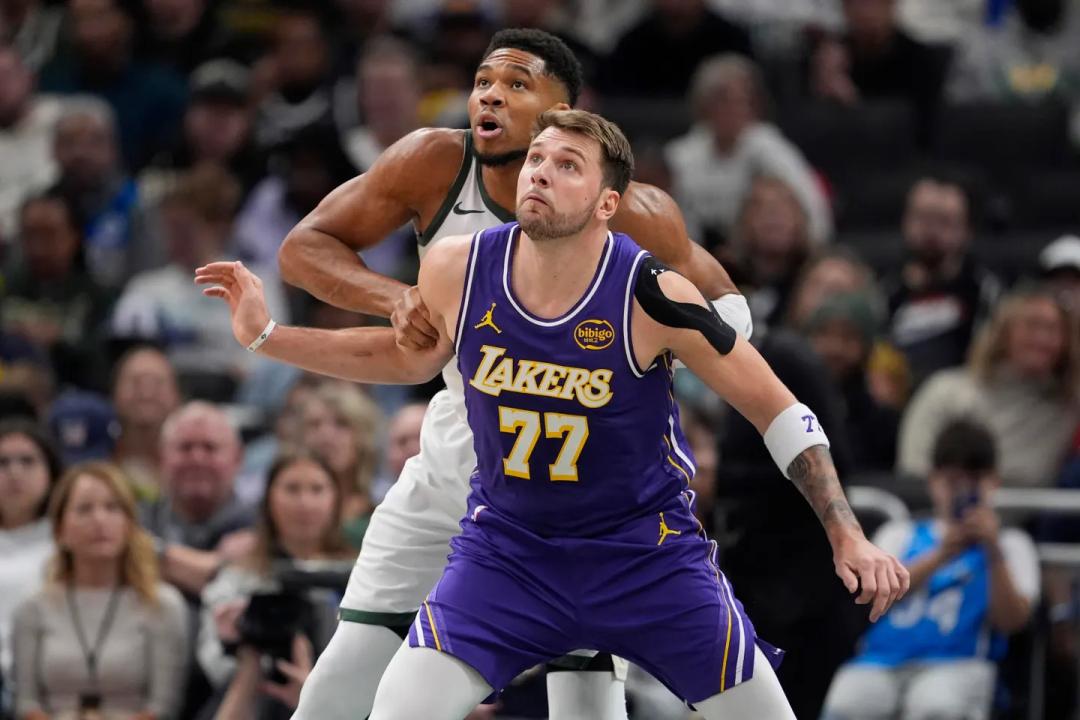
If the immersive game - watching experience of the Lakers is recognized by the market, other teams and sports leagues will surely follow up and explore similar cooperation. This cooperation pushes the content to multiple countries and regions through the official NBA App, indicating that it is not just an experiment limited to the US market but an attempt at a global content layout.
On the other hand, the participation of Spectrum SportsNet also provides new ideas for traditional sports broadcasters in terms of virtual - reality content distribution. These institutions don't need to invest a huge amount of money to build a new platform. Instead, relying on the existing app ecosystem, they can launch the immersive game - watching service as a high - end value - added package. This practical model may accelerate the implementation process of virtual - reality technology in the sports industry.
Currently, the evaluations of Vision Pro users are mixed. However, this game is just the first of the six games that Apple plans to live - stream in an immersive way. Apple said it will continuously optimize based on user feedback, which means that the subsequent game - watching experience is likely to be significantly upgraded.
The ultimate test of this transformation is: Will immersive sports game - watching turn out to be just a short - lived novelty, or will it truly become one of the mainstream choices for fans to watch games? The next Lakers' Vision Pro immersive live - stream will be on February 5th, and perhaps more answers will be given then.
This article is from the WeChat official account "Lanxiong Sports" (ID: lanxiongsports). The author is Wang Haoying. 36Kr is published with authorization.