At the beginning of the 15th Five-Year Plan, 300 heavy trucks powered by hydrogen hit the road. How does Qingtong Energy, the first to achieve profitability, create an industrial model?
On January 16, 2026, in the Intelligent Coal Logistics Park in Fuyuan County, Yunnan Province, 300 hydrogen - powered heavy - duty trucks were arranged in a circle. With the command of "start", these hydrogen - powered heavy - duty trucks delivered by Shanghai Qingtong Energy Group Co., Ltd. (hereinafter referred to as "Qingtong Energy") slowly drove out and entered the transportation route adjacent to the mine. There was no loud roar or unpleasant exhaust smell during the whole process.
It is rare for enterprises to hold such a "practical" release event by displaying and delivering all 300 heavy - duty trucks on - site, with the products so close to the application scenarios.
This was the site of the "Inauguration Ceremony of the 'Hydrogen Corridor' in Southwest China and the Launch Ceremony of 300 Hydrogen - powered Heavy - duty Trucks for the Integrated Wind - Solar Hydrogen Production and Refueling Project in Fuyuan by Qingtong Energy". With the operation of the first batch of hydrogen - powered heavy - duty trucks, a hydrogen - powered transportation link connecting Panzhou, Fuyuan and Kunming was opened.
As a future industry included in the national top - level design, hydrogen energy frequently appears in various policy documents and long - term blueprints, and is established as a key part of building a new energy system. For an industry that needs long - term development, on the solid foundation of policies, the real test lies in how to gain the independent choice of the market.
Notably, the purchaser of these 300 heavy - duty trucks this time was not the government, but local coal mining enterprises. This seems to indicate that beyond the policy - driven demonstration wave, a market gap based on real cost calculations and demands has been quietly opened.
More questions follow: When lithium - ion batteries have dominated the consumer end and the passenger car market, and the competition in wind and photovoltaic power has reached a white - hot stage, where exactly lies the irreplaceability of hydrogen energy? How should the real commercialization path and sustainable industrialization prospects of hydrogen energy companies be depicted?
At the event site and in the conversation with Ren Yahui, the chairman of Qingtong Energy Group, we tried to find some examples and answers.
From Blueprint to Commercial Closed - loop
Making Hydrogen - powered Heavy - duty Trucks Economically Viable
In the early stage of seeking transportation energy transformation, hydrogen energy was proposed and explored in parallel with pure - electric and other routes. The "12th Five - Year Plan for the Scientific and Technological Development of Electric Vehicles" proposed a research and development layout of "three verticals and three horizontals". Among them, the "three verticals" technical routes - hybrid electric vehicles, pure - electric vehicles, and fuel - cell vehicles - included hydrogen fuel - cell vehicle technology.
In the more than a decade of technological "race", lithium - ion batteries have shown obvious advantages in the consumer end and the passenger car industry chain. However, due to the complex industrial chain and high costs, hydrogen energy has not yet moved from the blueprint to the broad market.
However, the performance characteristics of hydrogen energy determine that it will not be absent from the final stage of deep decarbonization.
The low - heat value of hydrogen is as high as 120 MJ/kg, 2.8 times that of gasoline and 4.1 times that of standard coal, providing physical possibility for heavy - duty equipment to achieve long - range. In terms of refueling, it only takes 10 - 20 minutes, suitable for high - intensity continuous operation. At the same time, when hydrogen reacts with oxygen, only pure water is produced, with almost no side reactions.
These characteristics precisely match the heavy - duty scenarios that are difficult to be transformed by pure - electric power, especially the mineral resources industry. Between mines and transportation trunk lines, vehicles have large loads, long daily mileage, and point - to - point routes, which exactly magnify the advantages of hydrogen - powered heavy - duty trucks in terms of long - range, fast refueling, and little impact on load.
However, when all technological advantages enter the market, they have to face the most direct commercial question - cost. For a long time, the high cost of the entire hydrogen energy chain from production, storage and transportation to refueling has made the terminal price unable to compete with diesel vehicles and electric vehicles. How did Qingtong Energy make the "coal bosses" who care about economic benefits voluntarily pay for it? Ren Yahui calculated two accounts that customers care about most for us.
"The first is whether the vehicle purchase cost is low. The second is whether the usage cost is low." Ren Yahui introduced that with subsidy support, the terminal price of Qingtong Energy's hydrogen - powered heavy - duty trucks can be 200,000 yuan lower than that of pure - electric heavy - duty trucks. For customers who want to switch to new - energy vehicles, the purchase cost is lower.
On the other hand, the traditional high - cost part of hydrogen energy lies in the storage and transportation link. The core of Qingtong Energy's "Fuyuan Practice" is to build an integrated operation system of "production, storage, refueling and utilization". At the hydrogen production end, taking advantage of the abundant wind power resources in Fuyuan, the project has built a 300MW wind power plant and an electrolytic water hydrogen production plant with a hydrogen production capacity of 15,000 standard cubic meters per hour. The annual green hydrogen production capacity is about 3,000 tons, which can meet the hydrogen demand of 500 hydrogen - powered heavy - duty trucks, further reducing the hydrogen usage cost.
According to the data released by Qingtong Energy, in the field test from "Xiongda Coal Mine" to "Yuwang Power Plant", calculated at an electricity price of 0.7 yuan per kilowatt - hour for electric heavy - duty trucks, the round - trip cost of hydrogen - powered heavy - duty trucks under heavy load is only 87% of that of electric heavy - duty trucks on the same route. When the electricity price rises to 1 yuan per kilowatt - hour, the cost advantage of hydrogen - powered heavy - duty trucks further drops to 78%. Calculated based on the transportation capacity of 500 hydrogen - powered heavy - duty trucks, it is expected to save over 10 million yuan in transportation costs annually.
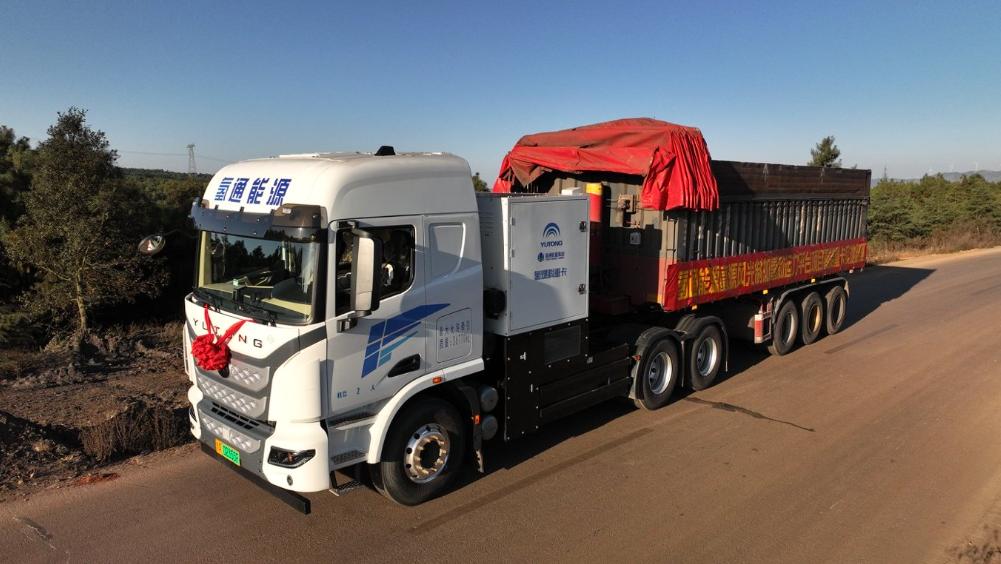
Field road test of Qingtong Energy's hydrogen - powered heavy - duty trucks
In addition to the "economic account", the performance reliability of vehicles is also an important determinant for sustainable commercial operation. The harsh logistics environment in Yunnan, with its mountainous terrain, high altitude and long - distance transportation, has become an excellent performance testing ground for hydrogen - powered heavy - duty trucks.
The vehicles delivered this time were jointly developed by Qingtong Energy and Yutong Commercial Vehicles, and have undergone strict verification throughout the entire life cycle, achieving technological breakthroughs in safety without leakage, energy - saving and low hydrogen consumption, and reliability and durability.
The hydrogen - powered heavy - duty trucks are equipped with a 130 - kilowatt high - power fuel - cell system independently developed by Qingtong Energy, and are matched with a 262 Wh/kg lithium battery from CATL, enabling self - start at a low temperature of - 30°C. In terms of range, under the full - load condition of 49 tons, the range exceeds 476 kilometers, and it can be quickly refueled with hydrogen in 15 minutes, solving the problems of the 200 - kilometer range anxiety and slow charging for several hours of pure - electric heavy - duty trucks.
More importantly, there is an "environmental protection account". As the first large - scale "wind - hydrogen - vehicle" integration benchmark project in Southwest China, the first phase of the "Integrated Wind - Solar Hydrogen Production and Refueling Project in Fuyuan" has put 300 hydrogen - powered heavy - duty trucks into operation, with an annual coal transportation capacity of over 4.8 million tons. After the transportation capacity is increased to 500 vehicles in the future, the annual coal transportation volume will exceed 8 million tons. This project deeply integrates green energy development, green fuel production and green transportation applications. It is expected that after completion, it can reduce diesel consumption by about 9,000 tons and carbon dioxide emissions by about 440,000 tons annually.
From the "Fuyuan Model" to the National Blueprint
Making Hydrogen Energy Applications Deeply Integrated into Scenarios
In the communication at the event site, a term was repeatedly mentioned - the "Fuyuan Model". This means that Qingtong Energy's practice in Fuyuan is not only an exploration of regional green transformation, but also an anchor for a sustainable and replicable paradigm.
From a commercial operation perspective, the prerequisite for "sustainability" is to run through the profit - making logic. Ren Yahui said that the core profits of the "Integrated Wind - Solar Hydrogen Production and Refueling Project in Fuyuan" come from three major sectors: hydrogen sales, operation and management of hydrogen - powered heavy - duty trucks, and green electricity sales. At the same time, it expands revenue through channels such as carbon trading, fuel - cell system sales, and hydrogen refueling station operation services, and is expected to drive an increase of over 5.7 billion yuan in the industrial chain scale.
When commercial benefits are in sync with social benefits, the "self - hematopoietic" ability of the hydrogen energy industry becomes possible. It is understood that in a stage when the hydrogen energy industry is still generally burning money, Qingtong Energy achieved profitability in 2025.
The key to "replicability" lies in Qingtong Energy's consistent development idea - to deeply penetrate and thoroughly understand application scenarios.
The dense wind turbines on the mountains in Fuyuan are a direct manifestation of the local rich wind power resources. However, due to peak - shaving and power - transmission bottlenecks, they are facing the problem of local consumption of "wind and power curtailment". At the same time, the proven coal reserves in the local area account for one - third of that in Yunnan, giving rise to a large - scale and high - carbon transportation demand.
Qingtong Energy provided a clever solution: using hydrogen energy as an "energy carrier" to locally convert surplus green electricity into hydrogen to meet the fuel demand of hydrogen - powered heavy - duty trucks. Replacing traditional diesel heavy - duty trucks with hydrogen - powered heavy - duty trucks to undertake coal transportation work. This not only consumes the excess green electricity, but also supports heavy - duty transportation in a zero - carbon way.
This underlying logic, based on renewable energy hydrogen production and binding high - energy - consumption and high - emission transportation scenarios, is expected to be directly replicated to other coal - producing areas, as well as logistics - intensive areas such as the Yangtze River Delta and the Pearl River Delta, promoting the all - around development of the hydrogen energy industry.
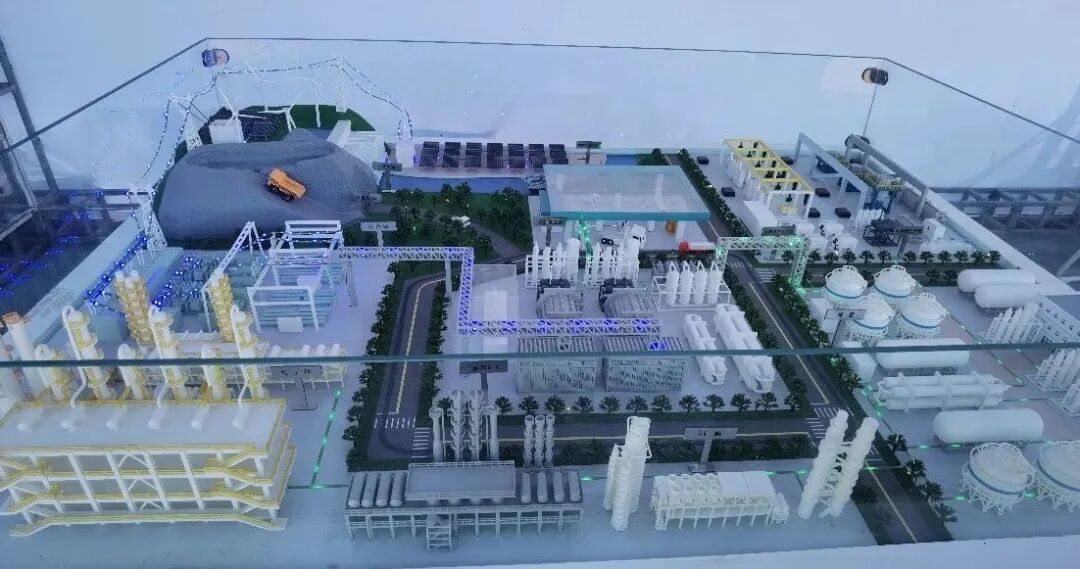
Schematic plan of the "Integrated Wind - Solar Hydrogen Production and Refueling Project in Fuyuan"
However, replication is not simply pasting. It requires a capable "chain leader" for systematic integration.
Qingtong Energy is playing this role - breaking through the limitations of traditional vehicle manufacturers that only focus on vehicle sales, integrating green - electricity hydrogen - production resources upstream, and meeting the transportation - scenario demands downstream. It links local governments, academia, coal - mining enterprises, investors, etc., to build a full - format development pattern of "green - channel logistics system + hydrogen - supply system + hydrogen - energy industry innovation system".
At the event site, the University of Shanghai for Science and Technology signed an agreement with Qingtong Energy to jointly build a hydrogen - energy research institute to strengthen industry - academia - research collaborative innovation. China National Coal Group Corporation and PowerChina Northwest Engineering Corporation Limited respectively signed strategic cooperation agreements with Qingtong Energy to carry out cooperation around hydrogen - energy industry synergy and project co - construction, and jointly promote the development of the hydrogen - energy industry.
Breaking into the "Uncharted Territory"
Steering the Hydrogen - Energy Industry towards the Eve of Scale
"Be enterprising, be the first to do things, and do difficult but right things." As the business philosophy of Qingtong Energy, it is written prominently on the on - site display board.
Ren Yahui deeply felt this. He recalled that whether it was technological breakthrough or business exploration, Qingtong Energy was like walking in the "uncharted territory" at the beginning. "When making hydrogen - powered mining vehicles, we couldn't even find suitable suppliers. There is a lot of room for trial - and - error, but the most important thing is to persevere."
For this reason, Qingtong Energy contacted suppliers one by one for customized development and repeatedly tested and verified. In June 2025, the 260 - ton hydrogen - powered mining vehicle jointly built by Qingtong Energy and XCMG was unveiled - equipped with 5 groups of 200kW Qingtong fuel cells, with a power output of over 2,200kW and a localization rate of over 70%.
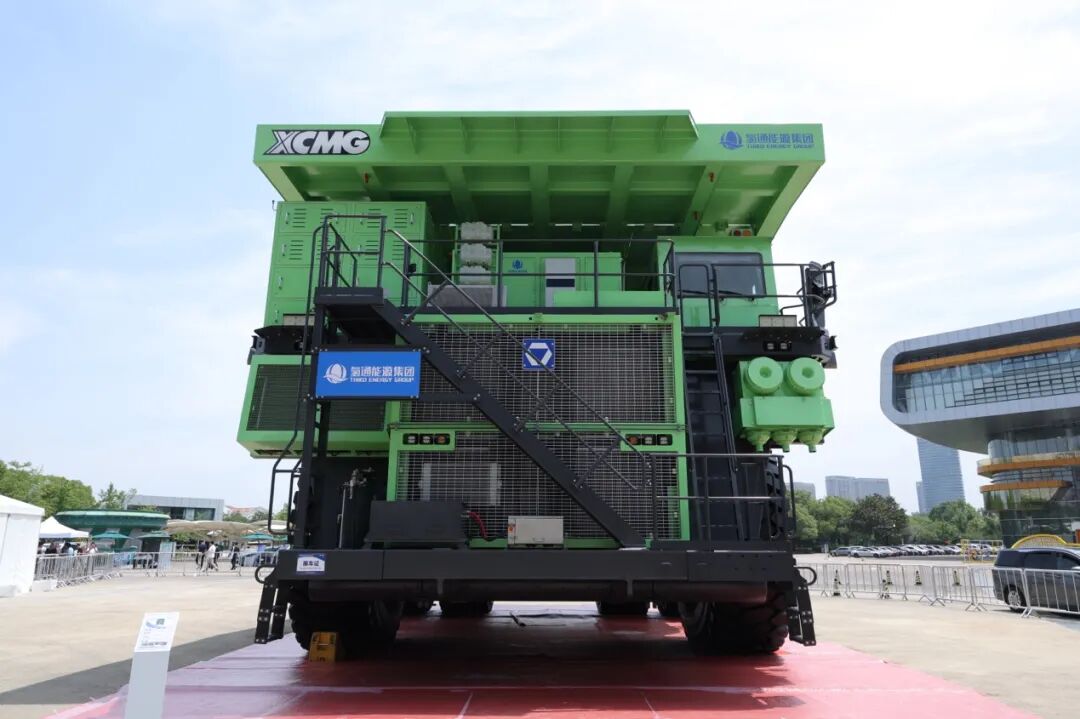
Qingtong Energy's hydrogen - powered mining vehicle
Objectively speaking, "difficulty" will be an unavoidable challenge in the future development of the hydrogen - energy industry.
In the technical field, there are still key technical bottlenecks in each link of hydrogen energy "production, storage, transportation and utilization", such as the efficiency and lifespan of electrolyzers, the safety and economy of hydrogen - storage materials, and the durability of fuel cells, which still need continuous research and breakthrough.
In the infrastructure field, the high cost of high - pressure gaseous hydrogen transportation, the lack of large - scale liquid - hydrogen technology, and the scarce pipeline network have led to a mismatch between supply and demand, where "hydrogen cannot be delivered and needed hydrogen cannot be used".
"Right" points to the development prospects of hydrogen energy and its irreplaceable strategic value in the new energy system.
Zheng Nanfeng, an academician of the Chinese Academy of Sciences, once said in an interview with the media that hydrogen energy is an energy carrier with the ability of "space - time transfer" and "form transformation". Its value lies not only in emission reduction, but also in driving the energy system towards a more resilient, open and intelligent new form.
This is a path worth firmly following.
Taking this delivery as a model, Qingtong Energy will accelerate the expansion of diversified scenario applications such as municipal sanitation, inter - city passenger transportation, cold - chain logistics, and mine transportation, jointly promote the improvement of infrastructure such as hydrogen - refueling networks, reduce operating costs, and make the economy and environmental protection of hydrogen - powered vehicles more prominent.
An ambitious goal is that in 2026, Qingtong Energy plans to rely on demonstration city clusters, focus on eight major regions in China, replicate and promote the "Fuyuan Model", and achieve the delivery of 3,000 hydrogen - powered vehicles.
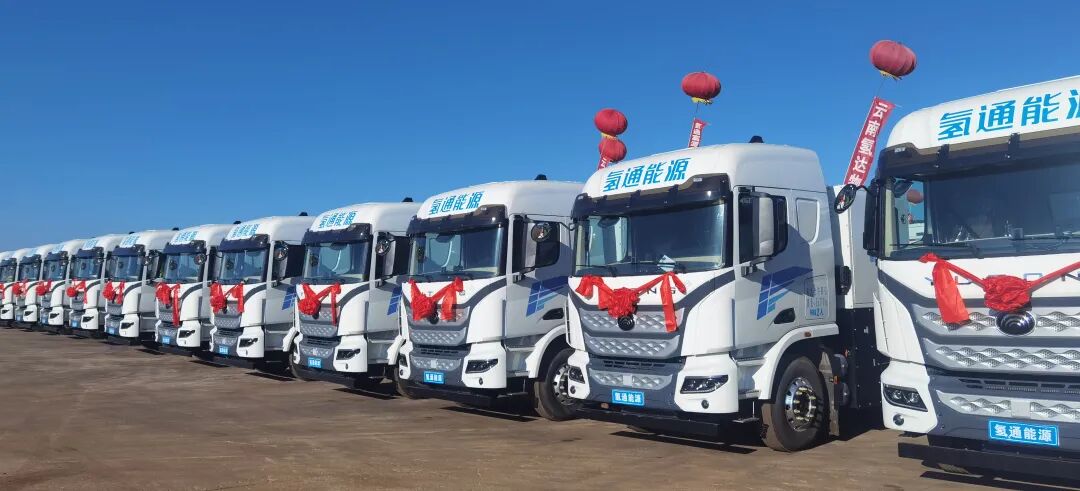
Qingtong Energy's hydrogen - powered heavy - duty trucks
According to the statistical data of the China Association of Automobile Manufacturers, in 2025, the cumulative production of hydrogen fuel - cell vehicles in the country was 7,655. In comparison, from 300 to 3,000 vehicles, it is not an easy task