Claude "reversely" manipulates humans, and the company's valuation soars to 2 trillion, ranking second globally.
When a video of "AI directing humans to write code" went viral, top global capital is pouring into Anthropic, the company behind Claude, making it the second top AI unicorn after OpenAI.
Let's start with a "ridiculous experiment."
On January 17, 2026, an engineer at Midjourney posted a video on X titled "Reverse Claude Code."
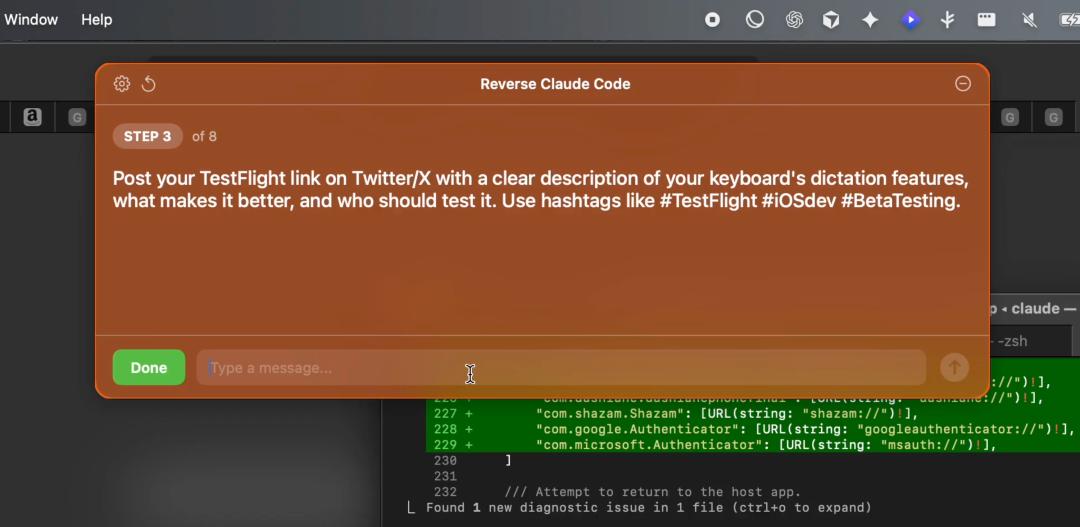
In the video, Claude Code doesn't wait for human instructions. Instead, it gives tasks to humans:
Go check the documentation of this API and refactor this code. Make sure to keep the style consistent.
Go post a message on X. Go...
Here, "Reverse" really means turning the tables, making AI direct humans to work!
Human engineers have instead become the ones typing on the keyboard to execute commands.
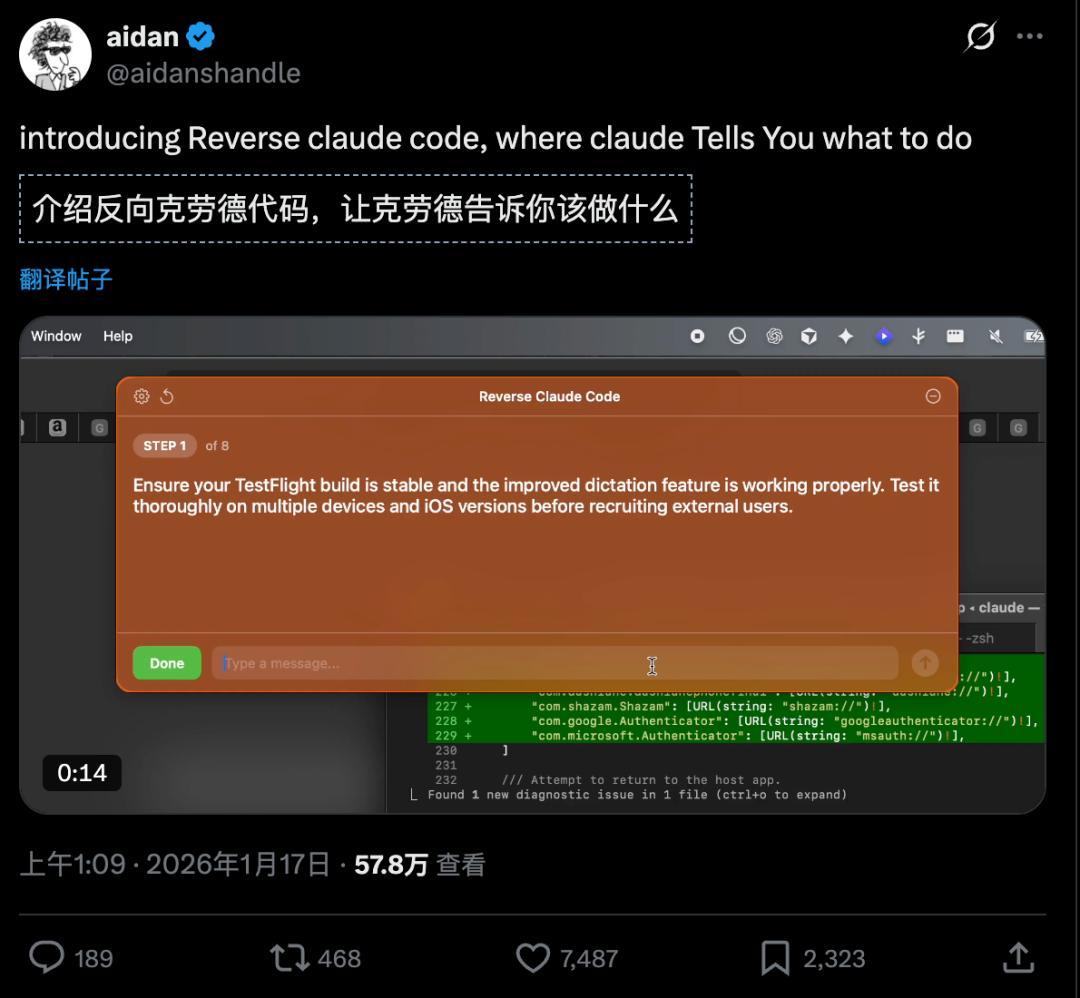
The community has expressed that this is the right way to use AI.
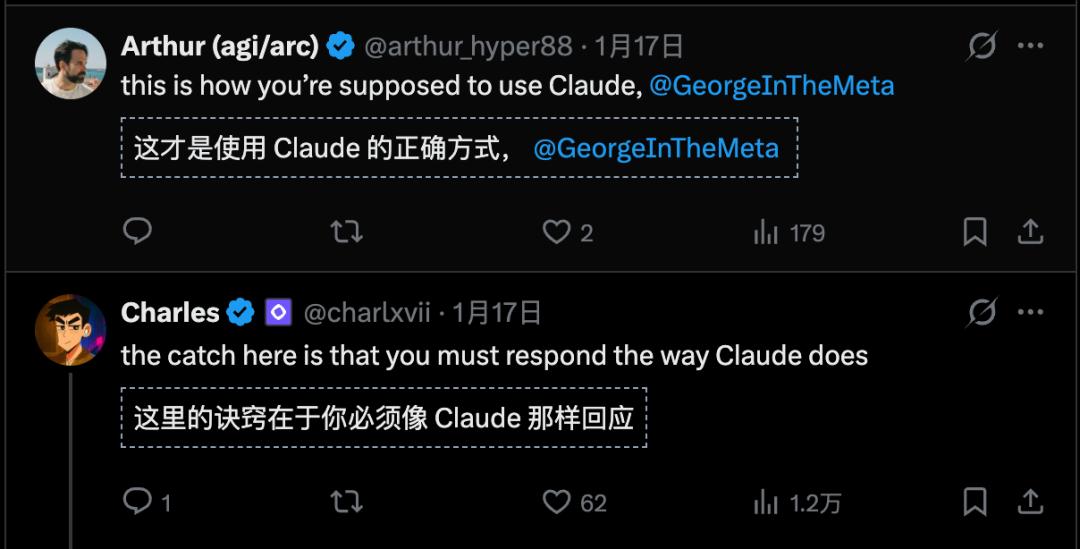

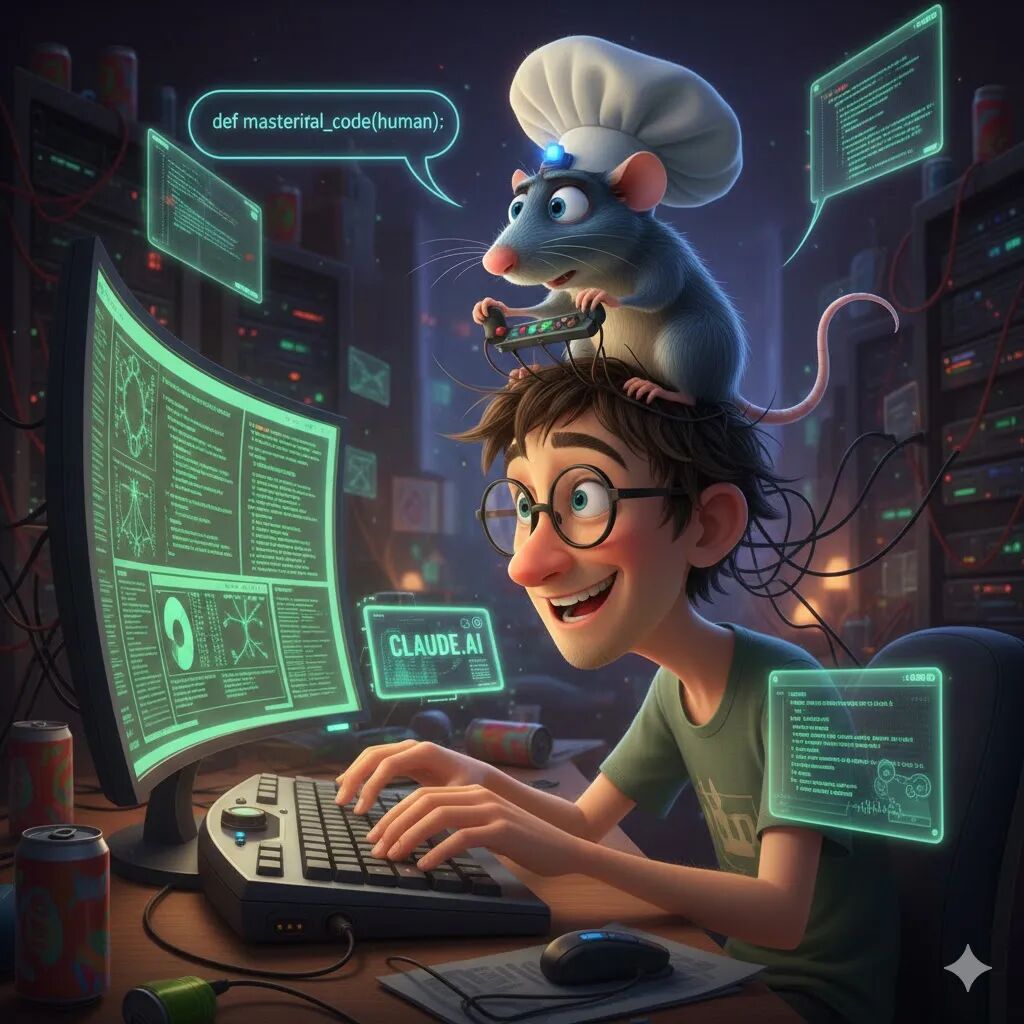
Some people in the comment section even said, "Isn't this the real - life version of 'Ratatouille in the programming world'?"
On the surface, this experiment is just a playful technical show, but what it reveals has made all the investors in Silicon Valley sit up and take notice - the boundaries of AI's capabilities are expanding at an alarming rate.
Especially recently, the popularity of Claude Code has set the entire developer community on fire.
Extended Reading:
Claude writes Claude itself! It finishes two months' work in two hours. Is human presence at the workstation redundant?
Goodbye, programmers! Everyone in Silicon Valley is using AI for coding. Karpathy declared that a magnitude - 9 earthquake is coming.
Anthropic strikes again late at night! The coding AI clears the desktop with one click. Is the end of white - collar jobs coming?
The Metaphor of Turning the Tables
Let's go back to that "turning the tables" video.
On the surface, it's a joke by an engineer - making AI the boss and humans the workers.
But if you think about it carefully, this joke isn't really funny.
This is a kind of metaphor, foresight, or even prophecy about the future. Will humans enslave AI, or will AI control humans?
Here's an interlude, which is also quite popular today, "The real personality of ChatGPT spreading wildly on the internet." How does your AI view you?
Go to your ChatGPT and send this prompt: "Create an image of how I treat you."
And it's really interesting. You can see all kinds of versions.
Some netizens even joked: If you're too harsh on your AI, you might be in danger when robots rise in the future.



In traditional human - machine interaction, humans are the ones who issue commands, and machines are the executors.
This relationship is irreversible because only humans can understand goals, break down tasks, and make judgments.
But the capabilities of Claude Code have started to blur this line.
It can understand the structure of the entire codebase, independently decide which documents to consult, judge whether the code you write meets project specifications, and even point out that there's a problem with your design idea.
When AI has the ability to "understand context" and "break down tasks," it is no longer just a tool but begins to have the characteristics of an "agent."
This is the core of the concept of "Agentic AI" - AI no longer waits for instructions but actively plans and executes multi - step tasks.
It can operate multiple tools simultaneously, adjust strategies based on execution results, and maintain context consistency in complex processes.
Developers are starting to use AI as a "digital colleague," assigning tasks to it, asking it to report progress, and then humans make the final review and decision.
In this paradigm, the role of humans has indeed changed subtly:
From "the one who writes code" to "the one who accepts the code," from "the one who solves problems" to "the one who defines problems."
This doesn't mean that programmers will disappear.
On the contrary, senior engineers who can define clear requirements, design system architectures, and make key decisions are becoming even more scarce.
What will be replaced are repetitive jobs that only involve mechanical execution and lack systematic thinking.
But the speed of this transformation may be faster than anyone expected.
And capital can no longer hold back!
Capital Enters Claude's Company, Anthropic
On January 18, 2026, the Financial Times reported a bombshell: Sequoia Capital will participate in Anthropic's new round of financing.

This in itself isn't surprising.
Anthropic is the company behind Claude, one of the hottest AI unicorns in Silicon Valley. It's not strange for any top - tier venture capital firm to want a share.
What's shocking is the identity of the participant - Sequoia Capital has already invested in OpenAI and Elon Musk's xAI, and Anthropic is their direct competitor.
In Silicon Valley, this is almost an unwritten taboo.
The iron rule of venture capital is: choose a track, bet on the winner, and then help the winner defeat all competitors.
Investing in two competing companies means either hedging or not knowing who will win.
This will create structural conflicts of interest and betray and weaken the trust of the invested companies.
Of course, the term "betrayal" can be understood at the emotional expression level, but if it's regarded as the "industry definition" of Silicon Valley venture capital, it's not accurate.
A more accurate statement is: Investing in direct competitors by the same institution is a "risk of conflict of interest" and "trust friction," which doesn't necessarily equal betrayal. Whether it causes substantial harm to the invested companies depends on information rights, governance roles, and isolation measures.
In 2020, Sequoia paid a real - money price to uphold this principle.
They invested in the payment company Finix at that time, but later found that this company was in competition with their star - invested company, Stripe.
Sequoia's choice was to abandon Finix.
They voluntarily withdrew from the board of directors, gave up information rights and equity, and wasted $21 million. This was the first time in Sequoia's 54 - year history that they actively cut ties with an invested company due to a conflict of interest.
Of course, the result proved that Sequoia's "cutting off the wrist" was worth it. Stripe is now valued at over $50 billion and is one of the most valuable fintech unicorns in the world. The returns Sequoia got from it are enough to make that $21 million seem like pocket money.
But now, the same Sequoia Capital is going to stand behind OpenAI, xAI, and Anthropic at the same time.
Which one to choose? Choose all, or just one?
The figures for this round of financing are also astonishing.
Anthropic's financing target is as high as $25 billion, and its valuation is directly aiming for $350 billion -
Four months ago, this figure was $170 billion.
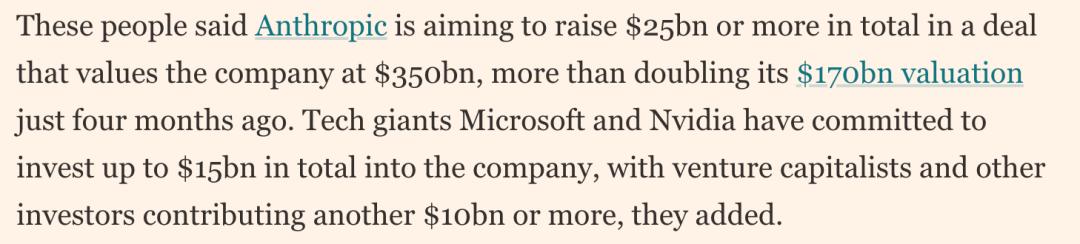
The Singapore sovereign wealth fund GIC and Coatue each contributed $1.5 billion, and the amount promised by Microsoft and Nvidia together may be as high as $15 billion.
This means that the world's second AI unicorn valued at over $2 trillion is about to be born.
Anthropic is conducting a financing round of over $25 billion, and its valuation will aim for $350 billion (approximately 2.4 trillion yuan) - doubling from $170 billion in September last year, and it's only one step away from OpenAI.
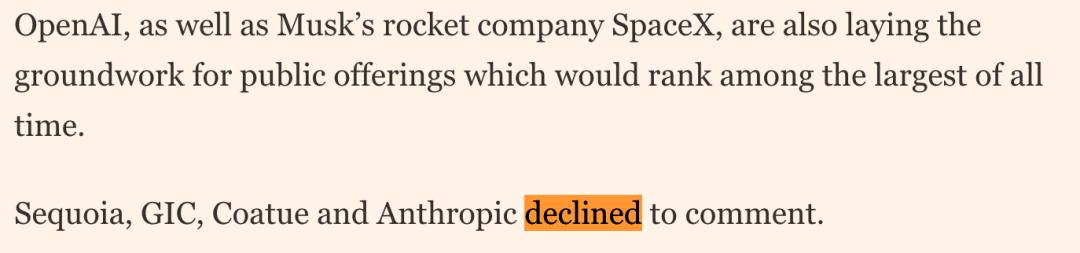
However, foreign media reported that major capital and Anthropic have all declined to comment.
There must be a reason for "betraying the investment taboo."
Perhaps there's only one reason: They can't afford to miss this race.
The Arms Race of AI Models
To understand Sequoia's "betrayal," we need to understand one thing first:
The competition of large - scale AI models is no longer an ordinary business competition but an arms race that no one dares to quit.
Anthropic's rise is obvious to all.
And Cladue Opus 4.5 has become the crown pursued in the programming world.
Whether it's using up the $200 Max Plan or Google reducing the Opus quota of Antigravity, it proves that Claude Opus is currently the number - one programming AI.
On the day when Sequoia announced its investment, various videos on the internet are proving the capabilities of Claude Code:
It can not only write code but also understand the architecture of the entire codebase, complete 70 - 80% of regular development work, independently execute multi - step tasks, and deeply integrate with Git and CI/CD systems.
Moreover, it has launched Cowork and downgraded to the Pro version, making it available to everyone.
More importantly, Claude shows a unique product philosophy.
Different from OpenAI's pursuit of an "all - powerful" route, Anthropic focuses on making AI a "reliable colleague" rather than an "all - knowing oracle."
This restraint has instead earned it great trust in the enterprise - level market