After ten years of being deeply rooted in the circular economy, Suhuishou is redefining the second-hand world.
Over the past decade, China's consumer market has witnessed a significant upgrade in its perception of "second-hand" goods. Second-hand items are no longer just the choice for price-sensitive consumers but have become a new consumption pattern.
The advent of the intelligent era has shortened the iteration cycle of electronic products. Faster functional upgrades, more frequent device replacements, and significantly improved circulation speed have propelled the continuous expansion of a large-scale second-hand market.
Data from CIC Consulting shows that, in terms of GMV, the transaction and service market size of second-hand consumer electronic devices in China reached 309.5 billion yuan in 2021, with a compound annual growth rate of 31.4% from 2016 to 2021. It is estimated that by 2026, this market size will grow to 987.5 billion yuan, maintaining an average annual growth rate of 26.1% in the next five years.
However, the expansion of the scale does not mean that the industry has fully matured. For a long time, enterprises have mainly focused on improving transaction efficiency. This approach has indeed increased the "circulation efficiency" of recycling in the short term, but issues such as pricing transparency, privacy security, and the boundary of responsibility have been neglected, and the industry's overall trust foundation remains fragile.
Against this industry background, Suhuishou has chosen a slower and longer path.
Instead of starting from traffic, it begins with the delivery method: establishing a face-to-face trust foundation through on-site service by engineers, making efficiency perceptible with clear time limits, and then gradually integrating data security, quality inspection processes, and technical capabilities into the entire recycling process.
This path is not easy, but it has shown remarkable results over the past decade.
As of October 2025, Suhuishou has recycled over one million devices in total, served more than ten million users, and achieved an annual transaction volume of 200,000 orders. Its engineer team has more than 400 members, and its service network covers over 200 cities across the country, with a daily processing capacity of approximately 10,000 orders.
At the tenth-anniversary milestone, Suhuishou is no longer satisfied with being just a service platform in the second-hand industry but has become a promoter of formulating circular economy rules. Just as its vision of "Recycling the Earth, Circulating the World" implies, Suhuishou hopes to answer a broader question: In an era when circular economy is gradually becoming a mainstream topic, what role should second-hand recycling enterprises play?
One Step at a Time in Ten Years: From "30-Minute On-Site Service" to "Safe Recycling"
On the surface, Suhuishou's tenth-anniversary upgrade is a series of enhancements to its service capabilities. However, from a strategic perspective, the core of this upgrade is not limited to the service level but is an upgrade of its industry role.
In the circular recycling market, there has long been an asymmetric dual structure: one is the platform model centered on traffic, which pursues GMV, conversion rate, and transaction scale; the other is the service-oriented platform centered on fulfillment, which cares more about asset confirmation and sustainable trust.
In low-value and low-risk transactions, the former has a natural efficiency advantage. However, in the recycling field of high-value and high-privacy-risk 3C products such as mobile phones and computers, this difference often leads to the concentrated outbreak of problems.
What Suhuishou presents at the tenth-anniversary milestone is a clear stance on this industry divide: In the high-value and high-risk recycling field, the heavy model is not the opposite of efficiency but the ultimate solution to the trust problem.
- Safe Recycling: One Step at a Time in Ten Years for Suhuishou
After establishing the advantage of "engineers arriving on-site within 30 minutes," Suhuishou did not stop at speed itself. As the market matured, it began to realize that single-point efficiency cannot form a long-term barrier, and what truly determines how far an enterprise can go is the stability of delivery.
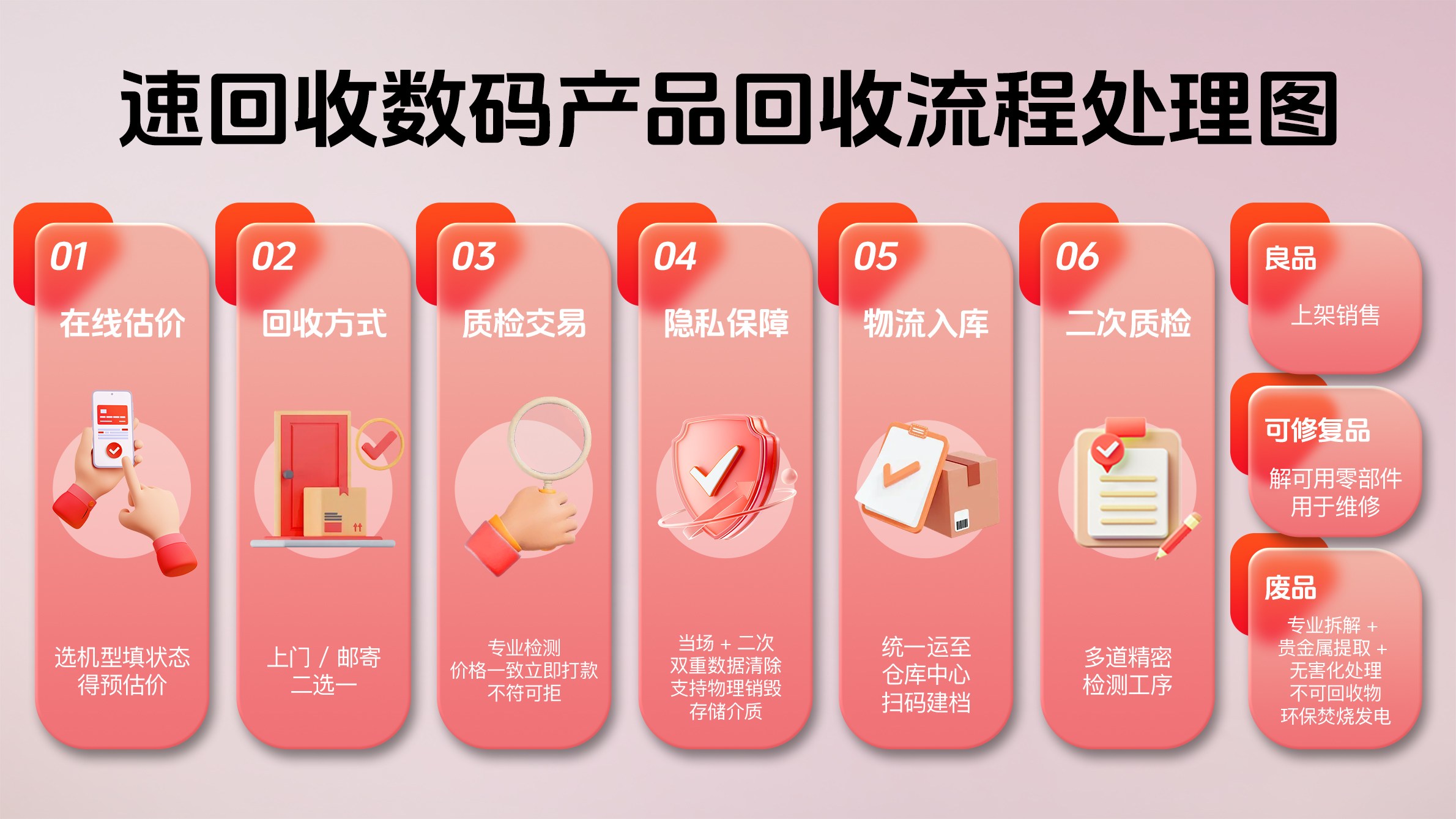
Centering on the core ability of "engineers arriving on-site within 30 minutes," Suhuishou systematically reconstructed its service process in the tenth-anniversary upgrade. The operations that previously relied on experience judgment have been disassembled into 4 major categories and 48 strictly executed service processes, covering the entire process of engineer identity verification, on-site fulfillment, device inspection, data deletion, fund settlement, and after-sales feedback, ultimately forming a set of "second-hand recycling service standards" with universal value.
In this standard system, data security is placed at the core.
For a long time, "one-click factory reset" has been regarded as the end of data deletion in the industry. However, security research has long proven that this operation does not equal complete deletion. For users, the risk of privacy leakage still exists.
At present, with the increasing prominence of carbon neutrality and resource constraints, the recycling of second-hand 3C products has become an important part of the circular economy. Since the release of the "14th Five-Year Plan for Industrial Green Development," the second-hand mobile phone market has expanded rapidly. IDC predicts that the transaction volume of second-hand smartphones in China will approach 100 million units in 2025, and the transaction value is expected to exceed 300 billion yuan. In such a trillion-level potential market, if security issues cannot be resolved, the cycle cannot truly be established.
What Suhuishou is practicing is not only physical deletion but also the protection of digital sovereignty. Through dual deletion and security certificate storage, data security has been transformed from vague "trust" into a clear "contract," allowing users to completely relieve their psychological burden and conduct transactions with peace of mind.
From a specific technical path, Suhuishou has established a security system of "dual deletion + full-process evidence storage": Engineers conduct on-site preliminary deletion when they arrive at the user's location. After the device enters the closed quality inspection center, it undergoes secondary in-depth processing through a physical-level deletion technology that complies with the NIST 800-88 international standard, and a traceable "digital passport" is established for each device, laying the foundation for future compliance with international regulations and global circulation. To support the long-term operation of this system, the platform has established an independent information security management mechanism, disassembling the security process into multiple mandatory nodes that cover the entire delivery chain. This choice of actively increasing complexity also constitutes a threshold that is difficult to be simply replicated.
To support the long-term operation of this system, Suhuishou has established an independent information security management mechanism internally and disassembled the security process into multiple mandatory nodes, covering the complete chain from user information, engineer identity, device inspection, deletion execution to post-event follow-up. For a platform known for its efficiency, this is a choice of actively increasing "complexity," but it also constitutes a threshold that is difficult to be simply replicated.
On this basis, Suhuishou has also proposed a "privacy leakage compensation" commitment, transforming technical capabilities into clear boundaries of responsibility.
- "30-Minute On-Site Service": It's Not Just About Speed
Simultaneously with the upgrade of the security system, there is a redefinition of "speed."
In Suhuishou's service standards, "30-minute on-site service" is a system efficiency supported by algorithm scheduling, regional density, and data processing capabilities. The background system schedules the engineer network in real-time through algorithms; in addition to introducing an AI-assisted valuation mechanism for manual valuation, engineers conduct on-site re-valuation; the background system synchronizes valuation and risk control judgments, making Suhuishou's "speed" a barrier that is difficult for others to replicate.
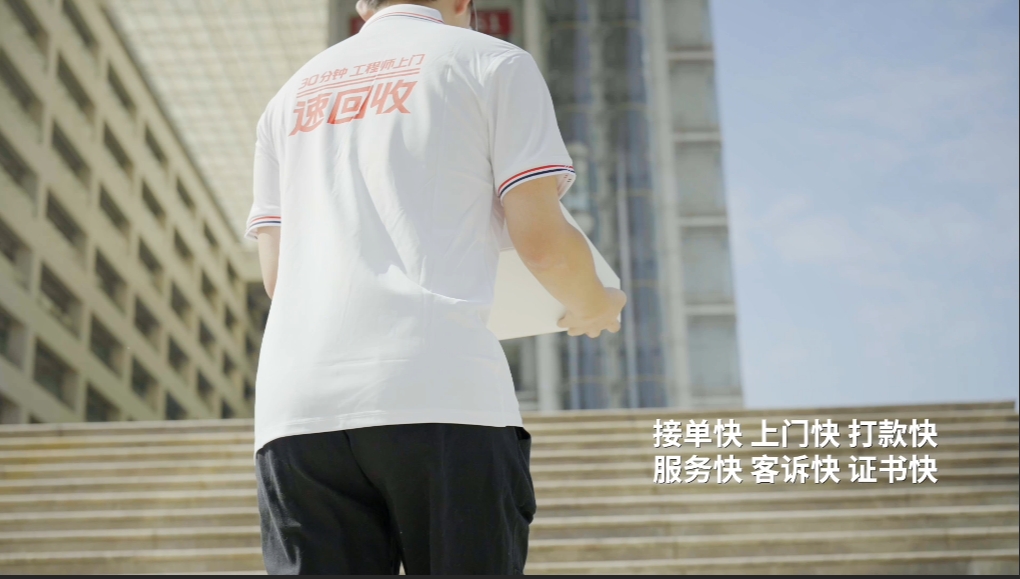
On this basis, Suhuishou further disassembles efficiency into quantifiable service commitments: "Arrival of funds within 5 seconds," "Fastest 15-minute handling of customer complaints," and "Sending of information deletion certificates within 48 hours." Among them, "Arrival of funds within 5 seconds" has saved a total of 660,000 hours for ten million users; in an ideal scenario, professional recycling can be completed within 30 minutes at the fastest, saving users at least 1.5 hours compared with store recycling.
Through cooperation with Alipay, users can enjoy the prepayment service after placing an order on the Alipay mini-program, relying on the Sesame Credit system for evaluation. This measure transforms efficient transactions into a stable experience, accurately responding to users' needs for capital turnover and efficient transactions, and providing a better delivery experience.
In this system, engineers are not just executors but carriers of trust. This is also the core value of Suhuishou's "heavy model" path: replacing the long-term industry reliance on experience and game theory with verifiable and accountable system capabilities.
Overall, what Suhuishou has achieved at the tenth-anniversary milestone is not simply a brand refresh but a systematic upgrade around how to establish security, efficiency, and responsibility in the circular economy.
Breaking the Deadlock: Where Does the Confidence and Ability to Support the Upgrade Come From?
The real threshold for Suhuishou to leap from a second-hand recycling company to a circular technology platform has never been on the demand side but on the delivery side.
There is no shortage of participants in this industry, and it has long been in a highly competitive stage. What truly determines the gap is who can maintain stable fulfillment after scale expansion. The scheduling, process, and risk digestion capabilities are the basic skills that require time to precipitate.
The reason why Suhuishou has survived the ten-year storm and evolved from the early stage of the wild-growing industry to the current stage of industry iteration is not that it achieved a large scale earlier but that it realized earlier that recycling is a business that must adhere to long-termism.
This judgment is not a post-event summary but comes from the very early industry experience. In 2005, when Suhuishou's founding team entered the second-hand 3C recycling field, they found that the overall competition in this field mainly revolved around information and channel gaps. What truly determined the difference in user experience often occurred at the fulfillment site: the professional judgment, bargaining ability, and service level of engineers. This also made the team gradually realize that if delivery relies on individual capabilities for a long time, recycling will be difficult to become a service that can be stably replicated.
Therefore, ten years ago, the team moved south to Shenzhen, and Suhuishou began to operate as an enterprise, and its path became clear: from Huaqiangbei to Yuehai Sub-district Office, from B2B transactions to corporate operation, and from stall experience to organizational capabilities.
At this stage, Suhuishou established a principle of "efficiency first": In addition to the traditional way of mailing back and forth, it offers on-site evaluation and transactions. In Suhuishou's view, efficiency is one aspect, and "face-to-face communication is the primary condition for building trust."
On-site service means higher fulfillment costs, a more complex scheduling system, and limited business growth in the early stage. However, Suhuishou's judgment is clear: In a non-standard industry that requires standardization, only by completing the process of device inspection, pricing, and transaction in a visible scenario can trust not rely on explanation but on the delivery itself.
The real turning point came after long-term accumulation.
Centering on on-site fulfillment, pricing mechanism, quality inspection process, data deletion, and fund settlement, Suhuishou established a set of operating specifications, which gradually precipitated into a reusable "Suhuishou standard." This standard is not only the internal operating logic of the enterprise but also provides an executable framework for the entire industry to refer to and align with.
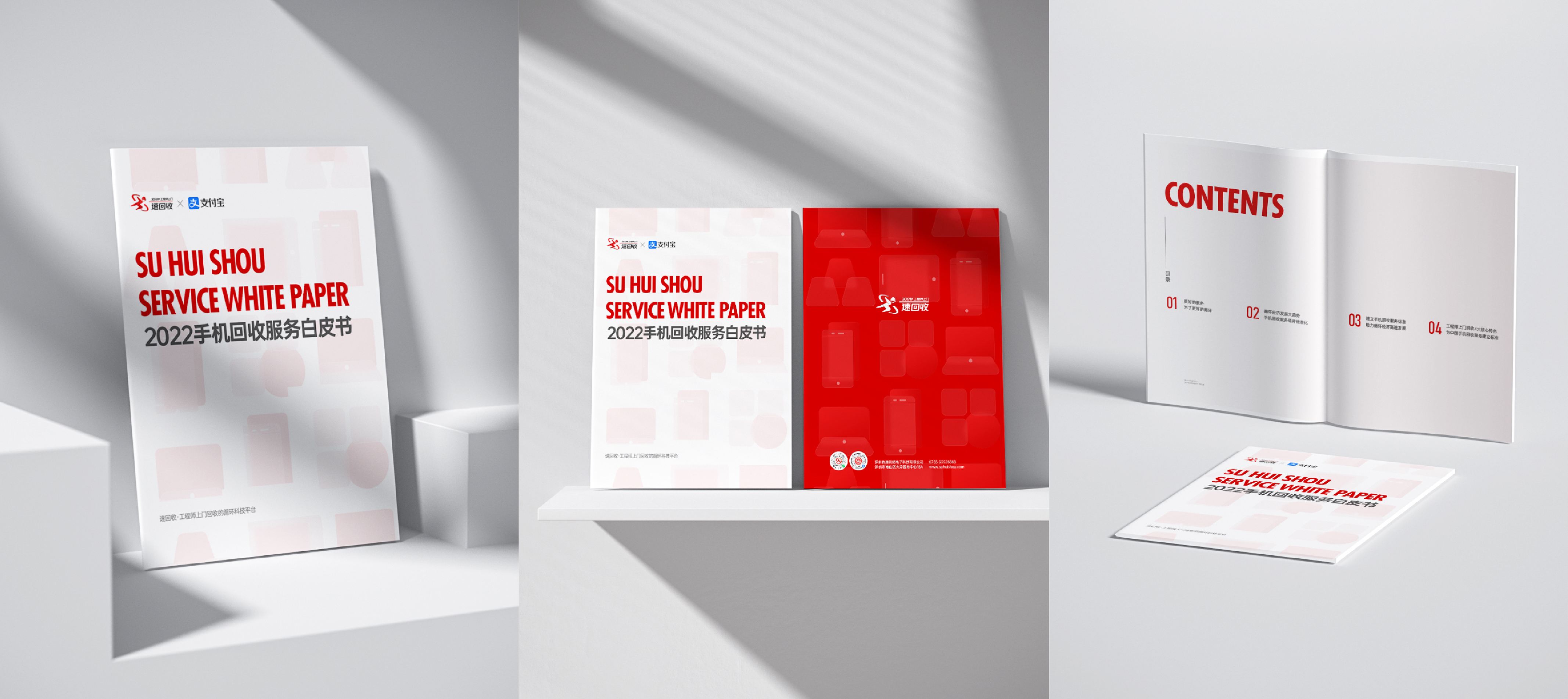
This role has also been strengthened in the industry-level co-construction. In 2022, Suhuishou jointly released a white paper on the second-hand industry with Alipay and carried out strategic cooperation on old device replacement with operators such as China Mobile and China Telecom. This means that it is not only a practitioner of the rules but also begins to participate in the co-construction process of the rules, becoming a promoter of transforming individual experience into industry consensus.
At the supply chain level, Suhuishou no longer stops at front-end recycling but extends to intermediate processing and back-end circulation, constructing a closed-loop structure of "recycling - inspection - grading - re-circulation." In this system, recycling is no longer the end but the starting point for the device to enter a new life cycle.
At the operational level, Suhuishou has chosen a path that emphasizes execution discipline. The construction of the engineer corps and the service efficiency of on-site service within 30 minutes have become the core structure to ensure service consistency.
At the strategic level, Suhuishou has not chosen to blindly expand product categories but continues to deepen and expand around its most mature and certain 3C recycling system.
While adhering to core product categories such as mobile phones and computers, Suhuishou is extending its capabilities to new 3C terminals such as AI hardware and smart wearable devices. These devices are highly similar to traditional consumer electronics in terms of valuation complexity, privacy sensitivity, and usage scenarios, and also place higher requirements on detection capabilities, pricing models, and data security.
Choosing this direction is not about chasing concepts but a natural extension based on existing capabilities: When algorithmic pricing, on-site fulfillment, quality inspection and grading, and secure deletion have formed a stable closed-loop, the boundaries of 3C products are also changing with technological evolution. What Suhuishou does is to make the recycling system always ahead of the changes in device forms rather than passively chasing them.
It is not difficult to find that Suhuishou has verified through its practice that second-hand recycling can also achieve scale and standardization. At the tenth anniversary, Suhuishou has chosen to enter a redefinition stage based on its stable delivery capabilities and recreate a second-hand circular world.
From Electronic Waste to "Urban Mines": Recycling is Becoming a Resource Security Issue
Currently, if we look at the recycling industry chain, we will find that what it is doing is no longer just the re-circulation of single devices but a whole set of resource reorganization processes covering multiple categories such as 3C digital products, household appliances, clothing, and even new energy equipment and scrap steel.
The "2024 Global E-waste Monitor (GEM) Report" shows that the global electronic waste generation reached 62 billion kilograms in 2022, and only 22.3% of it was formally recycled in an environmentally friendly way. The rest of the large number of devices are still in a state of idleness or non-formal recycling. The situation in China is also prominent. According to the calculation of the China Circular Economy Association, the average mobile phone replacement cycle of Chinese people has been shortened to 28 months, and more than 400 million used mobile phones are generated every year, with a stock of more than 2 billion. A large amount of reusable resources have not entered the standardized system.
