Elon Musk, the "First Man of Brain-Computer Interface," Makes a Stunning Revelation! Online Upgrade without Craniotomy, the Code for Immortality Has Been Written
[New Intelligence Yuan Introduction] Musk's "brain-computer pioneer" reveals that the brain can be "upgraded online" without craniotomy. A single version iteration can fix bugs, comparable to Tesla's OTA. Now, Altman has also entered the game.
It's even more science - fiction than science - fiction!
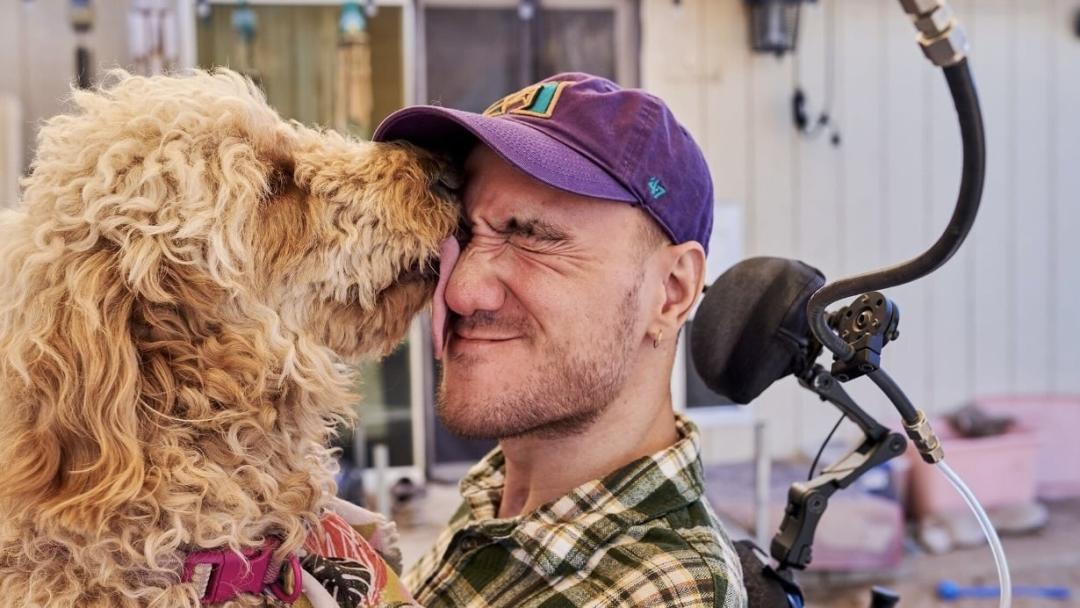
Noland Arbaugh, the first person involved in Musk's "brain - computer" project, personally reveals that the brain can be "upgraded online" without surgery.
Put it this way, the upgrade of the brain chip is similar to Tesla's OTA.
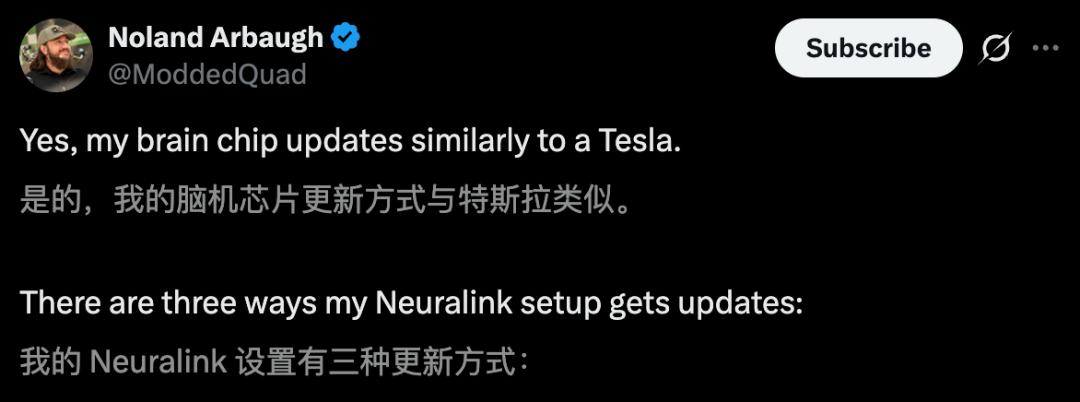
Currently, Noland's Neuralink device evolves continuously mainly in three ways:
"Telepathy" application
Over - the - air (OTA) wireless update of the implant firmware
Iteration of the implant itself
Shockingly, this is the first time in human history that the brain can be "infinitely iterated" like a mobile phone or a car system.
When there are bugs, there's no need for craniotomy. A single version update can fix them completely!
Can performance really be improved just by "pushing updates"? Is it the real "cyborg immortality"?
Moreover, now even Altman is following Musk's footsteps...
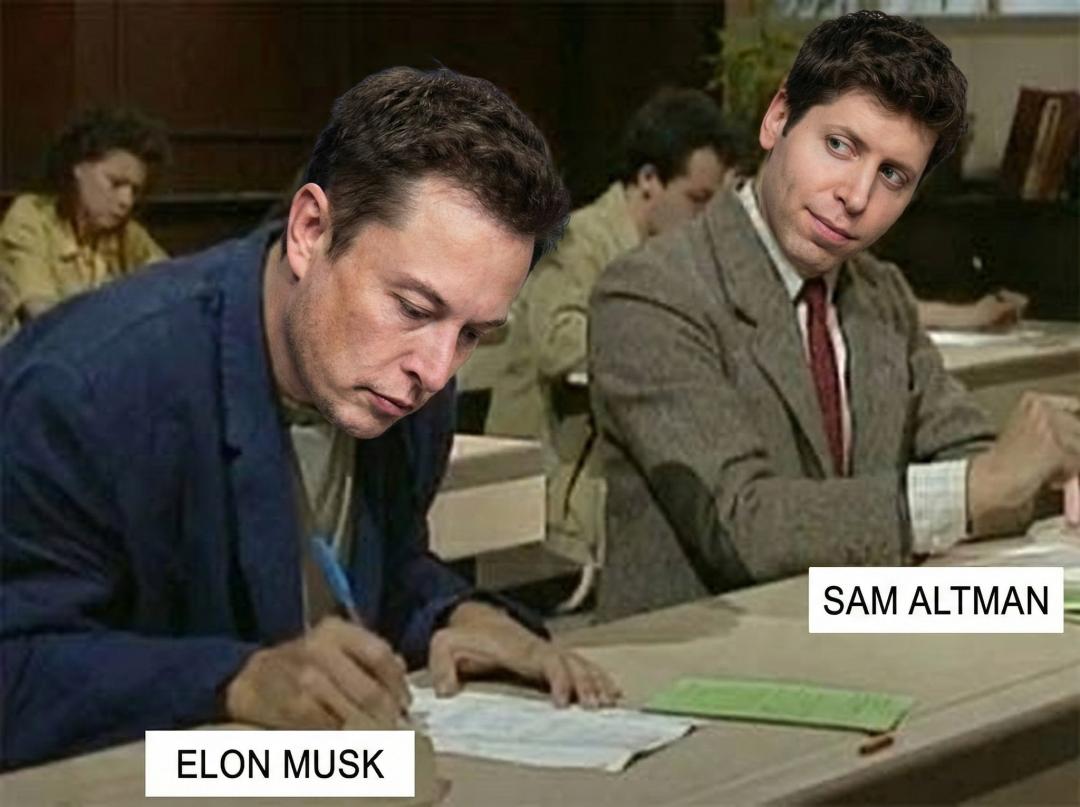
A Silicon Valley startup, Merge Labs, which was quietly established several months ago, has now been exposed and has successfully raised $252 million in a seed - round financing from venture capital firms such as OpenAI.
Altman is one of the founders, and he co - founded it with several top researchers like Alex Blania.

The first cyborg reveals:
Online brain upgrade, the human 2.0 version
Noland Arbaugh is the first human subject of Neuralink and the owner of the first - generation N1 implant.
This time, he rarely speaks up and personally shares his real - life experience with the brain - computer interface, shocking the entire internet.
Yes, the way my brain chip is updated is very similar to that of Tesla.
As soon as he said this, science - fiction became a reality. Three "hard - core" methods can complete the update with a single click.
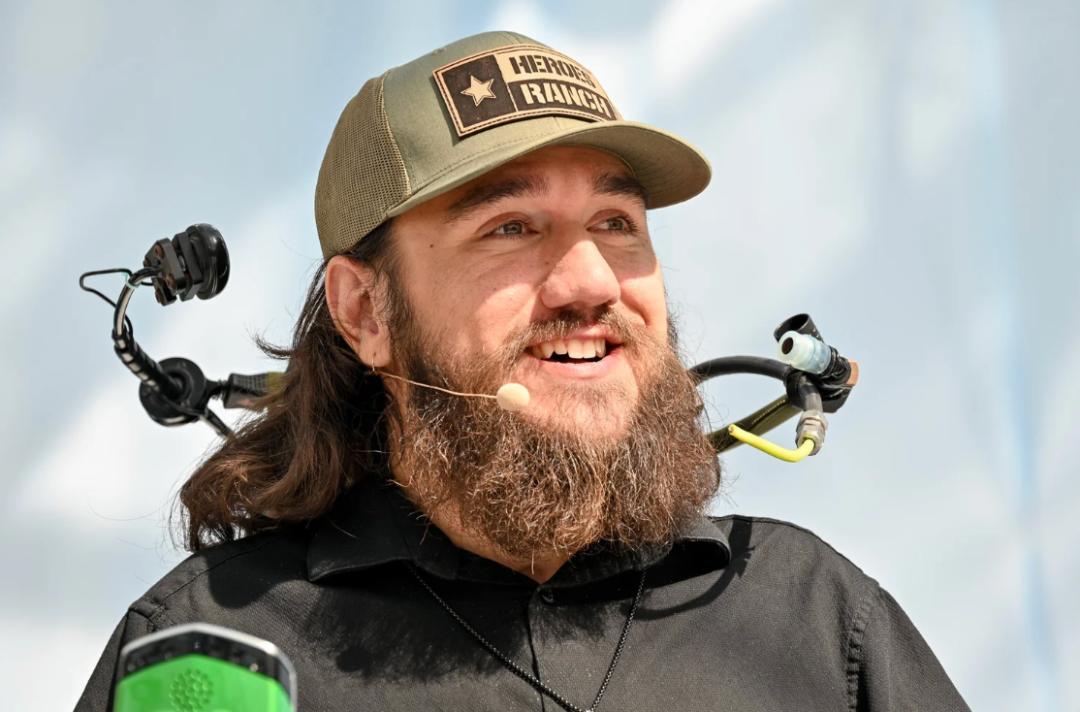
1. The exclusive APP "Telepathy"
The Neuralink team has developed an exclusive application called Telepathy, which can run on both mobile phones and computers.
In fact, this is the "control center" for Noland to interact with the world using his mind.
Telepathy decodes the collected neural signals into "control instructions" that computers and mobile phones can understand, allowing patients to control devices like using a touchpad.
This APP, like ordinary mobile apps, regularly receives updates from the cloud to continuously optimize the interface, interaction experience, and data presentation.
2. Firmware of the implant, a real online upgrade
Next, here comes the most hard - core part:
The chip in Noland's brain runs a firmware that can be updated wirelessly (OTA).
Moreover, there's no need for a second surgery!
Neuralink can directly push updates in the background to improve the signal - processing ability and system stability of the N1 chip, and even fix bugs.
Noland himself experienced this process: a few weeks after the surgery in 2024, 85% of the implanted electrode wires detached from his brain.
At that time, many people thought the experiment was doomed, and even Noland was mentally prepared to have the chip removed.
Unexpectedly, the expert team immediately improved the "signal recording" algorithm, instantly enhancing the sensitivity of the remaining 15% of the electrodes.
After Musk "extended the life" of the hardware with software, the problem disappeared.
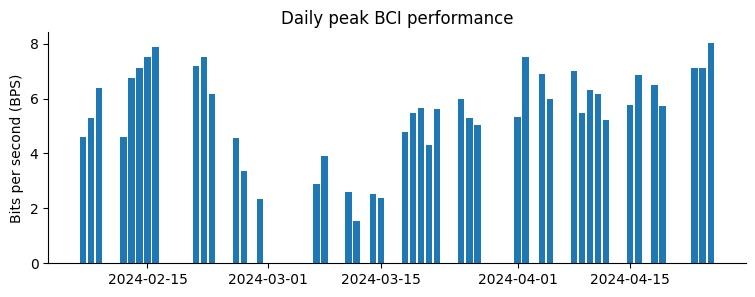
After a firmware update in March, the BPS (bits per second) performance even exceeded the level when all electrodes were intact.
Noland revealed that these updates significantly increased the cursor movement speed, and the whole process was wireless.
This feeling is almost the same logic as the well - known Tesla OTA updates.
It's just that the object of the upgrade is now the human brain.
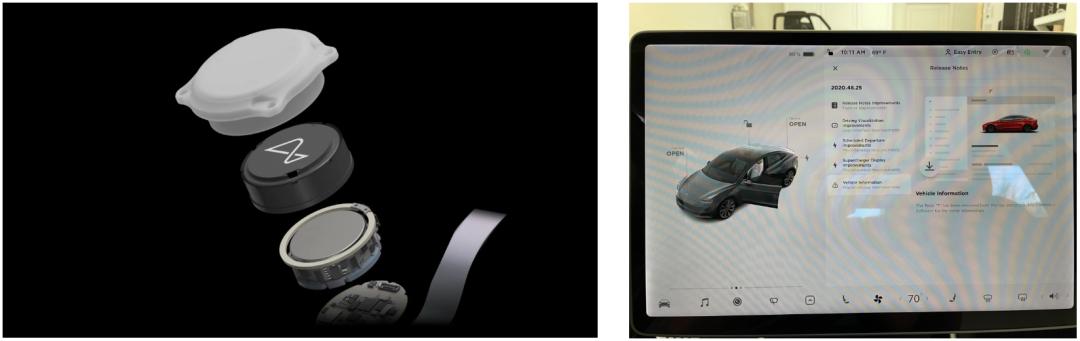
When seeing the Tesla online upgrade screen, it's like suddenly understanding the concept of "brain OTA".
3. Hardware iteration, pure physical replacement
The N1 implant is Neuralink's first - generation product. Currently, more advanced versions have also been introduced.
Noland said that theoretically, in the future, the old chip can be replaced with a new one through a single surgery.
Moreover, he excitedly said, "I definitely want to do it again."
If there's a chance to upgrade to the next - generation chip or have a "dual - chip implant", Noland will not hesitate to sign up again.
Even more surprisingly, in an interview, Noland revealed some important details. The whole surgical process is far less terrifying than people imagine:
This surgery was so easy.
The Neuralink experts said they would observe me for 23 hours after the surgery.
I said, "Are you sure? I just had brain surgery. Don't you want me to stay for more than a day?"
They said, "No, you're fine. Go home."
I was discharged from the hospital less than a day after the surgery and went home without even taking a painkiller.
Craniotomy and electrode insertion are as quick as a "blink of an eye", the next - generation dual - chip
Perhaps it's true that in the future, brain - computer interface surgeries can basically achieve recovery within a day after the operation.
Last month, DJ Seo, the president of Neuralink, said in a speech that the new surgical robot can perform "craniotomy and electrode insertion" quickly and accurately.
The insertion time for a single electrode has dropped from 17 seconds to 1.5 seconds, which is as fast as a blink of an eye.
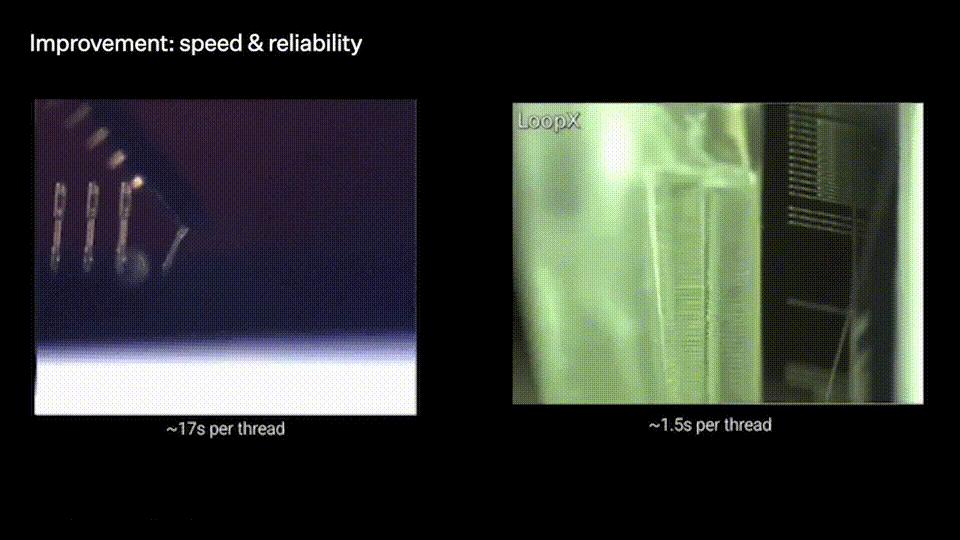
The most crucial part is the iteration of the electrode chip. Another British BCI patient, Jon L. Noble, introduced some differences between his implant and Noland's.
By the way, they both have the N1 implant. The differences are as follows:
Early implant: 64 ultra - fine threads, each with 16 electrodes, totaling 1,024 recording channels
New - generation implant: 128 ultra - fine threads, each with only 8 electrodes, and the total number of channels is still 1,024
As we can see, the total number of channels remains the same, but the distribution method has become much smarter.
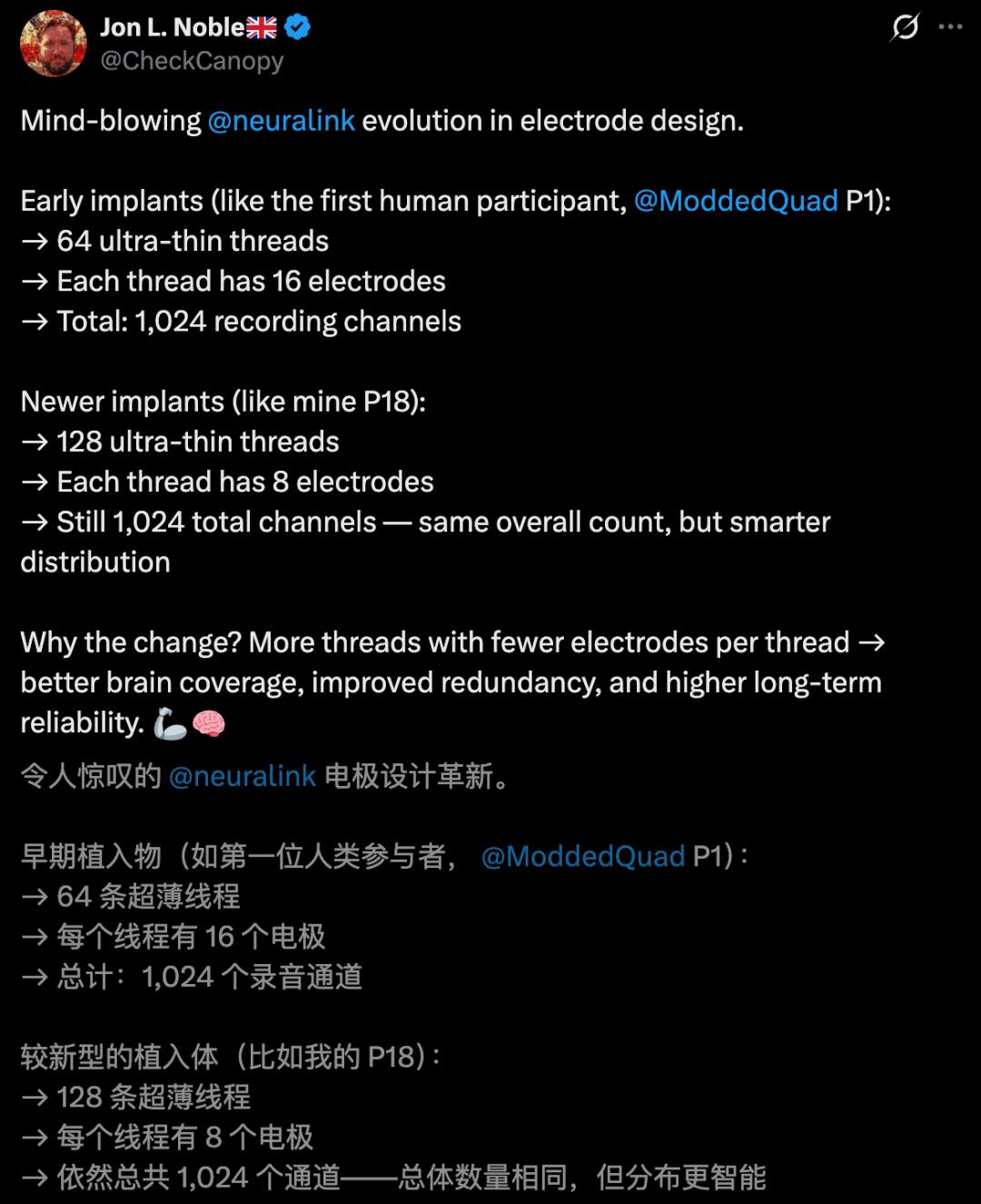
More threads + fewer electrodes can provide a larger brain coverage area, stronger redundancy, and higher long - term reliability.
This means that even if some threads have problems in the future, the entire system can still maintain high performance, just like adding more "backup routes" to the brain.
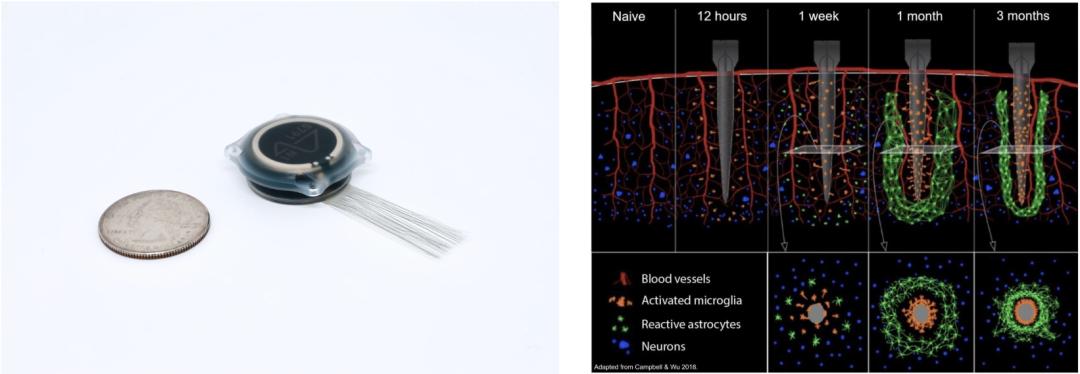
The surgical robot inserts the implant electrode wires (left) into the brain. The thickness of each thin wire is only one - tenth of a human hair.
Currently, about 20 patients have completed Neuralink's brain - computer surgeries.
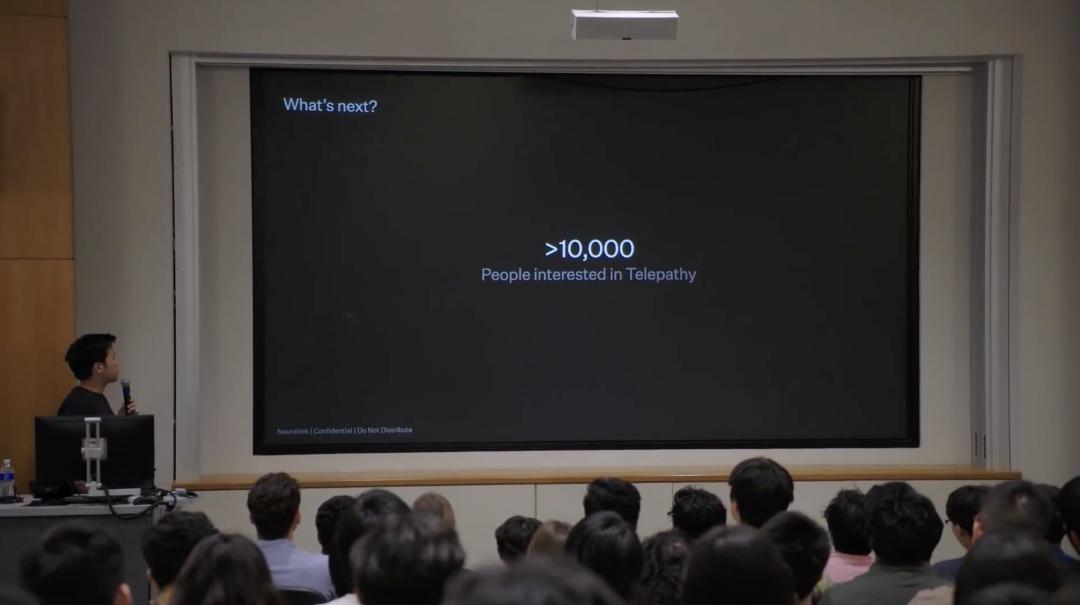
Moreover, more than ten thousand people around the world are queuing up to access the brain - computer interface.
Dual - chip interconnection, inserting another chip into the spinal cord
Compared with the access of the first - generation chip, the next - generation "dual - chip configuration" is the real highlight.
Musk personally admitted on social media that Noland might be the first person to try the "dual - chip" setup.
Since it's a dual - chip setup, one is implanted in the brain. Where should the other chip be placed?
The current plan is to implant one chip in the brain to "capture intentions" and insert another chip below the spinal cord injury site.
This Brain - Spinal Interface (BSI) design concept is very hard - core: it aims to build a "digital bridge" between the damaged nerve segments.
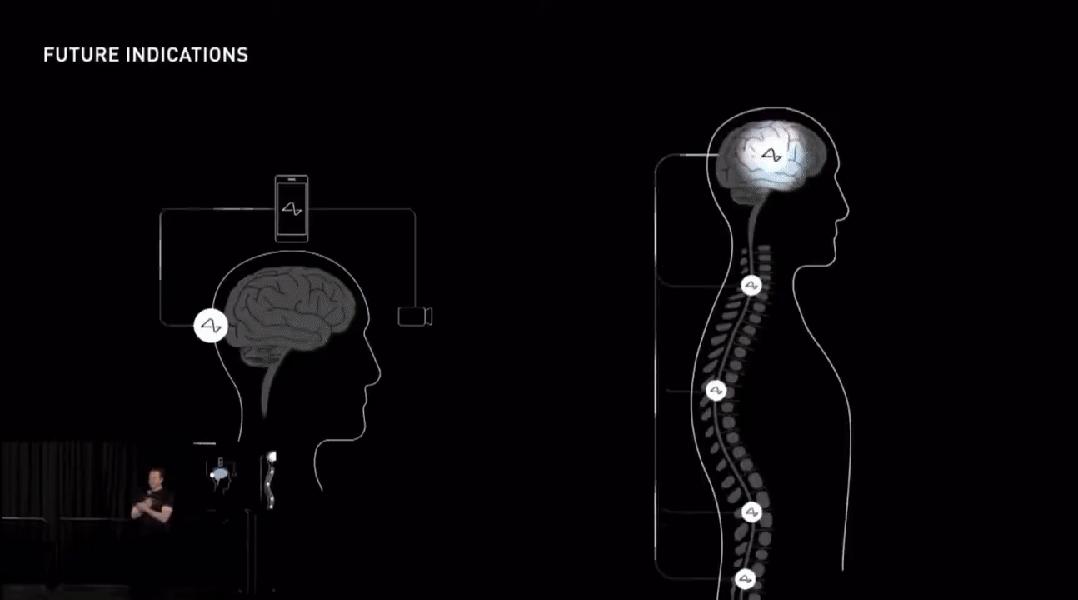
When the brain sends a signal to "walk", the chip wirelessly transmits the instruction directly to the spinal cord, bypassing the broken "cable" to stimulate the muscle group.
Simply put, it allows the brain's "walking instruction" to bypass the damaged segment and directly drive the legs.
Even Noland Arbaugh himself excitedly said that the two - way connection between the brain and the spinal cord is a real "closed - loop" recovery.
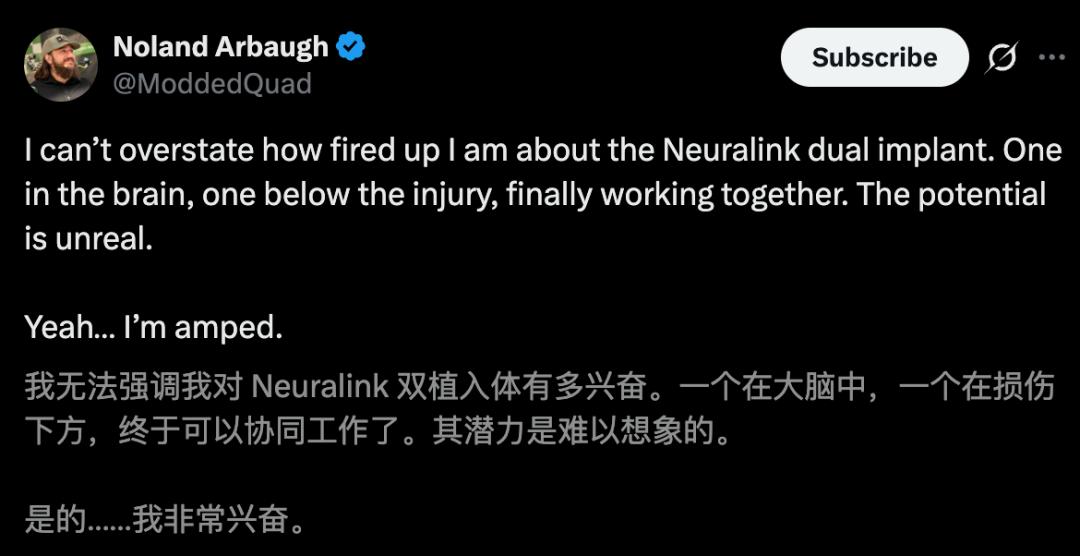
It's truly significant that it can enable paralyzed people to stand up again. Even Musk is convinced that it's possible to restore full - body function.
