In the era of credibility for new energy, who will guarantee the "authentic experience"?
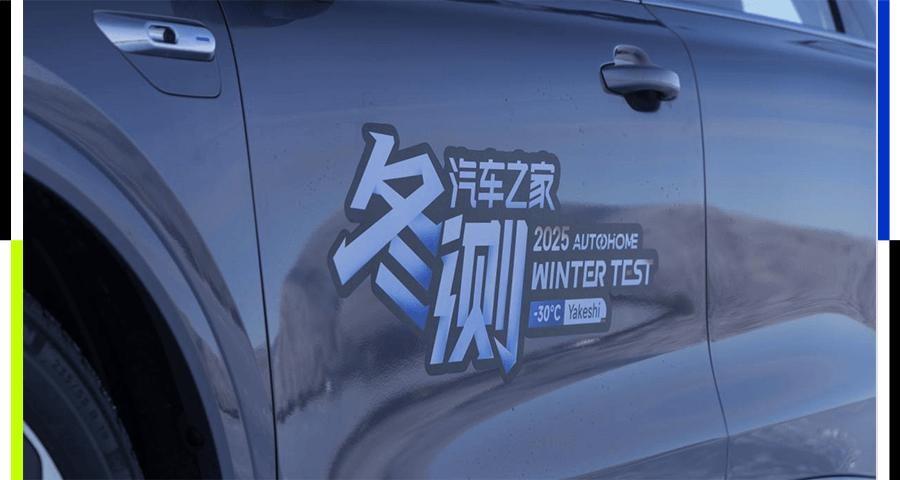
How did a new energy winter test trigger a butterfly effect?
On January 5th, a live-stream preview that shattered the industry's pretense topped the Weibo hot list. A "self-mocking" video posted by an original account of Autohome brought the most common and harsh question in the automotive media comment section - the word "paid promotion" - into the spotlight.
Instead of avoiding the doubts, Autohome used them as a starting point for industry discussion. That night, during the live stream of "100 Questions about the Winter Test" on Autohome, they responded one by one to the users' questions raised by the recent winter test: "Was it a paid promotion?", "Why not conduct the winter test in the Arctic!", "What are the rules for this year's range test?"
During this three-hour Q&A session, Autohome, as a professional platform media, responded directly to the long-avoided but persistent trust issues in the automotive industry's testing from multiple dimensions, including range, charging, air conditioning, safety, performance, and off-road capabilities.
Compared with simply presenting the rankings and test data, Autohome's "100 Questions about the Winter Test" was more like a rare public review, comprehensively dissecting the design logic behind the winter test. This live stream, which dared to show all the cards, also sparked discussions in the new energy industry, with the real-time online number on Douyin reaching nearly 20,000 at its peak.
It was also from this live stream that Autohome shifted the focus of the new energy winter test to a bigger question - Why, in the current era, do we still need the media to conduct large-scale and repeatedly verifiable vehicle tests?


Automobile manufacturers' tests
are increasingly unable to effectively build user trust
If you take a long-term view, you'll find that the current new energy industry is keen on an "extreme narrative".
Whether it's crossing the Taklimakan Desert, challenging the extreme altitude of the Qinghai-Tibet Plateau, or the first landing on the Antarctic continent - when the new energy industry starts to pursue the upper limit of technology, these tests initiated by automobile manufacturers have unconsciously evolved into a series of marketing events to attract traffic.
This is not to deny the value of tests in extreme environments. However, in 2025, when the penetration rate of new energy vehicles in China is close to 60%, there is a natural mismatch between these tests and the real vehicle usage needs of ordinary users.
The core goal of automobile manufacturers' tests is to verify product capabilities. Whether it's extreme condition tests or durability verification, their value lies in confirming whether the vehicle meets the standards. These tests are crucial for engineering teams, but in terms of communication, the stance of automobile manufacturers determines the presentation of test results, which often emphasizes the upper limit of capabilities.
The problem is that in the popularization stage of new energy vehicles, what users need is no longer just how fast a car can run per 100 kilometers, but rather more fundamental questions: Is it stable, easy to use, and trustworthy under daily usage conditions? In this core question, today's consumers can no longer fully rely on automobile manufacturers to provide credible answers. Especially in the stage when there are continuous disputes over intelligent driving safety and the range of new energy vehicles generally shrinks in winter, a third-party evaluation system with credibility is the very meaning of media tests.
Autohome's winter test is a worthy reference sample at present.
It doesn't focus on a single indicator or extreme performance. Instead, it starts from the real winter vehicle usage scenarios of users and constructs a set of six core dimensions, including performance, safety, range, off-road capabilities, air conditioning, and reliability. Through 12 standardized tests, it disassembles the real performance of new energy vehicles in cold environments into a comparable and verifiable result system.
Behind this systematic test and system standard lies Autohome's two-decade professional experience in the automotive content field and a test methodology that can stand the test of time. Based on this, Autohome can assume the role of a third-party "scale setter" and provide a trustworthy reference between the technical narrative of manufacturers and the real feelings of users.

In the era of fragmented information,
credibility is scarcer than traffic
The establishment of trust in new energy vehicles is no longer just about automobile manufacturers themselves, but also the entire automotive media ecosystem.
Take the "pre-winter test" event that happened in October last year as an example. After Autohome released the winter range test results of three electric vehicles - Xiaomi YU7, Li I6, and Tesla Model Y, a fierce online discussion about "whether 10 degrees Celsius can be called winter" emerged.
The supporters believe that 10°C covers the real vehicle usage scenarios in many regions of China and has reference value for southern users. The opponents, however, think that directly naming the 10°C test as a "winter test" has the problem of concept ambiguity. This disagreement has dragged the concept of "winter test", which should have a professional explanation, into the gray area of public opinion and marketing.
This kind of controversy around the "pre-winter test" is not aimed at a single test itself, but rather reflects the new energy industry's re-examination of test standards, credibility boundaries, and communication boundaries during its rapid development: Is the test environment real? Are the test conditions fair? Can the conclusions stand up to review? What exactly is the accurate concept of a winter test?
As these questions are constantly magnified, traffic may still create a lot of noise, but what is truly scarce is a basis for judgment that can be trusted in the long term. Especially in a content environment dominated by algorithms, this credibility becomes even more fragile.
To reshape the credibility of the automotive media ecosystem, Autohome chose to take the initiative and spent tens of millions to conduct a new energy winter test.
The slogan "Get serious about the cold and tell the truth" is more like self-pressure from this professional automotive media. It posted posters through its official account to show its attitude, and recorded the entire test process through videos, actively putting the test process under the supervision of the whole network and returning the right of judgment to the public.
This choice means high costs and high risks. To avoid any doubts about the fairness of the test, Autohome rented all the participating vehicles uniformly to ensure that they were all mass-produced models that consumers could normally buy at 4S stores, eliminating the possibility of "specially tuned cars" from the source. After all, once the vehicle source is not independent, the fairness of the test will be weakened from the very beginning.
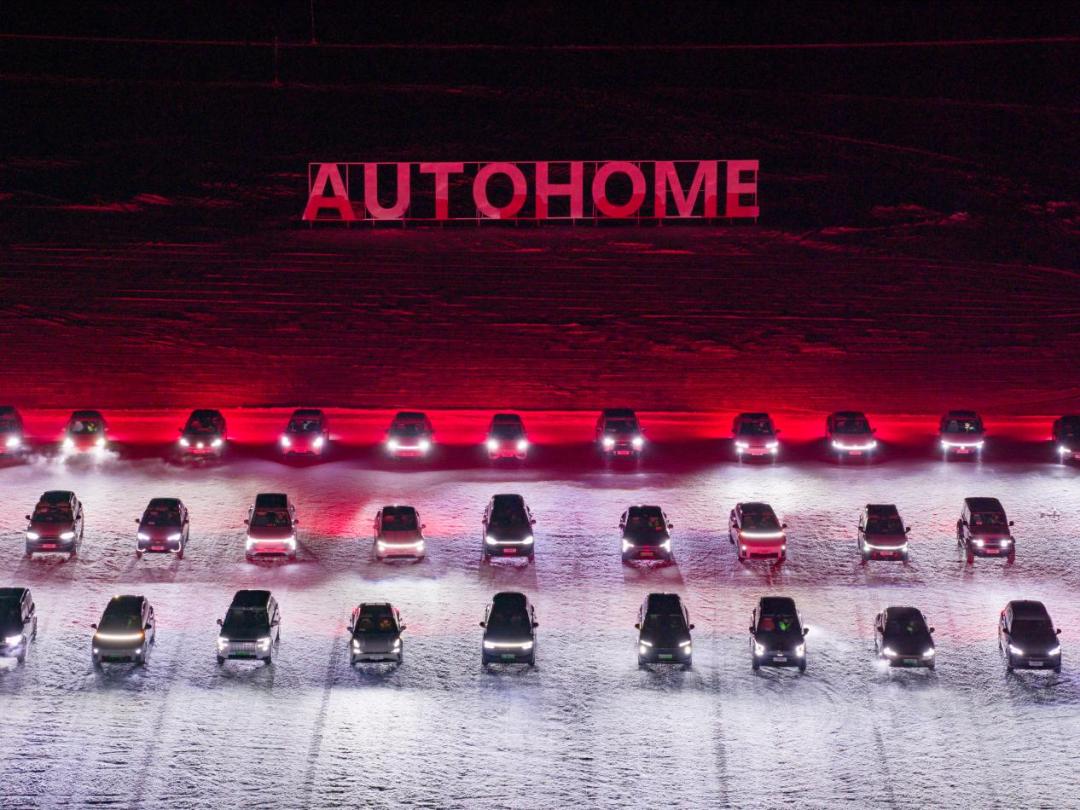
The same logic is also reflected in the setting of test conditions. Autohome built an ice and snow test site of about 800,000 square meters and completed the standardized test process in the same site. All vehicles used snow tires from first-tier brands such as Michelin, Pirelli, and Continental, with the same size as the original ones and the tire pressure recommended by the manufacturer. The models were divided into groups to level out the external variables in the test as much as possible.
The essence of these almost "harsh" unified standards is to achieve one goal: Make the final presented differences point as much as possible to the product itself, rather than the interference caused by condition differences.
In terms of samples, this winter test covered 67 mainstream and popular models. The significance of large-scale testing lies in diluting the contingency of a single vehicle's performance with a large enough sample size, avoiding over-interpretation of individual results, and thus providing users with a more stable and reusable basis for judgment.
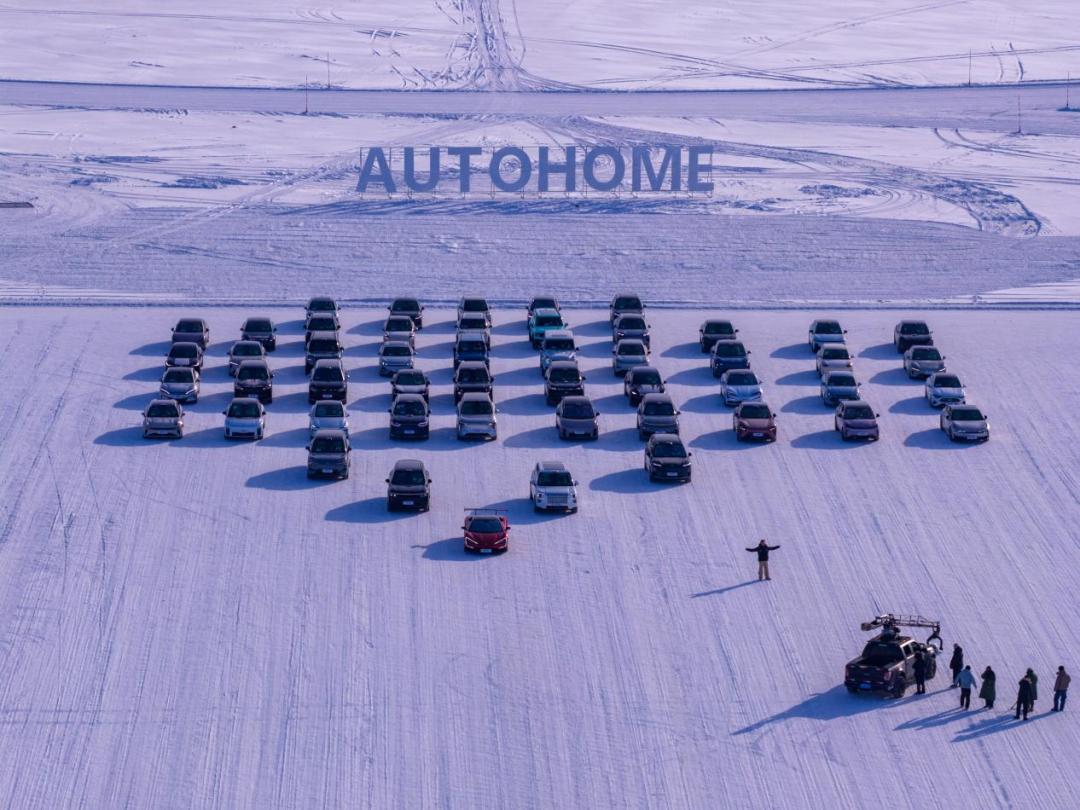
"Get serious about the cold and tell the truth" is not an easy slogan. Behind this winter test is the real investment of a team of more than 200 people over a month. Its final certification by Guinness as the "largest on-site automotive winter test" also confirms the objective difficulties in terms of scale, complexity, and execution cost of this test from the side.
Only the "seriousness" based on real investment and a transparent mechanism can be transformed into the truly scarce credibility in the new energy industry in the era of fragmented information.

Behind the new energy winter test
is a battle for user trust
In the current new energy industry, there is a huge gap between user perception and professional judgment.
Battery, electronic control, intelligent driving, OTA upgrades - these technologies have not been translated into a language that users can understand, but rather compressed into marketing slogans like "XX leading". Most users who buy new energy electric vehicles for the first time don't even know how much range reduction in winter is normal.
This has also led to the fact that any test that seems less rigorous and has inconsistent standards will be quickly magnified and turn into doubts about the credibility of the entire new energy industry. As in 2023, an extreme environment winter test initiated by a certain platform triggered public doubts from many automobile manufacturers and their executives due to disputes over test boundaries and methodology.
From the perspective of the entire industry, the reason why winter tests often trigger disputes is not simply a technical difference, but a long-term battle around how user trust is established and verified.
In the popularization stage of new energy vehicles with rapid penetration, users' judgment of vehicle performance increasingly relies on the "external scale" provided by third-party tests. Once the test standards are vague and the methods are not transparent, disputes are inevitable, and trust will also collapse.
But why does Autohome still insist on conducting large-scale tests under such pressure and risks? The answer is: to win back user trust.
Back in 2005 when Autohome was founded, the channels for car purchase information were relatively limited, and the car purchase experience highly relied on 4S store sales guides, print media advertisements, and word-of-mouth. The opaque prices, asymmetric information, and long decision-making cycle made it full of difficulties for the general public to buy a car.
In the era when portal websites dominated information distribution, Autohome, as one of the earliest vertical automotive media platforms in China, began to transform the automotive consumption chain with content. Twenty years later, Autohome has not only witnessed the popularization of automotive consumption in China but also accompanied several generations in car selection, purchase, and usage.
Especially in the second half of 2025, Autohome's platform actions accelerated significantly. In September, Autohome hosted the Global AI Technology Conference, jointly discussing the in-depth integration path of artificial intelligence and the automotive industry with industry experts and ecological partners. In November, through the Creator Conference, Autohome further activated the content production side, attracted top creators to participate, and promoted the evolution of the platform's content ecosystem towards a more open and diverse direction.
During the Double 11 period when traffic is highly concentrated, Autohome chose to compete head-on with its main competitors, directly comparing the platform's capabilities and trust foundation in real tests and user decision-making scenarios. At the end of December, Autohome brought the new energy competition back to the long-term trust building with a "truth-telling" winter test.
Has Autohome changed? To some extent, it has. It chose to respond directly to those long-existing doubts and actively moved towards a more open and transparent way of expression, promoting its platform transformation from content to service.
To some extent, it hasn't changed either. From "car viewing" to "car buying", and then to "car using" and "car changing", Autohome has always been user-centered, guiding user decision-making with content, connecting the consumption loop with transactions, and fulfilling experience commitments with services. For users, it is no longer just an information portal, but a trustworthy and reliable automotive consumption center.

In an era when traffic and emotions dominate information dissemination, truth itself is scarce, and consumers need a real, fair, and just winter test. This path may not be the fastest, but it is important enough. As for how far this path can go, the answer lies not in slogans but in Autohome's future practices.