余承东发飙,狠批鸿蒙座舱愚蠢
Sure enough, self - criticism from one's own people can be the harshest!
Recently, a screenshot of Yu Chengdong, an executive director of Huawei, losing his temper in a work group was exposed. He severely criticized the functional development of the Hongmeng cockpit with very sharp words.
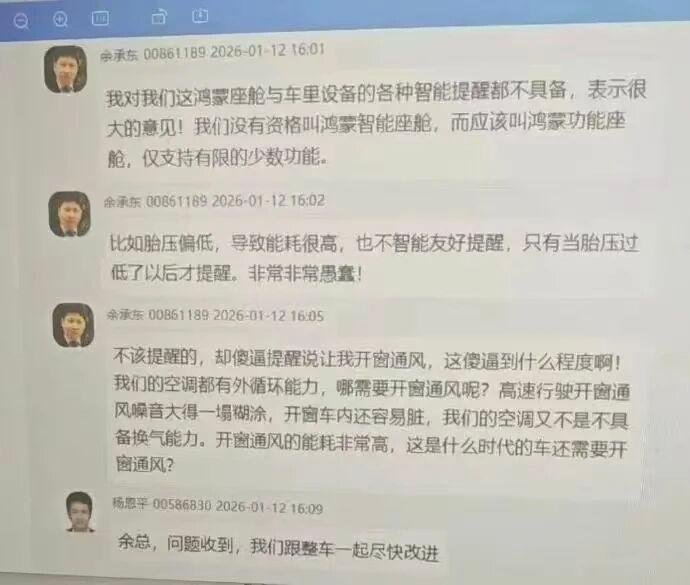
In his opinion, the current system only has some basic operations and completely lacks the ability of active intelligent reminders. "We don't even have the qualification to call it the Hongmeng Intelligent Cockpit. It should be called the Hongmeng Functional Cockpit!"
Yu Chengdong also gave two examples.
Firstly, it fails to give necessary reminders. Obviously, low tire pressure can lead to a sharp increase in energy consumption, but the system only gives a prompt when the tire pressure is extremely low. "This is extremely stupid!"
Secondly, it gives unnecessary reminders. When driving at high speed, the vehicle's air - conditioning system has an external circulation function, and there is no need to open the window for ventilation. Opening the window will only dirty the vehicle and increase energy consumption.
But the system still reminds to open the window. "How stupid is this! What era is it that we still need to open the window for ventilation?"
The relevant product manager responded in the group: "We've received the problem. We'll work with the whole - vehicle team to make improvements as soon as possible."
It has to be said that Yu Chengdong is really angry this time.
Currently, Huawei has not officially responded to the authenticity of the chat records.
The Experience of the Hongmeng Cockpit
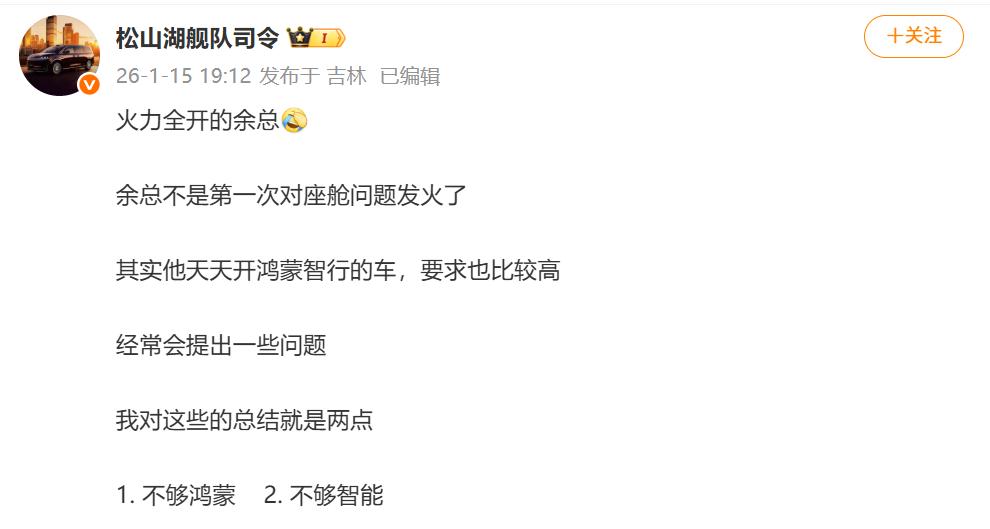
Some tech bloggers have revealed that this is not the first time Yu Chengdong has gotten angry about cockpit issues. In fact, he drives a Hongmeng - enabled car every day and has relatively high requirements. He often points out problems, saying that it is not Hongmeng - like enough and not intelligent enough.
Not only Yu Chengdong, but also many complaints can be heard on social media.
Some people directly said that the most obvious problem with the Hongmeng cockpit is the touch - screen response. When typing, the screen will seriously lag, and it's impossible to click on the desired area.
The utilization rate of the main - screen space is low. At the bottom of the entire screen, there are only apps such as "Applications and Services", "Settings", and "Huawei App Gallery", and the font size is very small.
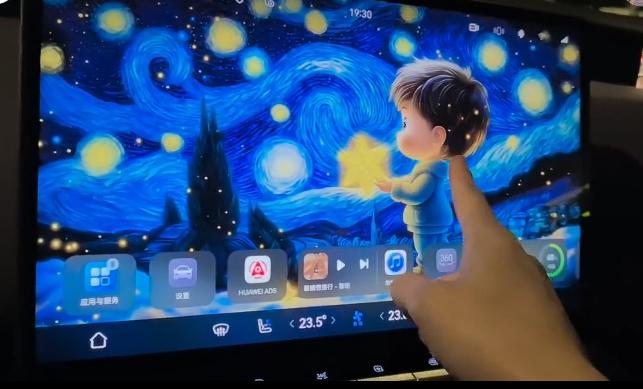
As an owner of the Wenjie M7, I deeply understand this problem. When I first got the car and drove on the highway, it took me a long time to find the time display.
Some users also said that the voice assistant Xiaoyi is sometimes not very sensitive. When sitting behind the driver's seat and giving the instruction to open the zero - gravity seat, Xiaoyi may mis - trigger and open the seats in other places.

Regarding the update issue, an owner of the Wenjie M7 said that since getting the car more than a year ago, the dashboard has never been able to display navigation information, and he has never received any system update notifications during this period.

Resource Diversion
Actually, the Hongmeng cockpit once had its glorious moments, but later, resources were diverted.
In 2021, the Wenjie M5 was unveiled at Huawei's Winter Flagship New Product Launch Event. It became an instant hit with its brand - new intelligent cockpit experience.
As the first vehicle equipped with the Hongmeng system, it supports seamless unlocking with mobile phones, smartwatches and other devices. Even if the device is out of power, it can be unlocked via NFC. On the way home from work, you can remotely turn on the air - conditioner, water heater and other household appliances through the in - car system.
In addition, the Xiaoyi voice assistant it is equipped with supports 60 - second continuous voice commands without re - awakening. The 3D face recognition function can automatically log in to the user's account and synchronize the seat and rear - view mirror positions. Functions such as intelligent split - screen and floating windows can meet multiple needs of the car owners.
Many manufacturers were unable to provide such smooth experiences at that time.
However, in 2024, Huawei released the native Hongmeng HarmonyOS NEXT, and a large amount of resources were redirected to the research and development of the underlying system.
The upgrade pace of Huawei's intelligent cockpit has gradually slowed down. Subsequent updates mainly focus on some minor functions, such as adding sunrise and sunset rendering effects, 3D road - name display, and enriching special vehicle models.
Yu Chengdong mentioned in a speech: "We did lead the development of the intelligent cockpit industry in the past, but in the past two years, we've been busy with the development of the native Hongmeng system, so the innovation speed has slowed down a bit."
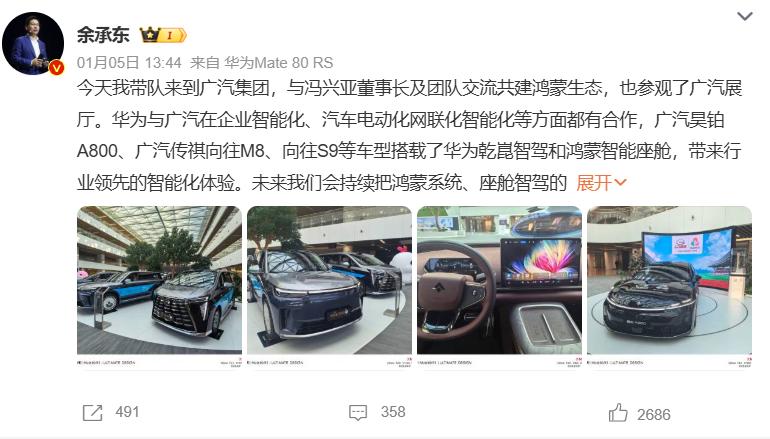
It's worth noting that on January 5th this year, Yu Chengdong visited GAC Group, and the two sides signed a cooperation agreement. The core of the cooperation is to better integrate the Xiaoyi intelligent agent into the car cockpit and jointly create a smarter new - generation intelligent cockpit.
So car owners don't have to worry. Just wait for the good news.
This article is from the WeChat official account "Technology Daily Push" (ID: apptoday). The author is Huang Wanyi. It is published by 36Kr with authorization.