ByteDance takes the lead in hardware, while Alibaba and Tencent get anxious.
The competition for cloud computing power of large models has reached a white - hot stage, and the competitive boundaries of technology giants are also rapidly spreading to hardware terminals.
Among them, ByteDance was the first to break out of the software ecosystem competition. From AI phones, glasses to cars, ByteDance has set its sights on full - scenario terminals. Recently, Tencent and Alibaba have also entered the game strongly. Different from ByteDance's self - research - led approach, Tencent uses capital as a weapon to densely build a hardware network. Alibaba, on the other hand, takes Tongyi large model as the core, binds a large number of hardware products, and also tries to increase Token consumption through the scale effect.
Xing Xiaoci, the person in charge of the intelligent hardware of the large model at Volcengine, predicts that in 2026, in the AIoT (AI hardware) field, there will be more customers and products with a single - product shipment volume exceeding 1 million units and a single - category shipment volume exceeding 10 million units.
On December 1, 2025, ByteDance launched the Doubao Mobile Assistant, firing the first shot in the battle for the mobile hardware entrance. Later, some media reported that the Doubao AI glasses were in production scheduling and were expected to be launched in the first quarter of 2026. There were even rumors that ByteDance was going to build a "Doubao car".
Although these rumors were successively denied by ByteDance, hardware has undoubtedly become the core battlefield for giants to compete for the entrance to the AI ecosystem.
Alibaba has also woken up. From January 8th to 11th, Alibaba held the Alibaba Cloud Tongyi Intelligent Hardware Exhibition in Shenzhen, attracting more than 200 brands to participate. More than 1000 categories of intelligent hardware were exhibited, covering a wide range of products, including AI phones, AI glasses, AI companion toys, pet translators, and AI perfume blending.
Xu Dong, the general manager of the Alibaba Cloud Tongyi large - model business, said in an interview with the media: In addition to Chatbot and Agent, hardware may be the scenario where large models can quickly form a commercial closed - loop. He predicts that the competition for intelligent hardware in 2026 will not be limited to phones, cars, and glasses, and new categories may emerge, which may also become new entrances.
Alibaba's strategy in the hardware battle is more to play the role of an "ecosystem - enabling" supplier: It cooperates deeply with module and chip manufacturers, encapsulates Tongyi's multimodal interaction and voice recognition capabilities into solutions, making it easier and more cost - effective for hardware manufacturers or developers to use, and promoting a more prosperous ecosystem.
Tencent's strategy is to target leading hardware manufacturers, such as Tuozhu and Insta360, both based in Shenzhen, and continue its familiar approach of "capital + technology output". As a cornerstone investor, Tencent participated in the IPO placement of Insta360. Recently, Insta360 also cooperated with Tencent Cloud to launch a conference microphone product.
There are reports that Tencent also participated in a new round of financing of Tuozhu completed in November 2025, with a valuation of $10 billion. Although Tao Ye, the founder of Tuozhu, denied this news, Tuozhu and Tencent have frequent interactions: Tencent's Hunyuan 3D 3.0 large model has been connected to Tuozhu's 3D model platform, and a new figurine generator called "Yinni" has been launched.
In 2026, the first "tough battle" among large companies is being fought around the edge - side entrance. In the past, this entrance was mostly occupied by the Hardcore Alliance (initiated by mobile phone manufacturers such as OPPO, vivo, Huawei, and Lenovo). Now, the old order of interaction is being overturned.
01
"Blocking" Can't Stop Doubao, and Alibaba Follows Suit
On December 1, 2025, Doubao launched its mobile assistant, which was installed on the ZTE nubia M153 series of mobile phones. By obtaining high - level permissions at the operating system level, it can achieve functions such as hailing a taxi and buying train tickets. Although ByteDance's attempt was quickly "blocked" by super - apps such as Taobao and WeChat, it clearly declared its strategic intention to compete for the entrance and initially verified the feasibility of in - depth cooperation between model manufacturers and mobile phone manufacturers.
Although the first battle was not successful, the industry influence stirred up by the Doubao mobile assistant continues to expand; the application is also being continuously updated, and the updates are more significant. According to the statistics of "China Entrepreneur", as of January 12th, the Doubao Mobile Assistant has undergone more than 40 updates and added new functions.

Just in the week of January 12th, the newly added assistant functions include: when previewing photos in the system photo album, the bottom button can quickly open the Doubao Assistant to use Doubao for photo editing; a "camera front - and - rear video beauty" function has been added at the UI and system levels, and the browser supports Douyin search.
ByteDance's updates also reveal its underlying thinking of learning to become a mobile phone system manufacturer. In addition to making incremental updates to the edge - side large - model capabilities, ByteDance has integrated Douyin search, Doubao input method, and Doubao large - model voice capabilities into it. In the design, it even pays attention to detailed requirements such as turning off the alarm by the assistant when the mobile phone alarm rings and when taking a nap.
Alibaba and Tencent have followed the overall idea of entering the mobile phone market from software, and their approaches still bear the distinct characteristics of the large - model era.
It is reported that regarding the GUI (Graphical User Interface) solution of the Doubao Mobile Assistant, Alibaba is also exploring a solution for combining software with mobile phones. On December 31, 2025, Alibaba's Tongyi Lab released the open - source "MAI - UI", which is a multimodal basic GUI intelligent agent. It can not only achieve human - computer interaction but also integrate the use of MCP tools.
Alibaba is also laying out another technical line, "A2A" (Agent - to - Agent). This route realizes cross - application retrieval by directly invoking the Agent capabilities in the App. Xu Dong said: Both the GUI and A2A routes are in the early stage and are advancing side by side. "A2A is developing rapidly, with a better experience, faster speed, and lower model consumption cost. If only GUI is used, the cost may be higher."
Facing the wave of GUI transformation, Tencent has also made attempts. Almost at the same time when Alibaba open - sourced the "MAI - UI" model, on December 30, 2025, Tencent open - sourced an edge - side translation model, Tencent - HY - MT1.5 - 1.8B, which can run on consumer - grade devices such as mobile phones and only requires about 1GB of memory after quantization.
At the beginning of 2026, WeChat Mini - Programs, in collaboration with Tencent Hunyuan, Tencent Cloud, and Tencent Advertising, launched the "AI Application and Online Tool Mini - Program Growth Plan". By providing free cloud - development resources, 100 million Hunyuan large - model Token quotas, as well as support in data analysis, advertising monetization, and traffic incentives, it helps developers quickly launch AI applications.
02
Alibaba Takes the Lead in AI Glasses, but ByteDance Follows Aggressively
Beyond the mobile phone entrance, AI glasses are currently the most fiercely competitive battlefield in hardware. At this year's Consumer Electronics Show (CES), according to media statistics, there were 23 AI glasses exhibition booths, of which 16 were Chinese brands, including Alibaba, Thunderobot Technology, AfterShokz, Rokid, and Xreal. At the policy level, smart glasses were also included in the "national subsidy" for the first time.
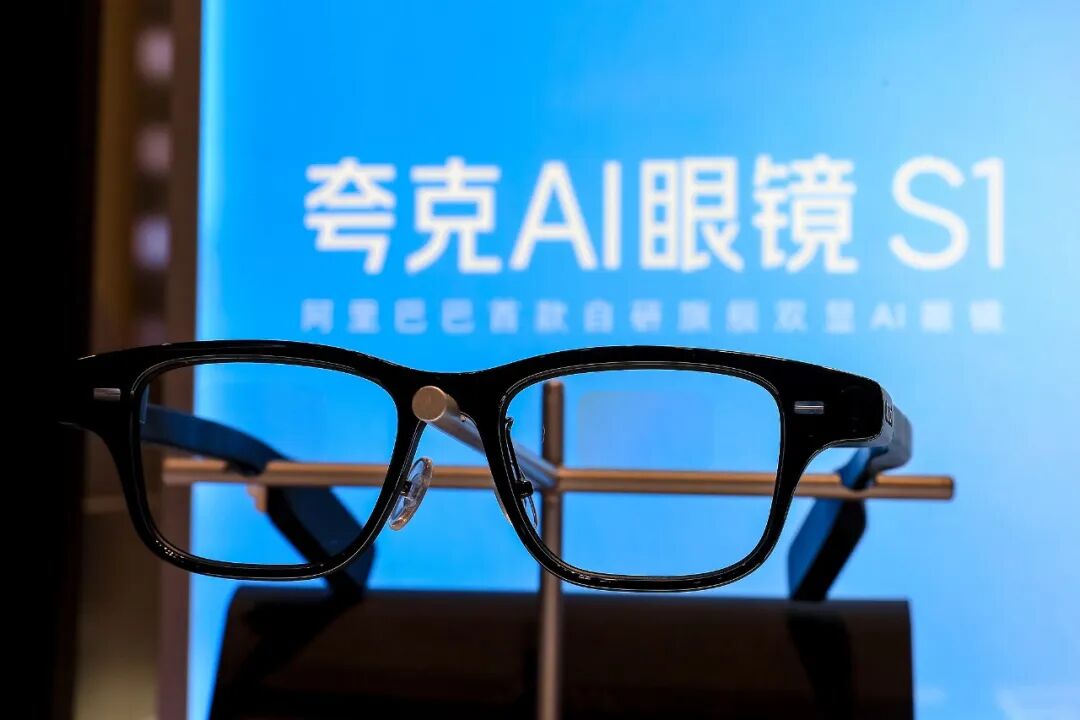
In the AI glasses market, Alibaba has temporarily taken the lead. On November 27, 2025, Alibaba officially launched the Quark AI glasses, initially offering a total of six models in two series, S1 and G1, with the lowest prices of 3,799 yuan and 1,899 yuan respectively. Shortly after its launch, more than 9,000 people had paid for it on its Tmall flagship store, and more than 5,000 units were sold on JD.com, and the pre - sale period lasted for 45 days.
But ByteDance is closely following. According to media reports, the Doubao AI glasses are about to enter the shipment stage. The screenless version of the AI glasses will be launched first in the first quarter of this year, and the version with a display function is expected to be launched in the fourth quarter of this year.
In response, "China Entrepreneur" asked ByteDance. The person in charge related to Doubao said that the rumors were untrue, and there was no clear sales plan at present. However, according to information obtained by the media from the supply chain, the glasses will be manufactured by Longcheer Technology. The R & D will be carried out at Longcheer's Huizhou factory, and mass production will be undertaken by Longcheer's Nanchang factory. The two parties have a clear division of labor: Longcheer is responsible for the underlying UI development, while ByteDance focuses on the upper - layer App R & D to better realize the interconnection between the product and the mobile phone. Previously, Longcheer Technology also disclosed in its semi - annual report in 2025 that the company had newly undertaken a mass - production project of AI glasses for a leading domestic Internet client.
Previously, Li Nan, a former senior executive of Meizu, predicted in a podcast that the product form of the next - generation personal computing center is not yet clear because technological capabilities are changing rapidly. Glasses, necklaces, and earphones are all possible options, and large - model capabilities will also enhance their competitiveness.
Regarding the AI glasses ecosystem, Tencent does not have a clear hardware manufacturing plan yet. In 2024, there were rumors that Tencent would act as an agent for Meta Quest VR headsets, but the cooperation has never materialized.
Tencent mainly follows the hardware layout logic of "investment leverage + ecosystem synergy". For example, in October 2025, Tencent App Gallery reached a cooperation with INMO, a leading Chinese AI glasses manufacturer, to jointly create an exclusive App Store for AI glasses. In July 2025, INMO announced the completion of a 150 - million - yuan Series B2 financing.
03
Lower the Usage Threshold for Partners
The hardware competition among giants is essentially a battle for the core voice in the AI era. When large - model capabilities are generalized to the physical world, whoever can occupy more scenarios, master more data and users will also enable the model to iterate and evolve faster, consume more Tokens, and relieve the commercialization pressure.
Currently, Alibaba and ByteDance have respectively launched development kits for AIoT devices. Alibaba has launched a multimodal interaction development kit, which integrates three Tongyi basic large models, Qianwen, Wanxiang, and Bailing, and pre - installs more than a dozen Agents and MCP tools in fields such as life and leisure and work efficiency. It can be applied to hardware devices such as AI glasses, learning machines, companion toys, and intelligent robots.
Compared with ByteDance, Alibaba's strategy is to lower the access threshold for hardware manufacturers through standardized technology output and, at the same time, increase the usage of the Tongyi large model through a large number of hardware terminals. At the recent Alibaba Cloud Tongyi Intelligent Hardware Exhibition, almost all mainstream AI hardware categories, from embodied intelligence and AI trendy toys to AI keychains, were equipped with the Tongyi large model, which also brought continuous growth to Alibaba Cloud's computing - power business.
ByteDance has launched development kits such as a toy AI framework and an audio AI framework. Based on the newly launched Doubao large - model 1.8 series, it offers targeted discounts such as three - month, one - year, and lifetime unlimited usage. ByteDance has even proposed the concept of "vibe interaction" to let software define hardware.
Xu Dong said: IoT manufacturers emphasized connection more than a decade ago but failed to achieve more value - added services. However, now, large models enable single - point IoT manufacturers to develop task - execution methods of communication and collaboration with each other. "First, we need to reduce the (model usage) cost, increase the shipment volume, and find better collaboration methods between different devices. It is possible to develop some new business forms and ecosystems."
According to Xu Dong, the TTS (Text - to - Speech) cost of many hardware devices accounts for 75%. However, some voice models can reduce the requirement for anthropomorphism, and the cost will be much lower. This is what the Tongyi large model is currently doing.
The relevant person in charge of ByteDance and Alibaba have both mentioned issues such as network connection, signal transmission, voice delay, and battery life of AIoT devices. A hardware practitioner even said, "The accuracy of recognition means the return rate of the product. Every error may be the beginning of an increase in the return rate."
Tencent has accumulated years of experience in audio - video technology in both the B - and C - ends, which also serves as the basis for Tencent to cooperate with hardware companies.
Shang Shidong, the vice - president of Tencent Cloud, said in an interview with "China Entrepreneur" when talking about the cooperation with Insta360: In the era of large - language models and deep learning, many task - training requirements need modules to jointly define a training goal. For example, how to find a better balance among device delay, device power consumption, and chip computing power requires algorithm developers, software developers, and device manufacturers to collaborate closely and jointly create.
In the second half of the AI era, hardware companies are learning to internalize and scale the capabilities of model companies; platform - type companies need to learn to transform the scale effect of the Internet into a competition for new interactions. In the near future, the focus of competition may shift from the number of users to the number of devices and the scale of invocation.
This article is from the WeChat public account "China Entrepreneur Magazine" (ID: iceo - com - cn), author: Yan Junwen, editors: He Yifan and Li Yuan. It is published by 36Kr with authorization.