Der Legende aus dem Yao-Class, Chen Lijie, hat sich bei OpenAI angestellt. Mit 16 Jahren wurde er zur Tsinghua-Universität befördert, und mit 30 Jahren bekam er die Stelle als Assistentprofessor an der Universität of California, Berkeley.
Latest News: Chen Lijie, a genius from the Yao Class, has joined OpenAI.
According to the news from "Top Chinese Community", it was confirmed internally at OpenAI that the genius from the Yao Class of Tsinghua University and Assistant Professor of EECS at UC Berkeley, Chen Lijie, has joined OpenAI and is responsible for mathematical inference!
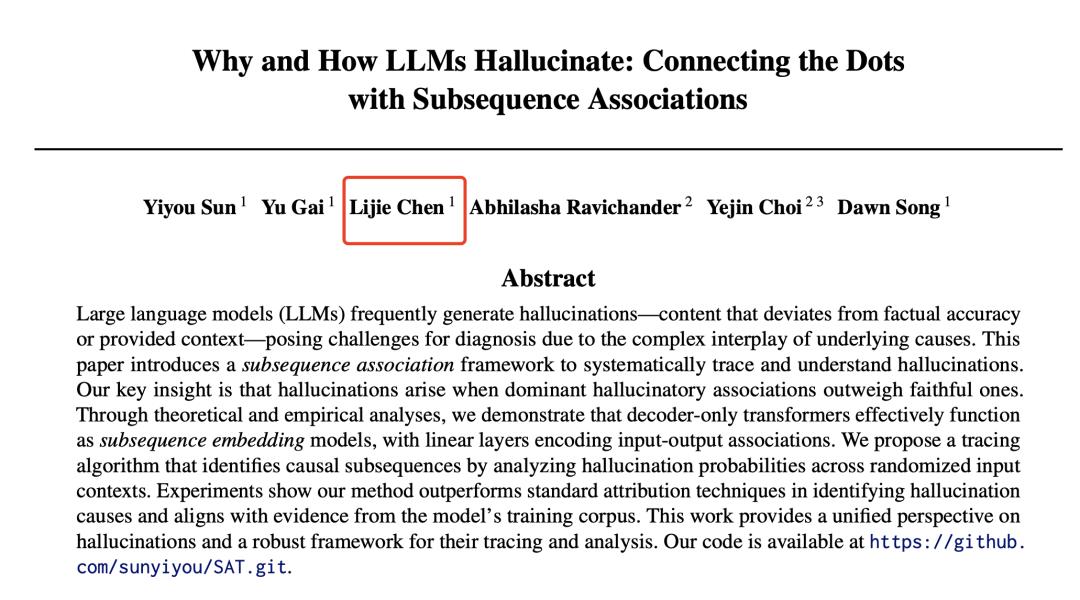
It is worth noting that in the prominent publication "Why Language Models Hallucinate" published last September, OpenAI also cited another study in which Chen Lijie was involved: "Why and How LLMs Hallucinate: Connecting the Dots with Subsequence Associations".
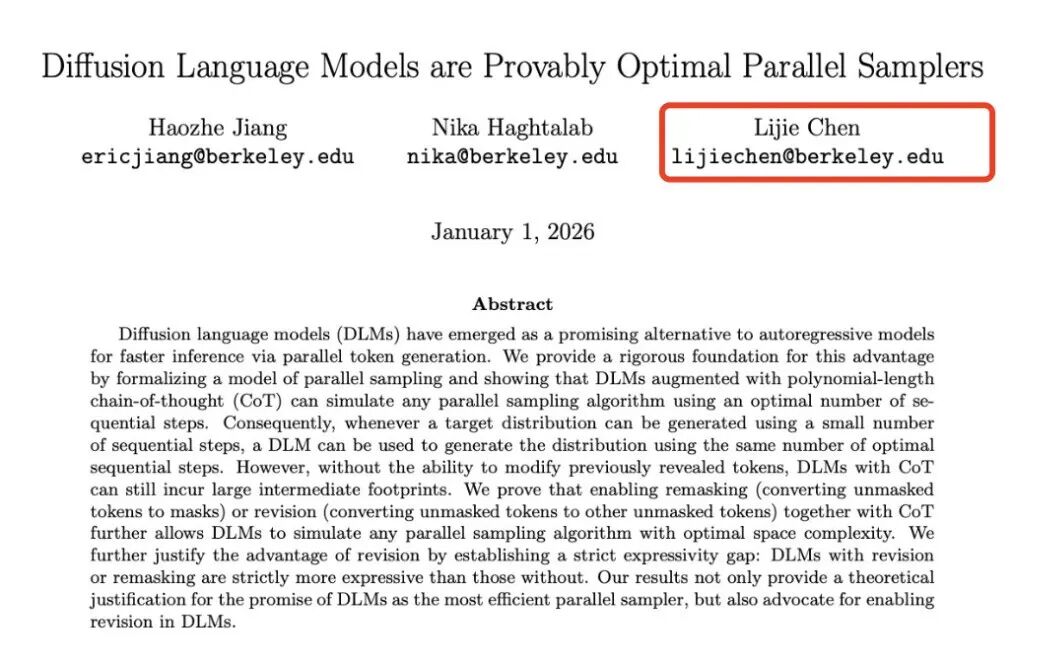
At the same time, the latest research direction that Chen Lijie has recently been involved in is also very timely and focuses on Diffusion Language Models, which follows the important development trend of current generative models.
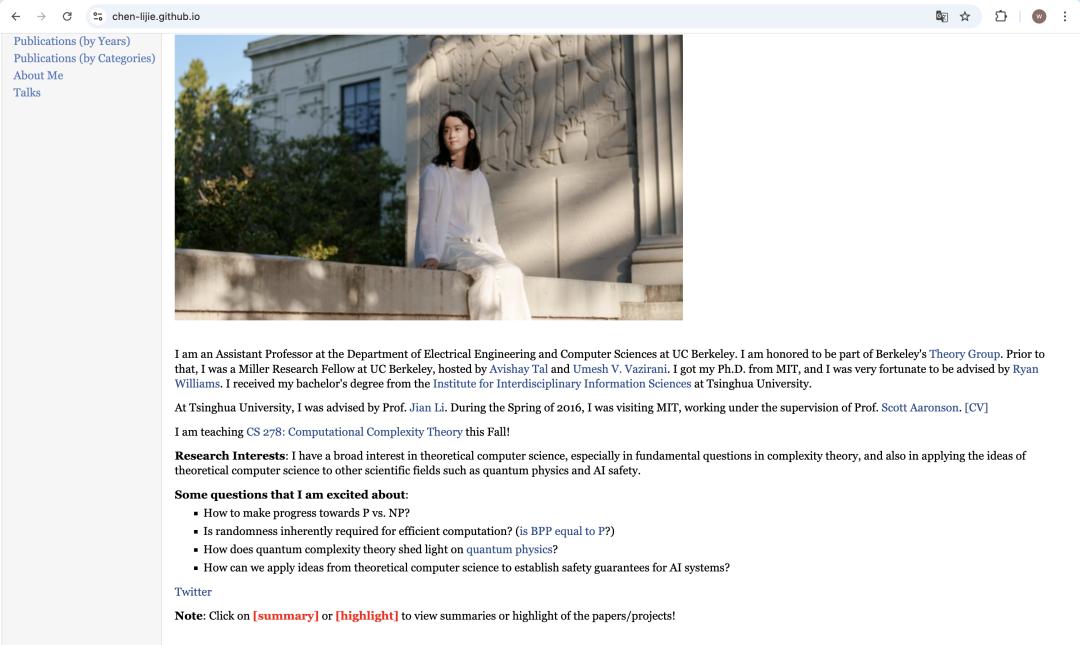
So far, Chen Lijie's homepage has not been updated.
Who is Chen Lijie?
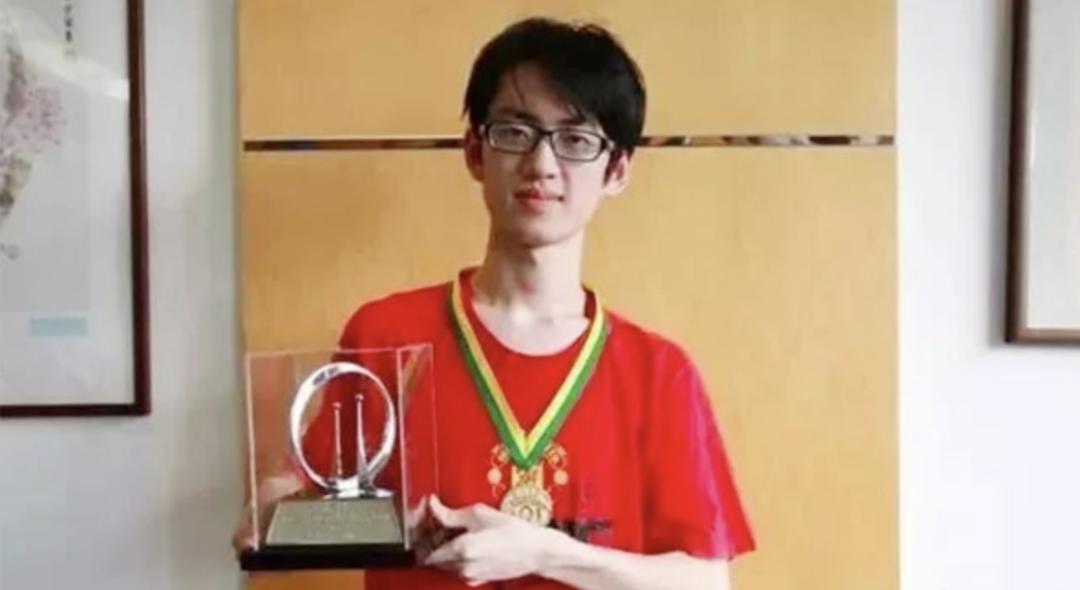
Chen Lijie was born in 1995. At the age of 16, he won the gold medal in the National Olympiad in Informatics (NOI) and was admitted to Tsinghua University by recommendation. He is a well - known alumnus of the "Yao Class" of Tsinghua University and has long been engaged in theoretical computer science.
In 2025, Chen Lijie officially joined the Department of Electrical Engineering and Computer Sciences (EECS) at the University of California, Berkeley (UC Berkeley) and became an assistant professor. He is also a member of the Berkeley Theory Group and mainly engages in Computational Complexity Theory.
Looking at Chen Lijie's educational and professional experience, it can be said that it has been an amazing career.
He has participated in computer science competitions since middle school and is one of the legendary participants in the circle of the Informatics Olympiad (OI):
November 2011: First place in Zhejiang Province in the National Informatics Competition (NOIP 2011)
February 2012: First place in the National Informatics Winter Camp (WC 2012)
February 2013: First place in the National Informatics Winter Camp (WC 2013)
April 2013: First place in the Chinese National Team Selection Contest (CTSC 2013)
July 2013: First place (gold medal) in the International Olympiad in Informatics (IOI 2013)
...
△
In 2013, Chen Lijie graduated from Hangzhou Foreign Languages School. In his senior year of high school, he declined an internship offer from Google to focus on his studies. In the same year, thanks to his competition results, he was admitted to Tsinghua University by recommendation.
After being admitted to the Yao Class of Tsinghua University, Chen Lijie gradually shifted his focus from competitions to research.
During his undergraduate studies, he published several papers at important conferences in computer science such as AAAI, AAMAS, COLT, and CCC, and systematically devoted himself to computational complexity theory.
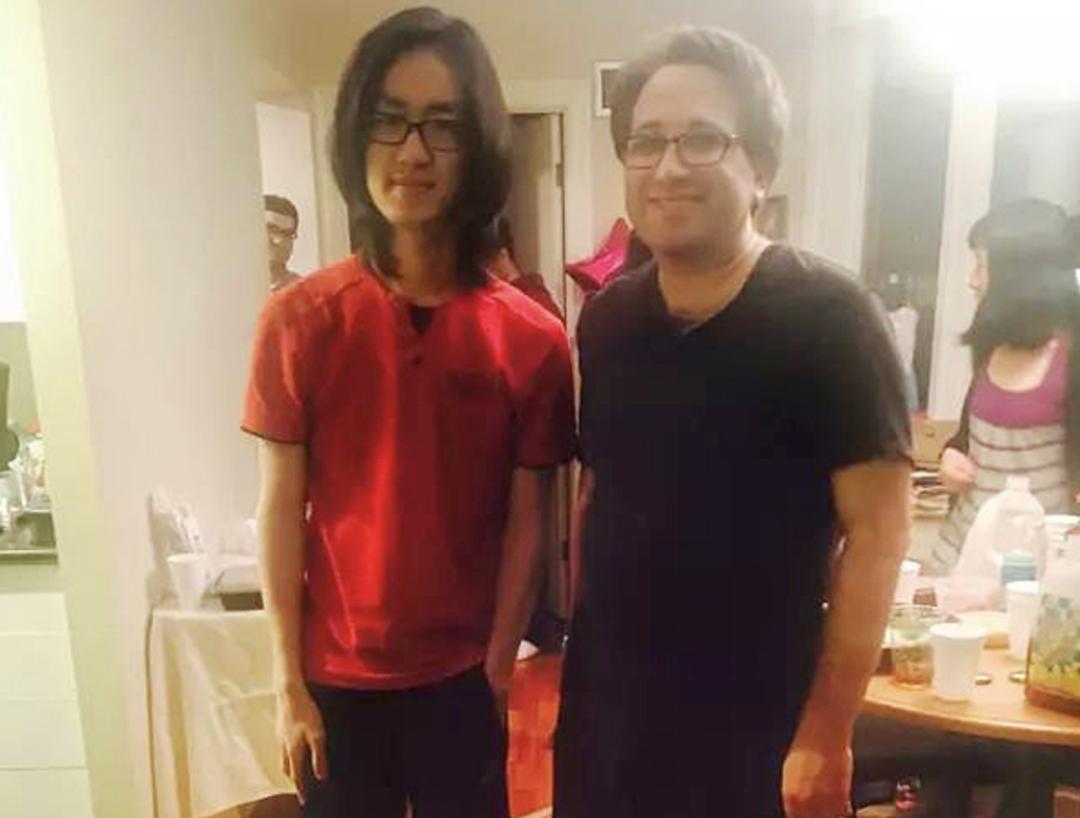
In the second half of his junior year, he went on an exchange program at MIT under the guidance of the famous theoretical computer scientist and quantum information scientist Scott Aaronson and conducted research on quantum complexity.
△
During his stay at MIT, he solved an open problem posed by the quantum information scientist John Watrous in 2002.
It is worth noting that Professor Scott Aaronson later joined OpenAI in 2022 and is engaged in the theoretical foundation of AI security.
In 2017, Chen Lijie published a paper at the annual Symposium on Foundations of Computer Science (FOCS) and solved an important problem in computational complexity theory. He was the first Chinese undergraduate student to publish a paper at FOCS.
In the same year, he graduated from the Yao Class of Tsinghua University and began a doctoral program in computer science at MIT.
During his doctoral studies, Chen Lijie worked under the guidance of Ryan Williams and focused on computational complexity theory and fine - grained complexity theory.
During this time, he published several papers at top conferences in theoretical computer science such as FOCS and STOC and received important academic awards such as the Best Student Paper Award at FOCS, including:
Best Student Paper Award at STOC 2019
Best Student Paper Award at FOCS 2019
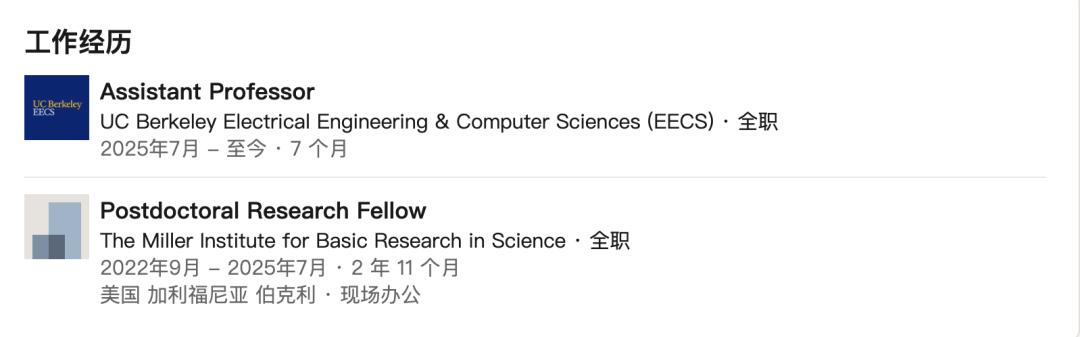
In 2022, Chen Lijie completed his doctorate at MIT and then joined the Miller Institute at UC Berkeley as a Miller Postdoctoral Fellow.
The Miller Fellowship is awarded annually to only a few outstanding young scientists. His co - advisors at Berkeley included Avishay Tal and the pioneer of quantum computing Umesh V. Vazirani.
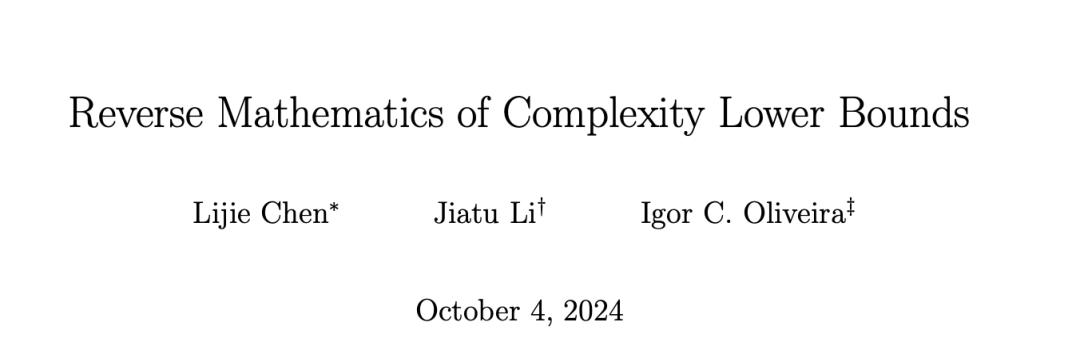
In 2024, a paper by Chen Lijie titled "Reverse Mathematics of Complexity Lower Bounds" brought new ideas for a type of problems in computational complexity theory that had plagued the scientific community for nearly 50 years.
In 2025, he officially joined UC Berkeley as an assistant professor of EECS and began teaching the graduate course "Computational Complexity Theory".
Currently, Chen Lijie's main research directions include core problems in theoretical computer science such as P vs. NP, circuit complexity, fine - grained complexity, derandomization, and algorithm lower bounds.
He has made systematic contributions in the areas of the relationship between derandomization and complexity lower bounds and the strengthening of complexity hardness.
In addition, he has begun to introduce methods of complexity theory into cutting - edge fields such as quantum physics and AI security.
Now that OpenAI has clearly defined the research direction of AI4S, Chen Lijie is now part of OpenAI.
However, Chen Lijie remains as modest as ever, and on his personal platforms, there are still only the latest information about his publications.
Sources:
[1]https://www.tsinghua.org.cn/info/1953/13913.htm
[2]https://chen - lijie.github.io/documents/CV.pdf
[3]https://chen - lijie.github.io/
This article is from the WeChat account "Quantum Bit", author: henry, published by 36Kr with permission.