The three toughest problems in Silicon Valley: power shortage, power shortage, and still power shortage. Silicon Valley tycoons are betting on new energy.
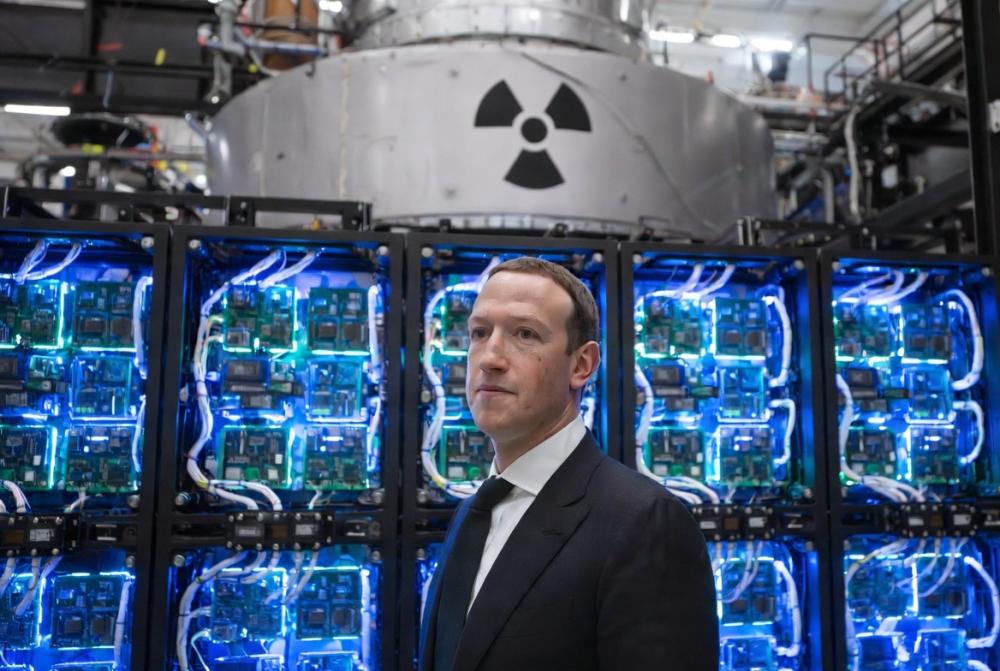
Mark Zuckerberg Bets on Nuclear Energy
The electricity consumption of a super-large AI data center is equivalent to that of a city with hundreds of thousands of people. There are already more than 4,000 such "power-hungry beasts" in the United States, and the number may triple in the next four years.
They train large models day and night and process every one of your searches and videos. The electricity meter spins faster than a flywheel. As a result, the power grid can't handle it, the electricity price goes up, and tech giants are going all out to "grab electricity".
Elon Musk bought a whole power plant's equipment overseas and shipped it back to the United States; Google simply spent $4.8 billion to buy a power generation company; Mark Zuckerberg has taken a fancy to nuclear power plants and recently signed three major nuclear energy deals; Microsoft has solemnly promised not to pass on the electricity costs.
However, the promise may not be effective. A study by Carnegie Mellon University warns that the electricity bills of residents in some areas may skyrocket by 25%.
01 Silicon-based Power Eaters vs. Outdated Power Grids
Modern AI is essentially an art of "burning electricity".
Every time you ask ChatGPT to write a poem or use Siri to set an alarm, there are thousands of GPUs running wildly in the data center behind it. The racks composed of these chips require a huge amount of power to drive, and the liquid cooling system for cooling also needs power support.
Taking the GB200 NVL72 as an example, the power consumption of a single rack is close to 140kW. Running 24 hours a day, the daily electricity consumption is close to 3,000 kWh.
Microsoft cited data from the International Energy Agency in an official blog post on January 13, showing that by 2035, the electricity demand of data centers in the United States will soar from the current 200 terawatt-hours per year to 640 terawatt-hours, that is, 640 billion kWh - equivalent to the annual electricity consumption of the whole of Germany.
Under the huge electricity demand, the power grid "can't hold up".
Tracking data from SemiAnalysis shows that currently in Texas, there are dozens of gigawatts of data center electricity application requests every month, but the power grid can only approve a little over 1 gigawatt.
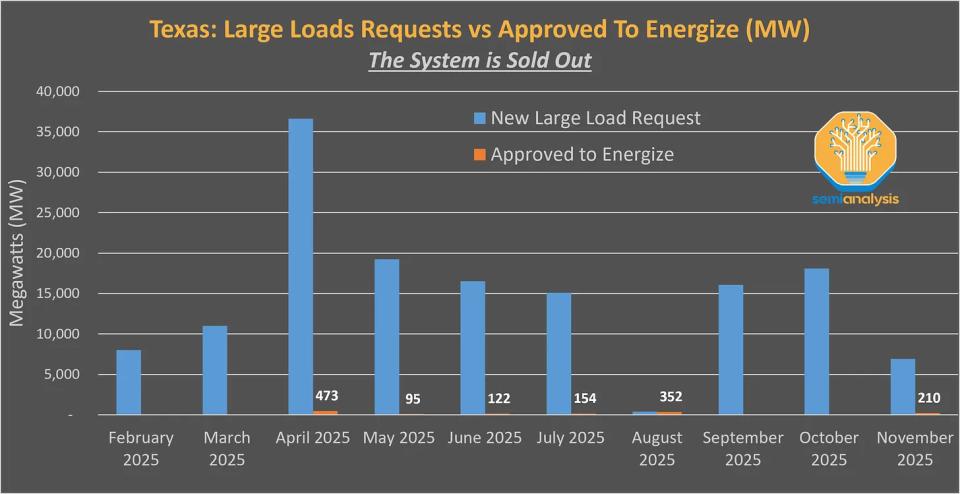
Application and Approval of Data Center Electricity Consumption in Texas, USA
What to do when there isn't enough electricity? The most direct consequence is a price increase.
Researchers at Carnegie Mellon University warn that in places where data centers are concentrated, the electricity bills of residents may be pushed up by 25%. Bloomberg data is even more prominent: the wholesale electricity price in some areas has increased by 267% in five years.
US Senator Bernie Sanders challenged on social media, "These data centers have pushed up everyone's electricity bills!"
Donald Trump was even more aggressive, emphasizing that ordinary people should not be made to pay for data centers and demanding that Microsoft make adjustments first and promise not to affect the public electricity price.
The root of the problem lies in the construction of the US power infrastructure.
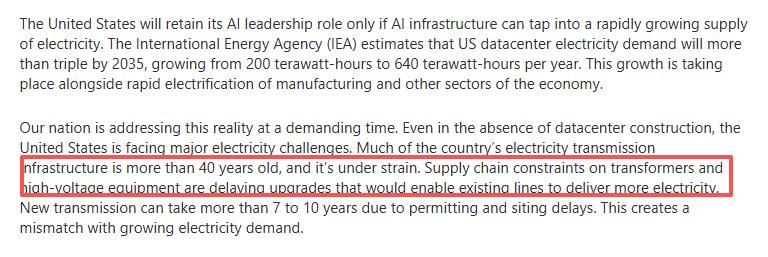
Microsoft admitted in the report that most of the power transmission lines in the United States have been in operation for more than 40 years and are already overloaded. Key equipment such as transformers is in short supply globally, and the supply chain is severely restricted.
Meanwhile, it takes at least 7 years to build a new high-voltage power transmission line from planning, environmental assessment, hearings to final completion. It also takes about 5 years to build a new power plant from application to power generation.
An AI cloud computing center with a capacity of one gigawatt can earn $10 billion to $12 billion a year. Bringing a medium-sized data center online half a year earlier is worth billions of dollars.
No giant can afford to wait for the construction and approval of the power grid.
In fact, the power grid companies themselves are also in a mess. Every time a new large user (such as a data center) is connected, a complex "system stress test" has to be done to ensure that it won't cause a regional power outage. As various application requests pour in like a tide, the system directly collapses and falls into a "dead loop".
02 Elon Musk and Mark Zuckerberg Show Their Skills
Dylan Patel, an analyst at SemiAnalysis, said, "In the United States, you simply can't get a new power plant on time."
Against this background, the "electricity-grabbing drama" starring Elon Musk and Mark Zuckerberg is quietly unfolding in Silicon Valley.
xAI under Elon Musk built a data center with 200,000 GPUs in 122 days, paired with its own 35 large gas turbines for on-site power generation, and equipped with Tesla's giant batteries to form a small power grid on its own.
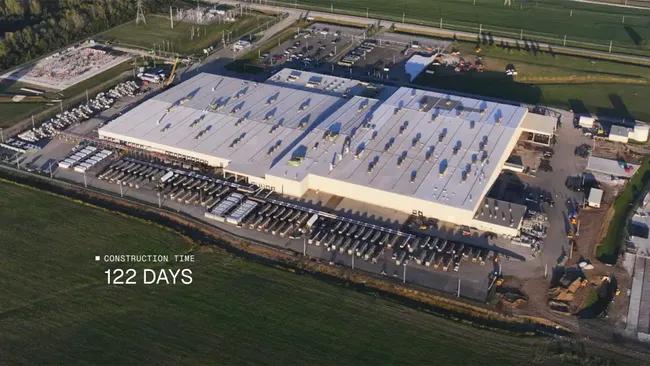
The 200,000 GPU data center built by xAI in just 122 days
For the next-generation data center that can accommodate 1 million GPUs, Elon Musk needs at least about 2 gigawatts of power. To solve this problem, xAI even chose the location of the factory on the state border. If the approval process in one state is slow, it will immediately start construction in the neighboring state.
The latest news shows that xAI directly bought a whole power plant's equipment overseas, disassembled it into parts, and shipped it back to the United States.
Compared with xAI, Google takes the route of Wall Street elites and directly spends money to acquire when facing problems.
In 2026, Google spent $4.8 billion to buy the power generation company Intersect Power and became the first tech giant to have a power generation business. Intersect is good at building clean energy power stations with solar energy and batteries, which can just help Google's data centers achieve "electricity freedom".
After buying Intersect, Google immediately started lobbying the government: "Give the green light to our data centers with their own power stations. Shorten the approval process from several years to two or three months, otherwise, the United States will lose in AI!"
While xAI and Google are competing for natural gas and solar energy, Mark Zuckerberg is betting on nuclear energy.
Meta recently announced that it has signed agreements with three nuclear energy companies, Vistra, TerraPower, and Oklo, to power the "Prometheus" AI supercomputing cluster under construction, which can provide 6.6 gigawatts of power by 2035.
It's worth noting that Sam Altman, the CEO of OpenAI, is one of the largest investors in Oklo and currently holds 4.3% of the company's shares, worth about $650 million.
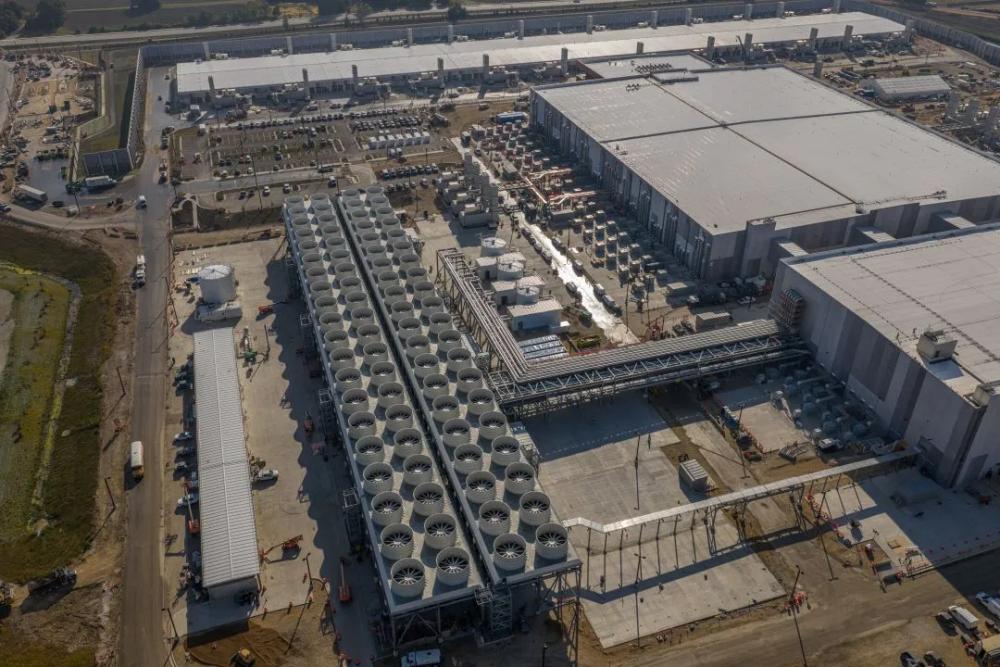
Microsoft's data center in Wisconsin
Compared with the above-mentioned clear projects, Microsoft's power solution is not clear yet. When facing various accusations, Brad Smith, Microsoft's president, publicly stated, "We guarantee that the electricity bills will not increase because of Microsoft's data centers!"
Microsoft promised to be fully responsible for all the power grid upgrade costs required by its own data centers. It also said it would design new solutions with power companies to ensure that the costs of industrial and residential electricity are completely separated.
However, the power grid cost is like a mess. Everyone shares the benefits of upgrading a line. How can we accurately calculate how much Microsoft should pay? Paul Patterson, a utility analyst at Glenrock Associates, complained, "It's not as simple as plugging in an electricity meter."
03 100% Clean Energy?
Tech companies always talk about "environmental protection" and "100% renewable energy", but when it comes to the crunch, they still use whatever can generate electricity quickly.
Data from the International Energy Agency shows that currently, the largest source of electricity for data centers in the United States is still natural gas power generation. Solar and wind energy cannot guarantee the 24/7 uninterrupted power supply required by AI. Nuclear energy is stable, but the construction period is too long, and it can't solve the urgent problem.
So, although Google, Microsoft, and Meta have written all kinds of environmental protection commitments in their annual reports, the proportion of natural gas and nuclear energy in this year's power purchase agreements is not small at all.
44% of the generators of the company that supplies power to the "data center corridor" in Virginia are supported by natural gas. Louisiana specially built a natural gas power plant to welcome Meta's super data center.
Meta's energy director frankly said, "We cooperate with power companies to access all forms of power, focusing on those that can be built quickly."
A "mixed" model has become the industry consensus: mainly use solar and wind power generation, pair it with giant batteries for storage, use natural gas power plants as a "backup" that can be activated at any time, and finally rely on nuclear power plants to ensure long-term power supply stability.
04 "Hunting" for Energy Talents
While the giants are spending huge amounts of money on power plants and nuclear reactors, another invisible war is also raging: the crazy "hunting" for top talents in the energy field.
If buying energy assets is like "buying water", then poaching energy experts is like "buying the well-diggers".
According to data from the recruitment data analysis company Workforce.ai, the energy-related recruitment volume of large tech companies increased by 34% year-on-year in 2024. The focus of recruitment is no longer the "sustainable development" image positions in the past, but infrastructure positions such as energy procurement, power market trading, and power grid access strategies.
Amazon (including its cloud computing division AWS) is the most aggressive, with 605 relevant recruitments.
Since 2022, Microsoft has quietly recruited more than 570 energy experts. It even poached Becky Baker, the former director of the energy market, from Google and invited Carolina Dybeck Happe, the former chief financial officer of General Electric, to serve as its chief operating officer.
Although starting a little later, Google is also catching up full steam. Since 2022, it has added about 340 people, and there are many senior energy regulatory affairs consultants such as Eric Schubert poached from BP and researchers like Taylor Norris from Duke University in its team.
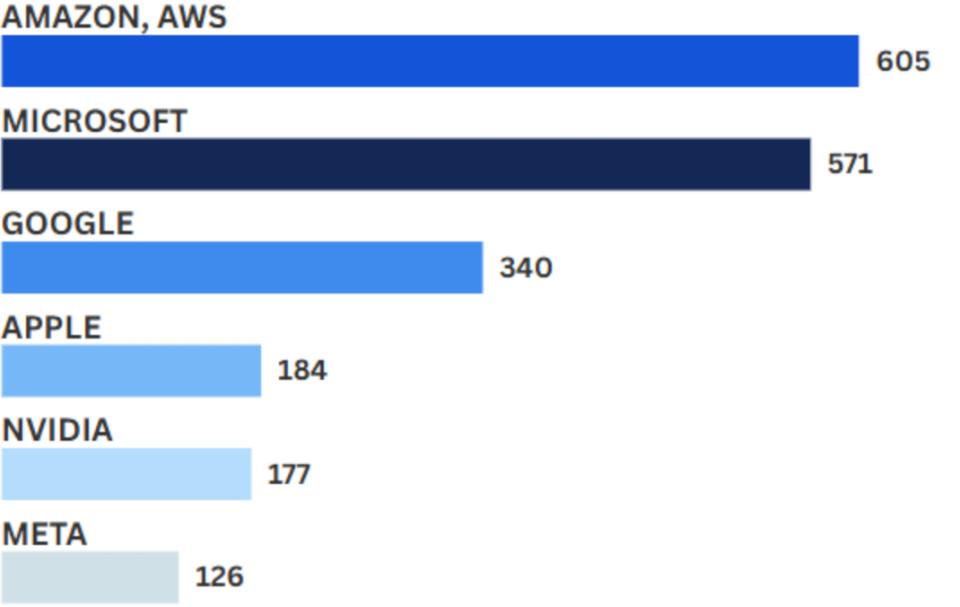
Recruitment data of energy positions by Silicon Valley giants since 2022
This "cross-dimensional attack" from Silicon Valley has also disrupted the talent market in the traditional energy industry.
Jeff Anderson, the business development director of the renewable energy recruitment consulting company Taylor Hopkinsons, said, "We are communicating with senior talents in the energy infrastructure field. They see the opportunities in the data center industry and the higher salaries offered by tech companies and are planning to change careers."
He also warned that the energy strategy, power purchase agreement negotiation, and power grid connection experts urgently needed by tech companies are already scarce resources, and this competition will make the talent market "extremely tight".
05 What Has the "Power Shortage" Changed?
The shockwave of this AI-induced power crisis has far exceeded the tech circle.
First, the energy industry has been reshuffled - now the hottest ones are not the new Internet stars, but the old factories that can manufacture gas turbines and energy storage equipment.
The stock prices of General Electric and Siemens have soared. Even South Korea's heavy industry giant Doosan and Finland's marine engine company Wärtsilä have received sky-high orders from data centers. Because the profits are so attractive, even the company Boom Supersonic, which used to build supersonic airliners, has switched to selling power generation equipment.
Second, small towns in the United States are in a state of mixed emotions.
For example, in Georgia, due to the establishment of data centers by Meta and Amazon, a large number of construction workers have flocked in, making the town extremely lively. But after the data centers are built, there may be less than 200 long-term jobs left. The town has received tax revenue but has also shouldered the burden of water shortages and power grid pressure.
This "electricity-grabbing war" has brought about many changes, and there is a phenomenon worth noting - any technological leap will eventually hit the ceiling of the physical world.
The first industrial revolution relied on coal, the second on oil and electricity, and the information revolution on chips. Now, the AI revolution is crazily testing the limits of the human energy system.
The elites in Silicon Valley, who were once the "rebels" subverting traditional industries, have now become "energy tycoons" buying power plants, building power grids, and researching nuclear reactors.
The war about the "future" is not only in algorithm papers but may also be in the power system. In other words, the future of the world will not only be marked by bits but may also be measured by watts.
Special translator Jin Lu also contributed to this article.
This article is from "Tencent Technology", author: Su Yang, editor: Xu Qingyang, published by 36Kr with permission.