Elon Musk starts the countdown: Electricity is the only "armament" in the AI era.
The spotlight is on the Texas Gigafactory. During Musk's three - hour conversation, there is no trace of sentiment or vision, only the iron laws of physics and the countdown of engineering.
He warns the world that the chip shortage is a thing of the past, and next year's crisis will be transformers and electricity. This Silicon Valley maverick has clearly anchored the competition in the next decade in the energy battlefield - "Electricity is currency."
In his eyes, China is holding the most crucial "money - printing machine" through its crazy infrastructure construction. While the world is fixated on GPUs, he has cast his gaze deeper: Can the electricity we have support a big bang of silicon - based civilization? And does the rapid - paced technology match the appropriate institutional warmth?
01
Musk's Energy Anxiety and the "China Shock"
Musk's anxiety is specific and real. To power the giant supercomputer of his xAI, he sought 1 gigawatt of electricity in Memphis, USA. The power grid company replied that he would have to wait in line for 12 to 18 months. He was forced to buy gas turbines himself and run 100,000 H100 chips by burning natural gas.
This constraint of infrastructure forms a sharp contrast with his observations of China. "China added 500 terawatt - hours of power generation last year, with 70% coming from photovoltaics. They are leaving us so far behind that we can't even see their taillights," he said bluntly.
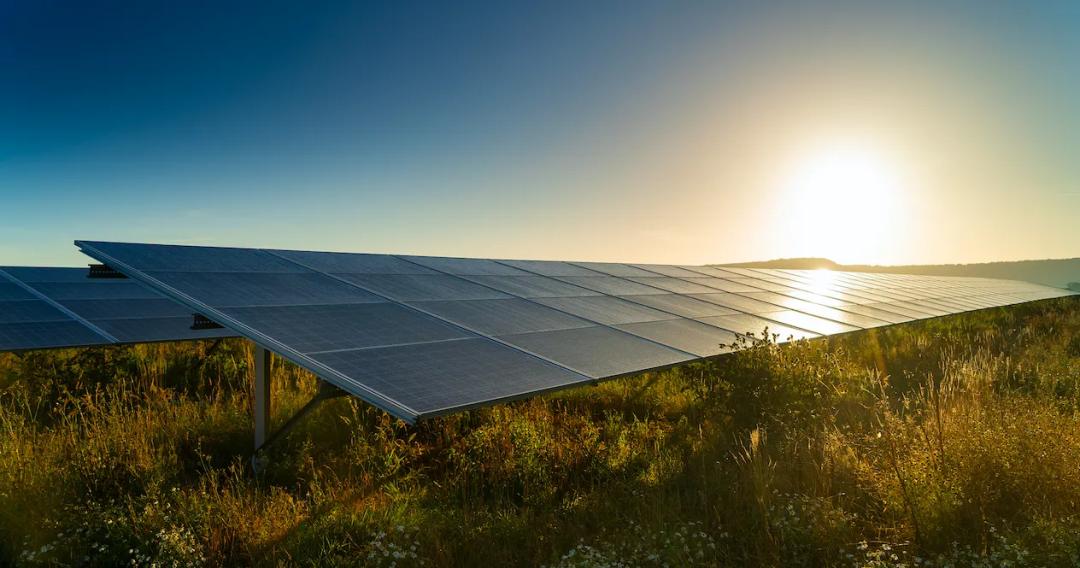
This is not flattery but an acknowledgement of a national - level infrastructure - building ability. While the United States is still arguing over grid upgrades, China's ultra - high - voltage power lines crisscross the country like steel arteries, directly transmitting the light and wind from the western deserts to the computing centers on the eastern coast. On the surface, it is a victory of technological ability and investment scale. In essence, it is an "asymmetric advantage" formed by the combined effect of national ability and long - term industrial policies.
The essence of this advantage is the superposition of the scale effect and the network effect. As a super - large infrastructure project led by the state, the ultra - high - voltage power grid has extremely high initial fixed costs and sunk costs during its construction. Once built, its marginal power - transmission cost is extremely low, and the benefits increase as the network expands, forming a natural - monopoly property.
This is also difficult for Musk to replicate in the United States. The decentralized private power grid system, lengthy approval processes, and property - rights disputes make it extremely difficult to build a national unified and efficient power - transmission grid.
What Musk sees is a sample of the determination to solve future problems with physical means. Of course, his brilliance lies in that he breaks out of the involution - style competition over process nodes in the technology circle and points out with the first - principles thinking that the real bottleneck in the explosion of computing power will ultimately come down to the most primitive energy - electricity.
02
China's Infrastructure:
System Test under Hardware Leadership
China's energy achievements are obvious to all. Its photovoltaic installations lead the world, and its ultra - high - voltage technology sets the standards. These are the "hard powers" praised by Musk. However, the rapid - paced technological revolution poses a deeper test to the "soft environment" of the system. Take the "East Data, West Computing" project as an example. It demonstrates a grand plan to transform energy advantages into computing - power advantages. Western provinces such as Inner Mongolia and Gansu are attracting data centers to locate there with low - cost green electricity.

But this brings new problems: When a huge amount of computing power and data are concentrated in the west, are the supporting data - property rights definitions, cross - border flow rules, and computing - power trading mechanisms mature? That is to say, China has significantly reduced the transaction costs of energy factors relying on its strong infrastructure - building ability, but the rapid expansion of production capacity (such as in photovoltaics) has brought pressure for market clearance. How to achieve optimal resource allocation through market mechanisms (rather than simply administrative orders) is a difficult problem.
In addition, energy investment itself has a strong geographical attachment, which involves deep - seated issues in regional development economics: When the west transmits clean electricity to the east, how can a more equitable cross - regional value distribution be achieved through price, tax, and compensation mechanisms to avoid the "resource curse" or new development gaps? This is not only a technical dispatching problem but also an institutional design problem of property rights, distribution, and incentives.
For example, AI training consumes a huge amount of electricity. Can the algorithms it generates avoid biases? How can the interest distribution between regions be balanced when the west supplies clean electricity to support the intelligent development in the east? This is no longer a simple technical problem but a challenge of institutional design and governance wisdom. Musk has seen the scale of "China's electricity output being three times that of the United States," but the system resilience, fairness, and sustainability beyond the scale are the longer - term race tracks.
03
Institutional Arrangement:
How to Place the "Human" in the Rapid Development
Musk's countdown exposes a sharp "time - discounting" contradiction: Technological development changes exponentially, while the evolution of institutions, laws, and ethical concepts is usually gradual. There may be a non - negligible time lag between China's advanced layout in energy "hardware" and the "software" - institutional arrangements - suitable for the intelligent era. From a sociological perspective, technological revolution is not only an innovation of production tools but also a re - arrangement of social relations, occupational structures, and even the meaning of life.
Musk's prediction is that with the popularization of humanoid robots, labor costs will approach capital expenditures plus electricity bills. To some extent, this statement has shaken the foundation of modern society - the social contract and social - stratification system centered on occupations and salaries.

This points to a possible social scenario: Material production is extremely abundant, but the economic role of humans is re - defined. When AI and automation may lead to structural unemployment, is our social system ready? When AI and robots take over a large number of jobs, can the concept of "universal high income" or similar distribution mechanisms be put on the table for discussion? This is not science fiction but an approaching real - world problem.
Technological development always pursues the ultimate improvement of productivity. Then, the ultimate goal of developing productivity is to liberate it, and everything points to how to better serve humans. The technological development of all mankind is based on a well - known tacit consensus that humans are the end, not the means, and we should pay attention to human values, dignity, and sense of belonging. What we need to ask is whether the current technological development has formed a "abundance trap"?
For example, while building a large number of data centers and smart grids, has a skill - transformation system for affected workers been planned simultaneously? While encouraging photovoltaic investment, has a mechanism been established to ensure that rural areas can fairly share the "sunshine benefits"?
The core of the national institutional arrangement is how to ensure the shared development dividends and avoid new digital divides and social differentiation in the torrent of technology. This requires not only an engineer's thinking but also a systematic thinking that combines sociology, ethics, and economics.
Musk has started the countdown with "deadly optimism." He has torn off the gentle veil of the future and put the cold and fundamental challenge of energy on the table. China has won the first - mover advantage in this round with its strong infrastructure - building ability. However, the real competition may have just begun: The iron towers and power lines of hardware are easy to measure, but the flexibility, inclusiveness, and foresight of institutions are difficult to quantify.
It is not only an engineering problem but also an economic problem - related to factor costs, scale benefits, and institutional costs; it is also a sociological problem - related to employment, fairness, and human values; ultimately, it is a political - economic problem - related to the role and status of the country in the new civilization form.
China's achievements in energy infrastructure provide a strong physical foundation, but the real test lies in whether we can build an adaptive institutional system on this basis that can both stimulate the "rapid advancement" of technology and ensure the "steady and inclusive" development of society. Electricity drives computing power, and a wise institution will determine what kind of future this power will shape.
This article is from the WeChat official account "Foresee Energy," author: Wang Mengjiao. It is published by 36Kr with authorization.