Using the "AI Swarm Model" to Transform 550 Million Medical Examination Reports into a Cash Cow for Chronic Disease Prevention, "Xuangezhiyuan" Launches Seed Round Financing
36Kr has learned that Xuange Zhiyuan Artificial Intelligence Technology (Wuhan) Co., Ltd., which claims to build the world's first holographic health risk management platform for AI preventive medicine based on the swarm model architecture, is seeking a 10 million yuan seed round of financing from the capital market. This round of financing will be mainly used for product commercialization, the creation of benchmark cases, and team building.
Breaking the Dilemma of "Only Treating, Not Preventing" in Medical AI and Entering the Trillion - Dollar Preventive Medicine Blue Ocean
While the current medical AI market is caught in "red - ocean competition", Xuange Zhiyuan has taken a unique approach and set its sights on a broader market - preventive medicine. The company's founding team told 36Kr that existing medical AI products mainly focus on the "disease treatment" stage, such as imaging diagnosis AI and clinical decision - support systems, but they only reach the population that already has diseases. However, the health risk management of China's 1.4 billion healthy and sub - healthy population remains an untapped blue ocean.
"What Xuange Zhiyuan wants to do is to build the world's first holographic health risk management platform based on routine physical examination data," the company's founder introduced. Relying on the technical support of a multi - disciplinary professor team from Tongji Medical College of Huazhong University of Science and Technology, the platform has created a "swarm model architecture" and can achieve full - disease risk assessment, enabling preventive medicine to move from concept to large - scale operation.
Technological Breakthrough: The Swarm Model Architecture Achieves "One Training, Multi - Disease Collaboration"
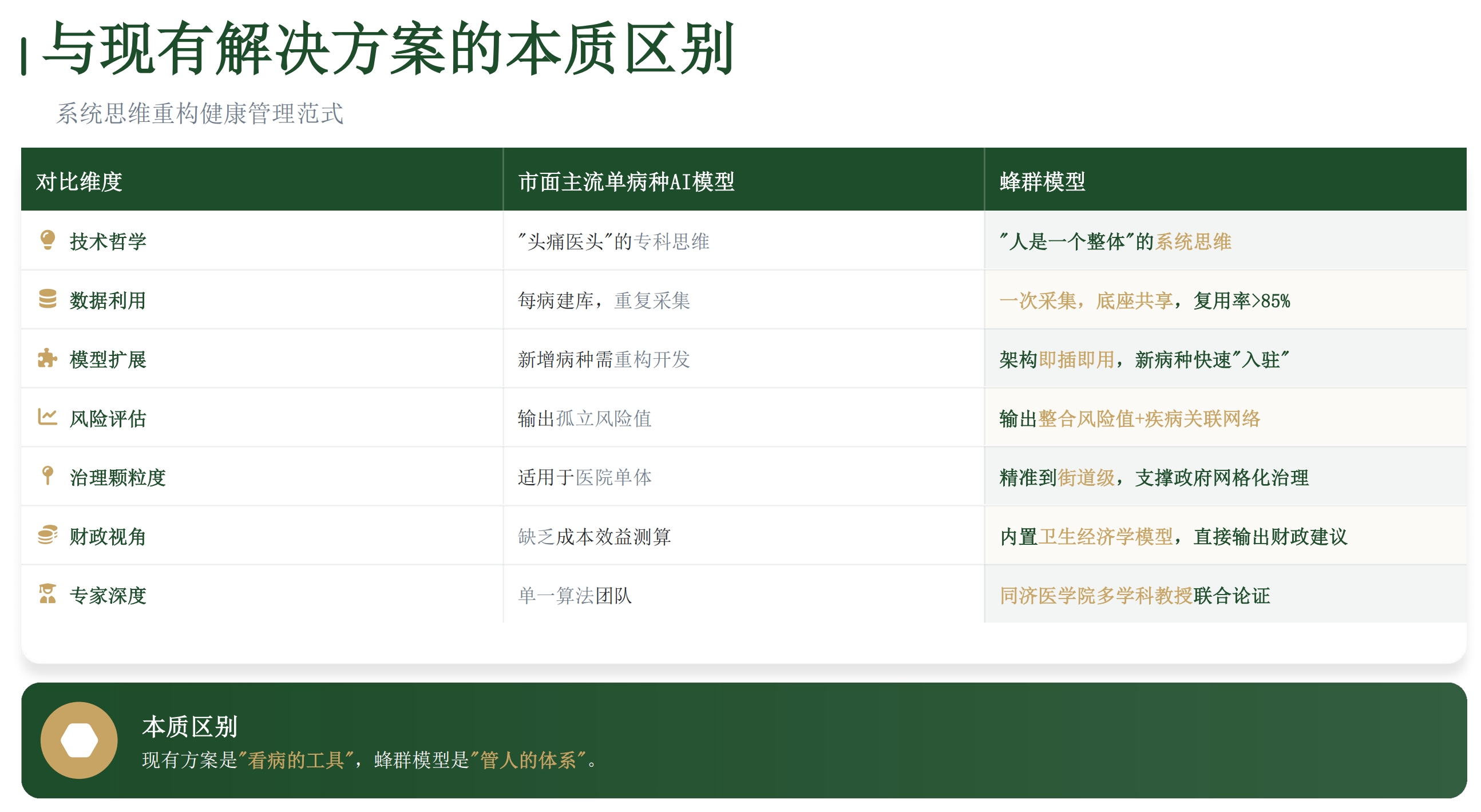
Different from traditional single - disease AI models, Xuange Zhiyuan's swarm architecture makes common features into a shared base, and each disease sub - model works collaboratively like a bee swarm. The advantage of this architecture is that for new diseases, only the "small part" needs to be trained, and there is no need to reconstruct the entire system. Moreover, the more diseases there are, the richer the shared features will be, and the accuracy of the overall model will actually increase.
Currently, the platform has completed the development of risk assessment models for 23 common chronic diseases, with an overall AUROC ≥ 0.95, reaching the clinical "excellent" level. This technological breakthrough makes large - scale and low - cost health risk management possible.
Diversified Business Model Builds a Strong Network Effect
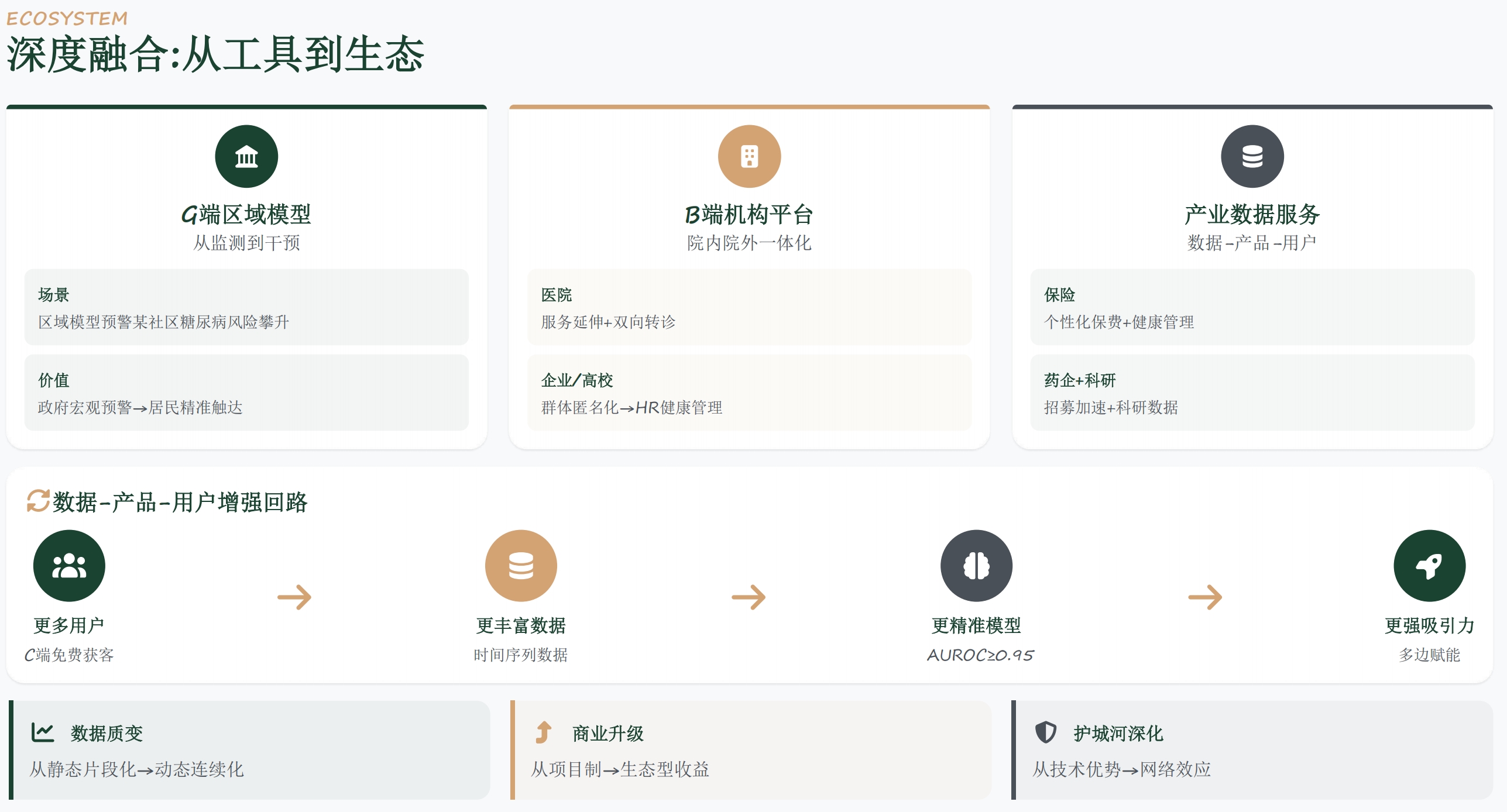
Xuange Zhiyuan has adopted a unique B2G2B2C business model. By entering through the government end, it builds a four - in - one service ecosystem covering regional health governance, institutional intelligent efficiency improvement, industrial data intelligence, and personal health management.
Government End (G End)
It provides regional group health governance and decision - making data support for the Health Commission, Centers for Disease Control and Prevention, etc. The initial bid amount can reach 24.3 billion yuan. Calculated at a 10% penetration rate, the annual income pool can reach 728 million yuan.
Medical Institution End (B End)
It provides population health risk management services and products for the health management centers of secondary and tertiary hospitals, health centers, universities, the military, large enterprises, etc. At the enterprise level, there are about 14,000 large enterprises (with ≥ 1000 employees) in the country (according to the 2023 enterprise legal person database of the National Bureau of Statistics). After Tencent introduced the "employee health portrait" in 2021, the hospitalization rate for chronic diseases decreased by 1.2%, and it saved about 18 million yuan in commercial insurance claims that year (as noted in the financial report). At the university level, the Ministry of Education's "Healthy China Initiative (2019 - 2030)" has included the "student physical health compliance rate" in the principal's assessment. The target in 2025 is ≥ 90%, and the current rate is 84%. The gap, which is the population in need of intervention, is approximately 4 million people. In the "Faculty and Student Health White Paper" project of Zhejiang University in 2022, with an investment of 1.2 million yuan (≈ 40 yuan per person), the student physical fitness compliance rate increased from 82% to 88%, and the principal's annual assessment was directly given extra points. The project was promoted in the Ministry of Education's briefing. The ROI is approximately 1:7, and it is directly related to the principal's performance, so the procurement intention is strong.
In the B - end market, with a 10% penetration rate, the annual sales can reach 1.666 billion yuan.
Industrial End (B End)
It provides data intelligence solutions for insurance companies, pharmaceutical companies, and research institutions. In the insurance technology field, the group short - term insurance premium reached 148.7 billion yuan in 2023, and there is a huge market space for optimizing the claims of the insured with pre - existing conditions.
According to the 2023 record of Ping An's "Chronic Disease Guard": After introducing an external model, the claims ratio decreased from 118% to 94%. The headquarters transferred 20% of the saved amount to the model provider (48 million yuan as noted in the annual report). The 2024 "Guidelines for Health Insurance Model Procurement" of the Industry Actuarial Association clearly states that for every 1 percentage point decrease in the claims ratio, 1%×20% of the premium can be extracted as the model wagering fee, which has become a standard clause for headquarters bidding.
Individual End (C End)
The personal AI health assistant is not an isolated product. It is the "terminal tentacle", "data source", and "value amplifier" of the entire platform ecosystem. Its integration with the first three major sectors will build a "smart health new ecosystem" that is driven by data in both directions, from macro - governance to micro - intervention. This integration is not a simple superposition of functions but a closed - loop of service, data, and business value through the "swarm model" architecture and a unified data base.
Aiming at the Core Pain Points of the System and Building a New Paradigm for Preventive Medicine
This platform attempts to address several deep - seated challenges in the current medical and health system:
Promoting the Shift of the Focus from "Treatment" to "Prevention"
The current medical system mainly serves the diagnosis and treatment of existing diseases, which is a passive response model. This platform aims to use technological means to systematically build a prevention system covering "risk assessment, early warning, and active intervention" and move the gateway of health management forward.
Exploring to Break the "Impossible Triangle" of Medical Resources
In the medical field, it has always been a challenge to achieve high - quality, high - accessibility, and low - cost simultaneously. This platform tries to provide large - scale health risk assessment services at a low marginal cost through widely accessible physical examination data and the scalable "swarm model" architecture, offering a technological solution for inclusive health management.
Committed to Building a Continuous and Dynamic Health Data Map
Different from the current relatively isolated and fragmented medical data situation, this platform focuses on integrating and analyzing an individual's cross - cycle health information, attempting to build a continuous "health trajectory" to provide more abundant data dimensions for a comprehensive assessment of health risks.
Industry observers believe that if such technologies can be successfully applied and verified, they may bring new ideas to public health governance, medical resource allocation, and personal health management. Their long - term value lies in the potential to help society shift more resources from the end - stage treatment of diseases to the front - end health maintenance and risk control.
Team Background: Strong Support from the Professor Team of Tongji Medical College
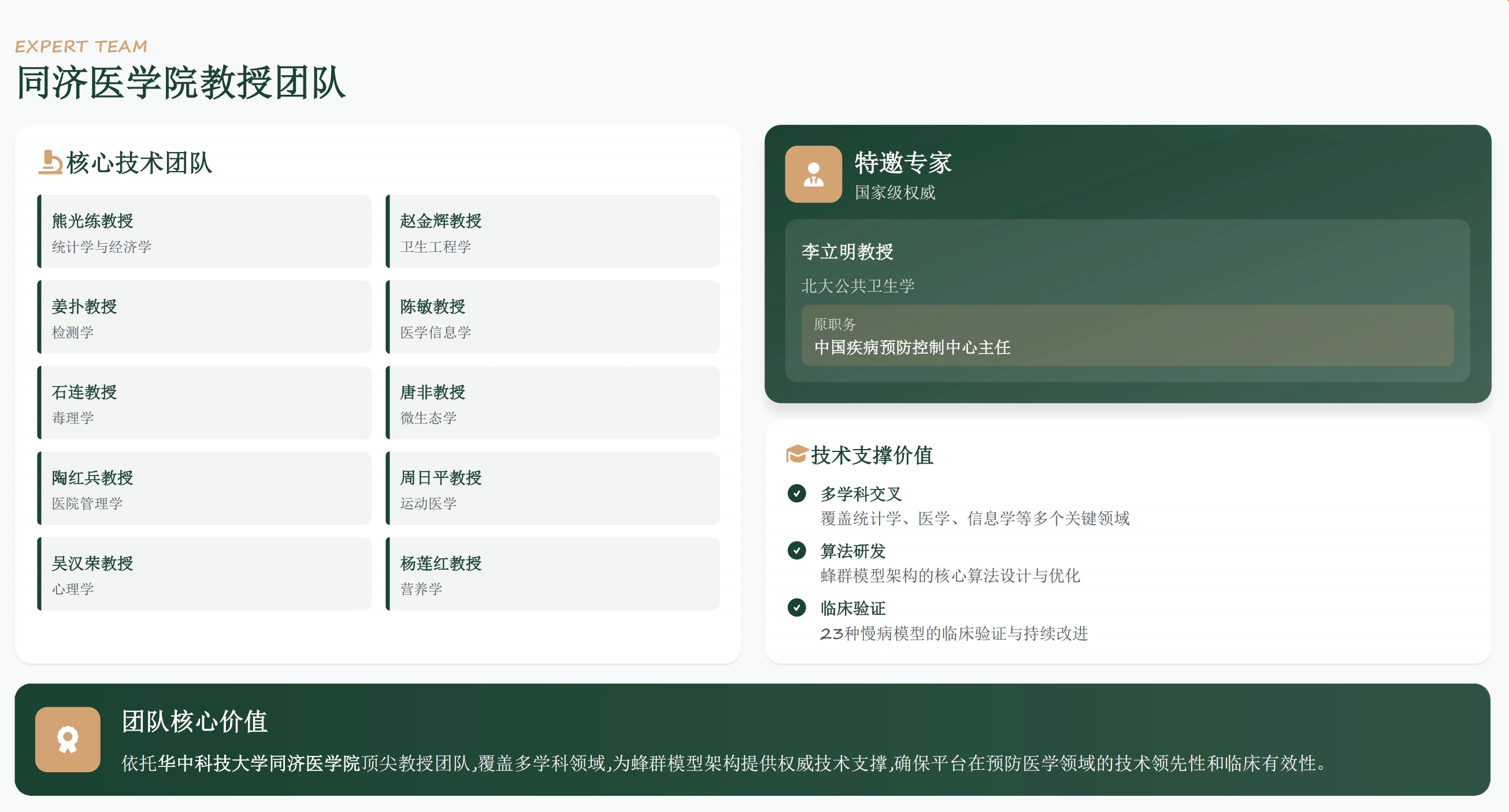
The company's core technology team comes from a multi - disciplinary professor team of Tongji Medical College of Huazhong University of Science and Technology, covering 9 fields such as statistics, economics, health engineering, and medical informatics. This interdisciplinary academic background provides solid technical support for the development of the swarm model architecture.
Funding Plan and Development Roadmap
According to the founder, the seed - round funds will be mainly used in three aspects: team building and R & D (42%), the construction of computing power infrastructure (30%), and the implementation of government cooperation projects (16%). The company plans to complete the implementation of benchmark projects for the Health Commission and Centers for Disease Control and Prevention in Hubei Province and Wuhan City within 12 months to lay the foundation for the angel - round financing.
According to the plan, the company will launch the angel - round financing in Q2 of 2027, with a target of raising 50 million - 100 million yuan for market replication and investment in C - end products.
Investors' Views
Industry investors told 36Kr that Xuange Zhiyuan's project has obvious differential advantages: "The preventive medicine track is in line with the policy direction of the 'Healthy China 2030' initiative. With the in - depth implementation of the 'Healthy China 2030' Plan Outline, the preventive medicine market has received policy support. The swarm architecture has obvious technological innovation, and the diversified business model also reduces the risk of single - dependence. Through the B2G2B2C business model, Xuange Zhiyuan has taken the lead in deploying in scenarios such as government health governance and medical institution services. Its technological barriers and first - mover advantages are expected to take a leading position in the tens - of - billions - level health management market. It is the only digital infrastructure in the 'Healthy China 2030' plan that directly transforms the 'chronic disease management for the whole population' policy into 'fiscally calculable, government - implementable, and perceptible to residents'."
With the completion of the seed - round financing, Xuange Zhiyuan will accelerate its deployment in the preventive medicine blue - ocean market and is expected to become a key promoter of the shift of medical AI from "treatment" to "prevention".