I can see the shadow of ofo in Songguo Chuxing.
Author | Zhang Fan, Huang Yida
Editor | Huang Yida
The "first stock of shared e-bikes" is coming.
Sh Pinecone Mobility (hereinafter referred to as: Sh Pinecone) submitted its prospectus to the Hong Kong Stock Exchange on January 2, 2026.
Sh Pinecone was founded in 2017 by Zhai Guanglong, a member of the founding team of Meituan. In terms of products, the Sh Pinecone e-bikes feature a striking yellow appearance, which not only echoes Meituan's brand vision but also replicates the visual symbol of the early yellow - shared bikes of ofo, making it convenient for users to quickly locate the bikes.
In terms of capital operation, in the first half of 2021, less than four years after its establishment, Sh Pinecone began preparations for an IPO in the United States. However, due to the impact of the general environment, the plan to list in the United States ultimately did not materialize.
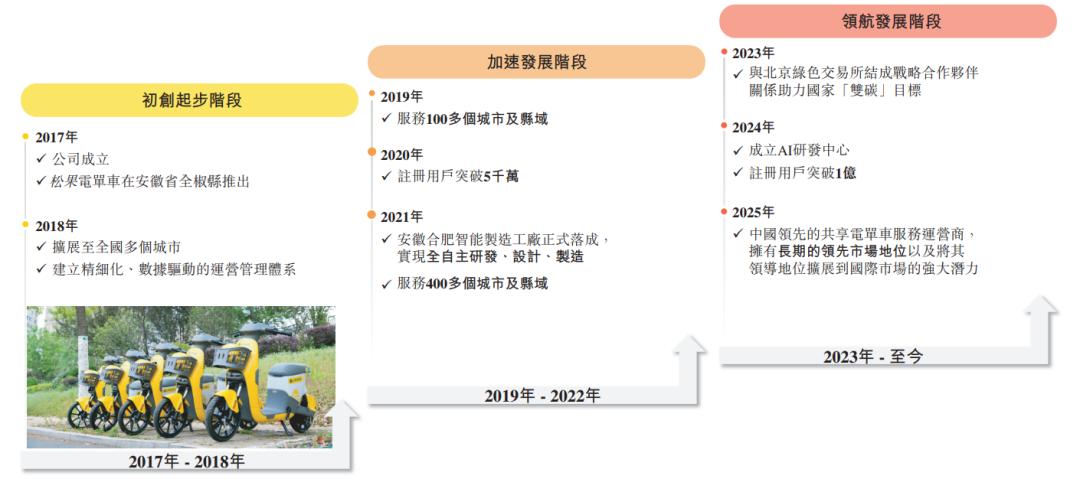
Figure: The development history of Sh Pinecone; Source: Company's official website, 36Kr
In terms of operating data, as of September 30, 2025, Sh Pinecone had deployed 454,627 shared e-bikes in 422 counties and cities across the country, and the number of registered users had reached 128 million, a considerable scale. In terms of revenue, Sh Pinecone's e-bike business achieved revenue of 934 million yuan in 2024, a slight year - on - year decrease of 0.16%, and the revenue accounted for about 97% during the same period.
In recent years, the company has also been actively exploring new businesses, such as adding advertising. As of September 30, 2025, the proportion of other revenues increased to 6.4%, but the e-bike service, as the pillar business, still accounted for as high as 93.6% of the revenue during the same period.
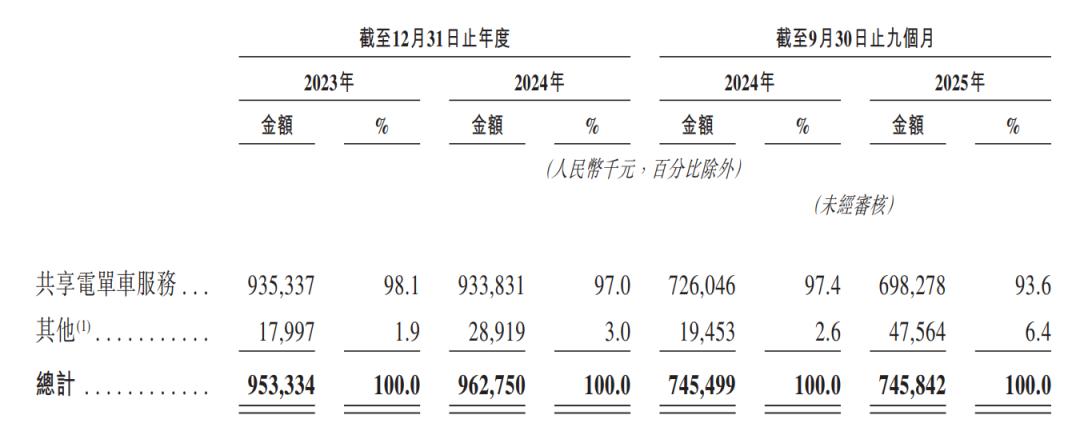
Figure: Sh Pinecone's main business and revenue structure; Source: Company's prospectus, 36Kr
01 Recover the cost of e-bikes in one year
Digging deeper into the business level, according to the prospectus data, in Q3 2025, the company's single - trip price was 2.94 yuan, and the average daily order volume of Sh Pinecone e-bikes during the same period was 3.08. This means that an active Sh Pinecone e-bike is expected to generate an annual revenue of 3,305 yuan (365 days * 2.94 yuan * 3.08 orders).
Over the past five years, the purchase cost of shared e-bikes has shown a steady downward trend. The industry's average purchase cost has dropped from 3,365 yuan per bike in 2020 to 2,978 yuan per bike in 2024. Sh Pinecone's depreciation policy is that the depreciation period of vehicles and batteries is 2 - 4 years. It can be seen that, without considering other costs for the time being, Sh Pinecone's operation model is: invest in a shared e-bike, recover the cost in one year, and make money in the next 1 - 3 years.
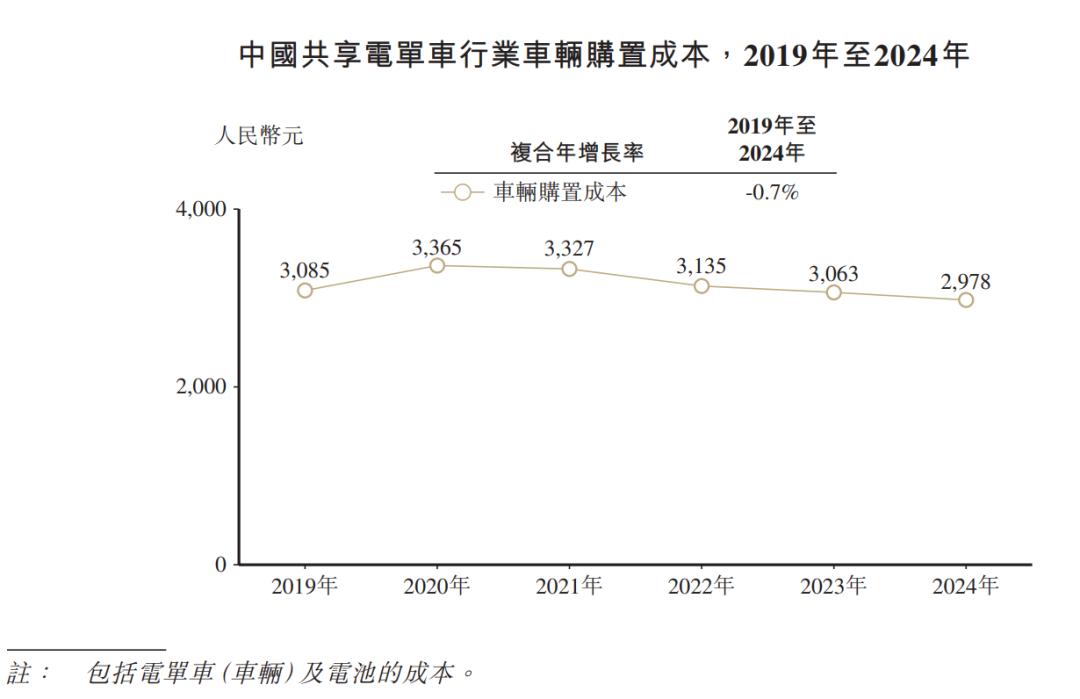
Figure: The purchase cost of domestic shared e-bikes has decreased steadily; Source: Company's prospectus, 36Kr
In terms of gross profit margin, Sh Pinecone's comprehensive gross profit margin increased from 15.8% in 2023 to 24.3% in Q3 2025, an increase of 8.5 percentage points. However, the cumulative revenue in the first three quarters of 2025 hardly increased. Therefore, the growth of gross profit mainly comes from cost control, mainly driven by the expiration of e-bike depreciation.
It can be seen that on one hand, the depreciation is decreasing, and on the other hand, the fleet size is expanding. This opens up a possible profit path, that is, to drive profit growth by having some vehicles serve beyond the depreciation period.
02 The disappearing economies of scale
But in fact, shared e-bikes are not profitable.
From the perspective of cost structure, the proportion of depreciation dropped from 41% in 2023 to 29.1% in Q3 2025. Correspondingly, the operating costs continued to rise. The changes in the proportion from 2023 to Q3 2025 are as follows:
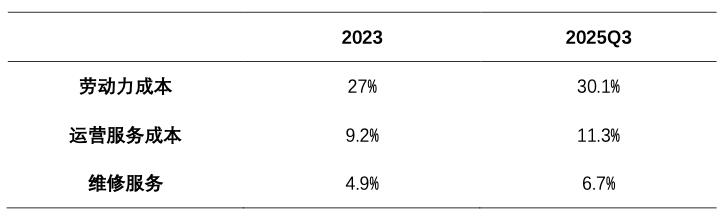
Table: The main cost items of Sh Pinecone show an upward trend; Source: Company's prospectus, 36Kr
The continuous rise of relevant operating costs is actually the last thing that the investment logic of the Internet wants to see.
One of the business rules in the Internet era is that the priority of scale is far higher than profitability, so losses are not important. Enterprises need to continuously increase investment to expand the scale. As the economies of scale are released, not only can various operating costs be diluted, but also a scale barrier can be built and transformed into a moat for enterprise development.
However, the above logic has not been verified in Sh Pinecone: while the fleet size is continuously increasing, the cost side does not show the expected downward trend. The reason is that, compared with shared bicycles, shared e-bikes require relatively high - frequency and large - scale charging and maintenance, which is one of the main constraints preventing Sh Pinecone's cost from decreasing.
Although current shared e-bikes can achieve a range of 80 - 100 kilometers with larger - capacity batteries, they still face problems such as the need to invest in electricity costs, logistics costs, and idle time during charging for operation. As a result, the relevant operating costs have always remained high. Moreover, due to the larger activity range of shared e-bikes, the difficulty of scheduling is also increased, further pushing up the maintenance cost.
In the domestic market pattern of shared e-bikes, the top three are Hello e-bikes, Meituan e-bikes, and Qingju e-bikes. Sh Pinecone currently ranks fourth in the industry, but its market share lags far behind the top three. Looking at the shared bicycle market, in the early years, there were various colorful bicycles, but in the end, basically only three remained, namely Hello, Meituan, and Qingju. And shared bicycles also have difficulty in making profits at present and still rely on the blood - transfusion from major shareholders to maintain operations.
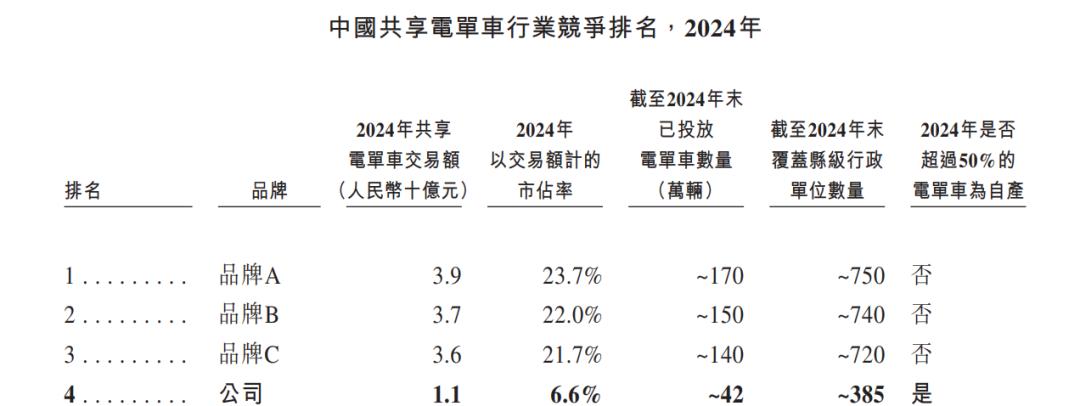
Figure: The competitive pattern of the domestic shared e-bike market; Source: Company's prospectus, 36Kr
The reason why Internet giants are willing to layout such loss - making shared businesses is largely that travel is an important part of promoting the activity of the local - life ecosystem. If the shared bicycle/e-bike business is calculated separately, it is losing money. But when it is put into the entire local - life ecosystem, it can contribute to overall profitability.
However, this logic does not apply to Sh Pinecone. As an independently - operated shared e-bike enterprise, in a market full of giants, it lacks strong support from shareholders and its business scale lags far behind the top three in the market. In the current situation where the economies of scale are not well - released and the profit expectation is dull, where is the future way out for Sh Pinecone?
Looking back at the development history of the shared bicycle market, Mobike's destiny was to be acquired by Meituan. There were also rumors that ofo would be acquired by Didi, but the acquisition negotiation ultimately broke down and its business has completely shut down. It is not difficult to see that leading enterprises are either incorporated by Internet giants or fade out after the capital chain breaks.
03 Why does it still need financing?
The following two sets of company data are worthy of attention:
1) The scale of deployed e-bikes increased from 389,899 in 2023 to 454,627 in Q3 2025, a growth of 16%;
2) During the same period, the average daily orders of daily active e-bikes increased from 2.76 to 3.08.
Then, with the increase in the average daily order volume of e-bikes and the expansion of the vehicle scale, the total order volume should also increase. But the fact is just the opposite. The daily order volume actually declined, dropping from 1.102 million orders to 1.006 million orders during the reporting period, a decline of nearly 10%.
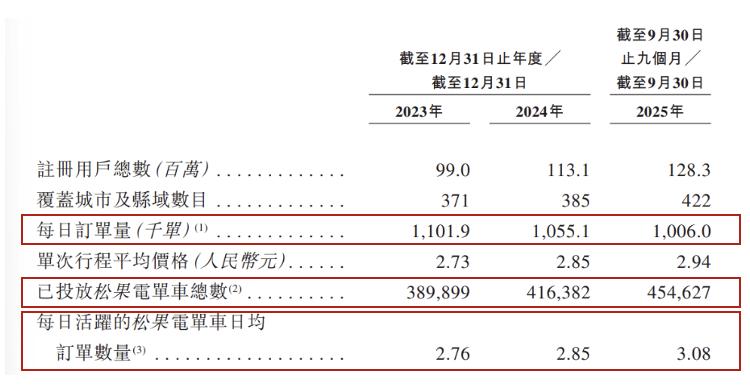
Figure: Some operating data of Sh Pinecone; Source: Company's prospectus, 36Kr
According to the definition in the prospectus, the daily order volume counts active e-bikes, which means that the proportion of active e-bikes among the deployed Sh Pinecone e-bikes is declining. In other words, as the vehicle scale grows, the operating efficiency decreases.
According to the fundraising plan, part of the raised funds will be used to pay for the purchase cost and expenses of e-bikes for the company's plan to enter more advanced cities in the next three years. Currently, it plans to enter 30 cities in South China.
Therefore, it inevitably raises questions from investors: Against the background of poor release of economies of scale and low operating efficiency, is it still necessary for Sh Pinecone to continue to increase the deployment of e-bikes?
*Disclaimer:
The content of this article only represents the author's views.
The market is risky, and investment should be made with caution. Under any circumstances, the information in this article or the opinions expressed do not constitute investment advice to anyone. Before making an investment decision, if necessary, investors must consult professionals and make a careful decision. We have no intention to provide underwriting services or any services that require specific qualifications or licenses for the parties in the transaction.