With 12 billion, a married couple from Nankai University rang the bell at the IPO.
The Hong Kong Stock Exchange remains bustling.
Today (January 9th), Ribobio Co., Ltd. officially listed on the Hong Kong stock market, creating the first Chinese small nucleic acid drug stock and also the first innovative drug IPO on the Hong Kong stock market this year. In this IPO, Ribobio issued shares at a price of HK$57.97 per share, opening with a sharp 29% increase and its market value exceeding HK$12 billion.
Behind Ribobio is a couple of scientists. Liang Zicai and Zhang Hongyan met at Nankai University and then both went overseas for further studies and teaching. After returning to China with enthusiasm, they founded Ribobio in 2007, thus embarking on the exploration journey of Chinese small nucleic acid innovative drugs.
This is a good story of long - term companionship by a VC. Along the way, a number of investors have gathered behind Ribobio, forming a large team. Among them, as an investment institution that has continuously supported Ribobio since the Series A round, Panlin Capital has accompanied Ribobio for ten years and also reaped remarkable returns - the rewards given by time are often more substantial.
A couple of scientists return to China to start a business, a long nineteen - year journey
The starting point of Ribobio dates back to Nankai University - Liang Zicai and Zhang Hongyan met here. After graduating from the Department of Biology in 1988, they both went overseas to study and completed their post - doctoral research at Yale University. Subsequently, they taught together at the Karolinska Institute in Sweden.
During this period, the global life sciences witnessed a crucial turning point: in 1998, the RNA interference (RNAi) mechanism was discovered. A tiny double - stranded RNA could precisely silence specific genes. Several years later, this achievement won the Nobel Prize, revealing a new possibility: drugs don't have to only target proteins but can also intervene earlier at the gene expression level, theoretically opening the door to more "undruggable" targets.
This is a grand and elegant idea. Liang Zicai keenly perceived its potential and thus focused his research on the field of small nucleic acids, becoming one of the earliest Chinese scientists to explore this direction. The outside world may not know that the Chinese translation "small nucleic acid" was named by him and has been used ever since.
Around 2006, with the belief of promoting original innovation in China, Liang Zicai and his wife returned to China. He presided over the first 863 key project in the field of small nucleic acids in China and joined the Institute of Molecular Medicine at Peking University as a professor. The following year, Ribobio was established in Suzhou, and the first small nucleic acid base in China was simultaneously laid out.
At that time, the domestic small nucleic acid field was still in the "uncharted territory". There were even no qualified CROs in the market to meet the synthesis and pre - clinical research of siRNA. So Liang Zicai decided to start from scratch, gradually establishing nucleic acid synthesis processes, chemical analysis, and GMP quality systems, and transforming the data in papers into implementable production lines step by step. Since then, when it comes to Chinese small nucleic acids, Liang Zicai has become an unavoidable name.
Li Yuhui, the founding managing partner of Panlin Capital, recalled his first meeting with Liang Zicai to the investment community: "It was like being bathed in the spring breeze" and "we had a strong resonance". In Li Yuhui's memory, at that time, Professor Liang didn't rush to describe the business blueprint or market space but talked about the technical principles, delivery routes, and clinical needs in a logical and detailed way, showing rare scientific depth and systematic thinking.
Later, the Panlin team often used a term to describe such a founder: "an entrepreneur among scientists" - not only top - notch in scientific research but also able to turn complex technologies into products and lead the team through the "valley of death" from the laboratory to industrialization. In Li Yuhui's words: "He made you believe that in this long - distance race, someone can really reach the finish line."
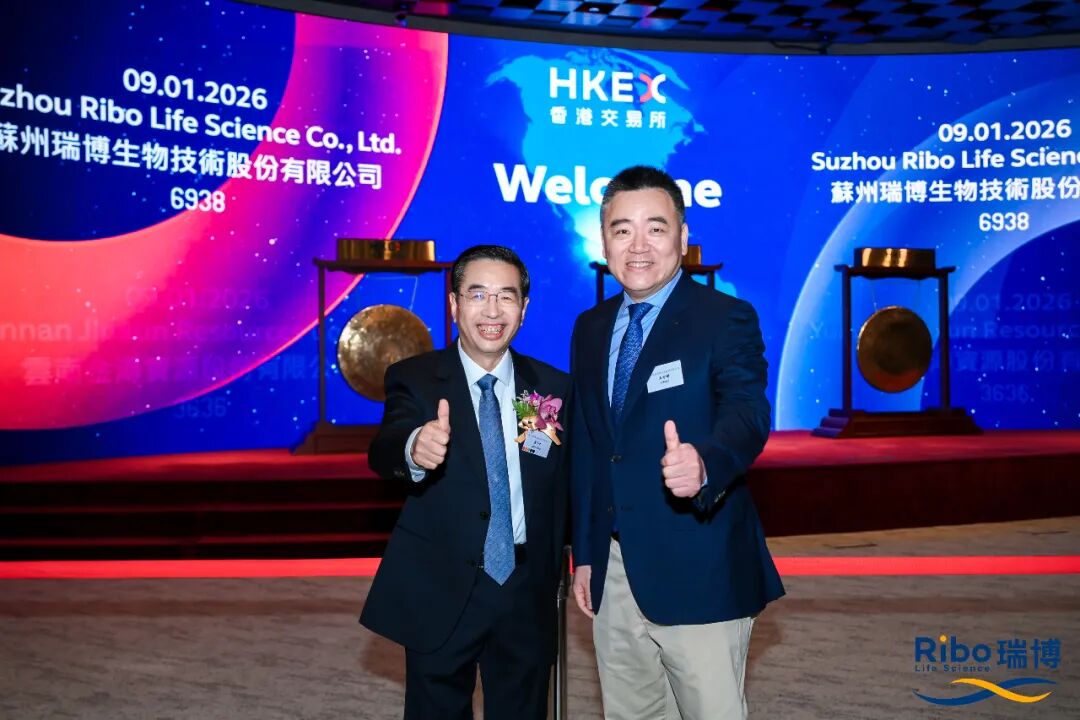
From left: Professor Liang Zicai, founder and chairman of Ribobio; Li Yuhui, founding managing partner of Panlin Capital
To date, Ribobio has built a full - process technology system covering from target discovery to clinical development, created one of the largest siRNA drug pipelines in the world. Seven self - developed drug assets are in clinical trials, covering a variety of indications in cardiovascular, metabolic, kidney, and liver diseases. Its self - developed liver - targeted RiboGalSTAR™ platform delivery technology has advanced multiple products to the Phase II clinical stage.
More notably, in 2023, Ribobio reached a cooperation deal worth over $2 billion with German pharmaceutical giant Boehringer Ingelheim - this is the first overseas deal of Chinese small nucleic acid technology, indicating that the value of Chinese innovation is being recognized globally.
"Looking back from 2007 to now, it seems like a long time," Liang Zicai sighed. "But looking at the world, the emergence of any innovative technology requires such a period of accumulation and development."
Panlin Capital invests in six consecutive rounds, the longest - accompanying investor behind Ribobio
Looking back at the growth process of Ribobio, an uncommon detail can be found:
Since the Series A round in 2015, Panlin Capital has invested in Ribobio for six consecutive rounds, accompanying the team through key stages such as technology verification, platform iteration, and industry fluctuations. For ten years, it has almost covered the most complete cycle of Chinese innovative drugs.
For Panlin Capital, the emergence of Ribobio was just in time. This investment institution, founded in 2010, started with PE business in the early stage. Since 2014, it has gradually focused on early - stage investments driven by technology and established healthcare as one of its core sectors. By 2015, the team had formed a clear judgment: the future of Chinese innovative drugs lies not in rapid imitation but in source breakthroughs with underlying technical capabilities.
It was during the search for the "right project" that Ribobio came into view. After three months of in - depth independent due diligence and multiple rounds of communication, Panlin Capital put Ribobio on the investment decision - making meeting. There were three factors for the decision to invest at this time:
First, it independently built the LNP delivery platform in the early stage, mastering the core technology; second, its existing pipeline had entered the clinical stage, verifying the feasibility of the technical path; third, Liang Zicai had both scientific research depth and organizational ability, being a rare "entrepreneur among scientists".
In that cold winter, Panlin Capital made its first VC investment in the biomedical field. "In the end, it's about what you choose to believe," Li Yuhui said frankly when talking about why he was so confident in Ribobio. It stems from respect for scientific logic, a persistence in first - in - class innovation, and a simple desire: to let those who are willing to endure hardships and dare to explore uncharted areas be finally seen by the era.
Trust was thus established and persisted throughout. In the Series C1 round in 2019, Ribobio was in a critical stage of technology platform iteration from LNP to GalNAc, and the new - generation delivery system was not fully formed yet. At this point, some potential investment institutions began to waver, and the company was in urgent need of funds.
Just then, Liang Zicai called Li Yuhui, and Li Yuhui hardly hesitated: "Not only will we invest, but we will also lead the investment." Eventually, Panlin Capital, together with Sany Venture Capital, led the crucial Series C1 financing round of Ribobio. Institutions such as Legend Capital, SDIC Venture Capital, Hanyang Capital, Blue Ocean Capital, Chuangyuanyuan Investment, Daxie Yungong Investment, and Shenzhen Zhonghui Investment participated in the follow - on investment, with a total amount of about 203 million yuan. This sum of money was extremely precious, helping the company survive the critical juncture of technology transformation.
"We had already developed a clear understanding. If we didn't lead the investment, we would waste our understanding and the opportunity," Li Yuhui analyzed later. Real patient capital is the kind that still dares to stay at the table when the company is in the most difficult situation and the market can't understand it.
After that, almost all the news about Ribobio was good. In the same year, during the Series C2 financing, the small nucleic acid track had changed greatly. With the approval of the world's first blockbuster small nucleic acid drug in China, the track suddenly heated up. Institutions such as China National Venture Capital Corporation, CICC Qide Fund, Hillhouse Capital, Hengxu Capital, Langmafeng Venture Capital, Sinopharm CICC Fund, Shenzhen Zhonghui, Shanghai Free Trade Zone Fund, and Hongtao Capital joined the investor camp. The market sentiment changed from cold to hot in just a few months.
Along the way, Panlin Capital has always been behind Ribobio. By the time of listing, it had invested six consecutive times, becoming the shareholder with the most investment rounds, the longest - accompanying time among external institutions, and also one of the two institutions with the largest investment amount. According to the prospectus, before the IPO, Panlin Capital held 6.69% of Ribobio's shares. Calculated based on the post - Series A valuation, Ribobio's current market value has increased about 30 times. Whether in terms of multiples or scale, this is a substantial return.
"After cooperating with Panlin for many years, the deepest feelings can be summarized in three words: serious, professional, and cautious," Liang Zicai said with deep feeling. "From global layout to corporate governance and then to capital strategy, they not only participated deeply but also gave firm support at critical moments - they are truly long - term partners."
The gift of time, welcoming the golden era of Chinese medicine
Looking back, Ribobio is more like a verification of long - termism for Panlin Capital. It confirms the consistent path of this institution in the past decade: early recognition, early positioning; long - term companionship, concentrated heavy investment; at the critical nodes of technological leap, helping the 'dark horse' become the 'white horse'. This methodology has never wavered regardless of whether the market is bustling or sluggish.
Ribobio is not an isolated case. In September 2025, GenFleet Therapeutics Co., Ltd. listed on the Hong Kong stock market, which is also the result of Panlin Capital's consecutive multi - round investments. From biomedicine to hard technology, projects such as Kangtai Medicine, Kaipu Biology, PPIO, Ruiyun Cold Chain, and WoFei ChangKong also follow a similar trajectory - making judgments before a consensus is formed and continuously accompanying the companies during the period when they need patience.
The data provides a side - view confirmation. Panlin's internal statistics show that more than 70% of the projects were invested in before the Series A round, and more than half were led by it in the first round.
"More than half of our projects have gone through multiple rounds of investment," Li Yuhui admitted to the investment community. "Because real innovation is never a linear evolution but a series of leaps. You must choose to continue believing at every critical node."
It sounds simple but is extremely challenging in terms of determination. It requires investors to have both the insight and patience of a scientist and the decisiveness of a sniper, daring to make heavy investments at critical moments. This "belief" doesn't come out of thin air but is based on a firm belief in the underlying logic of the industry.
In Li Yuhui's view, the long - term driving force of Chinese biomedicine is very clear: the aging population is accelerating, and the unmet clinical needs are constantly emerging. With the rapid evolution of life sciences and biotechnology, treatment methods are still continuously upgrading. "The medical field is a typical long - term and profitable track, and its value won't change due to short - term capital sentiment."
That's why, when the industry cooled down significantly in the previous years and there were doubts in the market about "Is it still worth investing in innovative drugs?", Panlin Capital's judgment became even more firm.
"In those two years, people often asked me, 'Why are you still looking at innovative drugs?'" Li Yuhui recalled. "In fact, our mindset was completely different. The return of valuations to rationality and the fading of the heat are precisely the best windows for professional institutions to conduct due diligence calmly and select high - quality targets."
It was also during this period that after first predicting "The spring of investing in innovative drugs is coming", Panlin Capital clearly proposed the investment direction of "original innovation" and continuously increased its investment in the biomedical field.
One of Li Yuhui's views is quite impressive: "To some extent, the charm of VC lies in the sincere desire to help entrepreneurs achieve their goals." It's not just about providing financial support but also offering judgments, resources, and patience at critical nodes, so that those worthy things can finally be accomplished.
After ups and downs, the Chinese medical investment market has finally shown signs of warming after experiencing the cold winter of the previous cycle. "Investment is a long - term practice," Li Yuhui sighed. "We're glad that we planted the seeds ten years ago, but what really excites us is that the golden era of Chinese biomedicine may have just begun."
The more in the trough, the more decisive the action should be. The more the market is bustling, the more calm one should remain. Perhaps this is the only answer to crossing the cycle.
This article is from the WeChat official account "Investment World" (ID: pedaily2012), author: Wang Lu, published by 36Kr with authorization.