OpenAI's 2026: Either achieve divinity or go bankrupt
2026 will be a make-or-break point for OpenAI. Facing an astonishing projected cash hole of $17 billion and a fierce counterattack from Google's Gemini, Altman was forced to activate the "Code Red." On one hand, there is an unprecedented financing plan of hundreds of billions of dollars; on the other hand, there is a financial crisis with the inference cost exceeding the revenue. Is this the inevitable path to AGI, or is it the eve of the bursting of the biggest bubble in Silicon Valley?
Under the spotlight of Silicon Valley, Altman is riding a unicycle while juggling more and more balls.
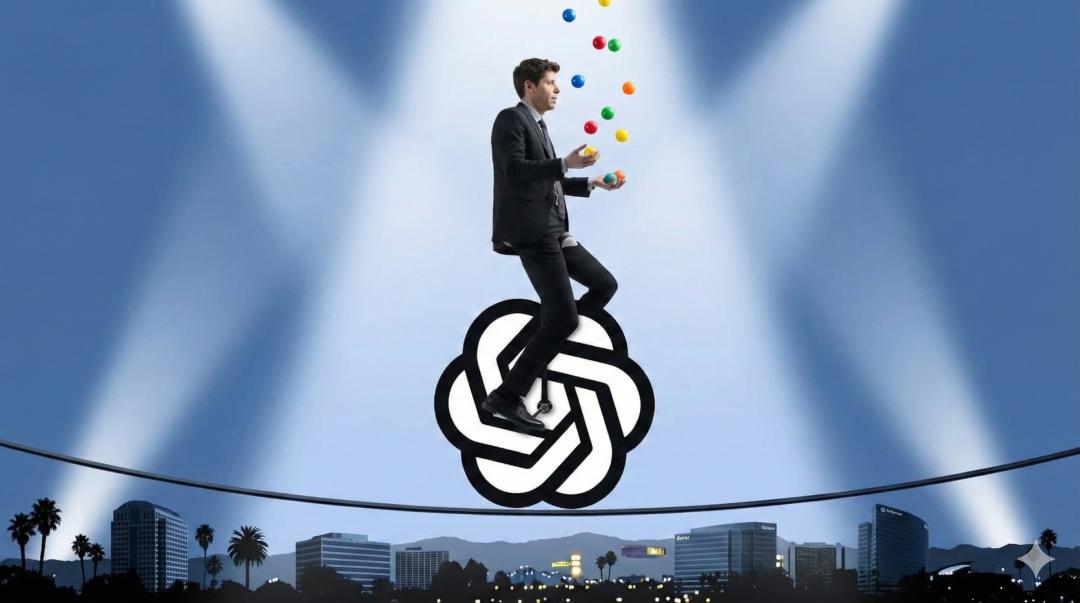
The picture is generated by Nano Banana Pro.
For the helmsman of OpenAI, merely creating an all - knowing chatbot seems to be too conservative.
To keep the investors waving their checks and the audience excited, he has to continuously come up with new concepts: self - developed chips, e - commerce integration, corporate consulting, and even consumer - grade hardware designed by Jony Ive.
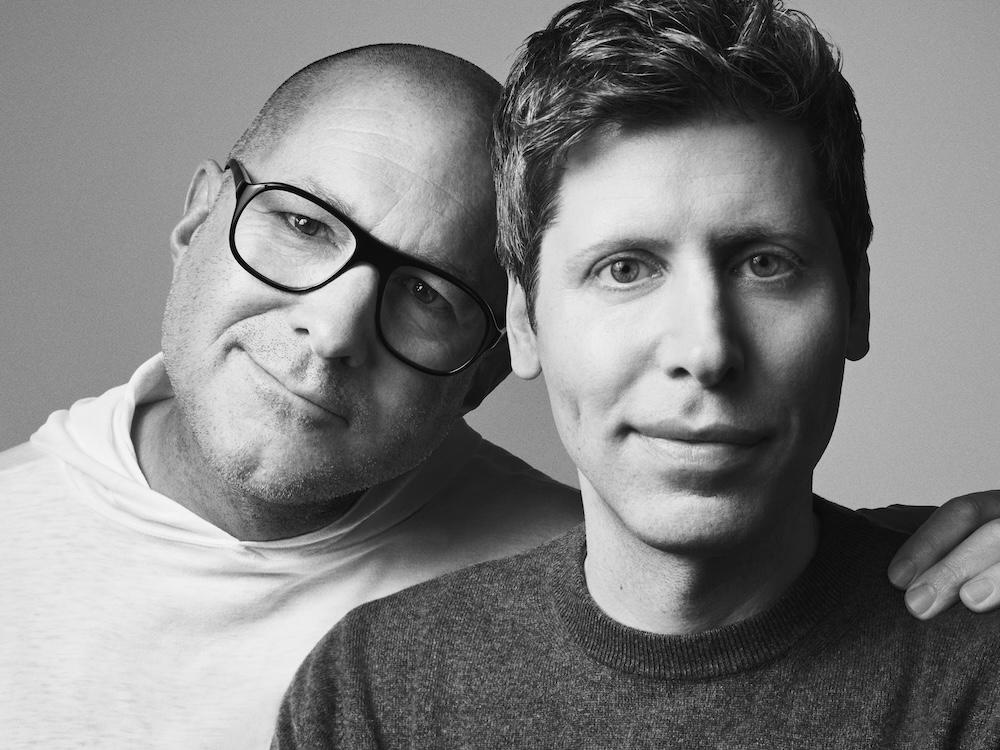
However, the admission fee for this show is becoming astonishing.
In 2026, for the fastest - growing unicorn in history, it is destined to be a thrilling "match point."
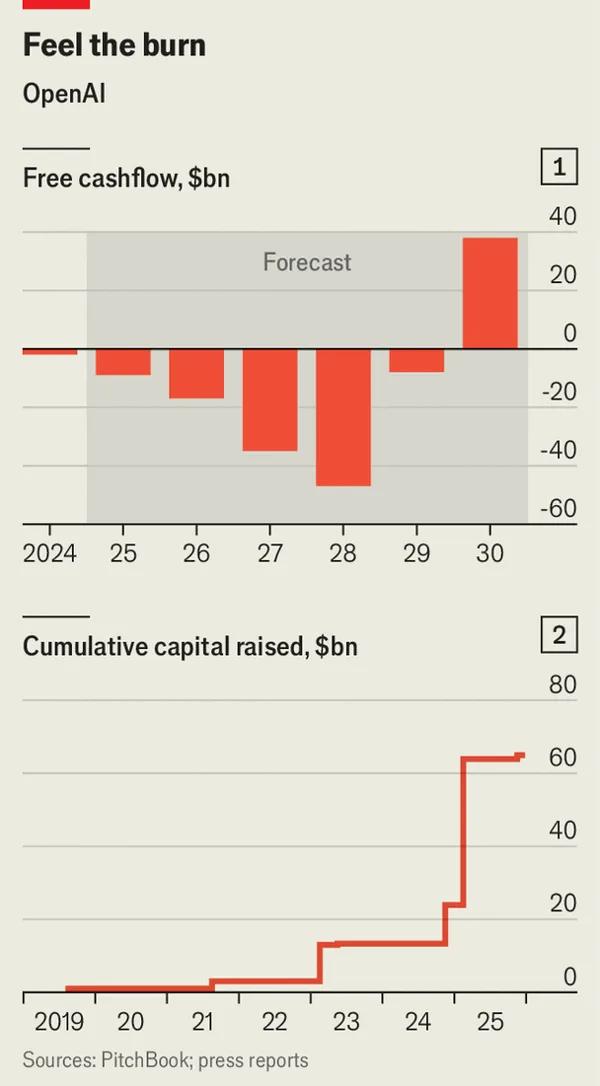
According to leaked financial forecasts, OpenAI is expected to burn through $17 billion in cash in 2026, up from $9 billion in 2025.
What's even more alarming is that this loss trend is expected not to converge but to continue to accumulate in the next three years.
This is like a game of Russian roulette with cash flow.
The Appetite of the Money - Guzzler
Since ChatGPT burst onto the scene at the end of 2022, OpenAI has raised more than $60 billion from investors, setting a record for private companies.
But Altman's appetite is far from satisfied.
According to a core source, OpenAI is planning a new round of financing in 2026, targeting a whopping $100 billion, which could push the company's valuation to an astonishing $830 billion.
In comparison, its valuation was around $500 billion in October 2025.
The list of potential major investors in this round is star - studded and complex: Amazon is in talks to invest $10 billion, even though it is Microsoft's arch - rival in the cloud; Nvidia has also hinted that it may invest $100 billion in batches, of course, on the condition that the money will eventually flow back to Jensen Huang's pocket to buy graphics cards.
Behind this unprecedented financing frenzy is equally unprecedented growth and consumption.
In 2025, OpenAI's revenue was reported to have reached $13 billion, and the annualized rate at the end of the year was heading towards $20 billion.
It took Google and Facebook five and six years respectively to reach this milestone, while OpenAI achieved it in just two years.
But the concern is that there is a tight "chain reaction" between OpenAI's revenue growth and computing power costs.
The company's computing power demand has soared from 200 megawatts in 2023 to 1.9 gigawatts (GW) in 2025.
To satisfy its future ambitions, OpenAI has even signed a letter of intent to increase its computing power capacity by 30 gigawatts in the next few years, with a bill as high as $1.4 trillion.
As a venture capital tycoon said, asking about the "burn rate" has even become a taboo at the financing negotiation table.
The leaked data depicts a terrifying future: by 2029, OpenAI may have burned through a cumulative $115 billion.
When asked by long - time supporter Brad Gerstner how to fill the funding gap equivalent to 100 times the 2025 revenue, Altman responded with his characteristic toughness: "If you want to sell your shares, I'll help you find a buyer."
The Crocodiles in the Moat
The reason Altman must maintain this high - intensity expansion is that the crocodiles outside the moat have come ashore.
Although Altman insists that the marginal cost of model training will decrease as the scale expands, the reality is that competition is forcing costs to spiral upwards.
Benchmark tests by Stanford's HAI Institute show that the performance gap between top - tier models is rapidly narrowing.
The Gemini 3 model released by Google in November has outperformed OpenAI's GPT - 5.1 in multiple indicators.
Although OpenAI quickly countered with GPT - 5.2, this counterattack was far from a decisive blow.
Meanwhile, open - source models are also closing in step by step. Like a pack of wolves, they are tearing at the territory of closed - source models.
This pressure has been transmitted to user data. Sensor Tower's monitoring shows that as of mid - December, ChatGPT had 910 million monthly active users, still far ahead of Gemini's 345 million, but the growth engine seems to be stalling.
A study by Deutsche Bank points out that in major European countries, ChatGPT's consumer subscriptions stagnated in the summer.
Realizing the crisis, Altman launched the "Code Red" operation in early December, suspending miscellaneous items and focusing on shoring up ChatGPT's moat.
What worries the management even more is that according to leaked Microsoft data, in the first half of 2025, OpenAI's inference costs (i.e., the cost of running the model to answer user questions) actually exceeded its revenue.
In other words, the more users use it, the faster the company loses money.
Performing or Selling Out
To fill the huge financial hole, OpenAI is becoming more and more like the traditional tech giants it once tried to disrupt.
That once - pure AI laboratory is now bowing to "advertisers."
Although the "Code Red" temporarily shelved the advertising project, insiders confirmed that advertising will definitely be implanted in ChatGPT in 2026.
Through partnerships with Etsy and Walmart, it is trying to turn the chat box into a cash register.
Meanwhile, OpenAI has started learning "vertical integration" from Google.
In addition to collaborating with Broadcom to develop custom chips to reduce dependence on Nvidia, Altman is also trying to replicate Android's channel success by collaborating with Jony Ive to develop consumer - grade hardware, attempting to open up new traffic entrances outside of the iPhone.
On the enterprise side, OpenAI has established a large consulting department and launched tools such as AgentKit, trying to poach more sticky enterprise customers from competitor Anthropic.
Although the consumer business is still the mainstay at present, the proportion of revenue from the B - side is rising.
Bubble or Singularity?
Is OpenAI now the inevitable path to super - intelligence, or is it another WeWork on the verge of bursting due to over - expansion?
A venture capital director who invests in a competitor unceremoniously compared it to a "steroid - pumped WeWork," implying that it could collapse at any time under huge debt and unrealistic growth expectations.
If enterprise - level sales fall short of expectations and ChatGPT fails to find more efficient monetization channels, this multi - billion - dollar empire could quickly disintegrate.
Currently, the capital market has started to vote with its feet, and listed companies deeply tied to OpenAI have been punished in both the stock and bond markets.
But in the primary market, the madness continues.
Altman once said in an interview that one of the reasons he wants to take OpenAI public is to see the short - sellers get crushed. "I'd love to see them burned."
This most - watched tightrope walker in 2026 still believes he can reach the other side.
For onlookers, this big show is about to reach its climax in 2026.
In an era where computing power is regarded as a belief, so - called valuation is just the ticket people pay for "believing in the future."
And the promise of AGI is like the Golden Fleece hanging on the edge of a cliff, tempting the Iasons to take a desperate leap before being reduced to ashes.
References:
https://www.economist.com/business/2025/12/29/openai-faces-a-make-or-break-year-in-2026
https://www.economist.com/leaders/2025/12/30/openais-cash-burn-will-be-one-of-the-big-bubble-questions-of-2026
This article is from the WeChat official account "New Intelligence Yuan". Author: New Intelligence Yuan. Republished by 36Kr with permission.