Disney has really brought Olaf to life! AI enables it to walk on two snowballs, and you can touch it in the park this year.
This year, if you visit Hong Kong Disneyland, you might run into the "show-off" from Frozen who loves summer the most - Olaf.
It will waddle towards you on those disproportionately short legs, and it can even blink, talk, and react when its carrot nose is pulled out.
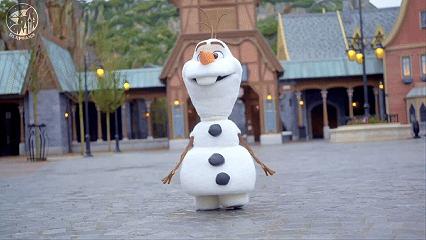
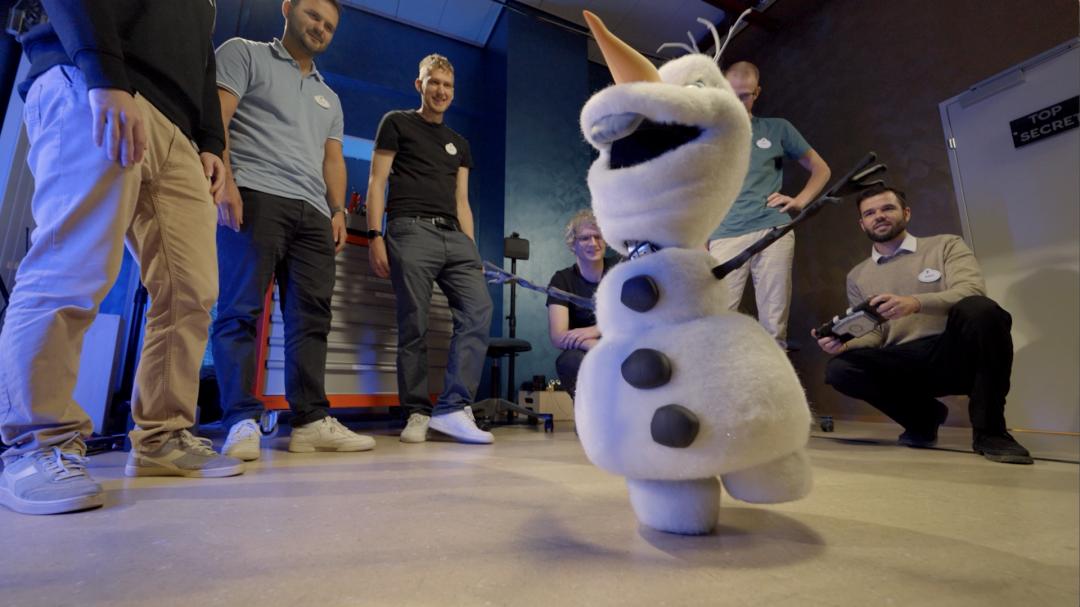
It's not a "costumed character" played by a staff member in the Disneyland. Instead, it's a real robot capable of autonomous walking and facial interaction.
You might wonder which robot company's solution was adopted. Was it Unitree, the one that provided robots to perform with Wang Leehom, or Tesla's Optimus developed by Elon Musk?
Actually, it's a self-developed "offspring" of Disney.
In the past year, embodied intelligence has become extremely popular, but few people have noticed that Disney, the dream factory, has been secretly researching robot technology for many years.
What's the Difficulty in Building "Olaf"
A mysterious department in Disney called Walt Disney Imagineering launched a robot project named "Project Kiwi" in 2018. They started researching humanoid robots that are closest to comic characters, hoping to make machines behave as real and natural as humans.
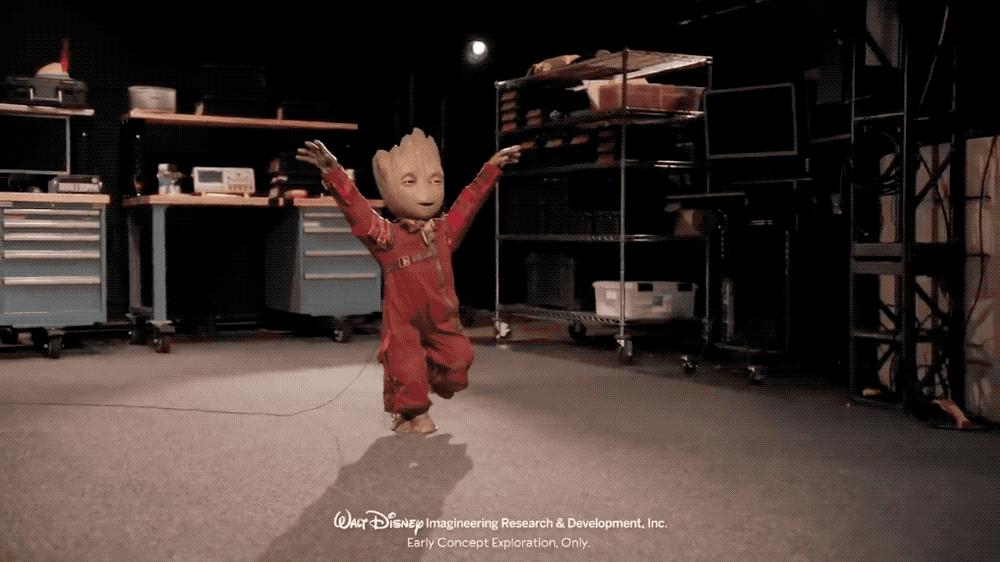
Remember the amazing Baby Groot?
It peeked out from behind the table, took those characteristic, slightly clumsy small steps, tilted its head at a 45-degree angle and blinked its big eyes. It was like a 1:1 copy of the scene from Guardians of the Galaxy Vol. 2 in real life. The final "one-legged stance" was incredibly stable.
There's also the "Spider-Man" robot created to replace the high-risk stunts of Spider-Man stunt actors. The parabola it makes in the air is so realistic.
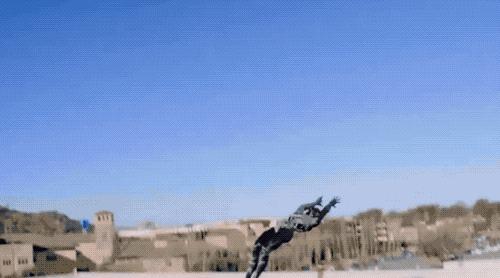
Different from the previous Spider-Man stunt robot Stuntronics, Olaf this time faces a hell-level difficulty because it's not a creature designed for the physical world at all.
In the Frozen animation, Olaf's head is as big as its body, and its feet are just two small snowballs. This proportion makes it almost impossible to achieve balance in the real world. What's more troublesome is that for the sake of the visual effect, the animators made Olaf's feet "slide" when walking, which completely violates the law of gravity.

To solve this seemingly impossible task, the Imagineering team came up with a rather "sly" solution.
First is the "modification" of the skeleton. The engineers developed an innovative "asymmetrical 6-degree-of-freedom leg mechanism." Simply put, the left hip joint faces backward and the left knee faces forward, while the right leg is the opposite.
This special design minimizes the probability of the legs colliding with each other. More importantly, it can perfectly "hide" the complex mechanical structure inside that plump lower body.
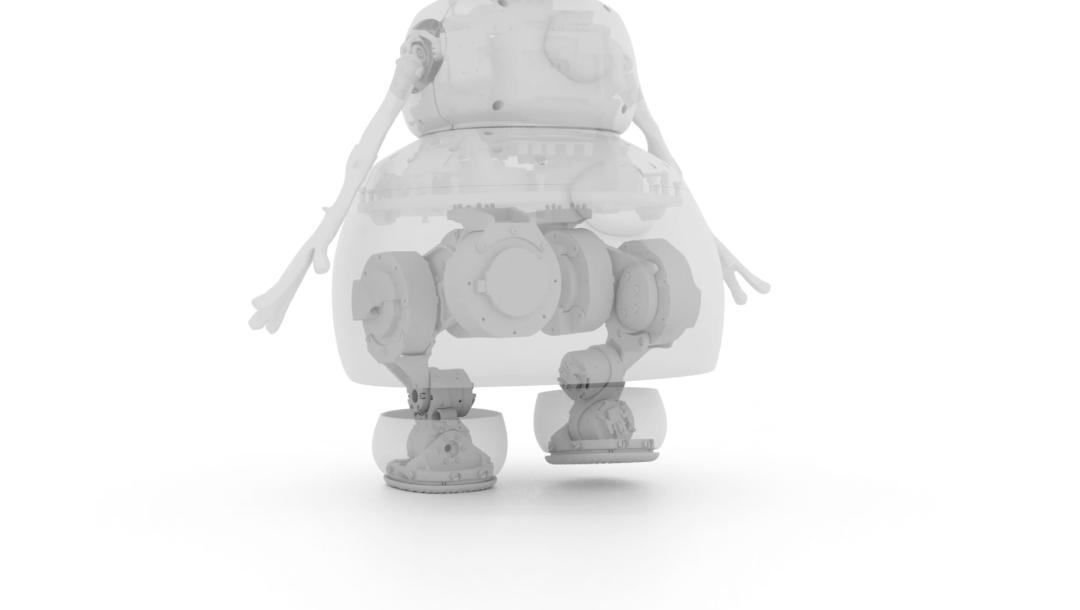
To make the hiding even more perfect, the snowballs of the lower body are designed as a soft foam skirt. This layer of foam can maintain its shape and deform when needed to accommodate larger leg movements.
What you seem to see is the snowballs moving, but actually it's the mechanical legs inside working hard.
Those seemingly soft feet are also made of flexible foam material. This is not only to restore the texture but also to absorb energy and reduce damage when falling. When Olaf walks, the feet will slightly deform like real snowballs. It's really well-thought-out.
Building the shell is just the first step. The core is to make it walk like Olaf.
For this purpose, Disney invited external support from companies like NVIDIA and Google DeepMind and developed an open-source simulation framework called Newton. Within this framework, they used a proprietary simulator called Kamino to train the robot.
The team directly invited the original animators of Frozen to the scene. The animators provided action references, and the AI kept trying and making mistakes in the simulator to learn how to imitate that iconic, wobbly "Olaf walk" while maintaining physical balance.
Learning to "Walk Gently"
Another big enemy of robots is noise.
If you've heard the Boston Dynamics' robot dog walking, you know how distracting that "click-click" metal impact sound is. For a character that should be light and cute like a snowman, it's simply disastrous.
The team designed a special noise reduction reward mechanism for this. During the training process, the AI will be punished for generating large impacts, so it learns a softer way to land.
Through thousands of simulation trainings, Olaf gradually learned a gentler gait. In actual tests, this method achieved a noise reduction effect of about 13.5 decibels, reducing the noise from nearly 82 decibels to about 64 decibels.
More Than Just a "Walking" Snowman
Besides the core walking ability, there are many delicate designs hidden in Olaf.
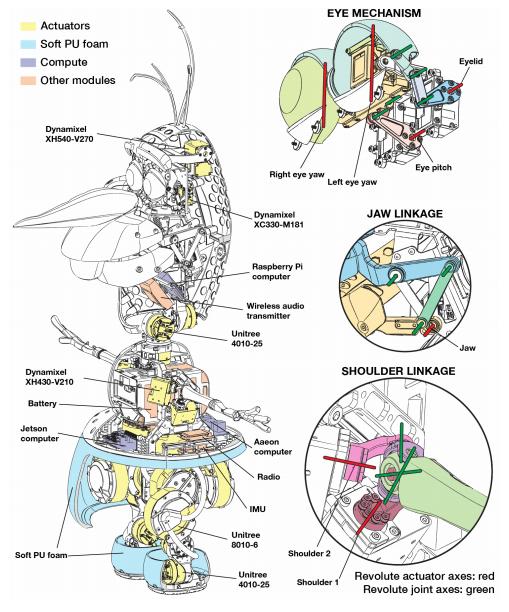
Its arms use a spherical five-bar linkage mechanism, which is remotely driven by an actuator inside the torso and can make swinging and pitching movements. The mouth uses a single actuator to drive both the upper and lower jaws simultaneously. The eyes have independent yaw control and pitching and blinking functions driven remotely by a four-bar linkage.
That iconic carrot nose and branch arms are fixed by magnets and can be easily disassembled. This not only restores the classic scene in the animation but also can automatically detach when the robot falls to reduce damage.
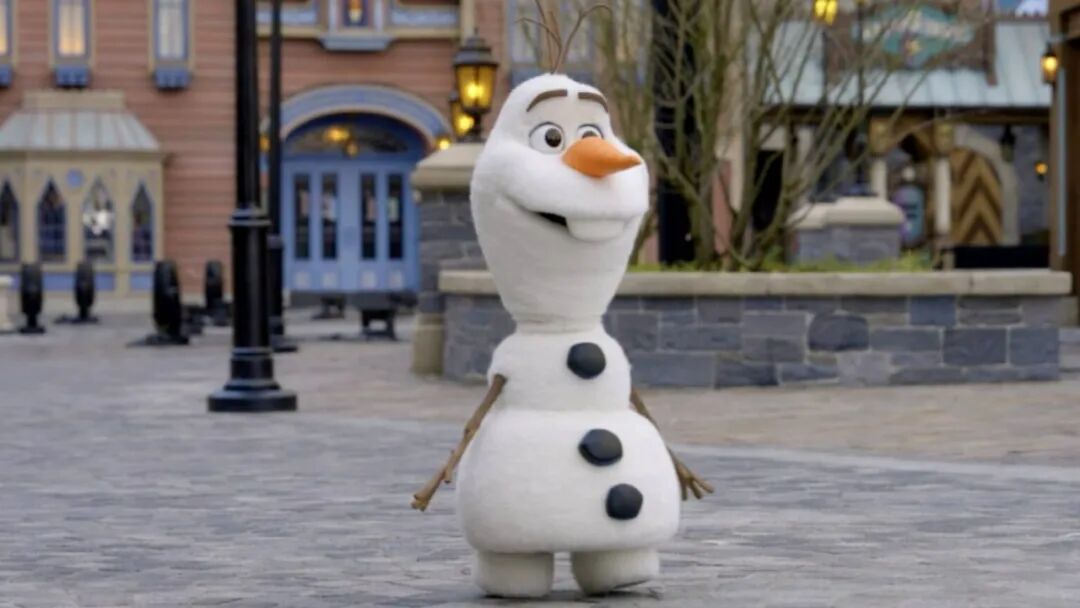
The costume is made of four-way stretch fabric that can stretch naturally with the robot's movements. The areas around the eyes and mouth are fixed with snaps and magnets to ensure a snug fit and easy maintenance. The "snow" on its body is made of iridescent fibers that will sparkle like real snowflakes in the light.
What Does Disney Aim for in Building Robots
From the Stuntronics revealed in 2018 to Olaf in 2025, Disney has reached an unprecedented speed in creating new characters and presenting them to tourists.
"In the past, it took several years to develop a robot," said a member of the R & D team. "Now, using reinforcement learning, we can bring a robot to life within a few months."
The underlying control framework, simulator, and training process are also constantly improving, making it easier and easier to develop new characters.
Different from companies like Boston Dynamics and Tesla, Disney's robots are never designed to complete tasks but to create emotional connections.
The Imagineering team emphasized,
Our goal is not to build the most powerful or efficient robot. We want to build a character that people can believe is real.
Olaf didn't learn how to efficiently carry items or run fast, but it learned how to walk wobbly towards you like that a bit clumsy, summer-loving little snowman, making you willingly believe: All this is real.
As Bruce Vaughn, the president of Imagineering, said:
If we do our job well, all the technology will disappear, and our guests will be completely immersed in the story we're trying to tell.
It is expected that at the beginning of 2026, this Olaf will officially "start working" in Hong Kong Disneyland and Disneyland Paris.
By then, tourists will be able to watch it waddle over, listen to it talk, and even pull out its carrot nose to see its exaggerated reaction.
Maybe one day, when we enter Disneyland, the one that warmly hugs you won't be a sweaty staff member anymore, but a real "mechanical life" that steps out of the animation.
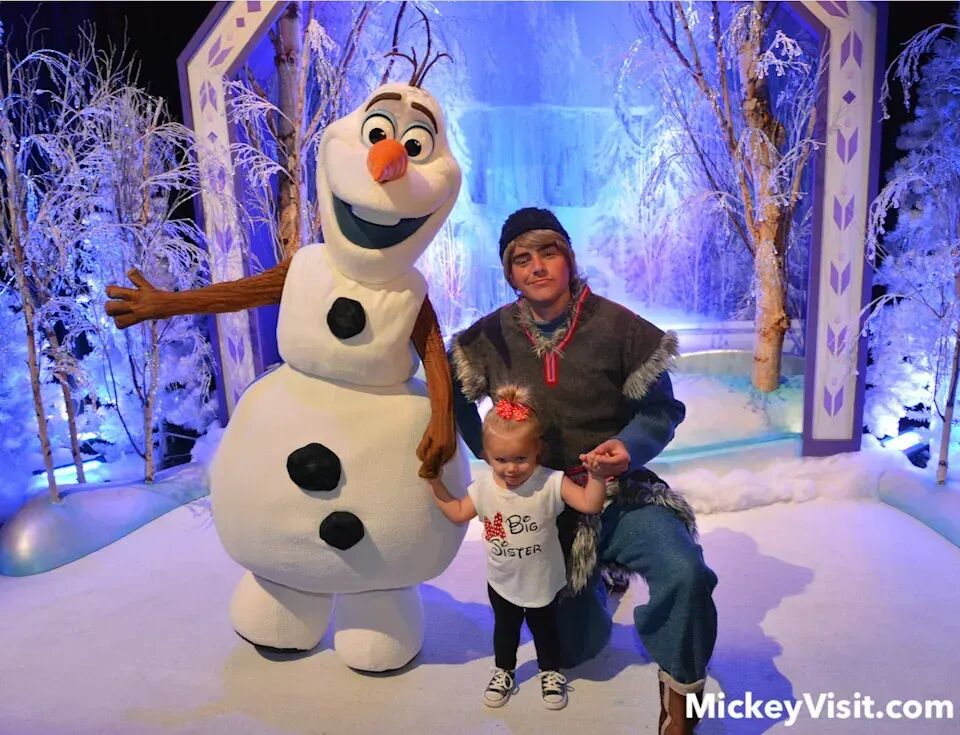
And Olaf, this little snowman who loves summer, is striding forward, leading us towards that future.
This article is from the WeChat official account "APPSO". The author is the one who discovers tomorrow's products. 36Kr has been authorized to publish it.