HarmonyOS phones offer an upgraded overseas experience: Ecosystem synergy creates a seamless global journey
In 2025, China's outbound tourism market made a strong comeback with an average annual growth rate of 44.3%. With over 70% of travelers choosing independent travel, self - exploration has become the mainstream. The Generation Z, which drives this trend, has emerged as the main force in outbound tourism.
As true "digital natives", Generation Z is already accustomed to the highly integrated and seamless mobile Internet ecosystem in China.
Smartphones are their "universal keys" to connect with the world. However, these "keys" often fail overseas. The core of the problem lies in the huge gap between the "connection mode" of services and the "usage habits" of domestic users.
Facing this common pain point, Huawei proposed a solution at the "Outbound Experience Ecosystem Forum" in Shenzhen - using the underlying capabilities of the HarmonyOS operating system to reconstruct the connection at the root. The core is to aggregate all pre - trip information with "one card" and provide direct access to all in - trip services in "one area". Huawei also joined hands with global partners to reconstruct the connection mode of outbound services, trying to break away from the traditional approach of patching only at the application layer and extend the domestic experience of "services revolving around users" globally.
The Three - fold Disconnects Behind Independent Travel
To understand the innovation of this solution, we need to systematically summarize those trivial complaints into three structural "disconnects" in cross - border digital experience, namely infrastructure, information interaction, and service distribution.
Firstly, there is the "infrastructure connection disconnect". The experience of international roaming is full of uncertainties, due to complex agreements between national operators and different network infrastructures.
Secondly, there is the "information disconnect in a cross - cultural context". The overseas digital information ecosystem is highly vertical and fragmented, and language and cultural barriers form a natural obstacle.
Finally, there is the "access disconnect for local services", which is the most direct point of friction. To take a taxi or order takeout, users often have to go through processes such as downloading apps, registering, binding accounts, and learning new interfaces. This traditional distribution model of "emphasizing apps, neglecting services" that requires users to rebuild a complete digital identity for one - time services fundamentally conflicts with the "light - demand" nature of independent travel, which is "use as needed and leave when done".
One - Stop Solution Upgrades Digital Service Experience
The idea of the Harmony ecosystem is to provide a one - stop solution for users' full - chain needs before, during, and after the trip.
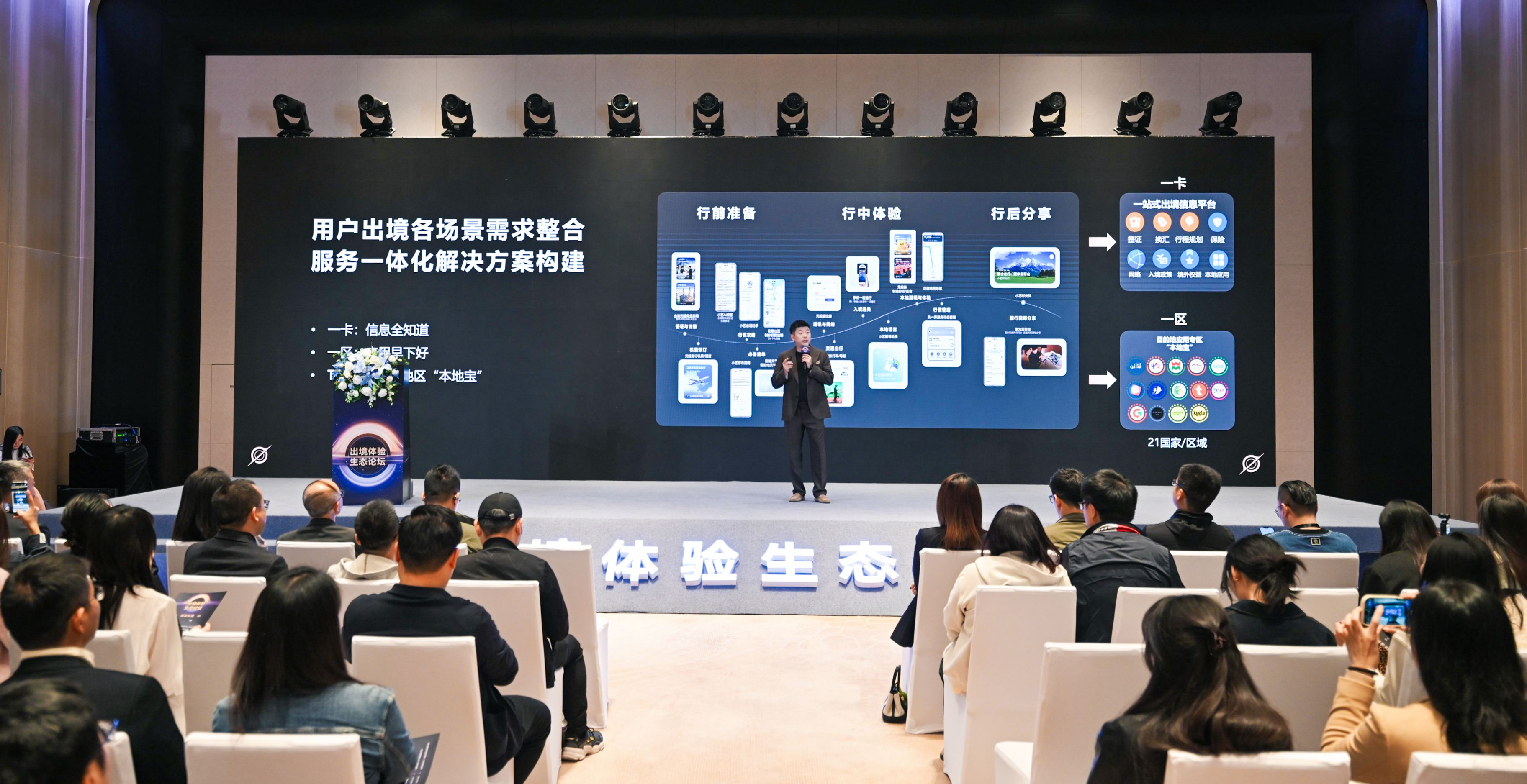
Before the trip, anxiety often stems from the chaos of information.
At this time, the Harmony system begins to play the role of the "trip controller". A aggregated card on the negative first screen of the user's phone can automatically capture and clearly present visa information pushed by the outbound assistant, personalized trip suggestions provided by Petal Maps, and introductions of destination policies and cultures from local tourism bureaus' meta - services, providing a window to deeply understand the destination culture. OTA - type meta - services support convenient booking of flights and hotels, efficiently presenting trip information and making the cumbersome pre - trip preparations orderly and convenient.
The real test comes after setting foot on foreign soil. At this moment, the "one - area entrance" of Harmony starts to fully function. Users can access the most core services without rummaging through countless newly downloaded apps on their phones.
Huawei's SkyLink service provides local high - speed networks covering more than 100 countries and regions around the world. Its features of "no need to change SIM cards, purchase without network, and use globally at will" enable users to obtain stable Internet access almost instantly after turning on the phone, completely getting rid of the "anxiety of being out of touch" and enjoying high - speed data without worry.
Petal Maps provides accurate global Chinese navigation and deeply integrates local life services. What users see on the map is not just a location, but may also be a recommendation for a taxi service, a recommendation for a hidden restaurant, or a ticket - purchasing channel for a scenic spot. Especially for tourists who love exploration, the "Outdoor Exploration Mode" first launched on the HUAWEI Mate 80 series by Petal Maps is very ingenious. It not only cooperates with the professional platform "Two Steps Road" to provide tens of thousands of selected hiking routes, but its "route signal prediction" function can also visualize the network signal coverage along the route, helping users to plan actively and avoid communication blind spots.
Moreover, the trip management reminders on the negative first screen greatly enhance the convenience of users' entry and exit and the happiness of traveling.
When the journey ends, the AI photo - editing function of the Xiaoyi Photo Studio can intelligently select a large number of photos, optimize the image quality, remove passers - by, and generate a travel video with beautiful templates with one click, allowing beautiful memories to be easily preserved and shared.
Global Partners Build the Harmony Ecosystem Together to Enrich Full - Scenario Outbound Services
After connecting outbound travel, the next proposition for the Harmony ecosystem is how to enable users to enjoy more high - quality overseas services when traveling abroad and how to allow the connected partners to achieve real business growth.
Against this background, Huawei chose to empower partners and developers with its innovative capabilities in Harmony, jointly building and sharing a new experience for outbound scenarios to provide better travel services for Huawei phone users traveling abroad.
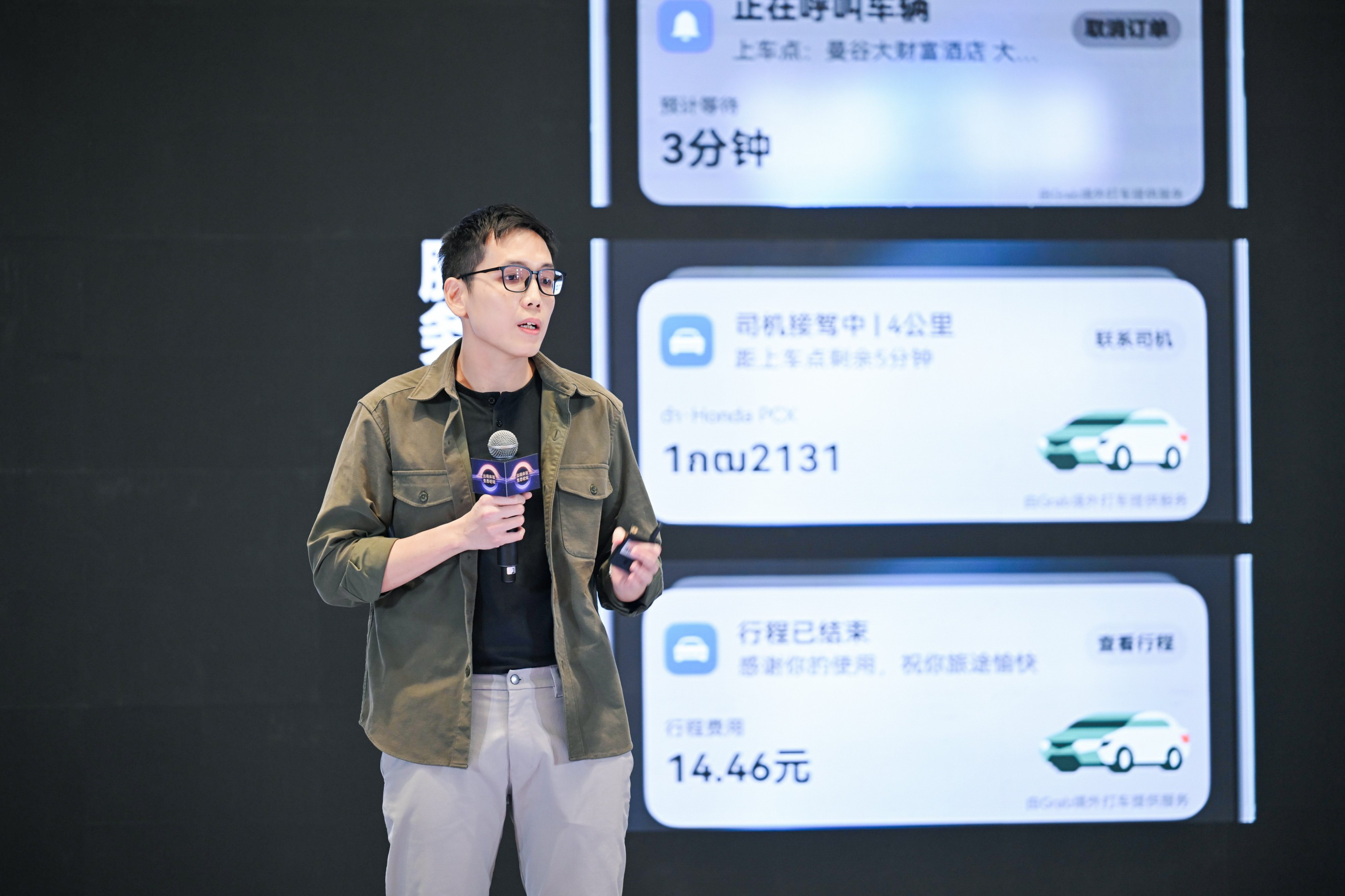
After connecting to the Harmony meta - service, Grab solved the problems of cumbersome overseas registration and poor language communication for users through functions such as one - click login with a Huawei account, voice wake - up by Xiaoyi, Chinese communication between drivers and passengers, and online payment in RMB, providing users with a more convenient and user - friendly overseas taxi - hailing experience.
Meanwhile, third - party data shows that within just two months, the monthly order volume of the Grab meta - service increased by 18 times. By lowering the user's usage threshold, developers achieved efficient service reach and also obtained high - speed business growth.
As Meituan's outbound business, Keeta brought a real on - the - go service experience to outbound users after connecting to the Harmony meta - service. It accurately solved the pain point of overseas consumers looking for reliable and convenient takeout services.
Li Zhenghao, the terminal technology leader of Keeta, once pointed out that for outbound users, the core value of the Keeta meta - service lies in being fast, convenient, and deeply reassuring, with seamless access and "use as needed and leave when done". Users don't need to search for local takeout apps in the app market. They can quickly find the Keeta meta - service card on the negative first screen of their Huawei phones and place an order with one click.
In addition, to meet users' in - depth needs for destination information, local tourism bureaus have also joined the Harmony ecosystem in the form of meta - services, providing tourists with authoritative policy interpretations and cultural introductions, and building a complete closed - loop from information acquisition to service consumption.
This ecological synergy is not an isolated case.
Currently, more than 120 meta - service cards for outbound scenarios have been launched on the Huawei Harmony system. From the takeout platform Talabat and the hotel booking platform Zen Hotels in the UAE to the smart services of Dubai Mall, more and more global partners are joining this ecosystem.
They cover high - frequency and essential scenarios such as dining, accommodation, and shopping in outbound tourism, jointly building a service matrix that is moving from "single - point breakthrough" to "full - scenario coverage".
As of now, the number of terminal devices equipped with Harmony 5 and Harmony 6 has exceeded 32 million.
For global ecological partners, this means a huge and high - quality incremental market. These users with Huawei devices have a strong willingness and ability to consume when traveling abroad.
Huawei has built a "high - speed road" for connecting outbound applications and services at the underlying level and opened entrances such as the negative first screen and Xiaoyi suggestions.
When a single phone enables users to seamlessly connect to the digital world in a foreign country, it provides not only communication connections but also an extension of China's digital service experience and infrastructure capabilities.
In the future, the Harmony ecosystem will continue to open up its core capabilities and deepen technological innovation, looking forward to more outbound service partners joining to jointly enrich the service ecosystem for global travel scenarios.
"Together, we can" is no longer just an emotional appeal, but a natural choice made by all parties in the industrial chain based on business consensus and real growth data after the technological foundation has matured.