Microsoft sets a goal: Completely remove C and C++ code and replace it with Rust by 2030.
Can't stand it anymore. Is Microsoft going to eliminate the C language?
In recent days, the news that Microsoft has set a goal to completely remove C and C++ from its code by 2030 has sparked a great deal of discussion.
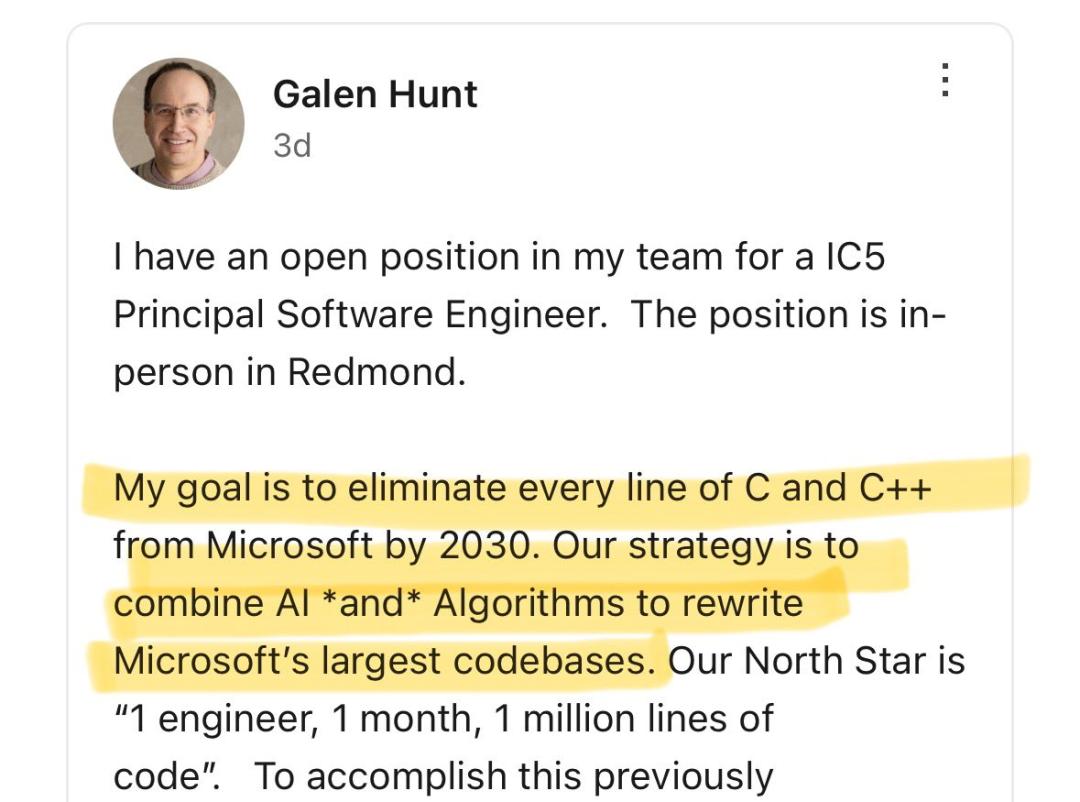
Here's what happened: Galen Hunt, who made such remarks, is an outstanding engineer at Microsoft. He has been working at Microsoft for 28 years. Recently, he was recruiting on LinkedIn, opening a position for an IC5 Principal Software Engineer.
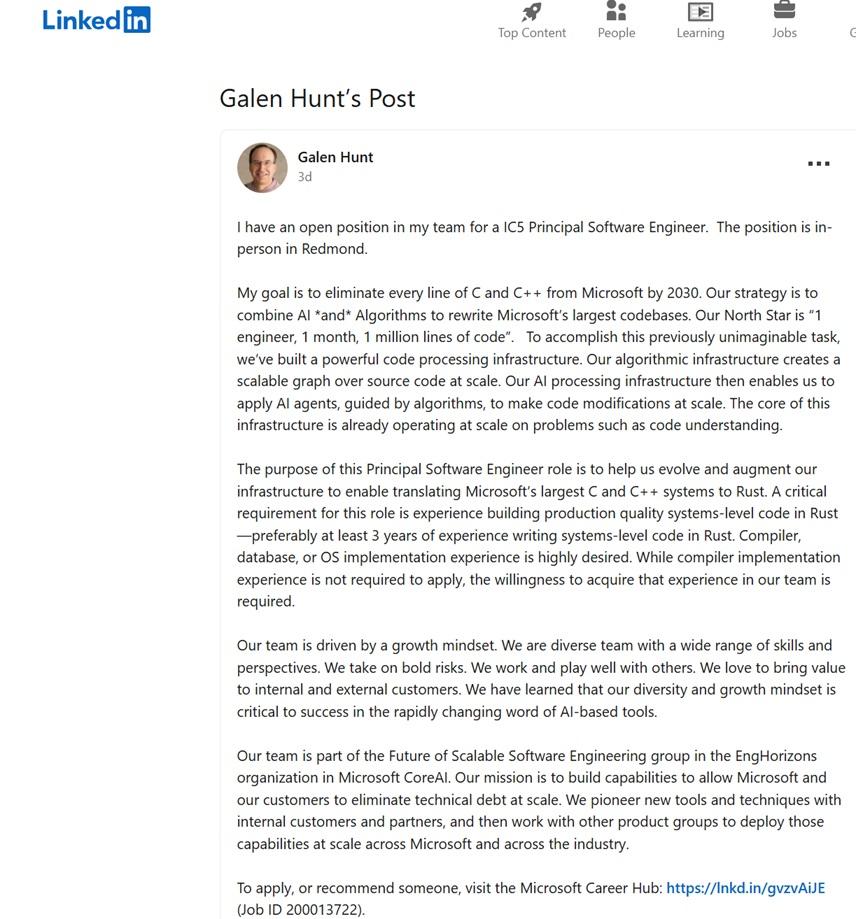
This core senior expert position is no joke. He said, "My goal is to eliminate all C and C++ code at Microsoft by 2030. The strategy is to rewrite Microsoft's entire codebase using AI and algorithms."
Galen Hunt also said that in his North Star team, the goal of the work is "one million lines of code per engineer per month." To achieve this unimaginable goal, they are building the infrastructure for code processing, including algorithmic facilities and agent-driven AI processing facilities, which can scale code conversion. Currently, such infrastructure has been widely applied to tasks such as code understanding.
You read that right, one million lines of code per engineer per month.
In addition, the new language they plan to use to replace the "old" C language, as you might have guessed, is Rust.
This has triggered a lot of criticism regarding old and new languages, tech giants, and AI code generation technology.
Some netizens said that this is simply crazy. This kind of decision-making method is common among those who have a deep-rooted, delusional belief in the Rust camp.
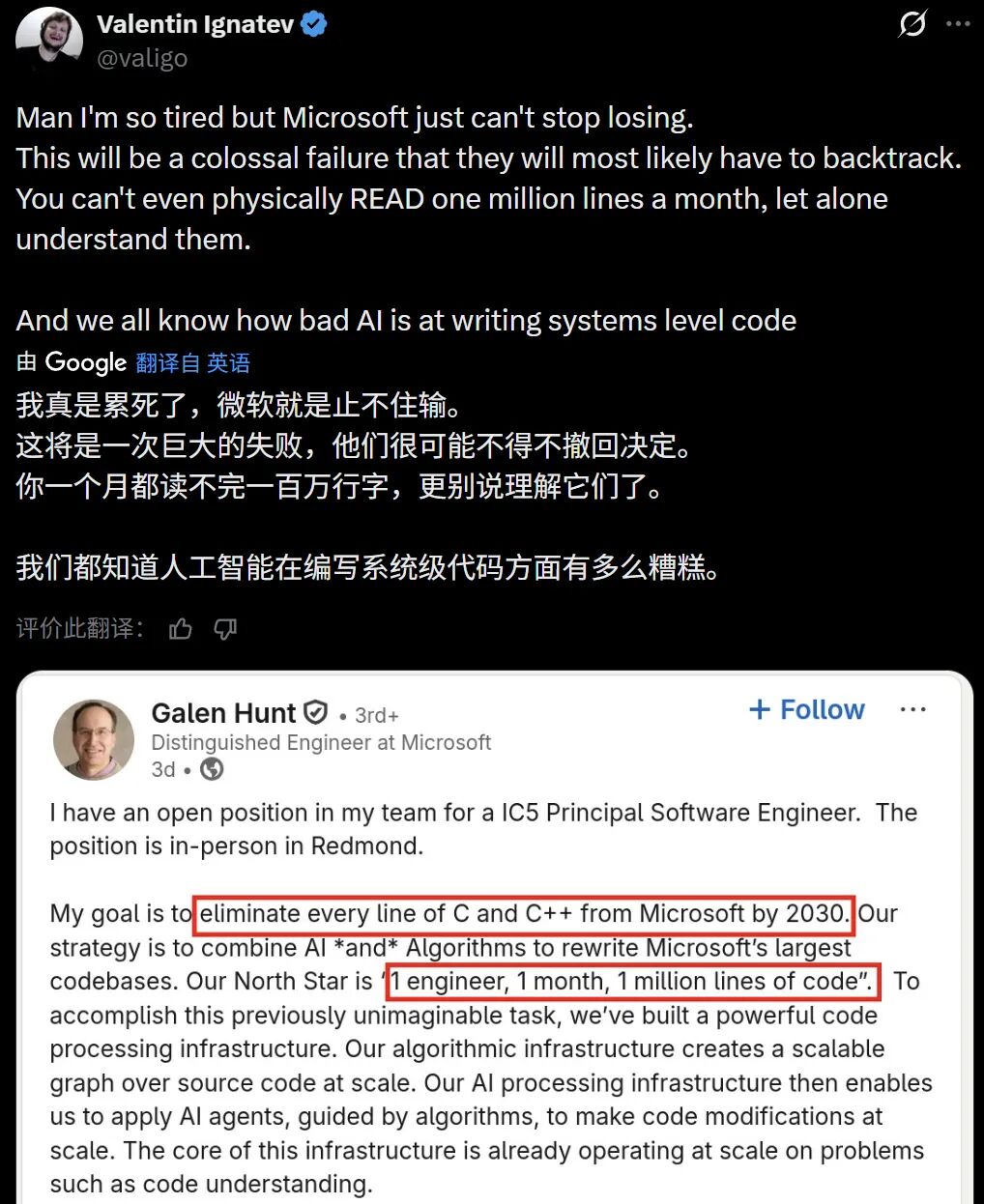
Overwriting the code that has been accumulated over the years and tested by a large amount of practice at an extremely fast pace and then forcibly adopting it without sufficient testing may not bring any obvious benefits to users in the short term. Moreover, this approach presupposes that Rust code is superior in all aspects, has no bugs, and is more secure.
Generally speaking, Rust is a more advanced language. While ensuring almost the same performance as C/C++, it solves the two core pain points of memory safety and concurrency safety from the root of language design and provides a modern development experience.
For nearly six years, Microsoft has been advocating the use of Rust.
Microsoft has enabled Rust developers to use the Windows API. There is also a code library on GitHub called "windows-rs", which is a Rust projection of the Windows API, allowing Rust code to call Win32, COM, and WinRT just like C++ or C#.
Microsoft has also launched a Rust driver development project (windows-drivers-rs), indicating that the company is also exploring the application of Rust beyond applications. It can be seen that optimizing for Rust is not just a slogan or a one-time open-source effort. Microsoft's emphasis on Rust is real.
However, so far, Microsoft's attempts to replace native languages such as C++, WinUI, and XAML with other languages have not been recognized by consumers and enterprises. The memory usage problems caused by this approach have been criticized. For example, Discord and Microsoft's own Teams have become memory hogs.
On the other hand, if you know that Windows, the operating system with over 1.4 billion users globally and the highest market share in the PC market, is mainly written in C, you will definitely think that Galen Hunt's proposal is a bit unrealistic. This "big rewrite" plan may have a huge impact on Windows 11. Currently, the C language drives most of the Windows kernel and underlying components, including the Windows API (Win32), while C++ is used to build native Windows applications.
The KPI of one million lines of code per person per month can only be achieved with the help of AI-assisted code generation.
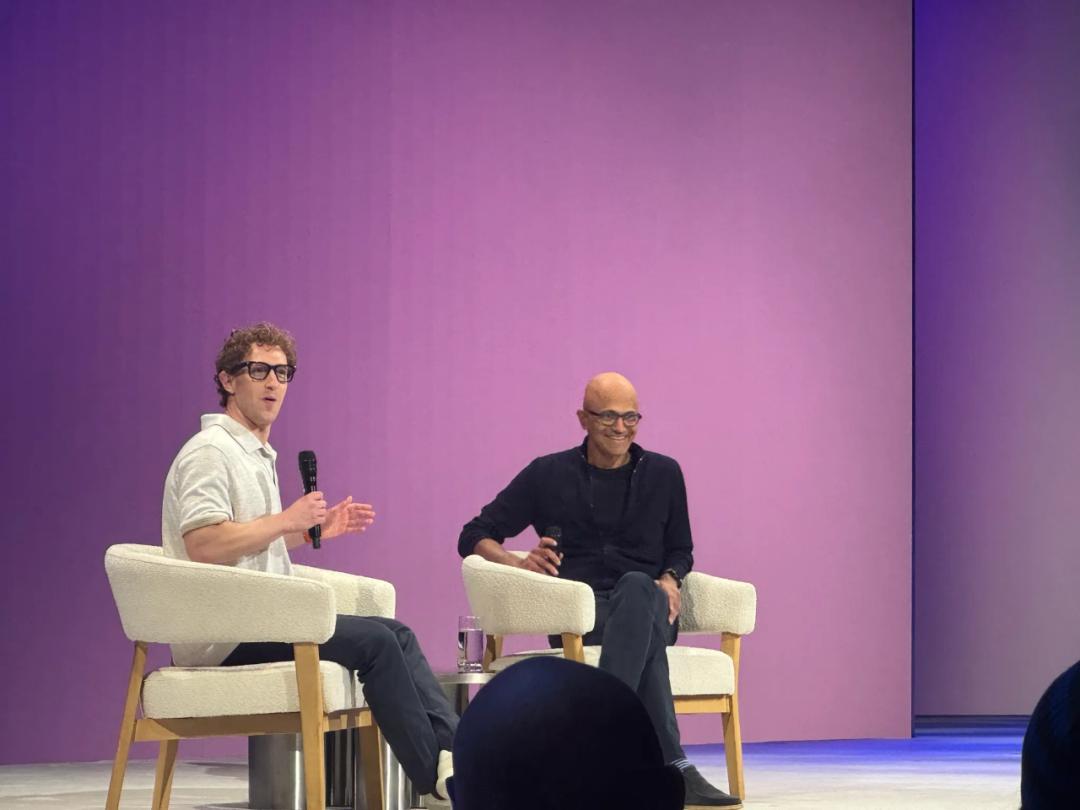
In May this year, Microsoft CEO Satya Nadella mentioned in a conversation with Mark Zuckerberg that 20 - 30% of Microsoft's code is now written by AI. Nadella said that the company has achieved different results in AI code generation for different languages. The progress in Python is greater, while the progress in C++ is relatively smaller.
Microsoft CTO and Executive Vice President of Artificial Intelligence Kevin Scott also said that he expects 95% of the code to be generated by AI by 2030.
However, whether large-scale application of AI to write code can be reliable remains to be verified. At least for now, it seems not. After all the commotion, Galen Hunt modified the content of his original post:
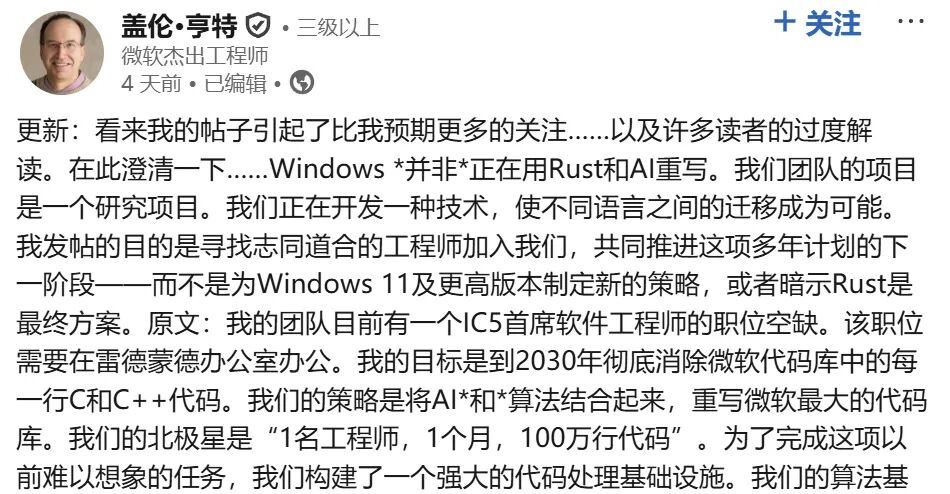
Can AI completely translate Windows code into the Rust language? Only time will tell.
Reference content:
https://www.linkedin.com/posts/galenh_principal-software-engineer-coreai-microsoft-activity-7407863239289729024-WTzf/
This article is from the WeChat official account "Machine Intelligence". Author: Machine Intelligence, Editor: Zenan. Republished by 36Kr with permission.