The green light is given for the mass production of L3 autonomous driving, and the national battery standards are upgraded. The top ten automotive news stories in China in 2025 witness the industrial transformation.
In 2025, the Chinese automotive industry forged ahead firmly amidst profound changes. The global automotive industry landscape was reshaped at an accelerated pace. In the domestic market, amidst fierce competition, a new trend of "stable volume and improved quality" emerged. Throughout the year, production and sales remained robust during structural adjustments. The dual - wheel drive characteristics of new energy vehicles and intelligent connected vehicles became even more prominent.
In this year, the automotive industry not only achieved collective breakthroughs in key technologies but also, under the dual effects of policy guidance and market self - discipline, entered a new stage of more mature and rational high - quality development.
In this year, the "price war" gradually gave way to the "technology war" and "ecosystem war." The core competitiveness of automotive enterprises shifted from production capacity and marketing to full - stack self - research capabilities, vertical integration of the supply chain, and user ecosystem operation. Localized breakthroughs in key areas such as chips, operating systems, and battery materials laid a more solid foundation for the industry's security and development.
Against the backdrop of both technological autonomy and global cooperation, the Chinese automotive industry responded to challenges with resilience and defined the future through innovation. It not only reshaped the domestic market landscape but also profoundly influenced the global automotive industry's value chain.
Looking back at 2025, the Chinese automotive industry was on a clearer and more stable course in the main channels of electrification, intelligence, and globalization. The "visible hand" of policies and the "invisible hand" of the market worked in tandem. The long - term approach to technological innovation was replacing the impetuosity of short - term traffic.
As we bid farewell to the old and welcome the new, NBD Auto systematically reviewed the key nodes and profound changes in the development of the Chinese automotive industry in 2025 and officially released the top ten news stories of the automotive industry in 2025 to record the progress of the era, summarize the industrial context, and look forward to the future evolution path.
Keyword ①: 60%
Event: The penetration rate of new energy passenger cars exceeded 60% for the first time.
News: According to data from the Passenger Car Association, from December 1st to 7th, the retail penetration rate of new energy passenger cars nationwide reached 62.2%, and the wholesale penetration rate was even higher at 64.3%, marking that the penetration rate of new energy passenger cars in China officially entered the 60% era.
This breakthrough was an inevitable result of the continuous growth of the market. In November 2025, the penetration rate of new energy passenger cars nationwide had reached 59.3%, laying the foundation for the breakthrough of 60% in December. The rapid growth of the penetration rate of new energy passenger cars was inseparable from the strong leadership of independent brands. In November, the penetration rate of new energy passenger cars of independent brands was as high as 79.6%, which meant that out of every 10 cars sold by independent brands, 8 were new energy models.
However, the policy of exempting new energy vehicles from vehicle purchase tax, which had been implemented for ten years, officially ended on December 31, 2025. Starting from 2026, it was adjusted to a 50% reduction. This policy adjustment might cause fluctuations in market demand at the end of the year and the beginning of the next year, but in the long run, it would promote the smooth transition of the new energy vehicle market from "policy - driven" to "product - power - driven."
Keyword ②: Intelligent driving publicity
Event: The Ministry of Industry and Information Technology issued a document to standardize the publicity of intelligent driving and strictly prohibit exaggeration and misleading.
News: In April 2025, in response to the chaos in the publicity of intelligent driving in the automotive industry, the Ministry of Industry and Information Technology urgently issued a document, clearly requiring car companies not to use exaggerated terms such as "autonomous driving." The Ministry of Industry and Information Technology emphasized that automobile production enterprises should fully conduct combined driving assistance test verification, clarify the system function boundaries and safety response measures, not conduct exaggerated and false publicity, strictly fulfill the obligation of notification, earnestly assume the main responsibility for production consistency and quality safety, and effectively improve the safety level of intelligent connected vehicle products.
Previously, in order to seize the market, some car companies abused vague expressions such as "autonomous driving," "high - level intelligent driving," and "zero takeover," and even packaged L2 - level assisted driving as "quasi - L3 level," downplaying the system's limitations, which led consumers to misjudge the function boundaries and over - rely on the system, resulting in multiple road safety accidents.
After the policy was introduced, car companies quickly responded and adjusted their publicity caliber. Exaggerated expressions were hard to find at important occasions such as the Shanghai Auto Show this year. The "fanatical marketing competition" in the industry cooled down. Standardized publicity ensured consumers' right to know and promoted the healthy development of the intelligent connected vehicle industry.
Keyword ③: Battery safety
Event: The mandatory national standard for battery safety was upgraded, requiring "no fire, no explosion."
News: On March 28, 2025, the mandatory national standard "Safety Requirements for Power Batteries for Electric Vehicles" (GB38031 - 2025), formulated by the Ministry of Industry and Information Technology, was approved and issued by the State Administration for Market Regulation and the Standardization Administration of China, and it will come into effect on July 1, 2026.
The new standard mainly revised the technical requirements for the thermal diffusion test. It was revised from "providing a thermal event alarm signal 5 minutes before fire or explosion" to "no fire, no explosion (still requiring an alarm), and the smoke should not cause harm to passengers." It further clarified the temperature requirements of the battery under test, the power - on and power - off states, the observation time, and the vehicle test conditions.
At the same time, the new standard also added a bottom impact test to examine the protection ability of the battery after being impacted at the bottom, requiring no leakage, shell rupture, fire, or explosion, and meeting the insulation resistance requirements; and a safety test after fast - charging cycles to examine the safety of the power battery after long - term fast - charging cycles, requiring an external short - circuit test after 300 fast - charging cycles, with the requirement of no fire and no explosion.
This, which can be regarded as the world's strictest battery safety threshold, proves that while vigorously promoting the development of new energy vehicles, China attaches unprecedented importance to driving safety. This measure will force the entire industry to upgrade battery technology and eliminate backward production capacity.
Keyword ④: Anti - "involution"
Event: The China Association of Automobile Manufacturers jointly issued an anti - "involution" initiative with 17 car companies.
News: At the end of May 2025, the China Association of Automobile Manufacturers issued the "Initiative on Maintaining a Fair Competition Order and Promoting the Healthy Development of the Industry" to the entire industry, clearly stating that it supported enterprises to participate in market competition through normal means and firmly opposed the bottom - less "price war."
This move officially pressed the pause button on the nearly three - year - long vicious "price war" in the domestic auto market. The focus of car companies' competition began to shift from "trading price for volume" to technology, quality, and the health of the supply chain. Against this background, car companies first started to "fight involution" by solving the problem of suppliers' payment terms, promoting the reconstruction of the upstream - downstream relationship.
Keyword ⑤: L3 - level autonomous driving
Event: The Ministry of Industry and Information Technology approved the mass - production access of L3 - level autonomous driving vehicles.
News: On December 15, 2025, the Ministry of Industry and Information Technology officially announced the first batch of access permits for L3 - level conditionally autonomous driving models in China, marking that China's autonomous driving industry had entered a new stage of mass - production application from technology verification. Relevant models of Changan Shenlan and BAIC Jihu were officially approved.
According to national standards, the approved L3 - level models can legally drive hands - off on designated urban roads, highways, and urban expressways, and independently complete dynamic driving tasks such as lane - changing, overtaking, and avoiding pedestrians and vehicles. The maximum speed of the pilot models in Beijing is 80 km/h, and the maximum speed of the pilot models in the congested scenarios in Chongqing is 50 km/h. Drivers need to stay alert and respond promptly when receiving a system takeover request.
Keyword ⑥: Trade - in
Event: The trade - in policy for cars in 2025 was implemented, and vehicles meeting the National IV emission standard were included in the subsidy.
News: At the beginning of 2025, eight departments including the Ministry of Commerce and the Ministry of Industry and Information Technology issued a notice to arrange for the trade - in work of cars in 2025, clearly including eligible fuel - powered passenger cars meeting the National IV emission standard in the scope of old cars eligible for application for scrapping and replacement subsidies. This move directly stimulated the huge stock market and became an important driving force for boosting the stable growth of the auto market and increasing the penetration rate of new energy vehicles.
According to data from the Ministry of Commerce, in the first 11 months of this year, the trade - in of consumer goods drove the sales of relevant commodities to exceed 2.5 trillion yuan, among which the transaction volume of car "trade - in" exceeded 11.2 million vehicles.
Keyword ⑦: Zero - kilometer used cars
Event: Four departments jointly issued a document to strictly control the export of zero - kilometer used cars and set a red line of 180 - day registration period.
News: In November 2025, four departments including the Ministry of Commerce, the Ministry of Industry and Information Technology, the Ministry of Public Security, and the General Administration of Customs jointly issued the "Notice on Further Strengthening the Management of Used Car Exports" (hereinafter referred to as the "Notice"). The "Notice" clearly stated that starting from January 1, 2026, if the vehicle applying for export is less than 180 days (inclusive) from the date of registration, the exporting enterprise needs to additionally submit the "After - sales Maintenance Service Confirmation Letter" issued by the vehicle production enterprise. The document should include the export country, vehicle information, overseas after - sales service network information, etc., and be stamped with the enterprise's official seal. Vehicles that cannot provide this document will not be issued an export license.
Before the policy was introduced, there was chaos in the export of "zero - kilometer used cars" in the industry. Although these vehicles had completed registration, their actual mileage was extremely low, and their condition was no different from that of new cars. This policy precisely targeted the behavior of arbitraging by exporting new cars in the name of used cars. At the same time, it did not completely ban their circulation, balancing the needs of industry development and market regulation.
Keyword ⑧: The champion of pure - electric vehicle sales changed hands
Event: BYD's sales of pure - electric vehicles exceeded Tesla's for the first time, ranking first in the world.
News: In May 2025, BYD, with a 15.7% share of the global pure - electric vehicle market, surpassed Tesla for the first time and topped the global pure - electric vehicle sales championship. This marked a key leap from following to leading for Chinese brands in the global competition of new energy vehicles.
Behind this milestone was the overall leadership of independent brands in technology, production capacity, and market layout. According to data from the Passenger Car Association, from January to November this year, the retail market share of independent brands was 65%, an increase of 5 percentage points compared with the same period last year. They became the main engine of the growth of the auto market, driving a 9.7% year - on - year increase in the sales of the domestic auto market in the first 11 months.
Keyword ⑨: Going public in Hong Kong
Event: Intelligent driving enterprises flocked to go public in Hong Kong, highlighting the industrial cluster effect.
News: In 2025, many enterprises in the intelligent driving field densely listed on the Hong Kong capital market, setting off a wave of going public in Hong Kong. Enterprises such as Pony.ai, WeRide, SimMo Technology, Pateo, and Hesai Technology have completed their listings on the Hong Kong Stock Exchange, covering multiple sub - fields such as the research and development of autonomous driving solutions, the manufacturing of intelligent vehicle systems, and the production of lidars, covering the core links of the upstream and downstream of the intelligent driving industry chain.
Among the enterprises that went public in a concentrated manner this time, there were both technology companies focusing on the research and development of high - level autonomous driving algorithms and supply - chain enterprises focusing on the production of core hardware for intelligent driving, forming a complete listing echelon from technology research and development to product manufacturing. With the successful listing of many enterprises on the Hong Kong Stock Exchange, the industrial cluster effect of intelligent driving was further highlighted, and it also attracted a large amount of global capital into this track, helping relevant enterprises carry out technology research and development and business layout in the global market.
Keyword ⑩: Solid - state batteries
Event: Key breakthroughs were achieved in solid - state battery technology, and many car companies promoted preparations for mass production.
News: In 2025, key breakthroughs were achieved in solid - state battery technology in China. Research teams from the Chinese Academy of Sciences, Tsinghua University, etc. successfully solved the core problems that had long restricted the implementation of the technology, such as poor interface contact between the solid electrolyte and the electrode and excessive interface impedance, through material formula optimization and process innovation.
On the industrial side, preparations for mass production were accelerated in synchronization. GAC Group built the first large - capacity all - solid - state battery production line in China, which had the capacity for large - scale production and planned to start small - batch vehicle - loading tests in 2026. Leading power battery enterprises such as CATL and BYD also stepped up the research and development and production line layout of solid - state batteries and continuously increased research and development investment to improve the technical system. At the policy level, the Ministry of Industry and Information Technology provided special subsidies for equipment purchase for solid - state battery pilot lines, reducing the research and development and mass - production preparation costs of enterprises and promoting the transition of solid - state battery technology from the laboratory to the industrial application stage.
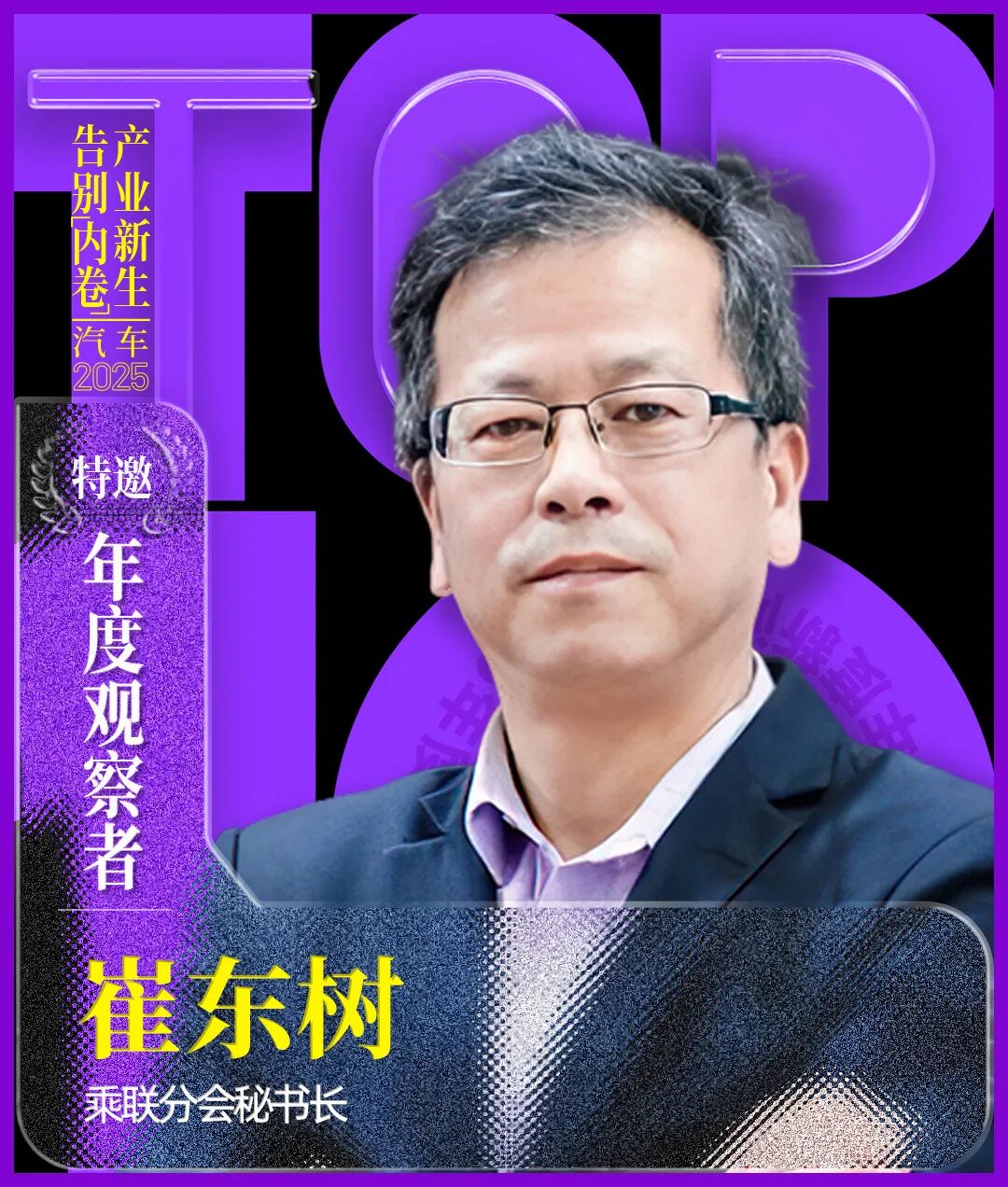
Comment:
In the past year, driven by both policies and the market, the Chinese automotive industry completed a key transformation, showing distinct characteristics of structural reshaping, deepening competition, and kinetic energy conversion.
The fact that the penetration rate of new energy passenger cars exceeded 60% for the first time was of milestone significance. It marked that new energy vehicles had fully entered the stage of market recognition and consumption - driven development from being mainly guided by policies and had become the absolute mainstream in the domestic auto market. Behind this change was the combined result of the long - term and consistent policy support from the state and the continuous technological innovation of the industrial chain. The penetration rate of new energy vehicles will continue to rise steadily in the future, and the charm of the products will continue to increase. Traditional fuel - powered vehicles will gradually become niche, and the transfer of industrial dominance is irreversible.
Currently, the main contradiction in the automotive industry is not simply the terminal price competition but the imbalance in the profit distribution of the industrial chain. The strong position of the upstream battery and key raw material sectors, especially the abnormal fluctuations in the prices of resources such as lithium mines, severely squeezed the profit margin of the mid - stream vehicle manufacturing sector. Vehicle enterprises were simultaneously squeezed by the upstream cost pressure and the terminal market demand, and the overall profit rate of the industry was at a relatively low level. Therefore, a healthy "anti - involution" should aim to build a more reasonable industrial chain profit - sharing mechanism to maintain the sustainable development of the industrial ecosystem.
In addition, the "trade - in" policy effectively stimulated the demand for replacement and upgrading. It was one of the most important growth engines in the automotive consumption market this year, significantly promoting sales growth and shaping the annual trend of the auto market with "high at the beginning and stable later." This not only laid a solid foundation for the auto market this year but also created favorable conditions for subsequent development. The continuation and optimization of the policy will continue to support the stable growth of the auto market next year.
BYD's pure - electric vehicle sales topping the