Dialogue: After the "clustered listings", is embodied intelligence still worth investing in?
Embodied intelligence is one of the hottest innovation and entrepreneurship fields globally this year. Many newly established startups have quickly entered the "unicorn" stage (valued at over $1 billion). In the first half of this year, the financing amount in the field of embodied intelligence has already exceeded that of the entire last year.
On December 19th, the humanoid robot company Galaxy Universal announced the completion of a new round of financing exceeding $300 million, breaking the single - round financing record in embodied intelligence. Its valuation also exceeded 20 billion yuan, surpassing the 12 billion yuan valuation of Unitree Technology during its financing in June this year and the 15 billion yuan valuation of ZhiYuan during its financing in March this year.
As of November 2025, nearly 30 companies in the robot industry chain have submitted listing applications to the Hong Kong Stock Exchange. In the secondary market, the stock prices of many listed companies have soared due to the robot concept. Traditional manufacturing enterprises, automobile manufacturers, mobile phone manufacturers, and Internet companies are all crossing into the field of embodied intelligence.
The overheating has also brought concerns. At the end of November 2025, the National Development and Reform Commission reminded that there are currently over 150 humanoid robot companies in China, more than half of which are startups or "cross - industry" entrants. Attention should be paid to preventing risks such as the "crowded" listing of highly repetitive products and the compression of R & D space.
At the crossroads where opportunities and bubbles coexist, is embodied intelligence still worth continuous investment? What changes have occurred in the investment logic, and what are relatively certain? Standing at the end of 2025, on December 19th, at the "Caixin Annual Conference 2026: Forecast and Strategy - Annual Dialogue and the 2025 Global Wealth Management Forum", Liu Yiqin, the assistant editor - in - chief of Caixin, had a dialogue with two senior investors representing different perspectives on this topic.
One is Wang Xinyu, a partner at Meituan Longzhu. Meituan Longzhu is a financial investment institution initiated by Meituan, focusing on investments in the consumer and technology fields. Wang Xinyu led the establishment of the Meituan Longzhu technology investment team and led the investment in a number of embodied intelligence companies such as Unitree, Xinghaitu, Independent Variable, and Sharpa. He places the vision of embodied intelligence on "liberating human productivity", enabling everyone to have a "nanny" and a "driver" at an affordable cost. In his view, the curtain of embodied intelligence has just been opened, and the current popularity is not excessive; instead, more talents and funds are needed.
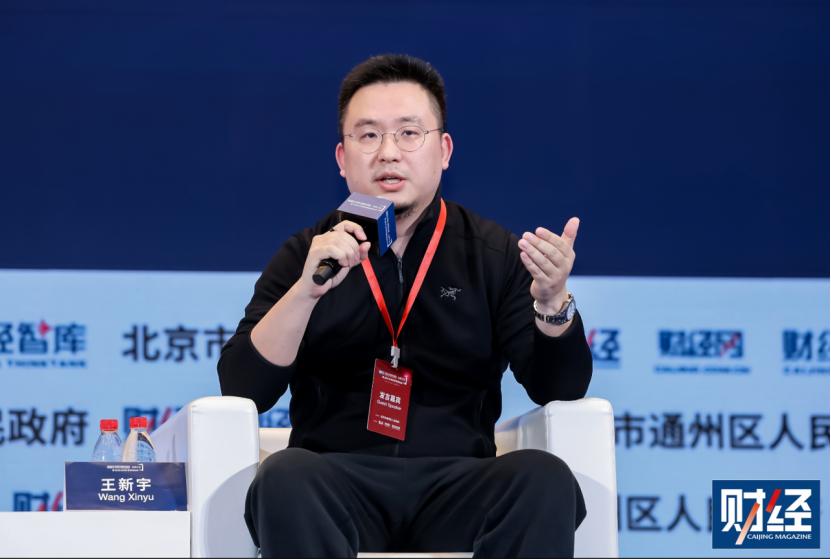
(Photo/ Wang Xinyu, Partner at Meituan Longzhu)
The other is Zhang Han, a partner at Sequoia China. Sequoia China is an investment institution that entered the field of embodied intelligence early and has a wide - ranging layout. Its investments cover multiple tracks such as humanoid robots and industrial robots. Zhang Han believes that embodied intelligence is a long - distance race with a cycle of at least a decade. China still lags behind the United States in algorithm originality but has obvious advantages in hardware reserves, industrial chain response speed, and engineering talents.
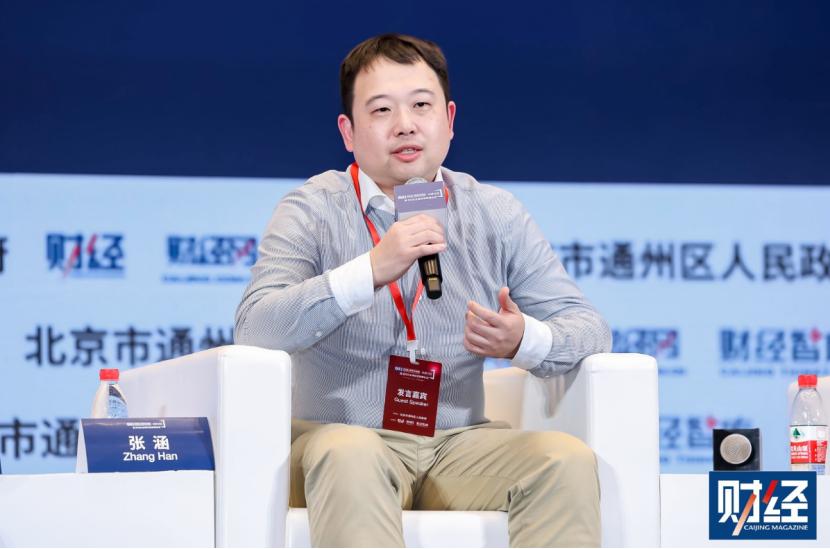
(Photo/ Zhang Han, Partner at Sequoia China)
The consensus of the two investors is that embodied intelligence is still in a very early stage and requires more patience and investment. Compared with seeing the production - line application of robots, they are more pleasantly surprised by every small leap in the underlying technology of the industry, even if it is just a "one - step, two - step" breakthrough.
The following is a selected transcript of the dialogue:
There Isn't Too Much Money; There's Too Little
Caixin: Meituan Longzhu has invested in several embodied intelligence companies in recent years. What value do you see in embodied intelligence?
Wang Xinyu: The concept of embodied intelligence is relatively new in China. We have been observing and investing since 2023 and 2024. Before that, we had a very long - term investment layout in the robot industry, including related fields such as autonomous driving and AI. First of all, this is not an overnight achievement. If we talk about the value of embodiment, I personally prefer to describe it as "liberating human productivity". Some people talk about the term "replacing humans", and people may worry about losing their jobs. In 2019, an Uber driver in the United States talked to me about autonomous driving, and he was very worried about losing his job. I want to say that every technological wave of change that liberates productivity is actually a progress that helps everyone live better.
I prefer to understand embodied intelligence as follows: Everyone here needs a nanny, a driver, a chef, or even a secretary or personal assistant at home. The fact that it is not yet popular is essentially an affordability issue. A relatively long - term vision of embodied intelligence is to liberate human productivity and help you enjoy more services at an affordable cost, whether at home or in more different scenarios.
Caixin: Sequoia China has been accompanying and supporting Chinese technology startups. What are the differences between this round of investment in embodied intelligence and previous fields such as large models, autonomous driving, and chips?
Zhang Han: Before embodied intelligence became a widely - concerned investment theme in 2023, we had been insisting on long - term layout in the robot field and made multiple investments in the so - called AI 1.0 era.
In my opinion, the difference between this wave of embodied intelligence and the previous ones is that currently, the mainly motor - driven upright robots are being pushed closer to mass production and commercialization. In terms of the combination of software and hardware and the overall industrialization level, China's embodied intelligence is leading the world. Especially, we have obvious advantages in hardware production. Theoretically, we can achieve more rapid and tangible results in this field.
Caixin: Recently, the National Development and Reform Commission proposed to prevent the crowded listing of embodied intelligence companies, which may lead to the compression of development space, triggering discussions on whether there is a bubble or overheating. As investors, how do you understand the requirements put forward by the National Development and Reform Commission, and what practical impact will this have on your next investment strategies?
Wang Xinyu: First, we need to define what a so - called bubble is. Whether it is embodied intelligence or hardware, China's role in the global arena is no longer just doing trade and OEM first and then gradually transitioning to advanced manufacturing.
In the field of embodied intelligence, we at least do not have an obvious disadvantage compared with the United States. In the past 40 years or a longer historical cycle, the Chinese people are indeed hard - working and brave. We are used to achieving 70% - 80% of what others did in the early days, and now almost the same or even better, with one - tenth or one - fifth of the cost and time of the United States or overseas. Is this reasonable? We have made statistics, and the financing amount of Figure AI in the United States last year may have been more than the total financing amount of the entire industry in China.
This is just the beginning. Whether it is AI or embodied intelligence, the curtain of a long - term development of more than a decade has just been opened. What we are doing in the field of embodied intelligence today is very clear. We are not following but striving to lead global progress or explore the boundaries of science and technology. Of course, there are complex things such as engineering and supply chains behind this science and technology. China and the United States are in a competitive situation. In the process of leading human progress, there is no bubble, and it is not that there is too much money. In fact, there is too little money. If we have more talents, more funds, and more attention invested in this field, we may be able to take the lead in this field in the future.
For example, the new energy vehicle industry somewhat follows the development pattern I mentioned. I believe that looking forward to the next decade from now, China will gradually take the lead in many global technology fields, and embodied intelligence is just one of them.
"Crowded listing" is another concept. Although statistics show that there are dozens of companies, in my mind, there aren't that many. Personally, I think that in addition to the companies truly engaged in embodied intelligence and those in the industrial chain supporting it, there are also some more peripheral "general - concept" companies that didn't do this before but have recently adopted new names. This is normal. So, we need supervision and guidance. We need to distinguish what is new - quality productivity and what is productivity but not new - quality. For example, some companies quickly claim to be new - quality productivity just because of a new concept. It is a very good thing for the government to supervise and inform the industry in a timely manner.
Zhang Han: I think the investment in embodied intelligence is just beginning. It is a long - term process of at least a decade, and the methodology has not fully converged yet. Everyone is still in the exploration stage. In this process, if the market sends out very positive signals and everyone, including the government, investors, and the public, is interested in this and believes it is the future development direction, it is normal for investment enthusiasm to emerge.
Currently, China has strong strength in embodied intelligence and indeed has the opportunity to gain a foothold in the global market. Previously, China's new energy vehicle industry has proven its value not only in the domestic market but also globally. So, for everyone, the opportunities in embodied intelligence are huge. Everyone doesn't want to fall behind and is willing to make early - stage layouts. I think this is a reasonable situation.
Regarding the issue of bubbles, as long as there is investment, there will be some elements of it. We just need to make the bubble thinner and thinner in practice and finally turn it into real value output. I am quite confident in this industry. We have seen so many companies in this industry, the quality of the people in it, and their progress, and we are quite pleased.
Chinese Characteristics
Caixin: When talking about embodied intelligence, the company Figure AI is frequently mentioned, and another one is Tesla's robot. As investors, how do you view these two companies, and what role do they play in the wave of embodied intelligence? In this wave of embodied intelligence, what new characteristics have Chinese startups and entrepreneurs shown compared with the past?
Zhang Han: Due to the unique status of Tesla's key figure in the global technology circle, its robot products will indeed attract everyone's attention, especially regarding the progress of implementation. People generally believe that it is relatively advanced in many aspects and has a complete logical closed - loop to tell a clear story: First, verify autonomous driving on electric vehicles, and then apply the same method to its robot practice. The robot will first meet the internal needs of the factory. So, every step sounds reasonable, and people expect it to make great progress in this area. Every time we see its demos and announced plans, they are quite grand, but in fact, we also need to pay attention to its delivery situation.
Every demo from Figure makes us feel very amazed, and we are also looking forward to when it will produce actual products. In addition to Figure, we also pay attention to Pi (Physical Intelligence), a very distinctive company that is quite advanced in terms of its "brain". Domestic companies engaged in embodied intelligence generally pay a lot of attention to them.
Overall, both domestic and foreign entrepreneurs in the field of embodied intelligence are getting better at following academic development and achieving practical implementation. As far as I know, Chinese scholars are also conducting in - depth research on embodied intelligence and have put forward their own ideas and practical methods in many directions. Although we still have some gaps in financing strength and original technology, our implementation ability is not much different. The bottleneck in the future development of embodied intelligence may be data. In this regard, the difficulty and cost of collecting data in some implementation scenarios in China are lower than those of our overseas competitors, which is one of our advantages.
Wang Xinyu: As Mr. Zhang mentioned just now, Elon Musk is indeed a unique figure. He has done a series of things, including Tesla, embodied intelligence, brain - computer interfaces, large AI models, rocket satellites, and new energy. I think it is very lucky for humanity to have such a person, and I personally believe that Musk will send humans to Mars.
Around 2019, I studied a lot about commercial space. At that time, many people often spent time arguing about whether to use liquid oxygen - kerosene or liquid oxygen - methane as rocket propellants. At that time, SpaceX used both. The reusable rockets used liquid oxygen - kerosene, and the rockets going to Mars used liquid oxygen - methane. The so - called first - principle is that there is no kerosene in space, so methane is used. There are many similar things. The robot is just a small part of Tesla. Looking at all the things Musk has done, including the recent establishment of a computing center in space, he is solving problems in the fields of human intelligence, semiconductors, and energy, and ultimately promoting humanity to become an inter - planetary species in the universe. From this perspective, Tesla's robot has a certain meaning.
Figure AI is even more interesting. We have visited their facilities in the United States and also talked about their financing. Instead of talking about the company itself, I want to explore two abilities reflected behind it: the ability to tell a story and the ability to imagine.
The demos of Figure AI have a Hollywood - block - buster - level quality, which can be divided into two aspects. One is the ability to tell a story. First, tell a good story to make people believe. There is a saying in Silicon Valley: "Fake it until you make it." Here, "fake" is a neutral word. I am not implying that Figure's products are fake. I want to say that for the promotion of any technology, you first need to tell a good story, whether it is a long - term vision or the current demos. An interesting part of an investor's job is to see whether something is just "faking it" or whether it can "make it" in the future. There are always many such stories.
What is even more interesting is the story of imagination. Many technological developments today can be traced back to science - fiction movies decades ago. If you have imagination today, perhaps the current technology cannot achieve the desired result, but maybe it can be achieved in twenty or thirty years. So, is there any value in "faking it"? Different companies are exploring along different technological paths in different ways. Maybe today's demos cannot be implemented yet, but I think they are still very valuable. Some technological paths and implementation methods have not yet converged. For example, whether it is the real - machine data school, the synthetic data school, or the intermediate school. I personally always think that such debates have a certain value, but there is not really a situation where "truth becomes clearer through debate". We should not focus too much on "liquid oxygen - kerosene or liquid oxygen - methane" but focus on flying into space.
The Signs of Commercialization Are Becoming Clearer
Caixin: Today, we see that many robots are still in the performance stage. Is there a contradiction here?
Zhang Han: There are many "schools" of embodied intelligence companies, but they can be roughly divided into two categories: movable humanoid robots and those for fine - operation. From the perspective of mobility, those performance robots belong to this category. However, in the field of fine - operation, people have been working on solving the problem of how machines can work like humans. There have been many breakthroughs in this area in the past two years.
We cannot say that any company's product has solved complex problems in a specific implementation scenario and is more efficient than humans. However, in some of our invested companies, their technologies and products are progressing very rapidly in this direction, and they may have the opportunity to increase the success rate to over 90% through model training and further post - training. Overall, embodied intelligence is very difficult because it involves the combination of software, algorithms, and hardware, strong interaction with the entire environment, and operation. The whole system is very complex. It has only been a short time since its implementation in the industrial field, and it may take many years to reach a satisfactory level.
In this process, we will see a "laying eggs along the way" model. When the technology reaches a certain level, it unlocks some scenarios and can perform some tasks, providing some value. This can happen soon. The progress of several companies we are concerned about in industrial production lines and hotel services has been quite gratifying. I expect that there will be clearer signs of commercialization next year.
Caixin: Meituan Longzhu has invested in several embodied intelligence - related companies. How do you judge whether a company is worth investing in?
Wang Xinyu: