High-end sports fill the gap left by luxury goods. Understand the changes in China's high-end consumption.
01 Traditional Luxury Brands Exit, Professional Sports Brands Fill the Gap
Business changes are always evident, and the actions of leading players serve as the market's barometers. Since the second half of 2024, apart from Hermès, many traditional luxury brands have closed their stores in China. In October last year, LV shut down its store in Shenyang's Zhuozhan Shopping Center, and DIOR withdrew from Dalian Times Square. In February this year, Gucci closed its stores in Shanghai's New World Dawan Department Store and Ruiou Department Store, which also sparked intense discussions in the market.
It's undeniable that some traditional luxury brands have adjusted their store - expansion strategies in the Chinese mainland market. The actions of some brands in prime city locations often precede the signals from performance reports and more intuitively reveal the pressure on the luxury industry.
Meanwhile, we can also observe that high - end sports brands are rapidly entering prime commercial areas.
In the past year, some professional sports brands haven't slowed down. Instead, they have increased their presence in flagship stores in the core business districts of first - tier cities and upgraded their store specifications, gradually becoming the new stars of top commercial landmarks.
From a business perspective, the high repurchase rate due to frequent use, the multi - season product structure centered around sports scenarios, and the user stickiness formed by professional communities enable these professional sports brands to demonstrate anti - cyclical capabilities different from luxury brands during the period when the growth of the entire luxury industry has significantly slowed down.
The global flagship store "City of the Future" of Descente was officially opened in Beijing's China World Trade Center. This super - large store with a sales area of 1,160 square meters is adjacent to Beijing SKP. Previously, it was occupied by the traditional luxury brand Armani.
When a traditional luxury brand that had been in this prime commercial location for 17 years exited, Descente, as a professional sports brand, brought the "City of the Future" inspired by the Möbius strip into the commercial core dominated by traditional luxury brands. A business narrative about the handover of consumption is gradually taking shape in the retail transformation.
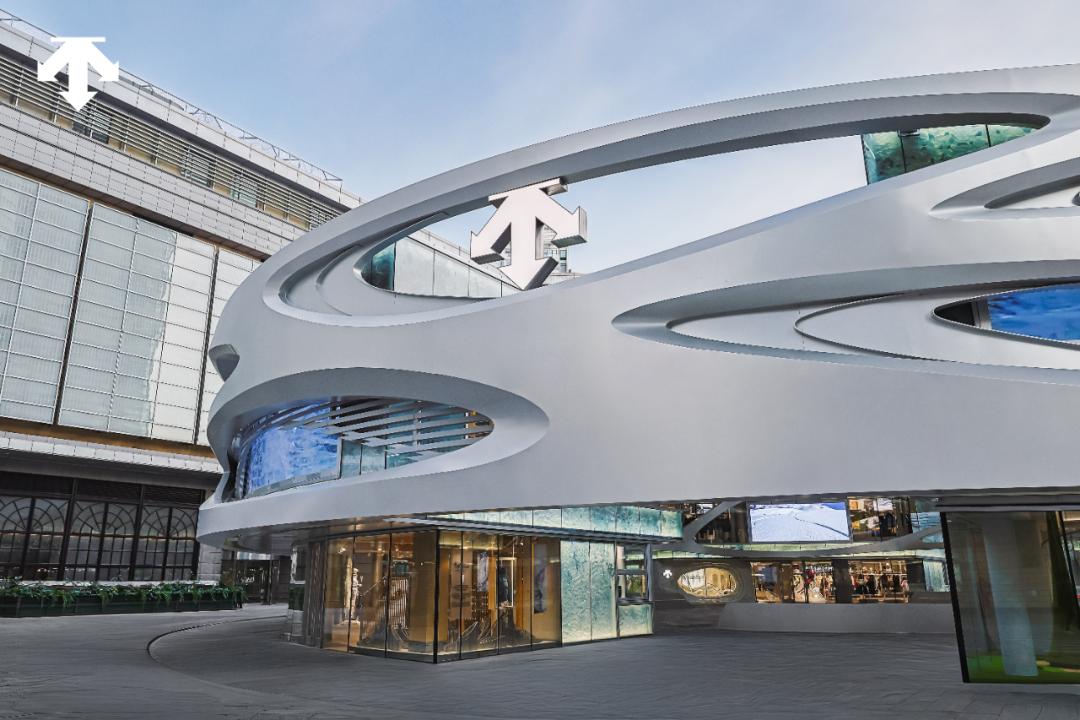
Among the sports brands entering the market in this round, Descente's path is particularly clear. It's not a scattered large - scale expansion but a gradual penetration from professional sports to contemporary urban life through a combined layout of professional scenarios, urban concept stores, and global flagship stores.
What enables Descente to take over Armani's large store?
02 Building a Global Flagship Store: Descente's "Offline Combination Punch"
When consumers' value judgments change, brands must also present new value propositions.
Descente's ability to enter the prime location in China World Trade Center and gain a foothold in the lives of middle - class consumers is not just about providing sports equipment. It's about making professional sports an exploration path for contemporary life.
Today's offline channels are no longer just simple retail places. They are also spaces for expressing brand values and fields for building connections and trust with users. Especially for the flagship stores that high - end brands rely on, as brands reach more consumers, they need a central medium for efficient expression.
This medium is the flagship store. The concept of the flagship store can be traced back to the European and American business systems in the 18th - 19th centuries. As a concentrated carrier and ultimate expression of a brand's core values, it has long become a key carrier for high - end retail to convey ideas and connect with users.
This is the strategic significance of Descente's "City of the Future". It's not just the opening of a global flagship store but a brand narrative about Descente's exploration of the future. Based on the concept of the Möbius strip, the "City of the Future" materializes Descente's professionalism into an experiential future world.
In the standard scope of high - end retail, the flagship store has become a touchstone for a brand's potential.
It tests not only the retail efficiency per square meter but also how a brand understands the future, how it builds relationships with consumers, and how it materializes its value concepts. As the strategic positioning of a global flagship store, the "City of the Future" is not just about Descente's past brand assets but also an offline entrance to the future sports life.
However, Descente's offline layout is not limited to the retail upgrade of the "City of the Future". It has a complete systematic strategy.
First, in terms of in - depth development in professional scenarios, Descente opened a flagship store at the Shanghai Sheshan International Golf Club in May this year. In the past, it also reached strategic cooperation with top ski resorts such as Changbaishan, Yunling, and Beidahu. In places closest to professional sports enthusiasts such as golf and skiing, it achieves in - depth connection between the brand and users.
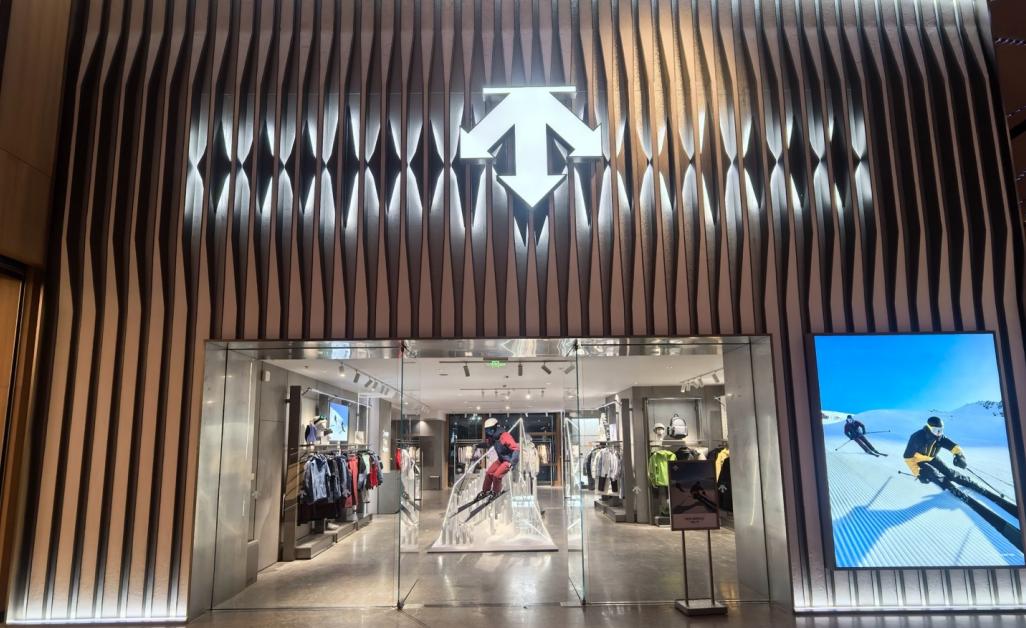
Descente's store at Hemu Jikepu Forest Ski Resort in Xinjiang
This is not a simple cooperative model of product placement. Descente, deeply rooted in professional scenarios, firmly anchors users' minds in the authoritative port of professional sports. This determines that Descente first attracts elite consumers who pursue professional equipment and excellent performance.
Second, after professionalism has cultivated a group of highly - recognized elite users, Descente begins to introduce its retail strategy into the core business districts of cities. Urban concept stores represented by Shanghai Xintiandi, Hangzhou in77, and Chengdu Taikoo Li form the urban narrative of Descente's retail strategy.
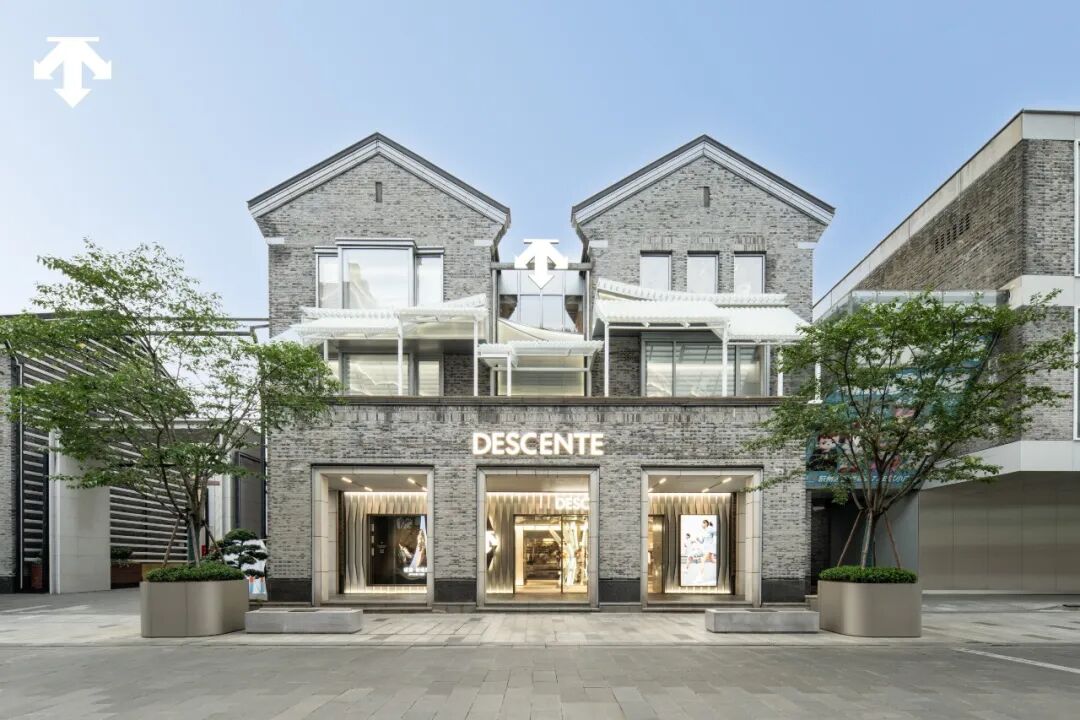
DESCENTE HANGZHOU Urban Concept Store

DESCENTE CHENGDU Urban Concept Store
In the process of integrating the brand spirit into art and culture, Descente also translates professional sports into a lifestyle that can be understood and continuously invested in by the urban middle - and high - end population. Take the Shanghai Xintiandi store as an example. It takes skiing as the design origin, retaining the blue - brick elements of old Shanghai and integrating ice and snow art installations.
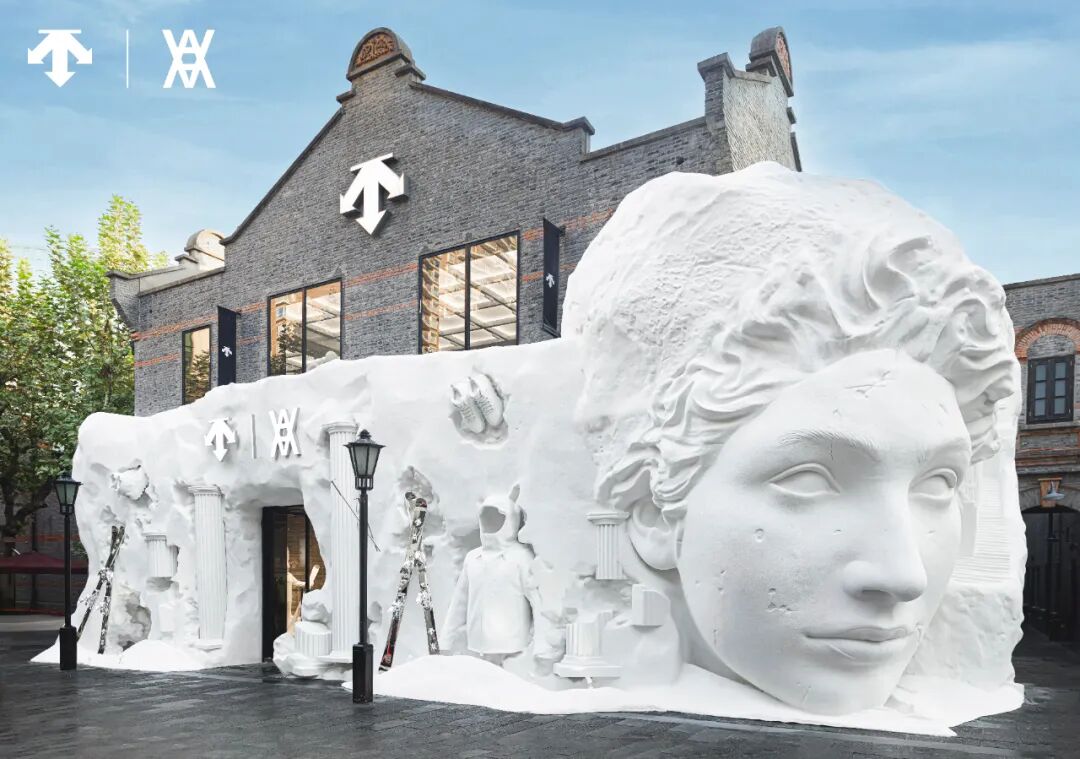
The limited - time pop - up space "Winter Wilderness" of the DANIEL ARSHAM collaboration presented at DESCENTE SHANGHAI
Finally, the global flagship store represented by the "City of the Future" completes the closed - loop of Descente's high - end brand image under its retail strategy. In a high - potential core location adjacent to Beijing SKP, the world's top luxury store, a store with an area of over 1,160 square meters is sufficient to continuously strengthen Descente's image as a high - end sports brand.
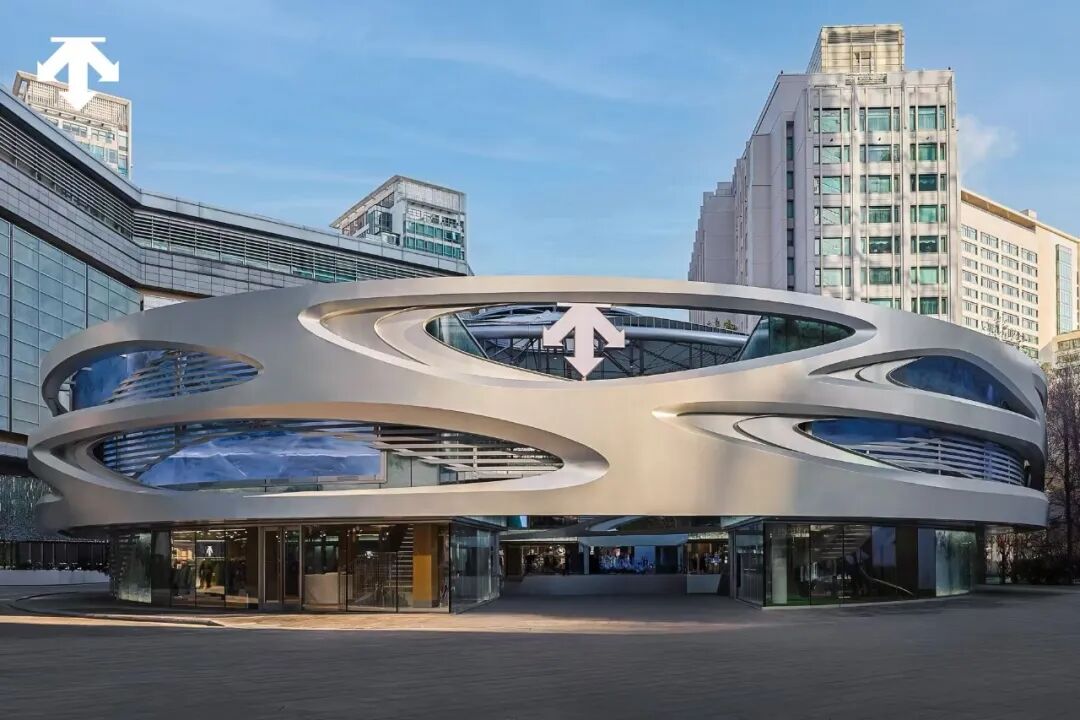
In top commercial circles like China World Trade Center and SKP, whether a brand can enter is never a simple leasing issue but a highly rational business judgment. The core consideration of the mall is whether a brand can match the structure of the core customer group, support long - term performance per square meter, and participate in constructing the future value narrative of the business district. Standing firmly in the prime location means that Descente not only has sufficient business strength but also the ability to continuously communicate with high - end consumers.
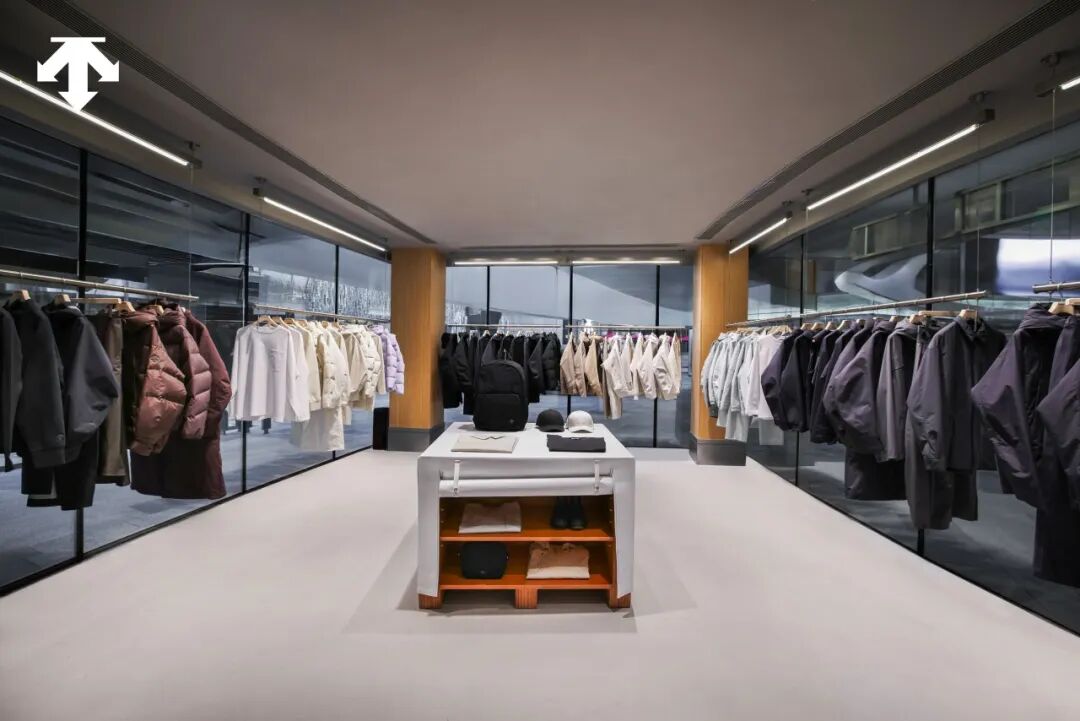
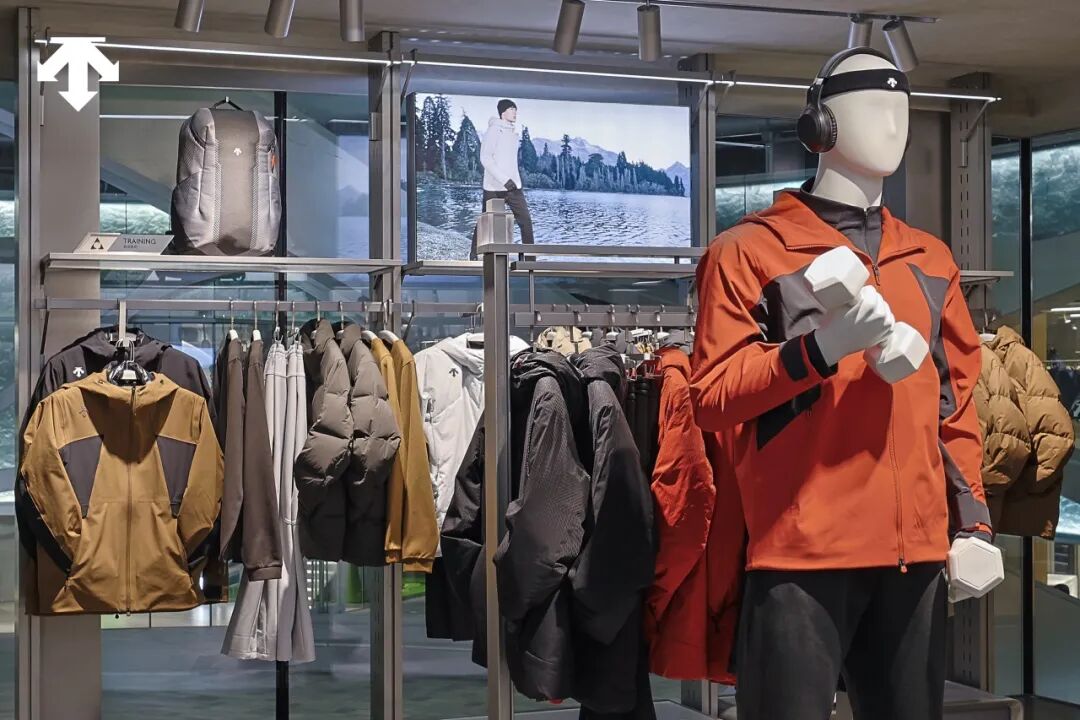
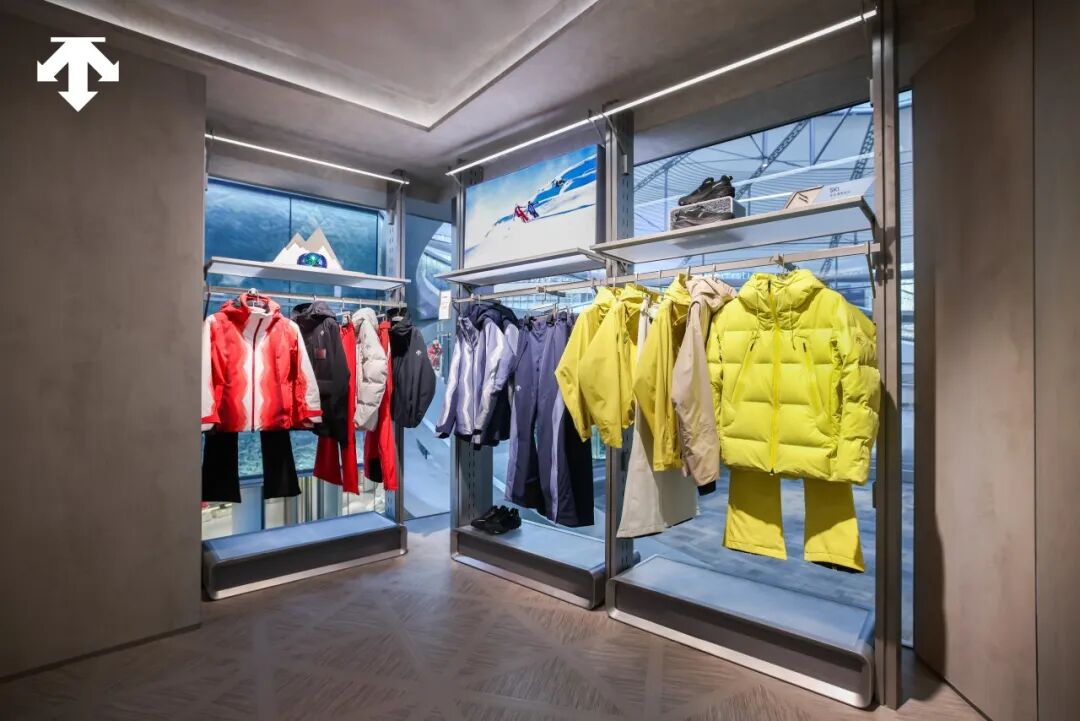
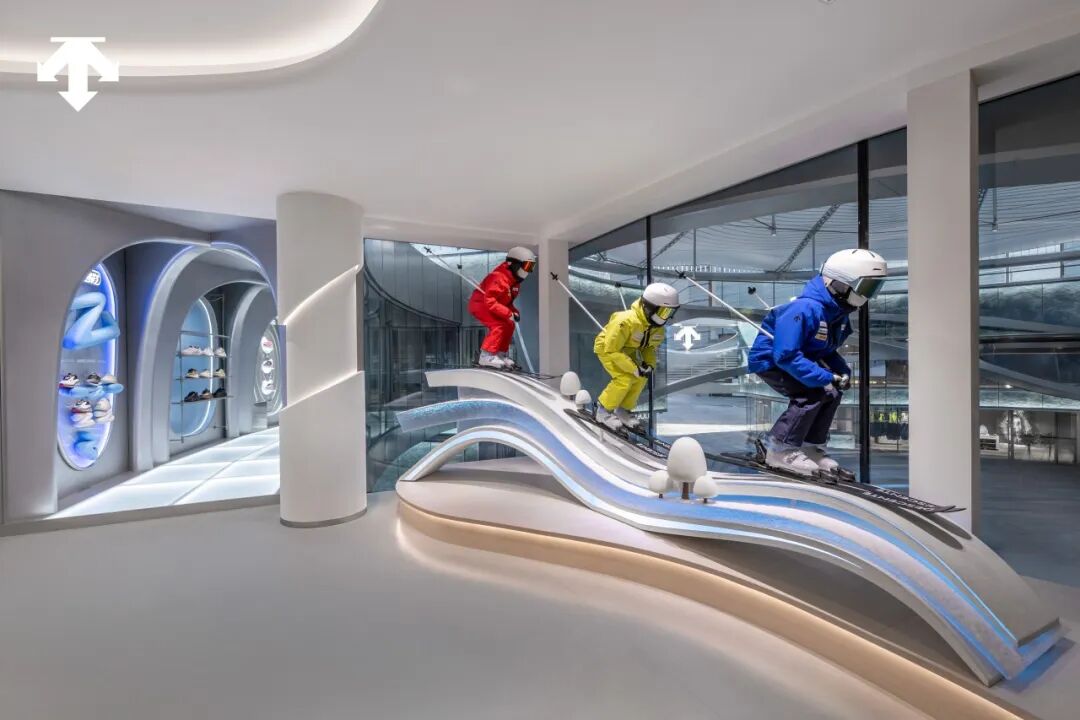
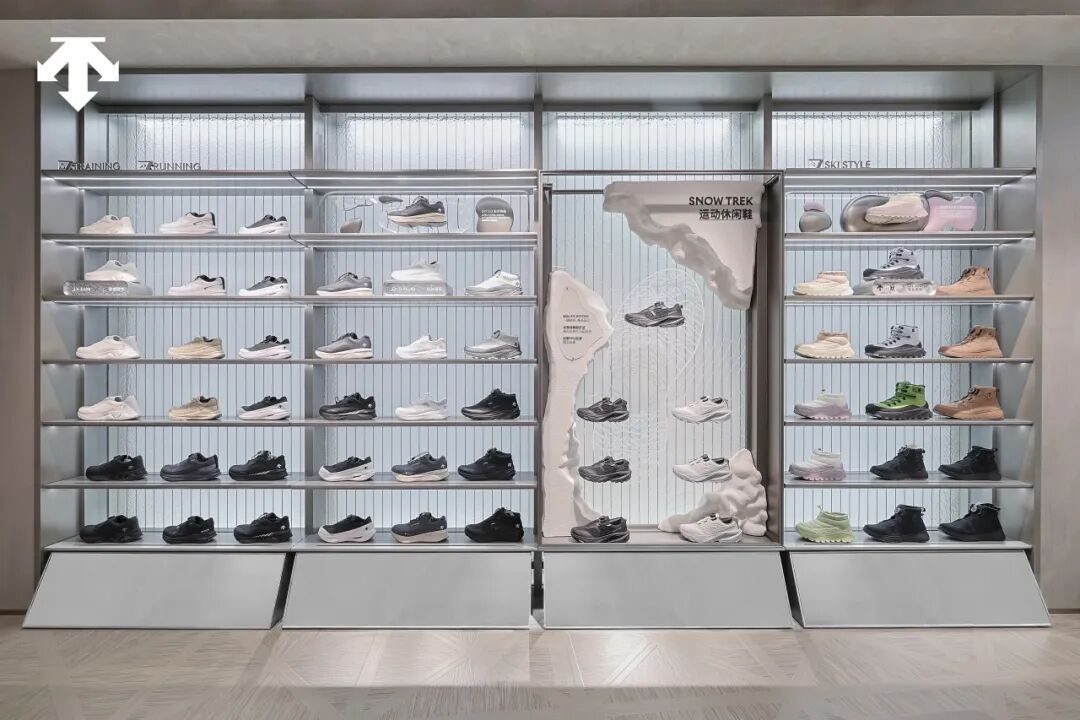
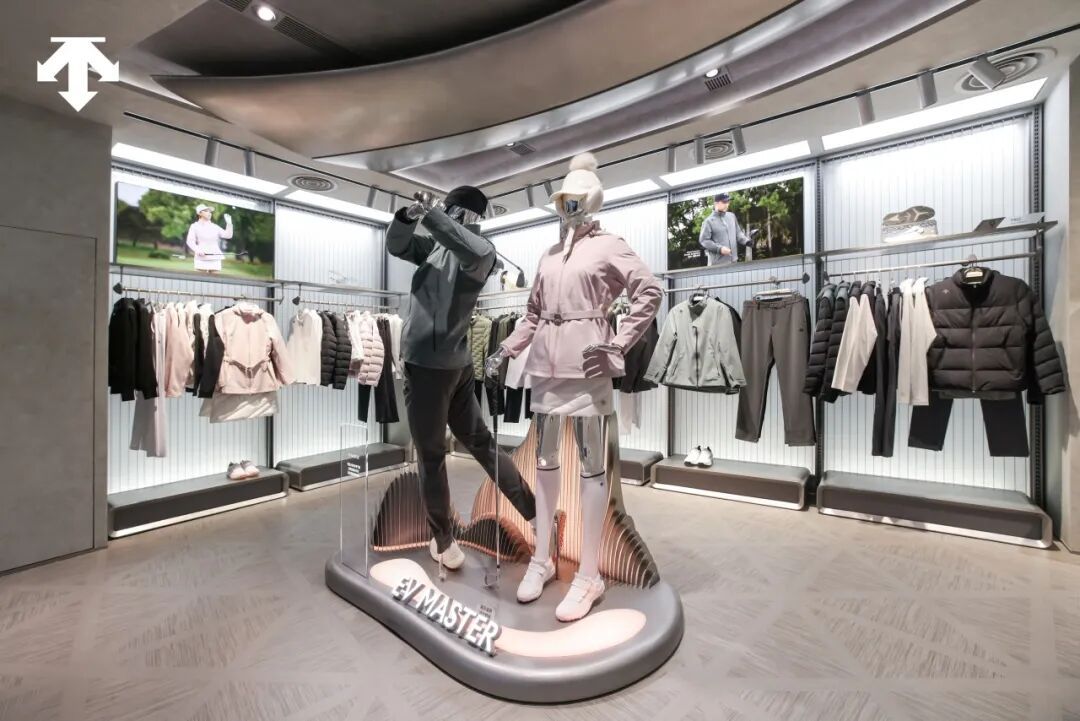
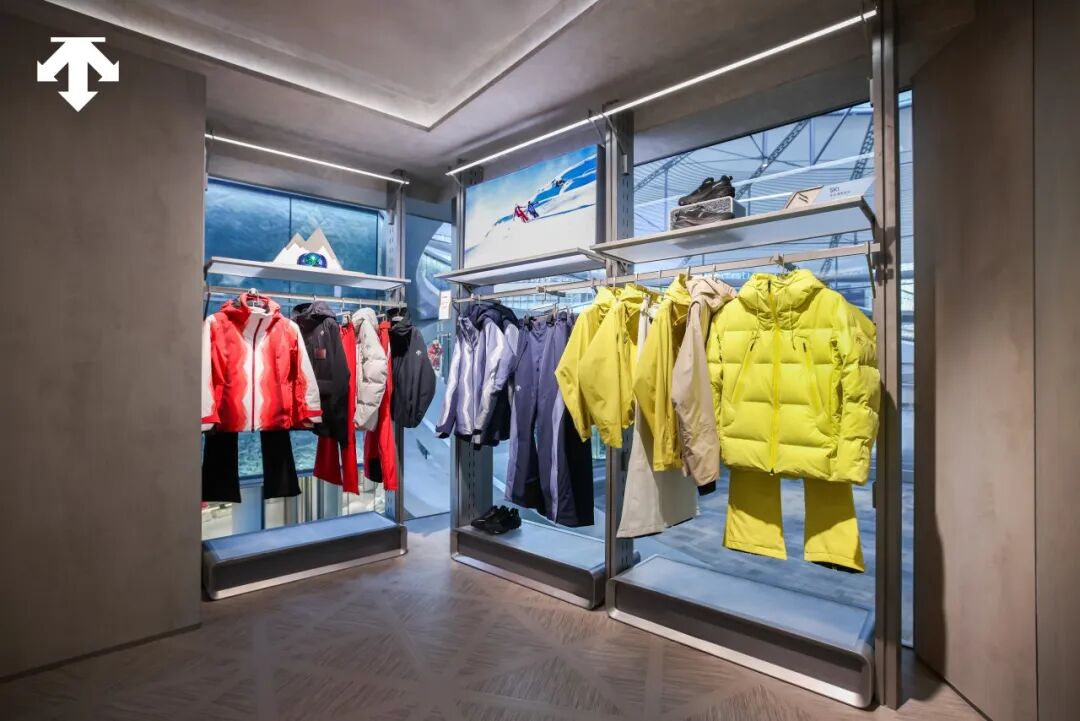
We can see that Descente's retail channel strategy has a clear three - stage path.
From in - depth development in professional scenarios, to urban narrative, and then to entering top commercial districts, the essential logic of this combination punch is to first occupy the peak of the industry and then benefit the general public. It determines that Descente's large - scale growth is not a rough channel expansion but a continuous penetration around the life paths of the elite group.
03 Not Just Competing for Retail Space, but a Change in the Logic of High - End Consumption in China
Descente's entry into the China World Trade Center Plaza has become a strong signal of the change in the logic of high - end consumption in 2025.
The global luxury market, which experienced brilliant growth during the 2020 - 2022 pandemic, has entered a cold winter in the past two years. According to Bain's data in 2025, the total number of luxury consumers has decreased from 400 million in 2022 to about 340 million in 2025.
Behind this is the decline of conspicuous consumption in the era of rationality. In the past, brand businesses that simply sold logos and price - increase strategies have gradually failed.
Andrea Guerra, the CEO of the Prada Group, once proposed that "the price - increase strategy in the luxury industry is a huge mistake. Continuous price increases will only weaken consumers' trust."
When price deviates from value, consumers will naturally re - examine which expenditures are worth keeping in the long term.
The "14th Five - Year Plan for Sports Development" proposes that by 2025, the total scale of China's sports industry is expected to reach 5 trillion yuan, of which the total scale of residents' sports consumption will exceed 2.8 trillion yuan. High - end sports consumption represented by skiing and golf, as an important part of it, has a growth rate significantly higher than the overall market average.
Meanwhile, under the policy advocacy of national sports, the scale of the entire market population has entered a period of structural expansion. The number of participants in skiing exceeded 26 million in 2024 - 2025; running, as the most widespread sport, has a participation population of 118 million; and in the traditionally high - threshold sport of golf, the number of adolescent participants is also showing a steady growth trend.
We can see that these professional sports, which were originally considered high - threshold, are breaking through the circle and entering a wider range of public life scenarios, becoming an important choice for a group of new middle - class people to establish self - order, expand social networks, and confirm their lifestyles.
When professional sports shift from one - time participation to long - term investment, the value judgment behind them also changes. For a professional sports brand, it needs to provide not just a set of equipment but rather jointly build the value consensus of these new middle - class people through the professional performance, long - term use value, and social attributes carried by the products.
In other words, in the current era of rational consumption, brands and products need to withstand more scrutiny than before. This value consensus does not come from slogans or marketing narratives but is gradually established in the actual use process.
Professional sports represented by skiing, triathlon, and golf naturally have community attributes. Descente participates in the construction of these community relationships through event cooperation, training support, professional services, and offline spaces. And consumers also achieve an identity with