The geeks who "reclaim" the HarmonyOS ecosystem have sown a sky full of stars.
At the beginning of the technological river's course change, those who are the first to sense the shift in direction are often those who are at the source and dare to take the first step in the fog. When a new operating system starts to grow from scratch, they don't choose to wait and see; instead, they roll up their sleeves and get involved. These people who are driving forward the fastest-growing operating system in the history of intelligent terminals are the HarmonyOS developers.
Among the HarmonyOS developers, there is a group of pioneers who lead technological innovation, drive product innovation, and spread knowledge about HarmonyOS. Now they have a common name - "HarmonyOS Geeks".
In December this year, the first batch of 50 "HarmonyOS Geeks" received official certification from Huawei. To be selected, one must have experience in hardcore projects, make open-source contributions, have technical works or achievements in competitions, leave clear footprints in HarmonyOS-related communities, courses, applications, and components, and also have a stable influence within a certain scope.
What the "HarmonyOS Geeks" represent is a group of pioneers who are enthusiastic about technology, full of innovative vitality and exploratory spirit, and actively participate in the HarmonyOS technology community. They are regarded as "pioneers" because they have turned the unknown into the known and paved the way for possibilities. For latercomers, their existence proves that in the HarmonyOS ecosystem, the paths, rhythms, and achievements of professional exploration can all be transformed into clearly visible industry influence and personal growth.
This time, 36Kr had in-depth conversations with 3 "HarmonyOS Geeks" with different occupations, ages, and identities to find out what kind of exploration, perseverance, and creation are truly needed in the rapidly growing HarmonyOS ecosystem.
Preachers: Be the first to act and teach others how to "fish"
Liu Qin, an associate professor at the School of Software Engineering of Nanjing University, was among the first to introduce HarmonyOS into the university classroom. In 2020, in his course "Mobile Internet Software Engineering", he used the newly released HarmonyOS 2.0 as the core teaching platform. Although the HarmonyOS system was still in its infancy at that time, in Liu Qin's view, it was precisely the most suitable time to learn.
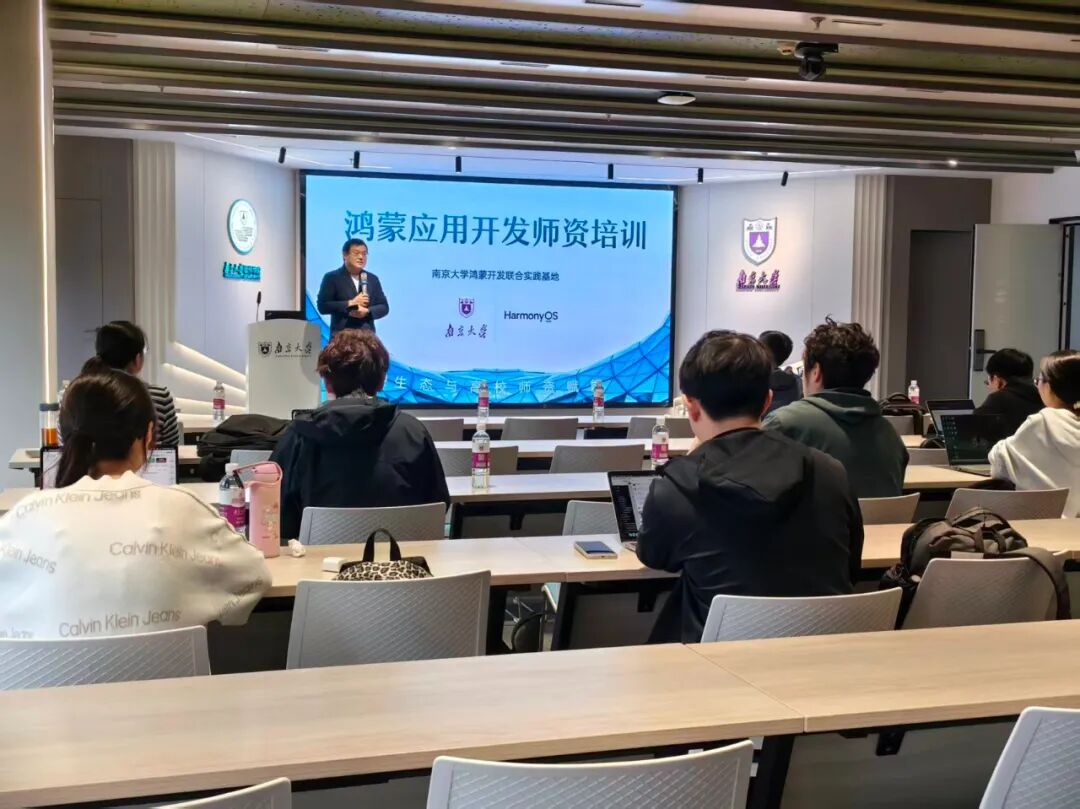
"On the one hand, it is the need of the country, and on the other hand, it is the advancement of the HarmonyOS technology itself (which is worth investing in)," he explained.
The popularity of the course far exceeded expectations. This core elective course, originally designed for 150 required students, actually had more than 230 students enrolled. It not only covered students in the major but also attracted students from different majors and grades to actively sit in on the class or even enroll in it.
More importantly, this course is not simply about teaching students how to write an application in the HarmonyOS ecosystem. What's more important is the change in the teaching goal. The class has shifted from building functions around a single device to designing service logic around multiple devices and multiple scenarios. Students need to re-understand what an application is, how the system coordinates, and how capabilities are disassembled and combined.
In this way, students can also disassemble scenarios from the perspective of HarmonyOS and think about the boundaries between services and the system. Under Liu Qin's guidance, the "Zhiwei Jianji" application developed by students at Nanjing University, which interprets test reports by taking photos with a mobile phone and establishes a health file, not only won the first prize in the AI track of the National Challenge Cup but was also invited by Huawei to develop a HarmonyOS version.
Another English listening and speaking training system developed by students migrated the interaction of the large language model on the web to the HarmonyOS mobile end, realizing functions such as class attendance and oral evaluation. According to Liu Qin, the undergraduate students who participated in the development also got an internship opportunity at Huawei and worked with engineers to promote commercialization.
A teacher is one who imparts knowledge, teaches skills, and resolves doubts. Liu Qin believes that for current software engineering students, thinking training is more important than teaching specific knowledge. "Preaching cannot touch students," he said bluntly. "Only by letting them see what corporate people in the real world are desperately doing." Therefore, as a HarmonyOS Geek, he also frequently invites Huawei engineers and industry entrepreneurs to the classroom to let students directly feel the pulse of the industry.
The effect of this immersive teaching is very direct. According to him, every year, some students join the core HarmonyOS teams of enterprises such as Huawei's Nanjing Research Institute after graduation. Even if these students switch to other fields, the cross-device development experience they learned during their education has become their core competitiveness. And as a teacher, Liu Qin can quickly link these resources, which is precisely due to the exclusive rights of HarmonyOS Geeks - in-depth connection with the official technology community and priority access to the ecological partner network.

An important characteristic of HarmonyOS Geeks is the ability to see long-term value in the early stage of uncertainty and turn the value into a sustainable learning and action system. Incorporating HarmonyOS into the curriculum system is not just about teaching students a new technical tool. More importantly, it helps them establish a new development mindset and cultivates the first batch of talents with a "HarmonyOS mindset" for the entire HarmonyOS ecosystem. Liu Qin has just answered the key question of "how to prepare more people to enter the HarmonyOS ecosystem", which is to enable more people to catch up with the trend when it just emerges.
Explorers: Build bridges in the deep waters of technology
Hundreds of kilometers away in Hangzhou, at his workstation in the Geely R & D Center, Li Junwei has just finished a busy day of development work. In the technology community, he has a more well-known name - "Shaohu", an active and influential HarmonyOS Flutter preacher.
Back in 2023, Huawei announced that HarmonyOS NEXT would remove the Android compatibility layer, taking a step towards complete independence. When the news spread, while developers were excited, they also fell into a general anxiety: How should the large number of applications developed based on Google's Flutter framework be migrated? This is not only a technical question for individual developers but also a systematic problem concerning whether the HarmonyOS ecosystem can grow at an accelerated pace.
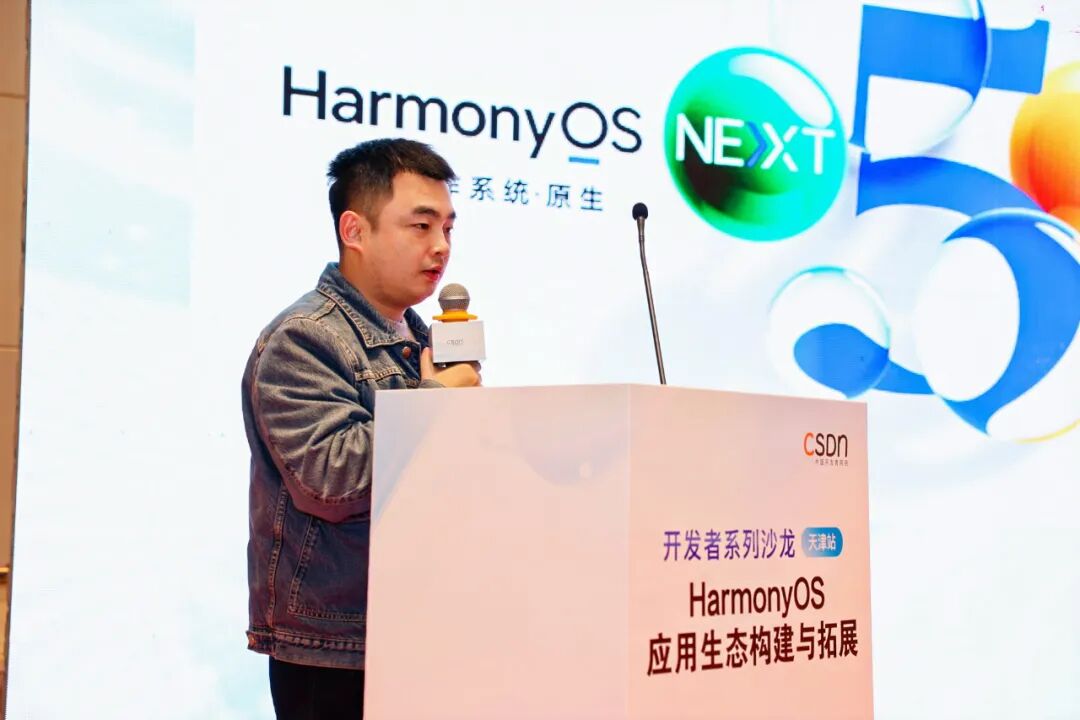
Li Junwei is a senior developer in the Flutter field. When talking about why he chose to engage in HarmonyOS development and gradually became a preacher, his answer was very simple: "At first, I just wanted to solve the migration problem of our own project."
Developing in a new operating system ecosystem is not an easy process. Li Junwei said bluntly that it was "very painful" during that time. To help later developers avoid detours, every time he solved a problem, he would record the process, thinking, and code in detail. Because the system was updated and iterated very quickly, to keep the tutorials up-to-date, he would immediately record his thinking, sort out the code, and stay up late to polish it into a technical article almost every time he completed a function adaptation.
"At first, it was just a few simple articles. Later, I found that it could really help everyone, and it just got out of control," Li Junwei recalled. An independent financial management application developer with hundreds of thousands of users encountered complex obstacles when integrating Huawei account services and was almost ready to give up HarmonyOS adaptation. Through Li Junwei's community feedback channel, the problem was quickly focused on and directly reported to the HarmonyOS technical support team.
Unexpectedly, two days later, this developer received not just simple technical advice but an almost complete, packaged example code suite. Li Junwei was quite touched. The response efficiency of the HarmonyOS technical support team to developers' pain points far exceeded his initial expectations, which also made him more determined to share technology and help his peers.
For Li Junwei, the deep appeal of becoming a HarmonyOS Geek lies in "autonomy" and "witnessing". In the past, when participating in open-source ecosystems led by foreign countries, it was mostly about following established routes and directions. In the HarmonyOS system, "we can put forward our own ideas and truly implement them in the community." He has witnessed the growth of the HarmonyOS developer community from scratch and from being quiet to being active, and also witnessed the rapid popularization of development devices from being hard to find - this is a rare experience of participating in the growth of an operating system from zero to one.
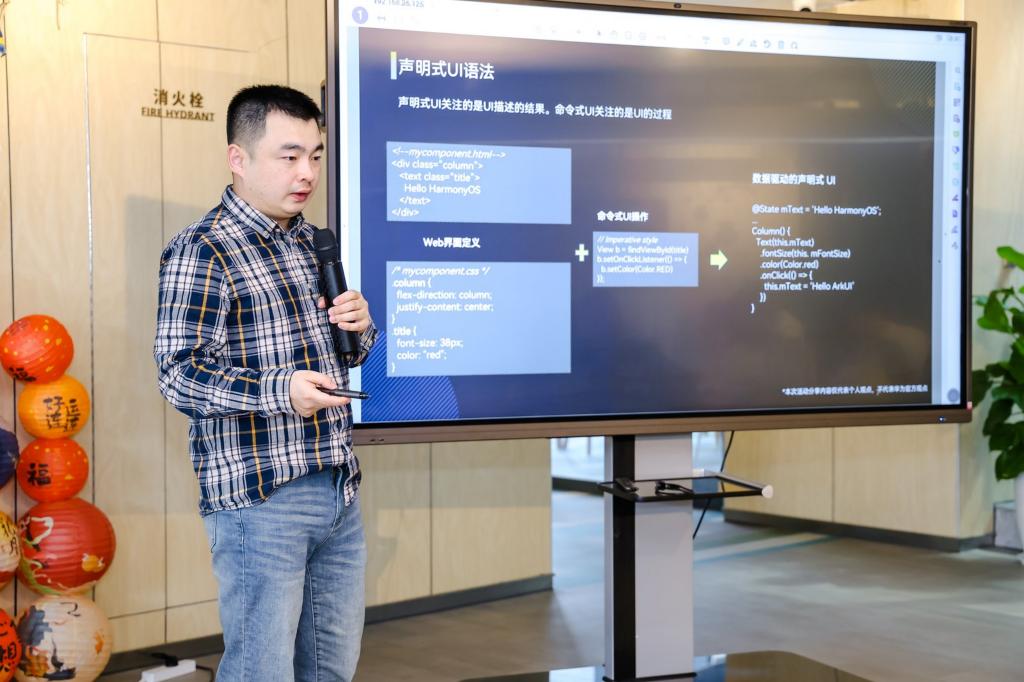
As a technical backbone of the enterprise, his choice also shows countless developers the possibility of a dual identity: one can be the "helmsman" of a key enterprise project and also an open-source contributor who silently "paves the way" in the emerging ecosystem. His HarmonyOS Geek spirit is reflected in using his excellent technical ability to lower the entry and migration thresholds of the entire ecosystem, allowing more "elephants" to smoothly step into this new continent.
Innovators: Realize the value of going all-in on HarmonyOS
In Guangdong, Liang Yujia, a post-00s developer who quit his job at a big company, chose a seemingly more difficult path - to become an independent developer. Majoring in software engineering, he started developing applications in his sophomore year, and an independently developed cleaning tool he created once reached one million downloads.
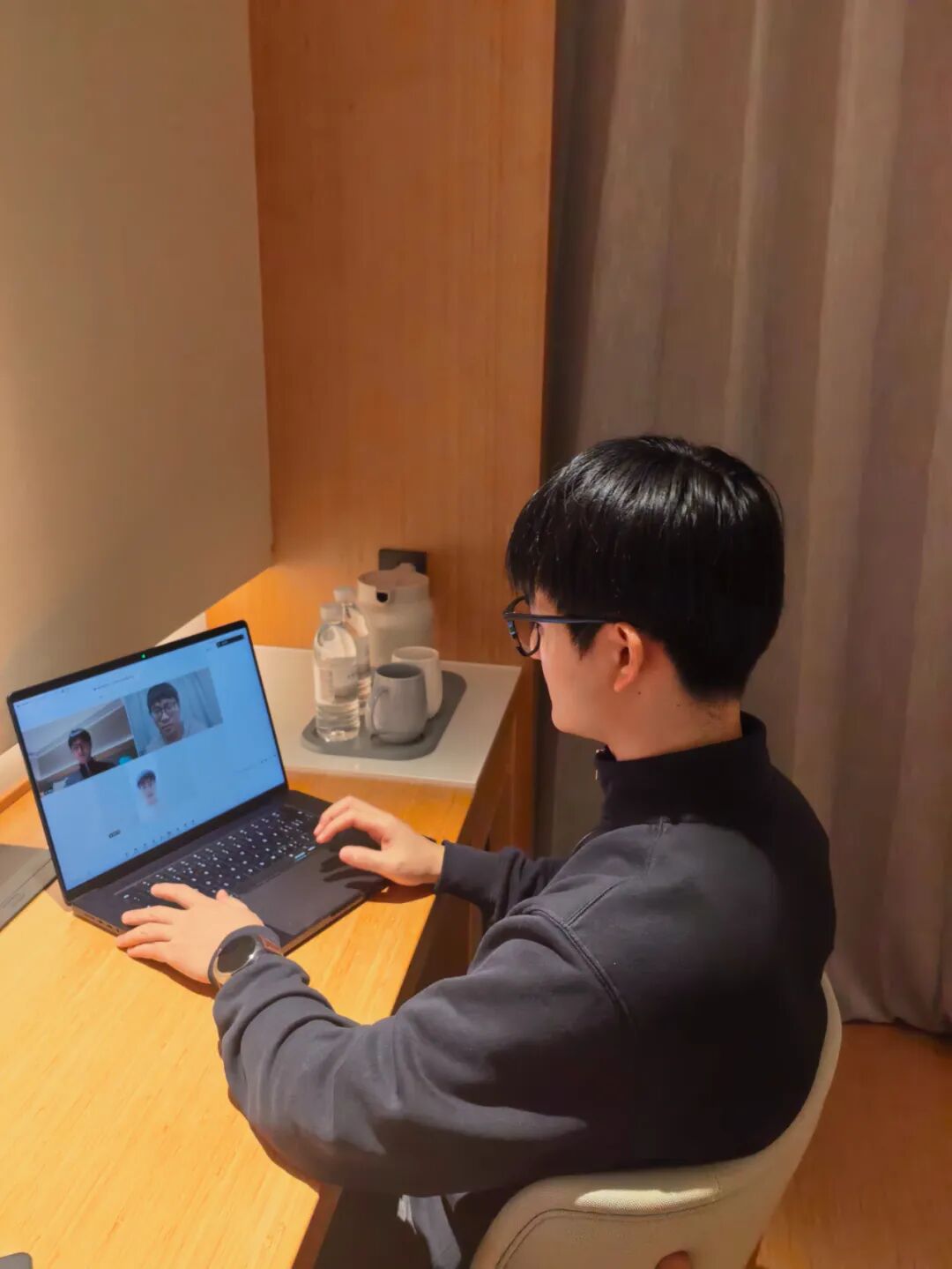
Because he was optimistic about the development momentum of the HarmonyOS ecosystem, at the beginning of this year, he formed a remote team with two college classmates and developed the "Wonderful Toolbox", which aggregates more than 300 efficiency functions, based on their own pain points in use.
This application, which integrates hundreds of functions such as video parsing, news, and text-to-speech, was developed to solve the pain point of the cumbersome switching between multiple apps. After it was launched on the HarmonyOS App Gallery at the end of July, the "Wonderful Toolbox" was immediately recommended in the official "New Apps" section. It received its first payment ten minutes after being launched and earned more than 10,000 yuan on the first day, with monthly revenue exceeding 400,000 yuan.
"HarmonyOS users really support developers by paying," Liang Yujia recalled. This "clear signal" made the Liang Yujia team immediately decide to "go all-in" on HarmonyOS. In the following months, six applications in the "Wonderful Family Bucket" series were quickly launched, and the team's monthly revenue stabilized at 200,000 - 300,000 yuan. The revenue from the HarmonyOS end was several times the total of other platforms.
More important than the business figures is that they have verified and interpreted the core characteristics of "HarmonyOS Geeks" as "application innovators". The in-depth application of AI technology has enabled the small team to release amazing productivity. The Liang Yujia team entrusted 90% of the coding work to AI and focused on demand insight and direction control, freeing themselves from repetitive coding and focusing on product logic and user experience.
This "small team, fast iteration, and deep connection" model may be difficult to break through in the red ocean markets of Android and iOS, but it has found the most suitable ecological niche in the blue ocean of HarmonyOS. There is no need to have a large team, nor to aim for a "platform-level" product from the start. Instead, focus on product experience and user pain points and make "creativity king".
With keen product insight, transforming the technical possibilities of the system into a popular product that meets user needs is precisely the innovation full of the HarmonyOS Geek spirit. These innovators have the ability to connect scattered system technology points and integrate them into coherent user value. By refining the fragmented needs of a large number of users, they can transform them into precise product directions.
What Liang Yujia has realized is not only the commercial value after "going all-in" on HarmonyOS but also the ecological value that only "co-builders" can enjoy. Their existence demonstrates to latercomers how to plant their own fruits full of creativity and vitality in the new soil of HarmonyOS.
Conclusion: Foresight, belonging, and a "future" worth pursuing
In the world of HarmonyOS, the future that Liu Qin sees is a more natural integration of technology and people. He believes that the paradigm represented by HarmonyOS is pushing us towards an intelligent world where "services find people"; what Li Junwei expects is the transformation from a "follower" to a "co-builder".
Developing in the HarmonyOS ecosystem gives him a sense of autonomy he has never felt before. He plans to improve his tutorials while developing his own independent applications and continue to move forward in connection and creation; what Liang Yujia looks forward to is to plant his own "works" in the soil of HarmonyOS. The initial success of application development has given him confidence, and his goal has become clearer. He is no longer coding for functions but for real creation and career.
Their stories together interpret the spirit represented by "HarmonyOS Geeks". It is by no means just an exclusive crown for top technical geniuses but an affirmation of those who dare to actively use their professional abilities in uncertainty and transform personal exploration into public value that nourishes the entire ecosystem.
This spirit also makes "HarmonyOS Geeks" go beyond an honor and become a "golden IP" representing foresight, responsibility, and influence in the developer circle. Because becoming a "HarmonyOS Geek" means that this person has proven himself in the HarmonyOS ecosystem, truly changed it, and made it better.
For individuals, the identity of a "HarmonyOS Geek" means a bigger stage, more concentrated resources, and more direct opportunities - priority access to new versions and new tools, face-to-face communication with Huawei's technical team and industry partners, and the opportunity to share their practical experience in more public occasions; for enterprises and organizations, a team with HarmonyOS Geeks is an advantage in itself because they not only master specific technology stacks but also have a stable position and connection ability in an important new ecosystem.
Currently, the universe of HarmonyOS is still expanding at an accelerated pace, and it calls for more HarmonyOS Geeks to join. It could be product people who use the distributed features of HarmonyOS to solve cross-device pain points, preachers who continuously create high-quality content and spread knowledge, or proposers who actively provide feedback in the community and promote detailed optimization.
After all, the story of HarmonyOS is a story about "people". Countless individuals inject their insights, enthusiasm, and responsibility into it, making the world of HarmonyOS come alive. Just as the name "HarmonyOS Geeks" calls for, it is those who always look towards the next unknown and are willing to make it clear with