Chinese humanoid robots land in Japan

Three humanoid robots showcased by GMO (Koto-ku, Tokyo, December 3rd)
Japan was once hailed as the "Land of Robots" and attracted worldwide attention for robots like Honda's "ASIMO." However, in the current development competition of humanoid robots, Chinese and American companies are leading the way. The industry is repositioning robots as the "bodies" of AI...
A "tectonic shift" is taking place in Japan's robot industry, which has long held a dominant position. At the robot exhibition that opened in Tokyo in early December, humanoid robots made by Chinese companies showed their presence. In the new market estimated to reach $5 trillion globally, emerging companies from the United States and China are leading, while Japanese companies currently have a weak presence.
"Please place your order." Robots moving as flexibly as humans are greeting visitors at the "2025 International Robot Exhibition." These are humanoid robots provided for rental services by Japan's GMO Internet Group since April 2025, which is participating in the exhibition for the first time. Six robots that were previously "dispatched" to enterprises and factories have gathered at the exhibition this time.
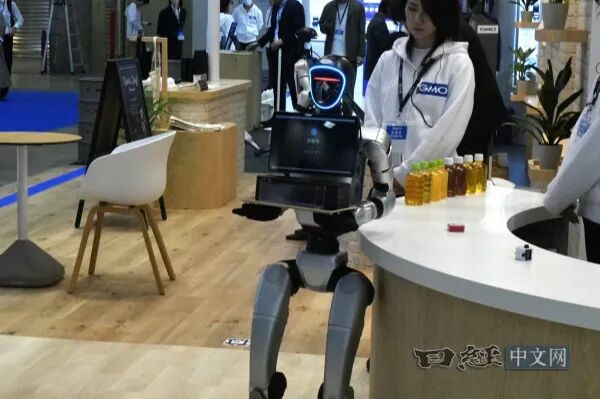
The humanoid robot "G1" developed by Unitree Robotics (Koto-ku, Tokyo, December 3rd)
All six of these robots are produced by Chinese companies. The "G1" model can take orders from customers in the exhibition area's coffee shop and deliver drinks and snacks. The G1 was developed by Unitree Robotics, a Chinese unicorn company founded in 2016. It is 130 cm tall and weighs 35 kg. Despite its small size, it has stable walking performance.
The G1 can also dance beside people, demonstrating its high performance. To the background music of songs like "Bling-Bang-Bang-Born" by the Japanese rap group Creepy Nuts, it successfully completed jumping and turning movements, arousing cheers from the on - site audience.
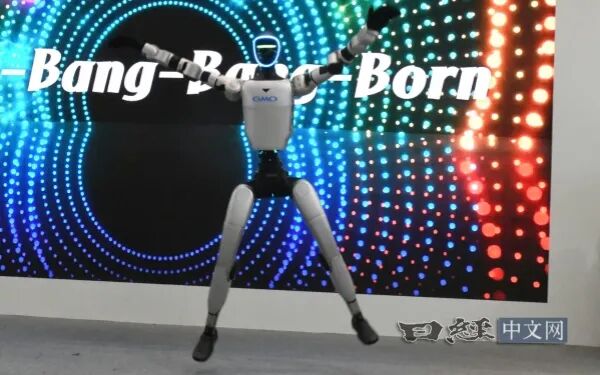
The humanoid robot "G1" jumping to the music (Koto-ku, Tokyo, December 3rd)
The "PM01" manufactured by Zhongqing Robotics, headquartered in Shenzhen, and the "Walker E" developed by Ubtech Robotics are also waving to greet the audience. The "Walker E" can carry up to 30 kg of goods and is intended for use in factories and warehouses.
Tomo Hiro Uchida, the president of Japan's GMO AI & Robotics Corporation, said, "We are trying to introduce as many humanoid robots as possible." They are looking for models globally, including in Japan, but "currently, the only products that can be mass - produced, have a sales system, and can actually be purchased are those made in China."
Although there are some concerns about Chinese - made products, such as information security issues and the potential impact of political tensions in Sino - Japanese relations, Uchida believes that "if we don't engage with these technologies, we will fall behind in development." Based on this judgment, the company decided to operate these products as a trading company.
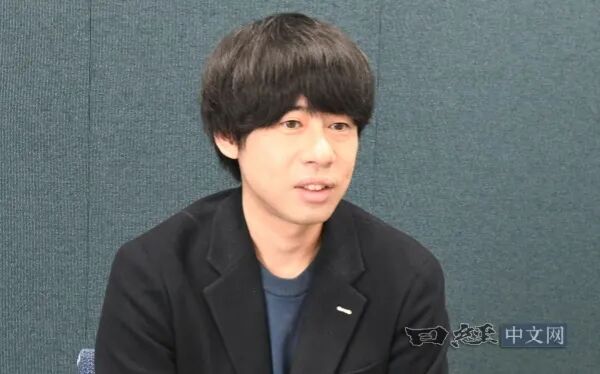
Tomo Hiro Uchida, the president of GMO AIR (Shibuya-ku, Tokyo, December 2nd)
The core driving force for robots to explore new markets is artificial intelligence (AI). With the rapid development of AI technology, the industry is repositioning robots as the "bodies" of AI, and this trend is constantly expanding.
In particular, humanoid robots with a human - like torso, head, and limbs are widely expected to be an effective supplement to the labor force because of their high compatibility with existing social infrastructure. According to a prediction by Morgan Stanley, the market size of humanoid robots will reach $5 trillion by 2050, and more than 1 billion humanoid robots will be put into work globally.
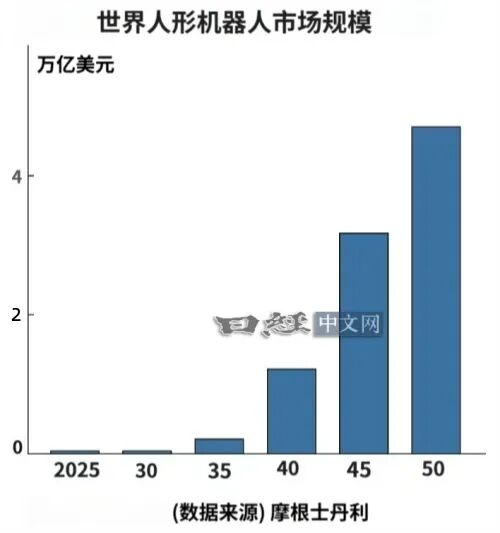
In the development competition of humanoid robots, Chinese and American companies are leading. China promotes development through national strategies and advocates for the localization of major components.
Zhang He, who is about to become the president of the Japanese subsidiary of Shanghai Zhipu New Technology Co., Ltd., said that the use of industrial robots is limited to some factories, but humanoid robots are on a different scale. Capital and outstanding talents are flowing into the steadily growing market.
The United States is also entering the stage of practical application. Jonathan Hurst, the Chief Robotics Officer (CRO) of Agility Robotics, a company developing warehouse humanoid robots, said that "dozens of robots are already working in real - world scenarios." These robots have moved more than 100,000 resin containers in the factory of a large American logistics company and are cooperating with Amazon to continuously train and optimize in real - world operating environments.

In contrast, Japanese companies have a weak presence. At the exhibition, many industrial robots from Fanuc and Yaskawa Electric were operating, while humanoid robots were rare.
In the past, Japan was hailed as the "Land of Robots" and attracted worldwide attention for robots like Honda's "ASIMO." However, Mana Hanamura, a senior manager at Deloitte Tohmatsu Venture Support, pointed out that "in recent discussions with American experts, no one has ever mentioned Japanese companies' humanoid robots."
Mana Hanamura further emphasized that "Japan should not directly compete with China and the United States head - on but should think about how to leverage its own advantages." For example, it can focus on meeting practical on - site needs such as elderly care in Japan or delve deeper into core basic technologies such as components.
The application prospects of humanoid robots are not limited to the manufacturing and logistics fields. They can also be widely used in dangerous disaster sites, service scenarios that require interpersonal communication, and other situations. Facing the global wave led by China and the United States, if Japan wants to show its presence, it must accurately identify its national advantages and systematically incorporate them into its strategy.
This article is from the WeChat public account "Nikkei Chinese Net" (ID: rijingzhongwenwang). The author is Miki Hiasa. It is published by 36Kr with authorization.