The story of new energy is almost over, while the era of intelligent driving has just begun.
Intelligent Driving: A Long - term Asset Undervalued by Sentiment but Reshaping the Valuation System
In the perception of most investors, intelligent driving is still regarded as a "future concept" and is far from generating actual returns. However, looking back at the industry history, we can find that technological waves that truly change the structure are often undervalued in the early stage, questioned in the middle stage, and finally repriced at the realization stage. Intelligent driving is moving from the first stage to the second stage.
In the past few years, the core narrative in the capital market has focused on the "electrification" of new energy, and this logic held true in the early stage. However, with the increasing penetration rate, intensifying price competition, and deepening hardware homogenization, electrification can no longer drive the systematic upward shift of the valuation center. The industry needs new growth variables, and in this context, intelligent driving has transformed from a "bonus item" to a core factor determining the competitive landscape.
From the perspective of the industry cycle, intelligent driving may be at a stage most suitable for long - term investors to enter
The key to determining whether a sector is worth long - term attention lies not in short - term fluctuations but in the stage the industry is in. The current prominent feature of intelligent driving is that the technical feasibility has been repeatedly verified, but the large - scale commercialization has not been fully launched. This is precisely the stage where the long - term investment value begins to emerge.
At the technical level, L2+ advanced driver assistance systems have achieved large - scale implementation in the passenger car market, and high - speed NOA and urban NOA are changing from "configuration selling points" to high - frequency usage functions. As users form usage habits, intelligent driving is shifting from an optional experience to an actual necessity, and the foundation for payment is being established accordingly.
Meanwhile, the industry's technical routes are clearly converging. The perception and decision - making solutions are gradually concentrating on BEV, multi - modal fusion, and end - to - end models, which means that the industry is shifting from the path exploration stage to the cost and efficiency optimization stage. This is usually an important signal for the acceleration of commercialization.
In the higher - order L4 field, Robotaxi has also entered a critical but relatively low - key promotion period. Although it is still a long way from large - scale popularization, in some cities and specific scenarios, autonomous driving has started actual operations and generated revenue. Once the technology is connected to real cash flow, the industry's valuation logic will change accordingly.
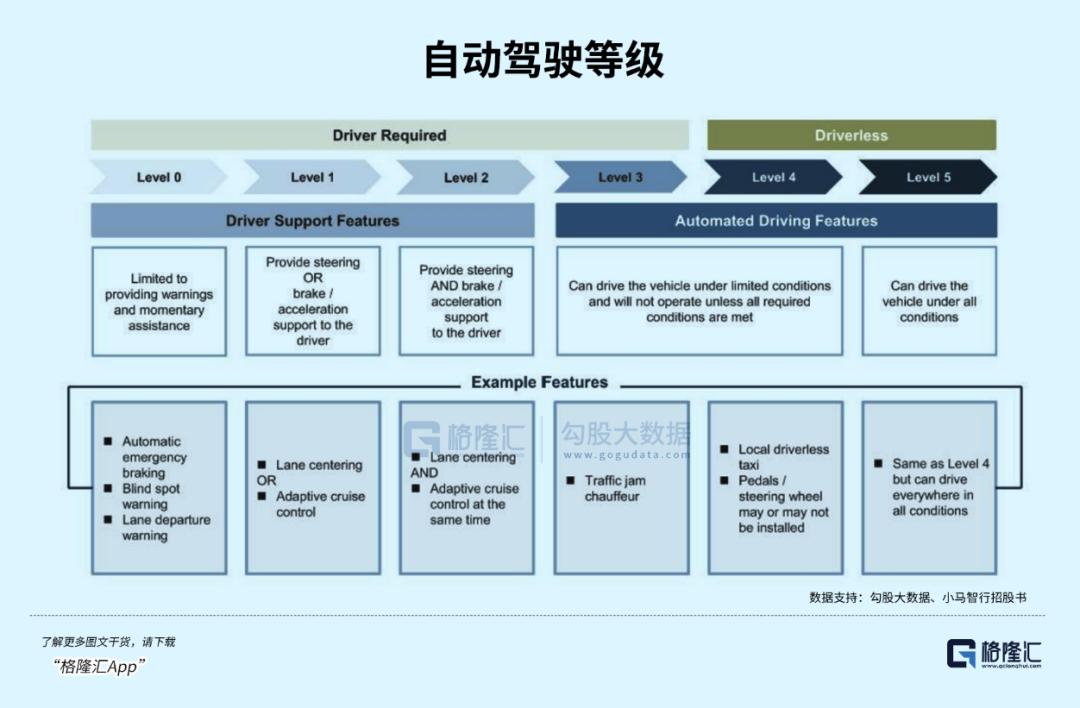
The essence of intelligent driving is not a function upgrade but a competition of platform capabilities
The biggest misunderstanding of intelligent driving in the market is to regard it as an advanced function in cars. However, from the perspective of the industry structure, intelligent driving is more like a platform system, and its value lies not in a single configuration but in the system capabilities.
A complete intelligent driving system includes at least perception hardware, algorithm models, vehicle control systems, and cloud - based data and operation platforms. The lower - level part is more about manufacturing, competing in terms of cost and scale; the upper - level part is more about software, competing in terms of algorithms, data, and continuous iteration capabilities. What really determines long - term competitiveness is not how much hardware is stacked but whether the capabilities can be repeatedly replicated in different vehicle models, cities, and scenarios.
Therefore, platform - type companies are often more valuable in the long run than single - point technology providers. The advantage of the platform lies in its reusability and economies of scale: one - time R & D for multiple scenarios. After the scale expands, the data in turn promotes system optimization, and the industry pattern is more likely to be concentrated.
The commercialization path is gradually becoming clear, and intelligent driving is entering the pricing stage
From an investment perspective, the core issues are always the source of income and the realization rhythm. In the field of intelligent driving, these two points are becoming clearer.
In the passenger car market, advanced intelligent driving is shifting from a one - time selling point to software subscriptions and function unlocking, extending the income from the "delivery time" to the entire vehicle - using cycle and significantly improving the quality of earnings.
In the travel field, the key for Robotaxi is not short - term profitability but its long - term impact on the travel cost structure. Once it can stably replace human drivers, the industry attributes and valuation logic will change.
Meanwhile, in B2B scenarios such as ports, industrial parks, mines, and logistics, autonomous driving has started to be applied. The business logic in these scenarios is clear, providing a real income basis for the industry.
Overall, intelligent driving is moving from a concept to a stage where it can be implemented and accounted for, and its investment logic is maturing accordingly.
From the perspective of the Hong Kong stock market, Baidu is an undervalued platform - type asset in intelligent driving
In the Hong Kong stock market, if we screen companies based on the criterion of "full - stack intelligent driving capabilities", there are not many companies that truly meet the requirements, and Baidu is one of the most representative ones.
Baidu's investment in intelligent driving is not a short - term follow - up but a long - term systematic layout. The Apollo platform covers the complete chain from underlying algorithms, vehicle - end systems to cloud - based simulation and operation management. Its value lies not in a single product but in being an "operating system - level" platform that connects automobile manufacturers, cities, and real - world road scenarios.
More importantly, Baidu has a scarce data closed - loop capability. Through maps, Robotaxi operations, and vehicle - end cooperation, it continuously accumulates and updates real - world road data, which is one of the most core assets in autonomous driving and constitutes a competitive barrier that is difficult to replicate quickly.
From a valuation perspective, the market currently mainly prices Baidu based on search advertising and cloud services. Intelligent driving is mostly regarded as a long - term investment, and its potential value has not been fully reflected, which also provides room for patient investors to conduct research and make layouts.
The significance of Pony.ai and WeRide lies in determining the "ceiling" of the industry
Even if investors cannot directly participate in the trading for the time being, companies like Pony.ai and WeRide are still indispensable samples for understanding the intelligent driving industry. Their role is not to be short - term profit - makers but to be verifiers of the industry's ceiling.
These companies focus on the most complex urban road scenarios and pursue L4 - level autonomous driving capabilities, which means higher technical difficulties and slower commercial returns. However, once the model is successful, its replication potential will be extremely significant. For investors, the key to paying attention to them is not the media hype but the speed of cost reduction, operational efficiency, and cross - city replication ability.
If they succeed, it means that the imagination space for the entire intelligent driving industry will be opened up; if they encounter setbacks, it means that the industry will need more time to bridge the gap between technology and reality.
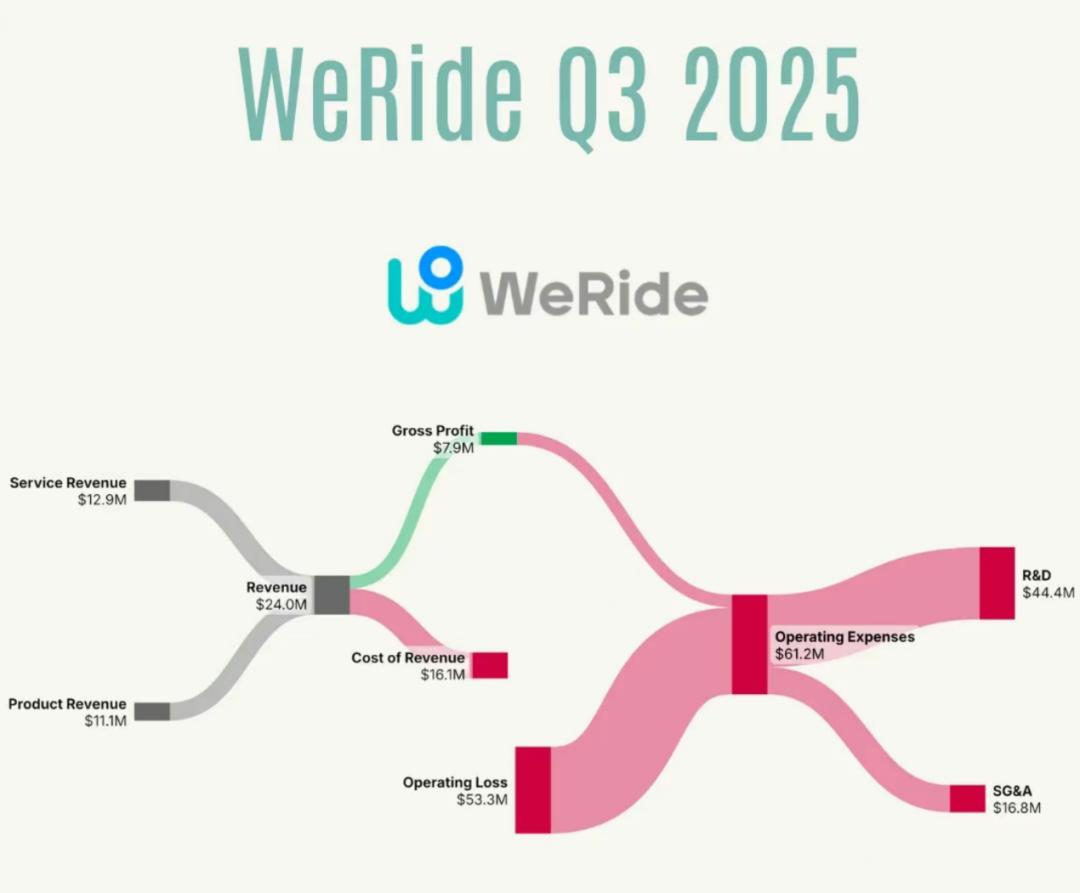
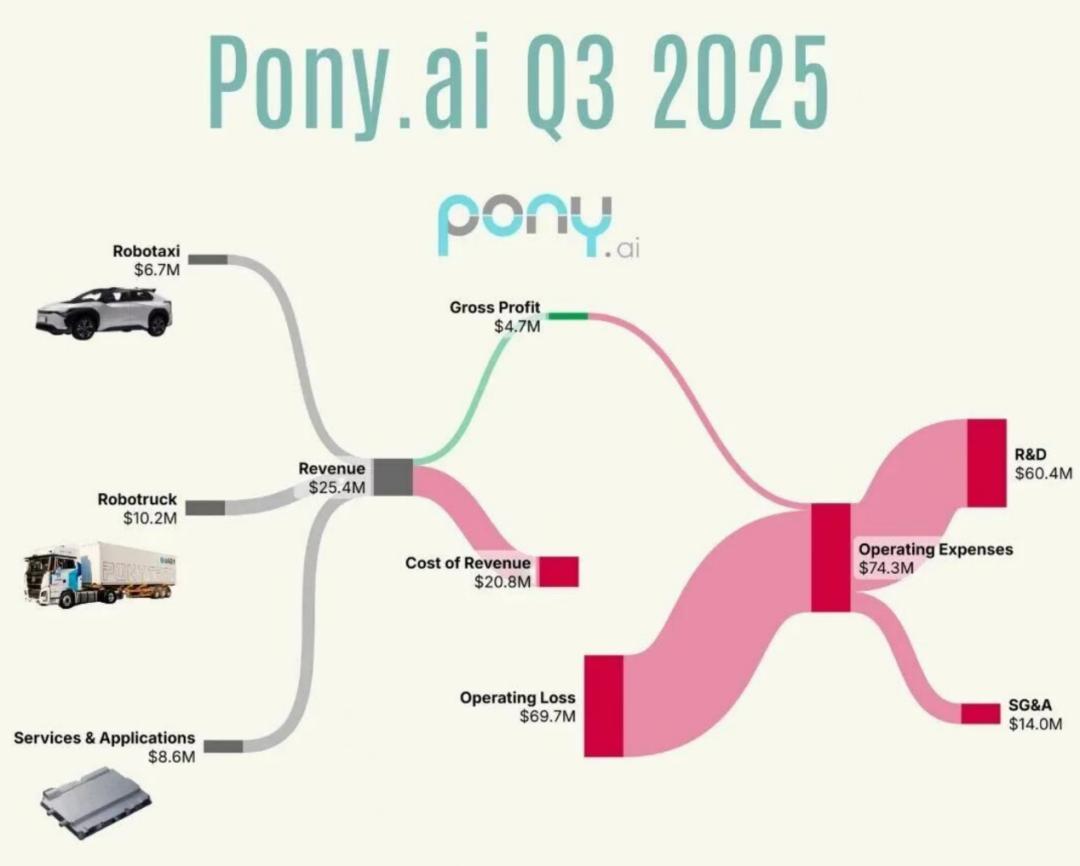
Source: AV market strategist
Investment Strategy: Intelligent Driving is More Suitable for "Allocation Thinking" than Short - term Gambling
Overall, intelligent driving is not a theme suitable for frequent trading but is more suitable for long - term participation in the form of portfolio and allocation. For most investors, a more reasonable strategy is to use platform - type companies with stable cash flows and continuous investment in the field of intelligent driving as the core position, while keeping long - term tracking of pure autonomous driving companies to capture industry trend changes.
It should be clear that the risks in intelligent driving mainly come from the rhythm rather than the direction. The speed of policy promotion, the path of technological iteration, and the progress of commercialization implementation may all bring about periodic fluctuations. However, in the long run, the direction of industrial upgrading is highly certain.
Conclusion: This is a Trend that "Happens Slowly but Will Definitely Happen"
Intelligent driving is not a sector that can make people rich overnight. It is more like a long - term curve that rises slowly but continuously. Real opportunities often come from in - depth understanding of the industry and companies before the market sentiment fully recognizes them.
By the time everyone starts to price companies based on intelligent driving, the excess return space for investors is often very limited.
Note: The copyright of this article belongs to Beijing Gelonghui Investment Consulting Co., Ltd. and its research team (Zeng Run: A0160623020001). The companies involved in the article are only for case analysis and do not constitute any investment recommendations. The market is risky, and investment should be made with caution.
This article is from the WeChat official account "Gelonghui Financial Hotspots" (ID: glh_finance), author: Gelonghui Editor. It is published by 36Kr with authorization.