Robots to face a major mass-production test next year
The 2025 Global Developers' Pioneer Conference and the International Embodied Intelligence Skills Competition will be held from December 12th to 14th.
Different from previous industry conferences mainly featuring exhibitions and forums, the core highlight of this conference is to place humanoid robots in a "arena" of real - world scenarios. From industrial production to social services, from home assistance to emergency rescue, and from medical care to artistic performances, it tests the robots' real - world implementation capabilities in various fields.
Multiple participating enterprises told Science and Technology Innovation Board Daily that next year will be a crucial year for the competition in the mass - production capabilities of robots, and they are actively planning their subsequent production capacity layouts. In addition to deeply cultivating the domestic market, expanding overseas markets has also become an important strategic direction for embodied intelligence enterprises.
From Industrial Handling to Home Services
In this competition, Aoyi Technology invested one million yuan in the competition and provided 30 high - performance dexterous hands to the participating teams.
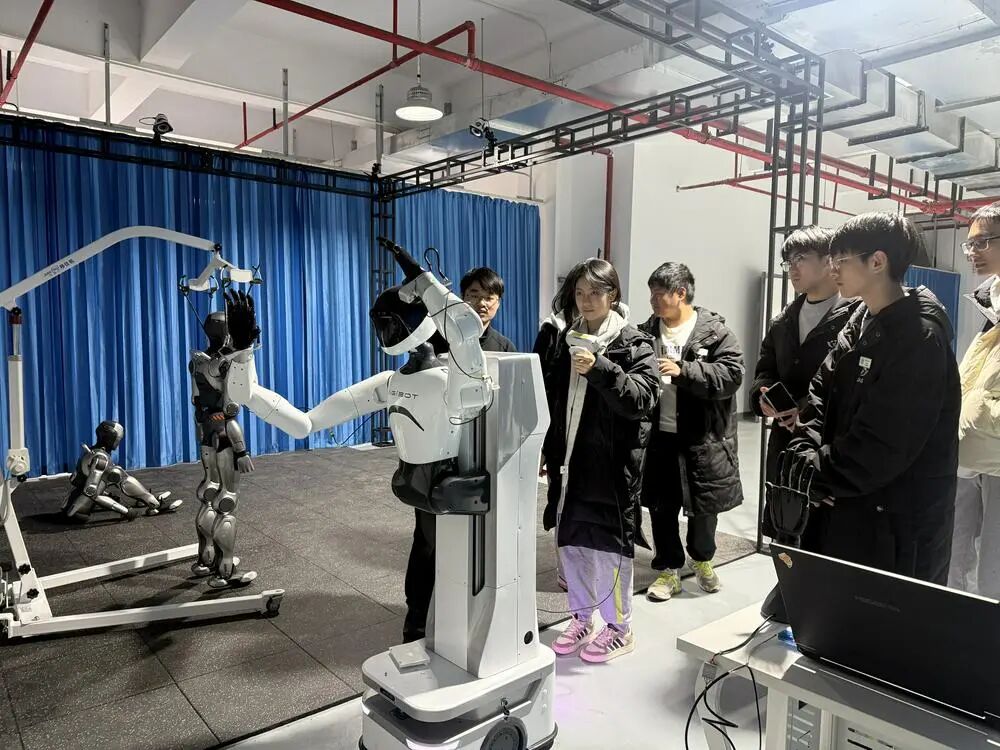
Aoyi Technology provides training to the participating teams
Chen Yao, the COO of Aoyi Technology, revealed that in 2025, Aoyi achieved a breakthrough in the core technology of dexterous hands. In June, it released the industry's first dexterous hand AP001 with tactile force control, introducing fine tactile feedback into practical products for the first time. By the end of the year, it launched the globally innovative model AP002, which not only integrates three - dimensional and one - dimensional mixed tactile perception but also realizes a closed - loop from "perception" to "force control".
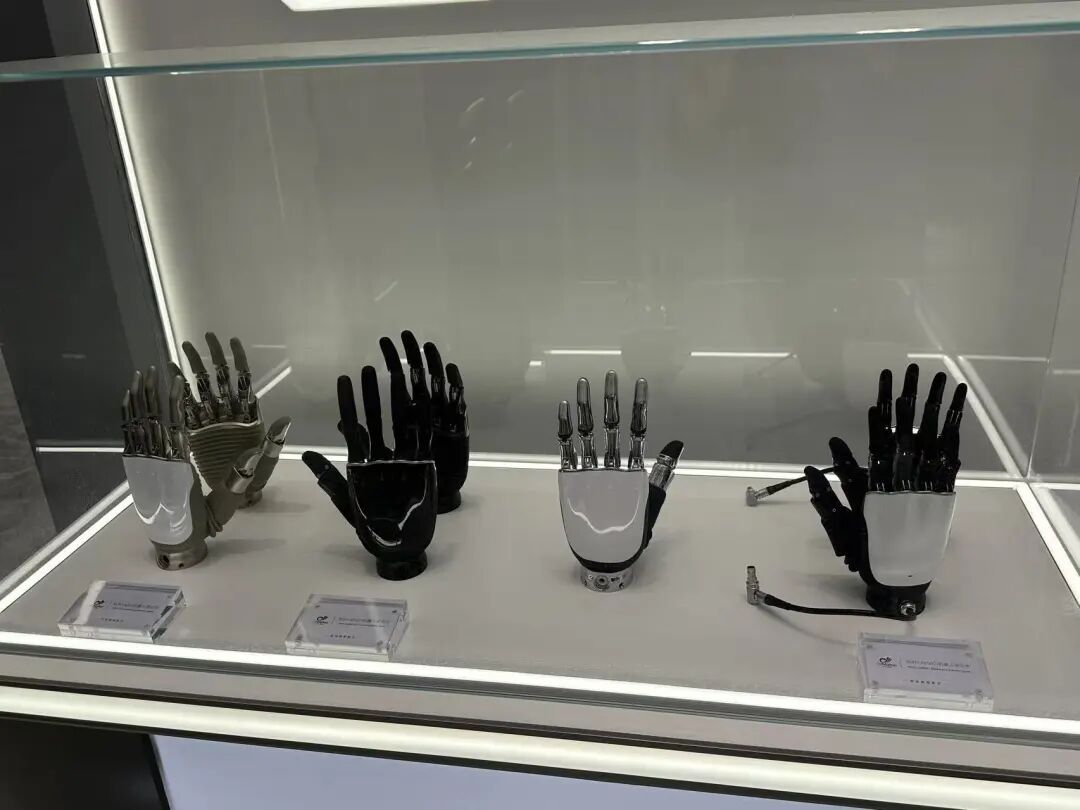
"In the past, robots might crush an egg when grasping it. Now, they can adjust the force in real - time through tactile feedback. This is a crucial step for embodied intelligence towards practical application. Looking forward, Aoyi Technology has planned to release the next - generation tactile force - controlled dexterous hand with a higher degree of freedom next year."
Currently, industrial scenarios are regarded as one of the most suitable scenarios for the commercial implementation of humanoid robots. Liu Aiheng, the director of the global business department of Kepler, believes that this competition is a "high - pressure test" of the commercialization capabilities of humanoid robots. The tracks set in the competition, such as industrial manufacturing and logistics assembly, are precisely the core scenarios where humanoid robots can first generate commercial value. This requires the participating products to be 'productive tools' that can withstand real - world verification, rather than 'performance artists' in the laboratory."
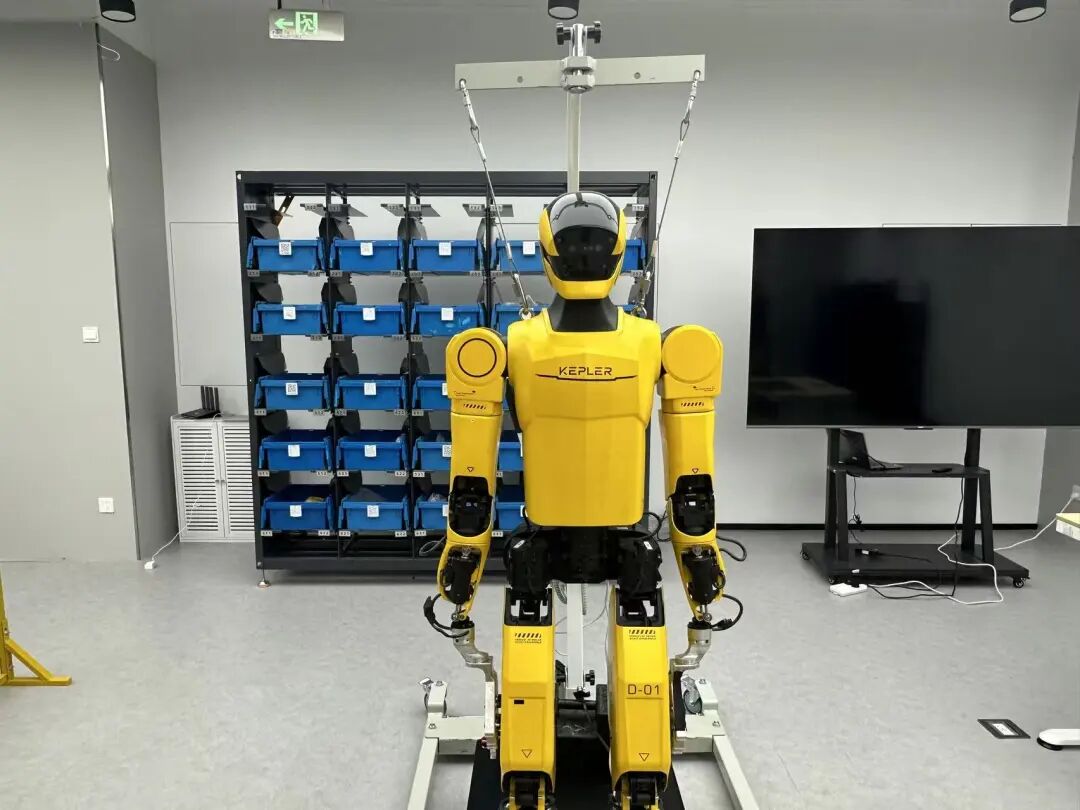
It is reported that Kepler's participating K2 "Bumblebee" has undergone "on - the - job training" in the environments of manufacturing enterprises such as SAIC - GM. Its battery life of "one - hour charging for eight - hour continuous work" and the two - arm load capacity of 30 kilograms are designed directly to meet the two - shift work system and handling needs in factories.
Compared with industrial scenarios, the home environment is more complex. Robots need to complete tasks such as folding clothes and organizing tableware, which greatly tests the generalization and robustness of the models.
Humanoid Robot (Shanghai) Co., Ltd. (referred to as "Guodi Center") participated in the home service track this time. Zhang Haoran, an algorithm engineer at Guodi Center, said that they are currently conducting continuous training and optimization and are quite confident of winning.
It is understood that Guodi Center has created a full - spectrum of robots with a unified large and small brain, covering from the low - cost companion robot Nano Dragon, to the Green Dragon Lite suitable for scientific research, education, and urban service industries, and then to the Green Dragon 3.0 with whole - body control and complex operation capabilities.
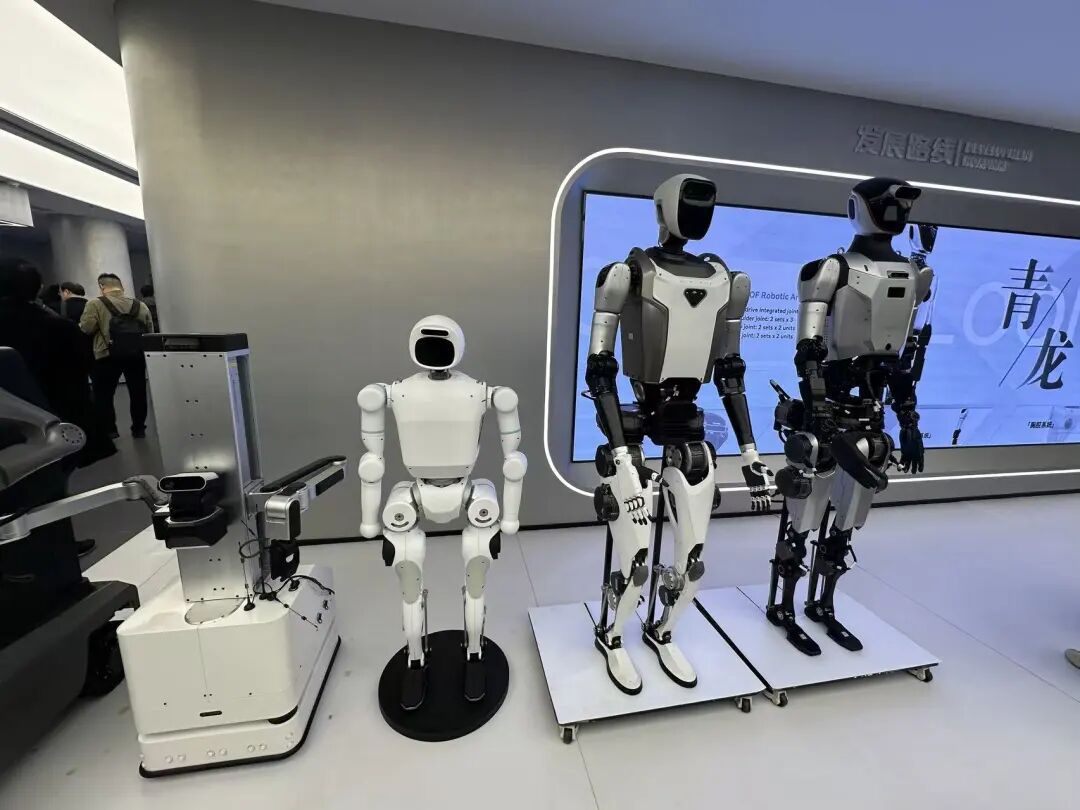
In addition, Guodi Center has built the largest heterogeneous real - machine dataset in the country, covering more than 8 million pieces of data and more than a dozen different scenarios. "Based on these data, we have also trained our self - developed Longteng VLA large model, which can achieve a success rate of over 90% in a six - hour stress test in the scenario." Zhang Haoran said.
Welcome the "Year of Mass Production" in 2026
Chen Yao, the COO of Aoyi Technology, believes that next year, the competition focus of embodied intelligence has shifted to the practical test of mass - production capabilities, and the key lies in whether one can firmly accept orders. In terms of market expectations, Aoyi Technology will focus on expanding overseas markets such as North America, Japan, South Korea, and Europe.
When talking about the technical bottlenecks of dexterous hands, Chen Yao said that their durability and stability need to be further improved. "The dexterous hands of Aoyi Technology can already reach an operation life of 300,000 times, and the next challenge goal is one million times."
The closing speed and accuracy of the five fingers of dexterous hands also need to be improved. "Currently, the time cycle for our rapid opening and closing has reached 0.7 seconds. Accuracy refers to the repeated positioning accuracy. In the industrial robotic arms, it is ±0.1 mm, and our dexterous hands have now achieved ±0.05 mm. How to achieve more refined hand operations is also what we want to challenge."
Liu Aiheng, the director of the global business department of Kepler, revealed that the company already has some small - batch overseas orders, which will be shipped one after another in the near future.
Regarding the implementation of robots in the industrial field, Liu Aiheng believes that the cost of robots needs to be further reduced. "The future mass - production goal is to reduce the selling price of robots to 200,000 yuan."
In terms of the time cycle, Liu Aiheng expects that robots will gradually enter the manufacturing industry next year, but it will take at least about 3 - 5 years to achieve large - scale deployment.
More than 100 Embodied Intelligence Industrial Chain Enterprises are Gathered in Zhangjiang, Shanghai, Covering 60% of the Industrial Chain
The person - in - charges of multiple enterprises mentioned the innovative ecological environment provided by Shanghai, the "City of Developers", in the interviews.
Chen Yao, the COO of Aoyi Technology, said that Aoyi Technology has been rooted in Shanghai and grown in Zhangjiang for more than a decade. It is the excellent scientific and technological innovation soil of Shanghai, the "City of Developers", that has nurtured our dreams. The first venture capital from Zhangjiang Science and Technology Innovation Investment and the long - term policy support and practical encouragement from the Shanghai government at all levels have provided us with crucial initial momentum and confidence for continuous development.
Liu Aiheng of Kepler believes that the support from the Shanghai government is not just empty talk but a real "full - factor" support system, forming a combination of "technology - scenario - finance".
"Shanghai has issued a clear Implementation Plan for the Development of the Embodied Intelligence Industry, setting specific goals such as achieving a core industrial scale of over 50 billion yuan by 2027. By providing computing power vouchers and corpus vouchers, it directly reduces the R & D costs of enterprises. Building digital twin training fields and pilot platforms solves the urgent need from simulation training to real - world verification. And by building investment and leasing platforms, it helps enterprises lower the usage threshold for customers through financial tools."
Zhang Haoran of Guodi Center also emphasized that the support from the Shanghai government for the field of embodied intelligence is undoubtedly huge.
"The government's promotion of 'model - driven' is highly consistent with our technical path. In addition, the lack of computing power has always been an unavoidable problem in the model training process. The government has provided great subsidy policies at the computing power level, which is equivalent to building the most solid foundation for enterprises' model training. In addition, the government is also promoting the demonstration applications of robots in scenarios such as logistics, industry, and commerce, which is highly consistent with the development path of our training ground."
It is understood that as the main position, main battlefield, and core bearing area of Shanghai's international scientific and technological innovation center, Zhangjiang has gathered more than 100 enterprises in the embodied intelligence industrial chain so far, covering 60% of the industrial chain. Among them, Zhangjiang Robot Valley has gathered nearly 100 enterprises in the robot industrial chain, including a number of key humanoid robot enterprises with industry competitiveness such as Guodi Center, ZhiYuan Robot, Fourier Intelligence, and Kepler Robot. The embodied intelligence robot industrial chain is becoming increasingly complete, and efforts are being made to build a world - class robot industrial ecosystem.
This article is from the WeChat official account "Science and Technology Innovation Board Daily", author: Huang Xinyi. Republished by 36Kr with permission.