In the year-end sprint, tech giants in both China and the United States are going all out.
As the year-end approaches, major tech companies are making collective efforts in the AI field.
In mid-November, Alibaba launched a new group strategic project called Qianwen, claiming to be the most powerful model to date; Ant Financial launched a new generation of AI assistant called "Lingguang", which focuses on generating interactive applications in 30 seconds.
Subsequently, the highly anticipated DeepSeek launched a new model. ByteDance's Doubao not only significantly upgraded its AI assistant but also entered the mobile phone ecosystem in the form of a system-level service, directly touching the "operational authority boundary" of existing applications and platforms...
A year-end battle among major companies in the AI field has officially begun.
01 "White-hot" Sprint
In mid-November, Alibaba and Ant Financial, two major groups, successively launched their major AI application products.
Alibaba officially launched the new Qianwen APP, a C-end application-level product based on its large model "Tongyi Qianwen", which is generally regarded as a direct competitor to ChatGPT. Public reports show that for this project, Alibaba mobilized at least hundreds of engineers and set aside two floors in its Hangzhou headquarters for secret development.
The core advantage of the Qianwen APP lies in its powerful multilingual ability and the potential for integrating life services. Just three days after its launch, it launched a real-time translation function covering 119 languages, covering almost all commonly used languages of over 98% of the world's population and supporting four major scenarios, including text, images, and simultaneous interpretation.
The "Lingguang" APP launched by Ant Financial emphasizes the efficiency concept of "making complexity simple". It is the first to achieve "generating small applications in 30 seconds with natural language" on mobile devices and supports editing, interaction, and sharing, positioning itself as an efficient creative tool.
The strategic division of labor between the two is clear: Qianwen focuses on being an entry point for life services, while Lingguang focuses on efficient tool creation. Together, they form a complete AI product matrix for Alibaba Group from life to work for the C-end.
In the app market, both products have performed quite impressively. The Qianwen APP rushed into the top three of the APP Store's overall list just two days after its launch; the Lingguang APP's download volume exceeded two million in six days and entered the top six of the overall list.
While Alibaba Group was on the offensive, on December 1st, Doubao launched a "major upgrade" - a new AI mobile phone assistant that directly embeds large model capabilities into hardware terminals.
Relying on the capabilities of the Doubao large model in reasoning, visual understanding, voice interaction, and interface operation, the Doubao mobile phone assistant attempts to break through the functional boundaries of traditional AI assistants and has the executive ability to "operate a mobile phone like a human".
It can help users complete routine tasks such as ticket checking, booking, and logistics tracking through simple voice commands, and can also handle more complex cross-application operations, such as comparing takeaway prices and placing online shopping orders. Taking the common "ordering takeaway across platforms" as an example, users only need to issue one command, and the rest of the process will be automatically executed by the AI in the background, and manual confirmation is only required before payment.
Although its technical path and model immediately raised significant security concerns, and major APPs unanimously resisted it, the Doubao assistant can still be regarded as an epoch-making breakthrough.
It shows people what a real Agent (intelligent agent) looks like in reality: It not only provides answers but also can complete actual operations across applications, achieving a leap from passive Q&A to active scheduling and execution for AI.
On the same day that ByteDance's Doubao unleashed its "killer move", DeepSeek also launched a major new product.
It launched two official versions of models at once: DeepSeek-V3.2 and DeepSeek-V3.2-Speciale. Among them, V3.2 pursues a balance between reasoning ability and output length and is more suitable for general scenarios such as daily Q&A and general Agents; V3.2-Speciale strengthens long-thinking ability on the basis of V3.2 and combines the theorem-proving ability of DeepSeek-Math-V2, making it more suitable for complex tasks.
DeepSeek's ambition is obviously not just to create a chatbot but to move towards the future "general AI assistant", just like the Doubao mobile phone assistant.
Driven by the concentrated efforts of Alibaba, Ant Financial, ByteDance, and DeepSeek, the domestic AI market suddenly reached a new high at the end of the year, and the competition almost became "white-hot".
02 "Thrust" from Silicon Valley
In addition to the competition in technology and product rhythm among themselves, another external thrust that cannot be ignored for domestic Internet giants' concentrated efforts at the end of the year comes from the "technological vane effect" continuously released by Silicon Valley.
On November 9, 2025, OpenAI launched the GPT-5.1 series.
OpenAI's official statement about this upgrade was "to make ChatGPT more intelligent and the interaction more interesting", emphasizing the integration of intelligent reasoning and emotional dialogue experience.
However, what the outside world really focused on was not the single model parameters but the ChatGPT group chat function simultaneously launched by OpenAI, which allows multiple AIs with different roles to collaborate to complete tasks in the same conversation.
This is also generally regarded as a key step for ChatGPT to move from a "single assistant" to a "multi-intelligent agent platform", and it quickly sparked a lot of discussions globally.
Just as the ChatGPT group chat function was causing waves, on November 18th, a bigger wave hit: Google officially launched its core model, Gemini3.0.
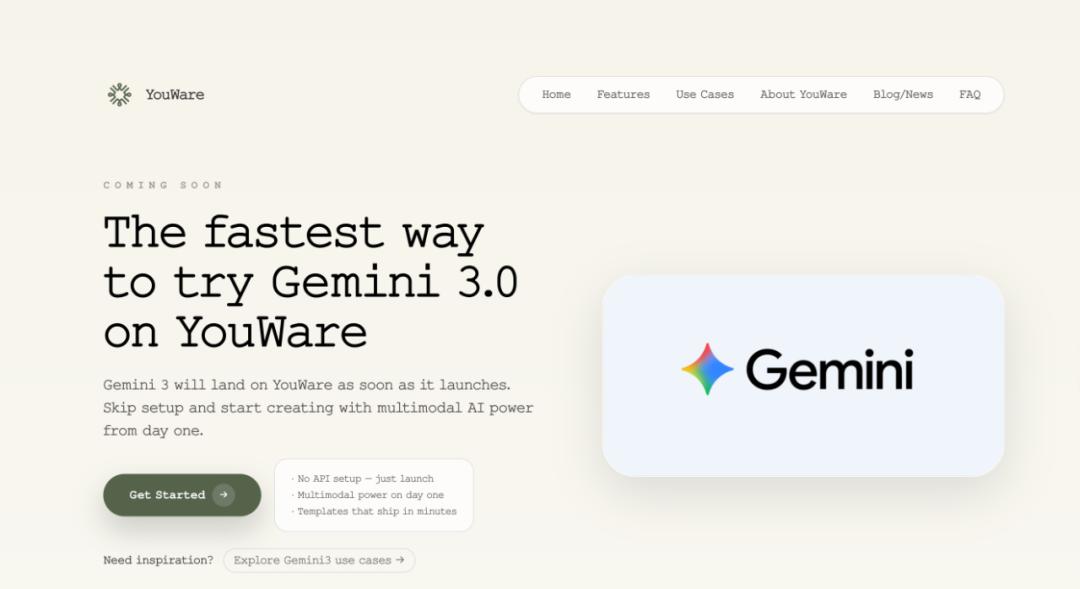
As soon as this model was launched, it was evaluated by many technology media as "the most complete large model system-level upgrade to date": It not only significantly improved in reasoning ability, multi-modal understanding, and complex task handling but also for the first time clearly focused on optimizing the reasoning efficiency on mobile devices and building a developer platform.
This sent a clear signal - Google is pushing AI from a "model ability competition" to a long-term layout of "full-scenario platformization".
What's even more intriguing is that this version also received rare cross-camp recognition. OpenAI CEO Sam Altman publicly said on X that "Gemini 3 looks good"; Elon Musk, the founder of xAI, also retweeted a related tweet from DeepMind CEO Demis Hassabis and commented, "Well done."
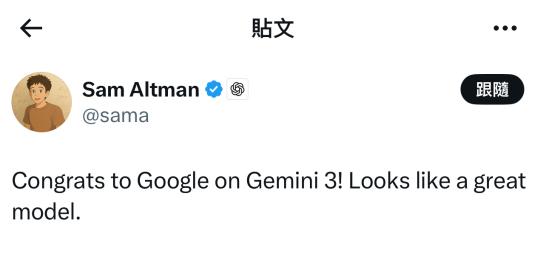
In the highly competitive environment of Silicon Valley, such positive feedback itself has a symbolic meaning.
As a result, Gemini overshadowed the just-launched GPT-5.1, and Google's stock price also witnessed a sharp rise.
In addition to OpenAI and Google, other major Silicon Valley companies have also been taking frequent actions.
In mid-November, xAI launched Grok 4.1, focusing on strengthening reasoning, multi-modal understanding, and tool invocation capabilities. Its core narrative is no longer about the chat experience but about "Agents capable of performing tasks".
Amazon, the global leader in cloud computing, launched its second-generation Nova large model at the Re:Invent conference in early December and simultaneously launched the Nova Forge platform, allowing enterprises to train exclusive models with their own data, clearly betting on the large-scale implementation of "enterprise-level customized AI".
This series of launches, especially the focus of the launched products, shows that a consensus has gradually formed within Silicon Valley:
The main battlefield of AI is shifting from "smarter assistants" to "more schedulable, collaborative, and executable intelligent agents".
This direction is constantly being verified and reinforced in Silicon Valley, making the concentrated actions of domestic giants more like a synchronized response to a gradually clear global technological trend.
03 Why the Battle at the Year-End?
Looking back at the important milestones in the AI field in recent years, we will find a rather indicative pattern: Whether it's ChatGPT, Claude, and Gemini abroad or DeepSeek in China, the key version releases of these heavyweight models often concentrate in the time window around the turn of the year.
Why do tech giants choose this time? Comprehensive analysis probably involves the following factors.
Firstly, it is conducive to attracting attention and achieving better communication effects.
The end of the year coincides with Christmas and the New Year in the West and the Spring Festival in China. There are relatively few major social news during this period, which is a "relatively quiet" period for traditional news agencies and technology media. Launching a major product at this time is more likely to obtain media exposure and user attention far beyond that of regular releases at a lower cost.
The most typical example is ChatGPT, which triggered this wave of AI.
On November 30, 2022, OpenAI launched ChatGPT (based on GPT - 3.5) with almost no pre - heating. This choice of time was extremely clever. It coincided with the holiday window from Thanksgiving to Christmas in the West. There was a lack of major news in the public opinion, but people had frequent social interactions during the holidays and needed topics to talk about. Therefore, ChatGPT quickly filled the public opinion vacuum and became a hot topic at family gatherings in Europe and America, achieving exponential user growth and completely changing the course of technology history.
This successful model was also pushed to a climax by major manufacturers at the end of 2023, evolving into a fierce "year - end battle".
To respond to OpenAI's dominant position, competitors launched a series of counter - attacks in the fourth quarter of 2023. Anthropic launched Claude 2.1 in late November 2023, significantly increasing the context window and reducing the hallucination rate, trying to gain a foothold in the enterprise - level market.
Immediately afterwards, Google, under the greatest pressure, launched its "killer weapon" on December 7, 2023 - the multi - modal large model Gemini 1.0 (including Pro and Ultra versions). Although the outside world speculated that Google might wait until the 2024 I/O Conference to launch it, Google obviously could not tolerate letting OpenAI monopolize the spotlight during this crucial New Year period.
The strategic intention of Gemini's debut at the end of the year was also very clear: Google had to prove to the market before the end of 2023 that it had the ability to compete with GPT - 4, so as to stabilize its stock price and boost the morale of its employees.
The domestic market also follows this rhythm. As a rising star in the open - source field, many important versions of DeepSeek that have sparked high - frequency discussions were almost all launched at the end of the year and the beginning of the next year.
The DeepSeek - V3 launched at the end of 2024 quickly spread in the developer community due to its performance in the public test and outstanding cost - effectiveness, becoming an important reference for many teams when selecting models for the new year.
Then, in late January 2025, the DeepSeek - R1 model, a major release by DeepSeek, caused a huge stir in the global technology field and was even called a "national - fortune - level achievement" by many people.
In addition to seizing the public opinion field when people need topics to talk about, the business rhythm of major companies themselves, as well as the management of their corporate status and image, are also the key reasons for their collective sprint at the turn of the year.
On the one hand, the data accumulation, computing power scheduling, and optimization experiments of major companies throughout the year often reach a state where they can be released near the end of the year; on the other hand, launching the "next - generation model" at the end of the year often means defining the ability standards, product expectations, and competition thresholds for the coming year first.
In addition, the end of the year is a crucial window for technology companies to "submit their reports" to the board of directors and investors. Launching a heavy - weight model at this time often makes it easier to amplify the shock effect and market influence brought about by technological breakthroughs, directly serving valuation management and capital narratives.
Taking DeepSeek as an example, if it launches a new model that is significantly ahead of the industry level at the end of the year, it can not only quickly strengthen the outside world's recognition of its original technological ability and "technological moat" but also help it gain more resources and strategic initiative for the next year's competition.
As early as September this year, Bloomberg reported, citing people familiar with the matter, that DeepSeek was developing a "real AI intelligent agent" targeting leading players such as OpenAI. The report said that to ensure the timely launch of the model in the fourth quarter, Liang Wenfeng, the founder of DeepSeek, personally participated in promoting the key progress.
For a listed company like Google, launching Gemini 3.0 at the end of the year is more like a strategic response to the capital market.
Many media reported, citing Google insiders, that the launch of the new model "may enable Google to regain the leading position, especially against the backdrop that OpenAI's ChatGPT - 5 has not yet had a decisive impact."
This move not only strengthens the confidence of Wall Street but also provides a more convincing growth narrative for the annual report and investor communication and may directly affect the stock price performance and analysts' expectations.
Finally, there is a more practical business consideration. The end of the year is often a crucial time for enterprises to formulate and initiate their IT budgets and technology procurement plans for the next year. Launching an AI model with a clear commercialization path and clear implementation intentions during this time window is more likely to be quickly included in the enterprise procurement list, "occupying a position" in advance for large - scale deployment and revenue conversion in the next year.
A representative example is the Doubao AI mobile phone assistant recently launched by ByteDance. Nubia, a mobile phone brand under ZTE Corporation, has released an engineering prototype equipped with the Doubao AI assistant. ByteDance has also publicly stated that it is promoting cooperation with multiple mobile phone manufacturers, planning to embed the Doubao AI assistant into different brand models through "ecological cooperation" to accelerate its large - scale implementation at the terminal level.
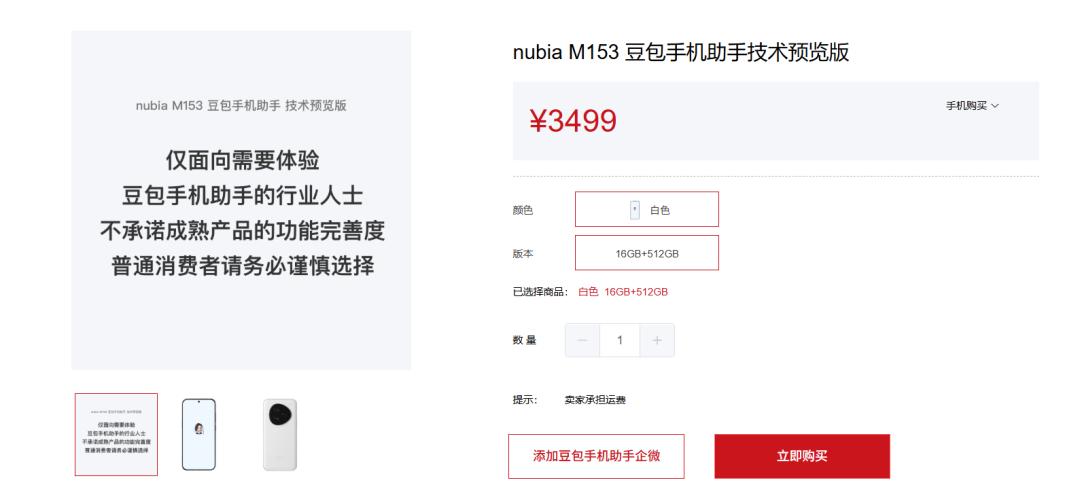
▲ Source: ZTE's official website
Although its release has touched the boundaries of the existing Internet platform and application ecosystem in a disruptive way and almost angered many parties, applications such as WeChat, many bank APPs, Alipay, e - commerce applications like Taobao and Pinduoduo, and even game products like Honor of Kings have successively restricted the related functions of "AI operating the mobile phone on behalf of the user" on the grounds of risk control, security, or user agreements.
However, to some extent, ByteDance has won, winning the first - mover advantage and mind - share in breaking the tradition and building the future. This game also confirms a reality from the side: When AI is no longer just an information assistant but starts to intervene in real operations and user behaviors, the ecological game between platforms has been triggered in advance.
Looking back at this collective sprint at the year - end, whether it's the intense and rapid competition among domestic giants or the continuous technological signals released by Silicon Valley, they all point to the same direction - the AI competition is accelerating from "who can launch the model earlier" to "who can build a complete system faster".
Model ability, product form, ecological collaboration, and commercial implementation are all on the same assessment table, and any single - point advantage is no longer sufficient to form a long - term barrier.
This makes the "year - end battle" of major companies in the AI field more inspiring for the future. It is the starting gun for the new global AI race, and the next focus of AI lies in their releases.