With a total financing of over $1 billion within a year, Apptronik aims to develop general-purpose high-performance robot bodies.
The embodied intelligence startup Apptronik has secured two rounds of financing within a year, with a total financing amount exceeding $1 billion. In February 2025, it received a $350 million Series A financing, co-led by B Capital and Capital Factory, with Google participating. In March, it obtained an additional $53 million in financing from Mercedes-Benz and ARK Invest, bringing the total Series A financing to $403 million.
According to a report from The Information, Apptronik recently received a Series B financing worth between $560 million and $660 million, led by B Capital. Its post - investment valuation reached approximately $5.47 billion.
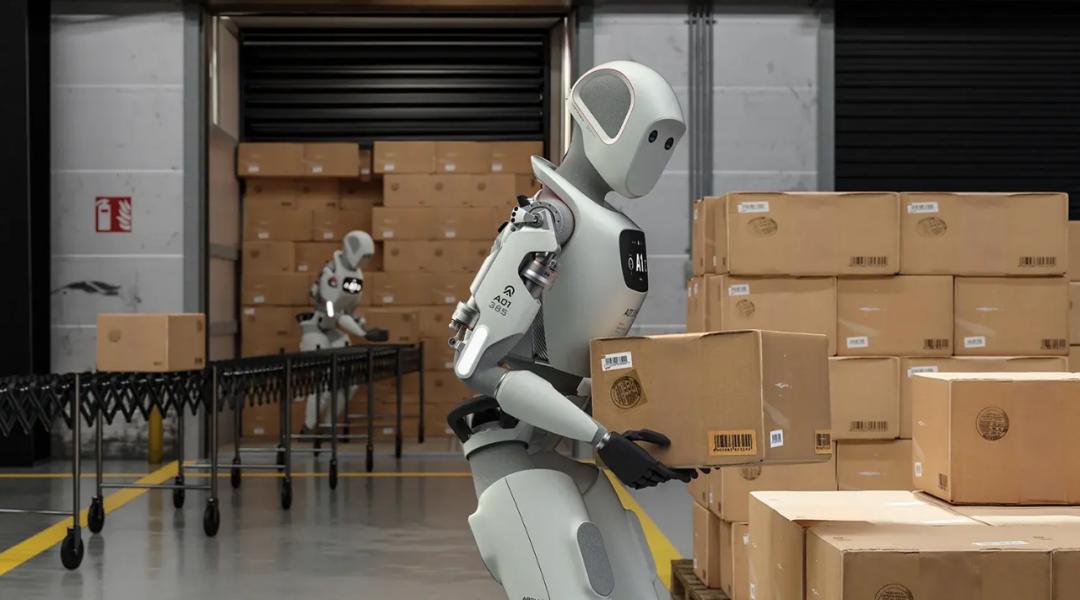
Apptronik focuses on robot bodies. Its latest robot, Apollo, is already its ninth - generation model. The model of this robot is provided by Google DeepMind (Gemini Robotics 1.5 and Gemini Robotics - ER 1.5) and NVIDIA (the basic model Project GR00T). Its core computing system includes NVIDIA Jetson AGX Orin and Jetson Orin NX modules.
It has launched pilot projects with major industry players, including Mercedes - Benz and logistics giant GXO.
Focus on Humanoid Robot Bodies, with the Ultimate Goal of Home Robots
Apptronik was spun off from the Human - Centered Robotics Laboratory at the University of Texas at Austin (UT Austin) in 2016, but they had been active as early as 2012 - 2013.
Their CTO and co - founder, Nicholas Paine, was a member of the NASA - JSC DARPA Robotics Challenge team. During that time, he assisted in designing elastic actuators and developed actuator - level controllers for the Valkyrie robot. After that, he served as a postdoctoral researcher at UT Austin. His work at Apptronik covers multiple fields, from commercial humanoid robots, force - enhanced exoskeletons to new types of robotic arms.

Apptronik's co - founders Jeff Cardenas (left) and Nicholas Paine (right). Image source: Apptronik
Jeff Cardenas, the CEO and co - founder, once worked in the Global Commercialization Group of the IC2 Institute at UT Austin, collaborating with innovators from around the world to bring innovative achievements from the laboratory to the market.
The global humanoid robot market has been promising in recent years. Goldman Sachs predicts that by 2035, the global humanoid robot market will reach $38 billion. By 2031, one million humanoid robots may be deployed in global facilities. Thanks to the progress of AI technology, this timeline is four years earlier than the previous prediction.
Jeff Cardenas, the co - founder of Apptronik, divides the company's vision into three stages. The first stage is industrial applications, such as logistics and manufacturing. In the second stage, robots will be introduced into the public domain, including retail and healthcare. The third stage is in the home environment, with the ultimate goal of providing assisted care.
Currently, Apptronik's robots are still in the first stage. The robots can only perform relatively simple dexterous picking and placing tasks, mainly focusing on the manufacturing and logistics fields.
At this stage, the key is to reduce costs and achieve mass production. Jeff Cardenas said that their goal is to reduce the target price of Apollo to less than $50,000.
From an industry - wide perspective, the cost of the bill of materials in the international market has decreased by about 40% since 2023, and the cost of each robot has dropped from $250,000 to $150,000.
From a first - principles perspective, the entire robot only requires $300 worth of raw aluminum, which is much less than the raw material cost required for a car. However, in the entire robot system, electronic components (especially motor drives and the combination of drives and actuators) account for more than 60% of the cost.
Currently, in the international market, there is not a sufficiently developed supply chain. Start - ups need to do many things that were originally done by the supply chain themselves. Moreover, Apptronik's production capacity is not high enough (less than 1,000 units, while Zhipu Robotics has produced a cumulative total of 5,000 units in recent days), and it cannot really turn the flywheel to amortize all capital costs over a large number of robots. However, Apptronik has set the goal of starting to produce commercial models in 2026.
High - Performance and Long - Endurance Humanoid Robot with Built - in NVIDIA and Gemini Robotics Models
Apptronik positions Apollo as a high - performance, easy - to - use, and multi - functional system. Apollo is about 1.7 meters tall, weighs 73 kilograms, has a maximum load capacity of 25 kilograms, uses a replaceable battery, and has a single - charge endurance of about 4 hours. It adopts a modular design and supports different configurations, such as being installed on legs, a wheeled base, or a bracket, making it suitable for different task scenarios.
However, currently, Apptronik still believes that bipedal robots are the most versatile choice because their customers attach great importance to "adaptability." Customers do not want to transform the existing working environment, and the current workstation layout is usually designed around humans.
Apollo's internal model is provided by Google DeepMind and NVIDIA (the basic model Project GR00T). Its core computing system includes NVIDIA Jetson AGX Orin and Jetson Orin NX modules.
Jeff Cardenas divides the role of AI in Apollo into two categories: cognitive intelligence (decision - making ability) and physical intelligence (such as balance ability and hand - eye coordination ability). In the long run, he said that Apollo's goal is to utilize new and diverse AI technologies.
Google DeepMind's new Gemini Robotics 1.5 series of models has been applied to Apollo. This system is jointly driven by the Gemini Robotics 1.5 model and the embodied reasoning model Gemini Robotics - ER 1.5. It aims to move from the "single - instruction" mode to the "true understanding and problem - solving" of physical tasks.
The Gemini Robotics - ER 1.5 model is used to understand the surrounding environment. It can even use digital tools such as Google Search to find more information. Then, Gemini Robotics - ER 1.5 will convert these findings into natural - language instructions and transmit them to the Gemini Robotics 1.5 model, enabling the robot to use the latter's visual and language understanding abilities to perform each step of the operation.
In addition, Gemini Robotics 1.5 can help robots "learn" from each other, even if their hardware configurations are different.
Apptronik focuses on the body. They manufacture a general - purpose robot platform at the lowest possible cost to ensure that Apollo can complete all basic functions (such as moving and operating), thus having basic value. Then, users can create applications for the robot to perform specific tasks. This is somewhat like a smartphone, providing a platform for people to use various apps.
They are also exploring a second business model: Robots as a Service. The concept of this model is that customers can rent any number of Apollo humanoid robots and pay monthly according to their working hours.
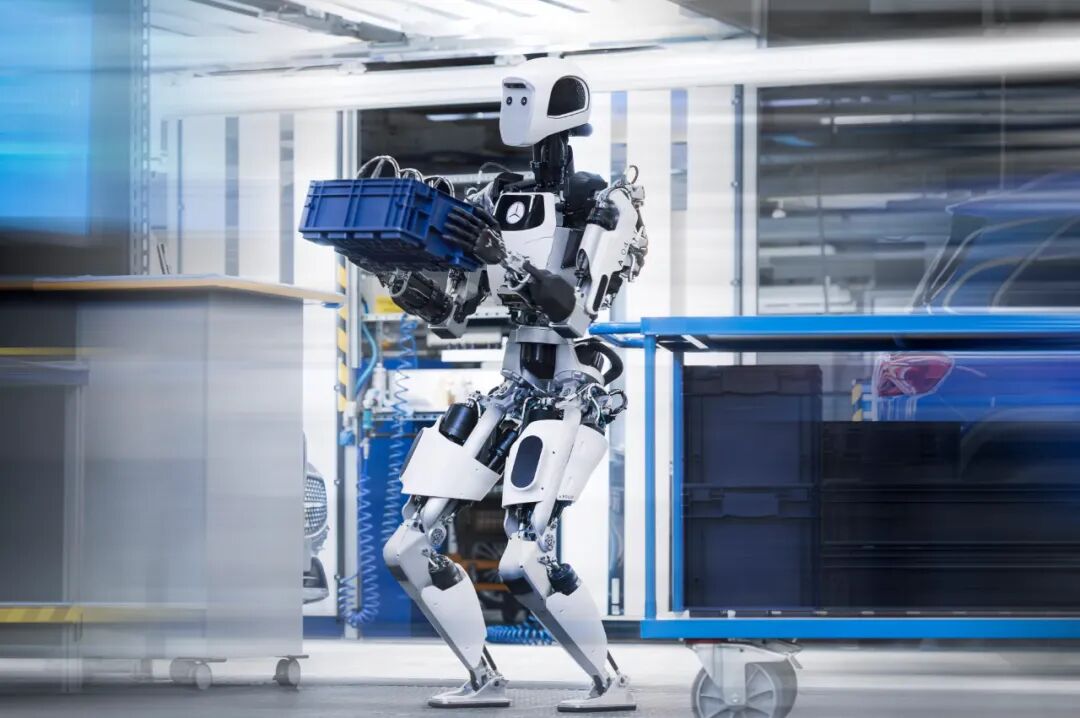
Apollo working in a Mercedes - Benz factory. Image source: Apptronik
Currently, Apptronik has reached a cooperation agreement with Mercedes - Benz and has put the Apollo robot into its production workshop to automate tasks that are "low - skill, physically demanding, and manual labor," such as having Apollo check and transport parts to human production - line workers.
Another partner of theirs is Jabil, also a manufacturing enterprise. They plan that once Apollo is proven to be commercially viable, Jabil will start producing this robot in its factory. This means that if everything goes according to plan, Apollo will ultimately be involved in its own manufacturing process.
Breakthroughs in Embodied Intelligence Require Breakthroughs in the Supply Chain and Ecosystem
The ability of per - capita productivity to drive the economy is huge. Improving per - capita productivity and increasing the number of production units may fundamentally change an economy.
This is an important internal logic in the story told by the embodied intelligence industry. Humanoid robots, because of their strongest interchangeability with humans in terms of productivity, have always been a promising direction in the industry.
Meanwhile, developing humanoid robots is an interdisciplinary field that requires multiple skills, knowledge, professional technologies, and the support of synergistically developed technologies. From a technical perspective, humanoid robots rely on the progress of multiple fields, such as electronic components, materials science, IP&E (interconnects, passives, and electromechanical components), and artificial intelligence. Before the widespread deployment of humanoid robots, many technical bottlenecks still need to be solved - these bottlenecks are often intertwined.
To break through these technical bottlenecks, a complete supply chain and an ecosystem are also needed. From the current point of view, the embodied intelligence ecosystem in the Chinese market is very strong, especially in the hardware industry chain, which is complete, has low costs, and a fast iteration speed. In terms of intelligence, there are also many powerful start - ups in the Chinese market conducting research and development, and there are start - ups focusing on the data field to fill the gaps. Moreover, there are rich application scenarios in the Chinese market for robots to verify, which makes it easier to form a data flywheel.
The AI - native hardware track where embodied intelligence is located is indeed still in the early stage. Whether it is hardware or software, it is not yet mature. Even the value that can be generated in application scenarios has only been partially verified at present, but its potential is huge, and it is likely to have a greater impact than the "digitization" that simply exists on the screen.
This article is from the WeChat official account "Alpha Commune" (ID: alphastartups). Author: Those who discover extraordinary entrepreneurs. It is published by 36Kr with authorization.