How far is the AI glasses from the mass market?
When you see the brilliant clouds in the sky, just tap your glasses to take a photo as a keepsake. When attending a meeting, just tap your glasses to record and summarize.
In 2025, AI glasses have become the entertainment companions for many people.
These glasses look similar to ordinary black - framed glasses, weighing between 39 grams and 50 grams, slightly heavier than myopic glasses (20g - 25g). They are generally equipped with a camera, microphone, and speaker, and are powered by large models and AI assistants. They can record audio and video, take photos and recognize objects, and have a battery life of 6 - 8 hours. The prices range from 500 to 8000 yuan. The presence or absence of AR devices is the price dividing line. AI glasses without AR cost between 500 and 2000 yuan, monocular AR glasses cost over 2000 yuan, and binocular AR glasses cost over 3000 yuan.
This is a market that has become bustling again. In 2021, the popularity of Roblox sparked a wave of enthusiasm for AR glasses. Manufacturers such as Rokid, Thunderbird Innovation, Inmo Technology, and Xreal entered the market one after another (refer to the article "Breaking Promises, Delays, and Price Drops! Earning 140 Billion a Month but Losing at the Starting Line"). At the end of 2023, Meta Ray - Ban triggered a wave of enthusiasm for AI glasses. AR manufacturers successfully transformed, and at the same time, large Internet companies entered the market with capital, completely igniting the industry's enthusiasm.
IDC predicts that the global shipment volume of smart glasses will reach 14.518 million units in 2025, a year - on - year increase of 42.5%. The growth in the Chinese market is even more rapid, with the shipment volume expected to reach 2.907 million units, a year - on - year increase of 121.1%. During the 618 shopping festival, the sales volume of AI glasses on the JD platform increased by 7 times year - on - year. During the "Double 11" shopping festival, the turnover of the smart glasses category on the Tmall platform increased by 2500% year - on - year.
Meanwhile, IDC data shows that the bulk of the real sales of smart glasses may not come from well - known star startups or brand manufacturers, but from the "less - smart" products from Huaqiangbei.
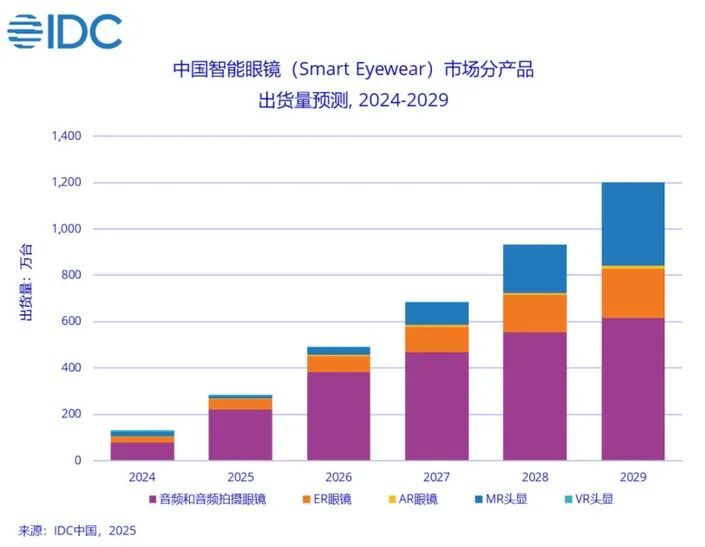
Image source: IDC China
Currently, no single product can cover all scenarios, and there is no so - called "killer app". The return rate of AI glasses on major platforms has reached as high as 30% - 40%. Beneath the booming appearance, AI glasses are experiencing unprecedented growing pains.
Complaints from enthusiasts
"I joined an AI glasses community. This group is active 24 hours a day. If you don't check it for a day, there will be over 999 new messages. A large number of users share their trial experiences of samples and compare the functions of new products in the group."
Zeming is an active member of the group. Whether it's the Shanghai Glasses Exhibition or the Alibaba Cloud Computing Conference, he is at the forefront of the experience, conducting on - site tests and answering questions from group members.
Zeming currently has 4 pairs of AI glasses, namely Rokid Glasses, Meta Ray - Ban Generation 1, INMO GO2, and the newly purchased Quark S1.
After trying out more than a dozen pairs of AI glasses, Zeming summarized that his most commonly used functions are translation and teleprompter. He pays the most attention to the AI's response speed and answer quality. He likes the specialized translation ability of the INMO GO series. "The GO series is more business - oriented, mainly used for translation and teleprompter. Many people think its functions are too single, but I've used it for a year and find it very suitable for me. I hope GO3 will continue to specialize, and I'll buy a multi - functional glasses from another brand."
Zeming commented that when buying glasses, you need to know what you want to use them for. Currently, AI glasses are still "experimental products", and no single product can cover all scenarios.
Some practical functions of AI glasses have been recognized by enthusiasts. For example, first - person shooting can free your hands in scenarios such as sports and travel for taking photos and videos. However, most AI functions sound interesting but have obvious bugs. For example, the icon navigation function can easily block the view, posing a danger when cycling; the translation function has a delay, causing a lag in communication.
As for the price, in the eyes of Zeming and other group members, around 2500 yuan is the psychological threshold for "having fun without losing money". If it exceeds 4000 yuan, it will be directly on the "rejection list". They have an inner "parts list" that matches the price. The pre - sale price of a certain manufacturer's third - generation product is 2999 yuan. Some people think it's "similar to a pair of Zeiss glasses and acceptable", but Zeming thinks it "lacks sincerity" because it uses a Spreadtrum chip instead of the Qualcomm AR1. He believes it's not as good as "Quark's binocular dual - core (Qualcomm AR1 + Airoha chip)".
However, for a pair of glasses, the basic wearing experience and optical performance are the core. Zeming has returned more glasses than he has kept. Most of the reasons for returning are poor experiences: the "tight - head feeling" of Rokid glasses, the pain caused by the non - smooth contact between Xiaomi's temple and the ear, and the glasses slipping due to the lack of nose pads...
After being filled with motherboards, chips, microphones, speakers, and batteries, weight has a decisive impact on wearing comfort. For Asians, glasses under 30 grams can be worn without feeling the weight. Traditional glasses usually weigh around 20 grams. You can feel the weight of glasses under 55 grams, but it won't cause obvious discomfort. Glasses weighing between 55g - 75g are in the "adaptable wearing" range, and long - term wearing is not recommended.
Another group member, "Yuanyuan Yuan", returned all the AI glasses he bought this year, from the dozens - of - yuan Bluetooth glasses from Huaqiangbei to those from Rokid, Thunderbird, Xiaomi, and Inmo. He tried seven or eight pairs back and forth but didn't keep any. Yuanyuan Yuan said he just wanted a good - looking AI audio glasses because he needs glasses + headphones for online games. However, all the current AI glasses are uncomfortable to wear. He described himself as "almost desperate".
The problem of lens cleaning is also a headache. Lenses with display functions generally have a low waterproof and dust - proof rating. One of Zeming's Thunderbird glasses was damaged by sweat stains. He sincerely hopes that the official can release a cleaning and maintenance tutorial for AI glasses.
Many people are also troubled by the "social awkwardness" caused by AI glasses. "When you see a product in a store, you have to say 'xx, take a photo' loudly. How embarrassing!" a group member complained.
The so - called AI capabilities are also disappointing. Among all the functions of Meta AI glasses, the AI usage rate is less than 2%. Yuanyuan Yuan complained that all AI functions require the phone to be connected to the Internet. To check if a photo is taken, you have to open the phone app; to check if an audio is uploaded, you also have to open the phone app. The glasses also drop the connection from time to time. "It's always about the network, the network, the network. It's really annoying."
Meanwhile, Zeming is getting tired of the "futures - style" marketing of AI glasses (delays in press conferences, product launches, and deliveries). His Rokid Glasses were delivered 20 days after ordering and the price dropped by more than 300 yuan after he used them for a month and a half. INMO's glasses hadn't been delivered 30 days after ordering, while the Quark glasses were delivered in 15 days, which was the fastest.
For those who are attracted by the hype and want to buy their first pair of AI glasses, Zeming suggests, "Buy the non - prescription version first to test the waters and take advantage of the seven - day no - reason return policy."
Currently, manufacturers are struggling to find a balance between weight, battery life, display effects (such as narrow field of view and light leakage), heat dissipation, and wearing comfort, while enthusiasts are looking for a fit in terms of comfort, price, AI capabilities, and professional scenarios.
The map of participants: "Hundreds of glasses" players with different ambitions
Despite the continuous complaints from consumers, China remains the hottest market for AI glasses, without a doubt.
IDC data shows that the global shipment volume of smart glasses will reach 12.8 million units in 2025, a year - on - year increase of 26%. The Chinese market will exceed 2.75 million units, a year - on - year increase of 107%, ranking first in the world. The optimistic expectations of securities firms for this market come from the large number of myopic people and sunglasses users. There are about 2.6 billion myopic people in the world, and the annual sales volume of sunglasses is about 1 billion pairs. On this basis, AI glasses are expected to become a major product category.
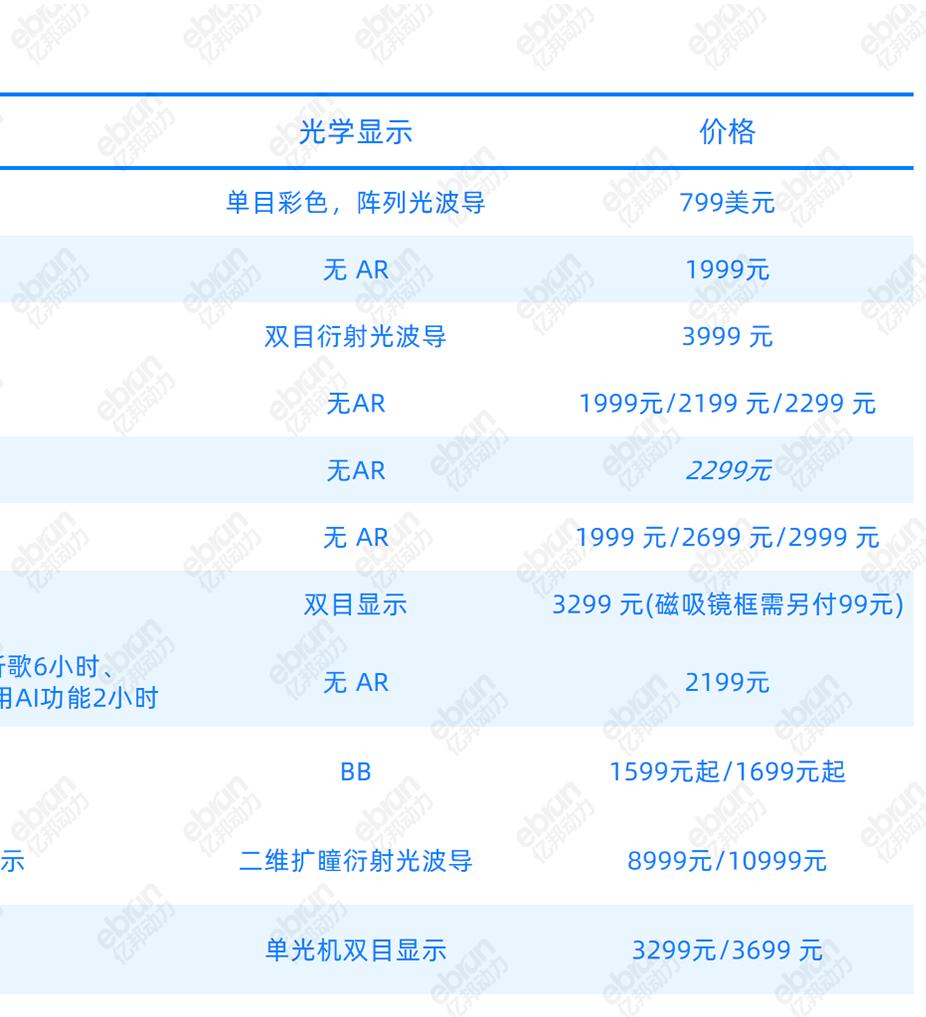
According to incomplete statistics, nearly 70 companies have entered the market from last year to this year, with a new product launched on average every 9 days. Among them, the Xiaomi AI glasses launched in June, without AR, focus on light interaction and ecological integration, and are priced at 1999 yuan. 40,000 units were sold during the first - sale. The Rokid Glasses launched in September sold 40,000 units in 5 days. The pre - orders for INMO GO3 exceeded 20,000 in 3 days after its launch. As for the Quark AI glasses, more than 7,000 pairs were sold within two days after the pre - sale started at midnight on October 24th (refer to the article "The Quark AI Glasses are Coming Strong: You Can Take Taxis and Shop, and There's Tongyi Qianwen as an Assistant").
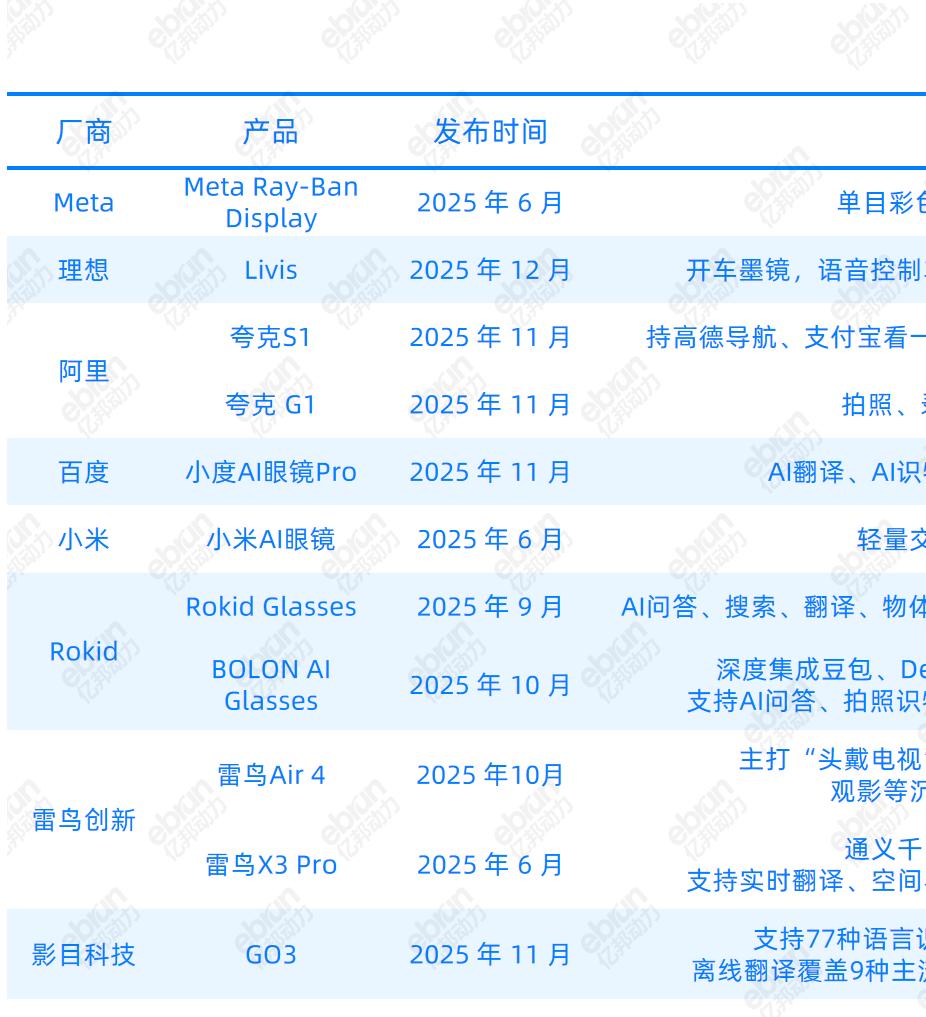
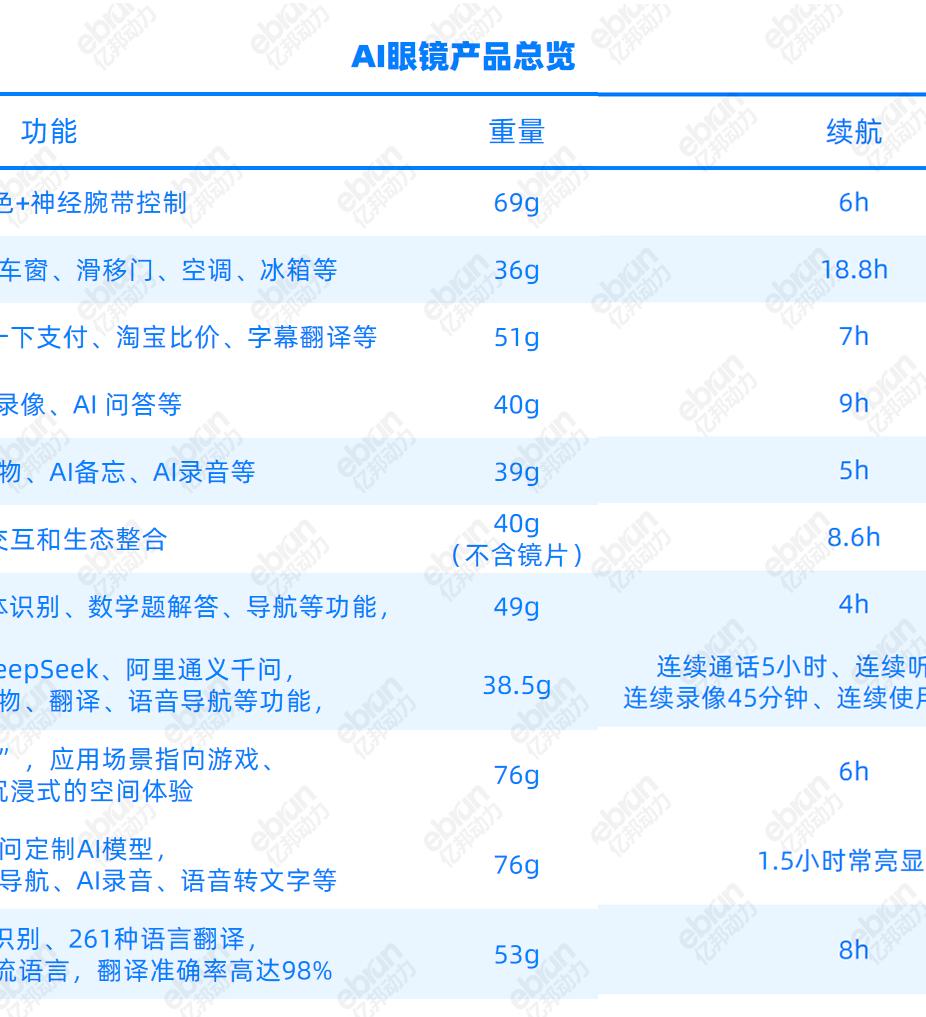
ByteDance is expected to launch its self - developed AI glasses in Q1 of 2026. As all the large companies enter the battlefield, many people believe that AI glasses will become an opportunity for large companies. After all, with their advantages in brand, channels, resources, and price wars, large companies can easily enter and dominate the market. For example, in the smart speaker and smart watch markets, after large companies launched price wars, it became very difficult for startups to recover. Both Mobvoi and Rokid are still in fear of this.
Although they are all called "AI glasses", current products are mainly divided into three types:
One type is auditory - enhanced, essentially "AI audio glasses", which can replace Bluetooth earphones. They have no camera or waveguide. Through voice interaction, they can achieve notification broadcasting, intelligent Q&A, and music listening. They are suitable for light - interaction scenarios such as commuting and office work, and their prices are affordable, thus completing the market enlightenment first.
One type is visually - enhanced, focusing on "hands - free first - person shooting". They are embedded with a camera and microphone, partially replacing mobile phone cameras and action cameras. This is also the current main form of AI glasses, precisely meeting the creation and sharing desires of Vloggers, travelers, and trendy people.
Another type is fusion - display, that is, AI + AR functions. In addition to "hearing" and "seeing", it adds the ability of "display". For example, the Quark AI glasses G1, through the waveguide and a micro - display, can overlay information on the real - world view. It can display floating arrows for navigation from Gaode Maps or connect to Taobao for real - time price comparison.
The reason for the route differentiation is that within the limited hardware space, it is still not possible to make a "universal" pair of glasses. This is not determined by the manufacturers' capabilities, but by the development level of the supply chain. Therefore, most AI glasses are deepening one of these characteristics.
Misa, the founder of Rokid, believes that for a long time in the future, AI glasses without display will be the mainstream. AI shooting glasses are suitable for novice experience and target the mass market, while AI + AR glasses are mainly used by professional people and in professional scenarios (refer to the articles "AR Opens the Door to the Metaverse at Airports and Nuclear Power Plants", "Cultivating Super Workers Requires a Pair of AR Glasses | Yibang Industry").
Misa said that the Xiaomi AI glasses are a typical supply - chain product, serving as a benchmark on the passing line of the industry. The highlight of the Quark AI glasses is that the temples are very thin, but they have not yet entered the mass - production stage. Based on the production capacity of the supply - chain partners, he believes that all parties will reach the convergence point of competition in two years. Before that, they should focus on building the ecosystem, scenarios, brand loyalty, and user reputation.
Regardless of the number of functions, "being wearable" is the primary prerequisite. The industry generally regards "under 30 grams" and "8 - hour battery life" as the critical points for entering the mass market. Currently, most products weigh between 35 - 55 grams. How to "lose weight" without sacrificing performance is the ultimate challenge for the supply chain.
Fan Haoyu, the senior vice - president of the product department at Li Auto, believes that "the iPhone moment of AI glasses" may occur around 2027 - 2028. As for the "killer app", it may be a false proposition. "Large companies will integrate their ecosystems, but the essential functions are still basic ones such as taking photos, recording audio, shooting videos, and using sunglasses. Functions like QR - code payment are niche demands." Fan Haoyu pointed out.
Tool or toy: The triple gates of technology, form, and society
Although manufacturers are constantly emerging, the buyers of AI glasses are still limited to specific groups such as enthusiasts, outdoor lovers, and international students, who buy them for scenario - based functions (such as real - time translation and first - person shooting). For the general public, there is no "must - buy" reason for AI glasses.
Compared with AI glasses, other smart hardware products - smart watches, TWS (True Wireless Stereo) earphones, and smartphones - represent three market trajectories for smart consumer products.
The smart watch was born in 2014. The first - generation products positioned themselves as "smartphones on the wrist", integrating mobile phone functions into the watch.