Musk's "Brain-implant Needle Insertion" Breaks the 1.5-second Mark for the First Time! Tens of Thousands Flock to Become Cyborgs
[Introduction] Over 10,000 people worldwide are queuing up. Musk's Neuralink has dropped another bombshell! In a 20 - minute speech, it was revealed for the first time that the implantation time of a single electrode in the "brain - computer interface" has plummeted from 17 seconds to 1.5 seconds, and the implantation depth has exceeded 50mm, directly reaching more abundant neurons.
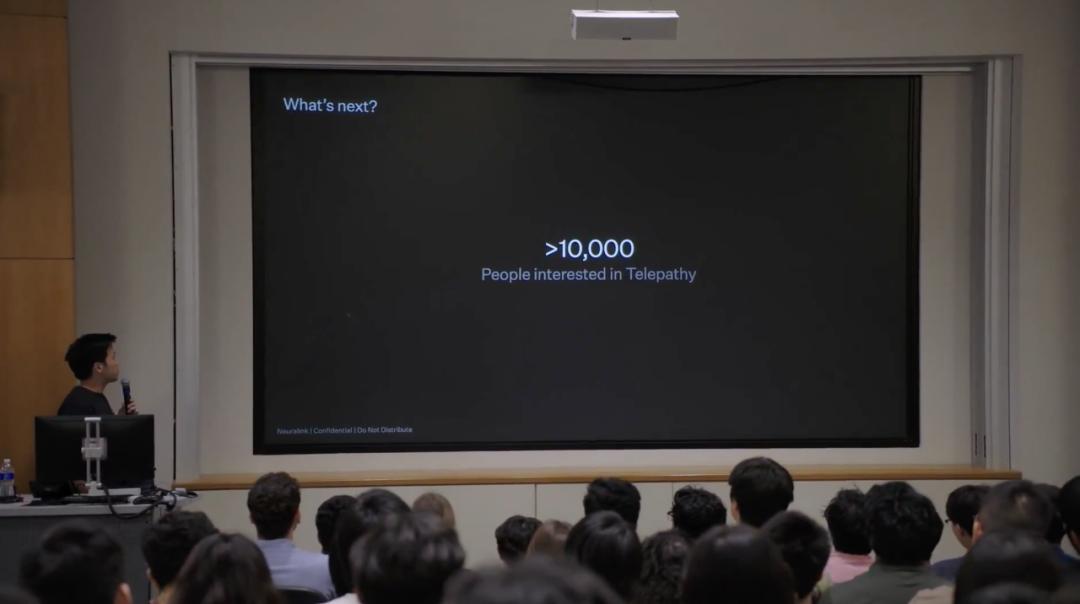
The queues for Musk's BCI surgeries are overwhelming, with over 10,000 people waiting!
Recently, Neuralink released a 20 - minute video in which co - founder DJ Seo elaborated on the company's latest progress and future development path.

Surprisingly, Neuralink's surgical robot has pushed the efficiency of the future "craniotomy and needle insertion" to an astonishing level.
— The implantation time of a single electrode wire has dropped from 17 seconds to a mere 1.5 seconds!
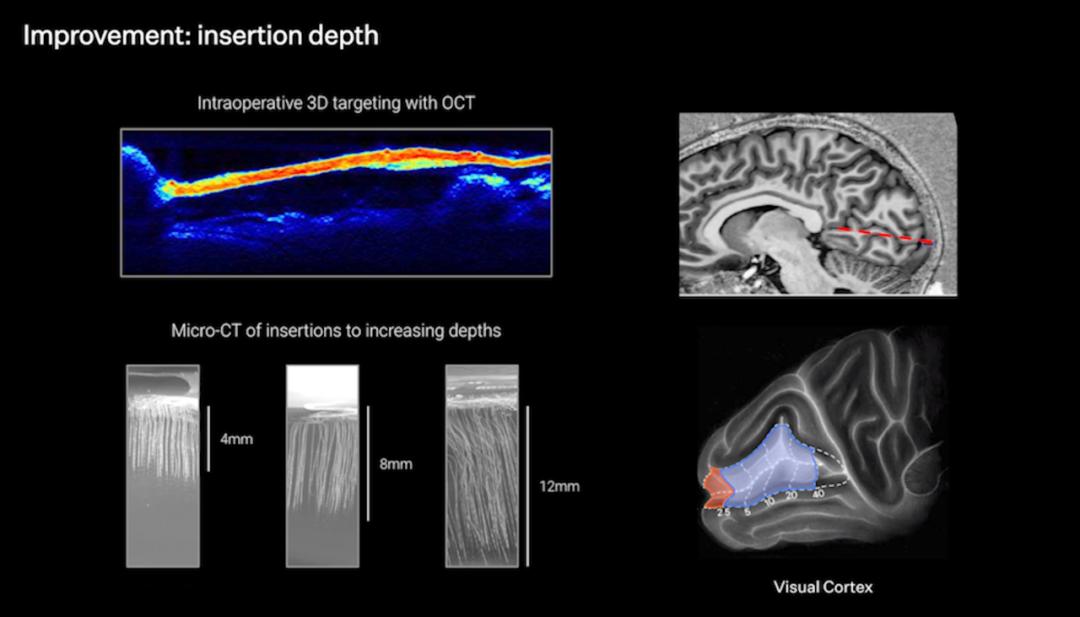
More importantly, the new implantation needle can penetrate over 50mm deep from the brain's surface, reaching more abundant neuron regions.
This means that more precise motor control and sensory feedback will be achievable in the future.
Moreover, this surgical robot is compatible with 99% of the world's population.
The manufacturing cost of the disposable needle holder (needle magazine) has been reduced by 95%. What was once an expensive "concept - demonstration - level" component can now be mass - produced.
Currently, the Telepathy program has enabled many people to control the cursor with their "thoughts" and is also excellent for playing games.
The first patient to receive a Neuralink implant, Noland Arbaugh, said that he looks forward to the day when the "Cyborg Game League" becomes a reality.

These days, a very popular video has been circulating online, which seems even more real than science fiction.
A paralyzed ALS patient can feed himself independently by controlling a robotic arm with just his thoughts after receiving a BCI implant.
Musk said, "Any device that can be controlled by a computer or a phone can also be controlled by a Neuralink implant."
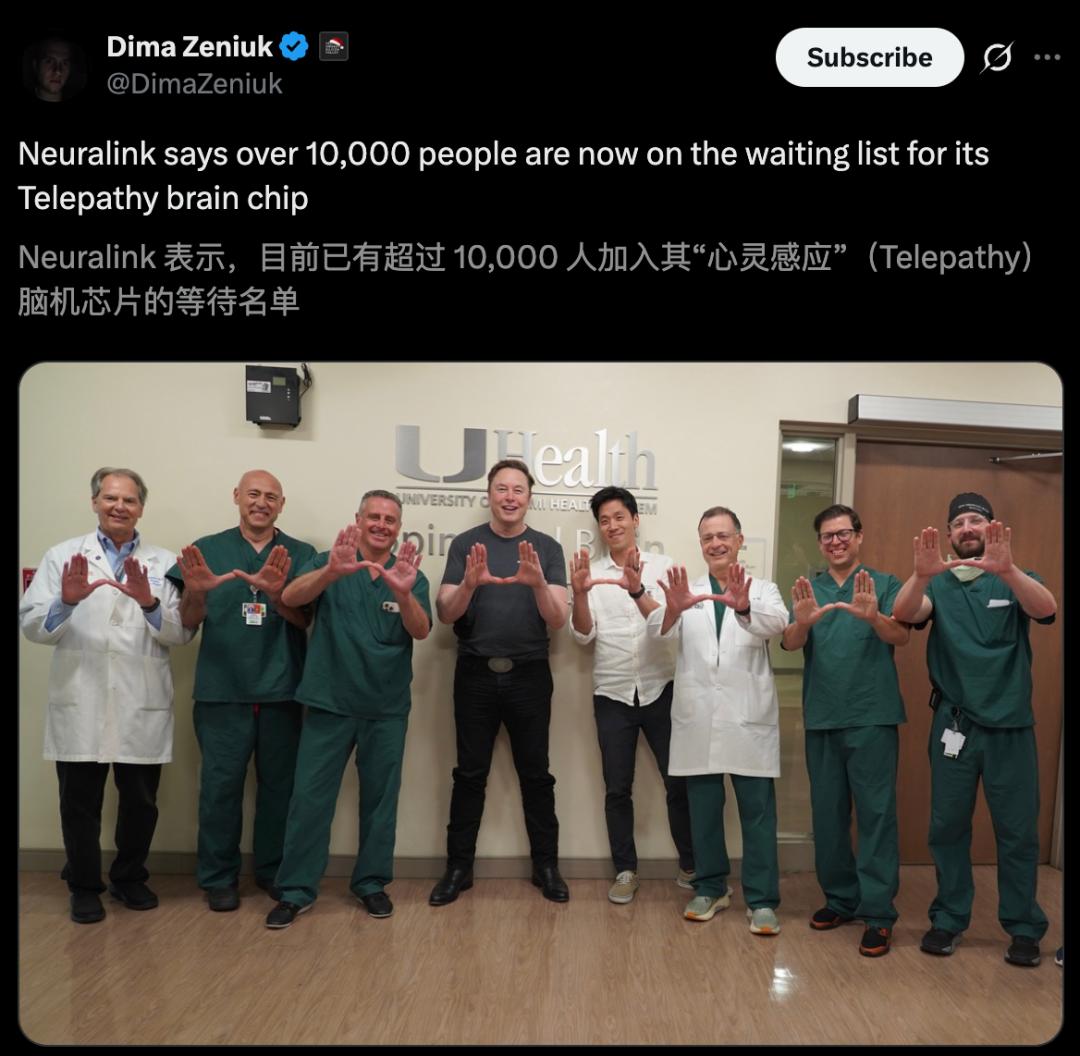
Not only that, over 10,000 people worldwide are on the waiting list to get a brain - computer interface.
DJ Seo said that Neuralink is currently accelerating this process, and it is expected that 20 patients will undergo the surgery before the end of the year.
We are one step closer to mechanical transcendence.
That robot is the real secret of Neuralink
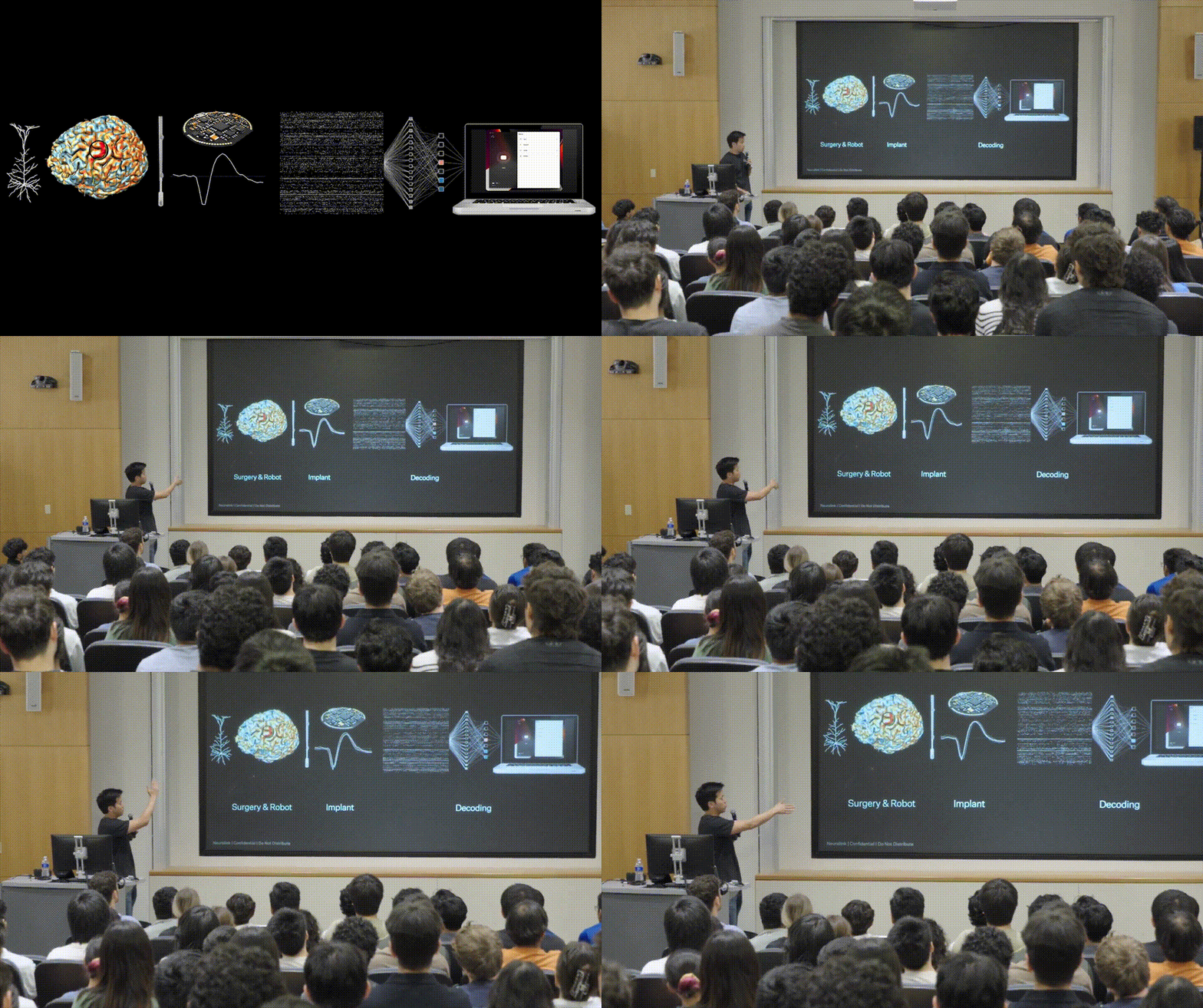
On - site, DJ Seo revealed Neuralink's three major technical systems and engineering challenges, as shown below —
The surgical robot, the implantable device itself, and neural decoding.
To understand neural signals, after a surgery to implant a brain chip, ML is needed for decoding.
What's most impressive about Neuralink is not the 25mm small round chip implanted in the skull, but the surgical robot behind it.
The surgical process is very shocking:
The doctor first opens the scalp, drills a coin - sized bone window, and then exposes the beating brain.
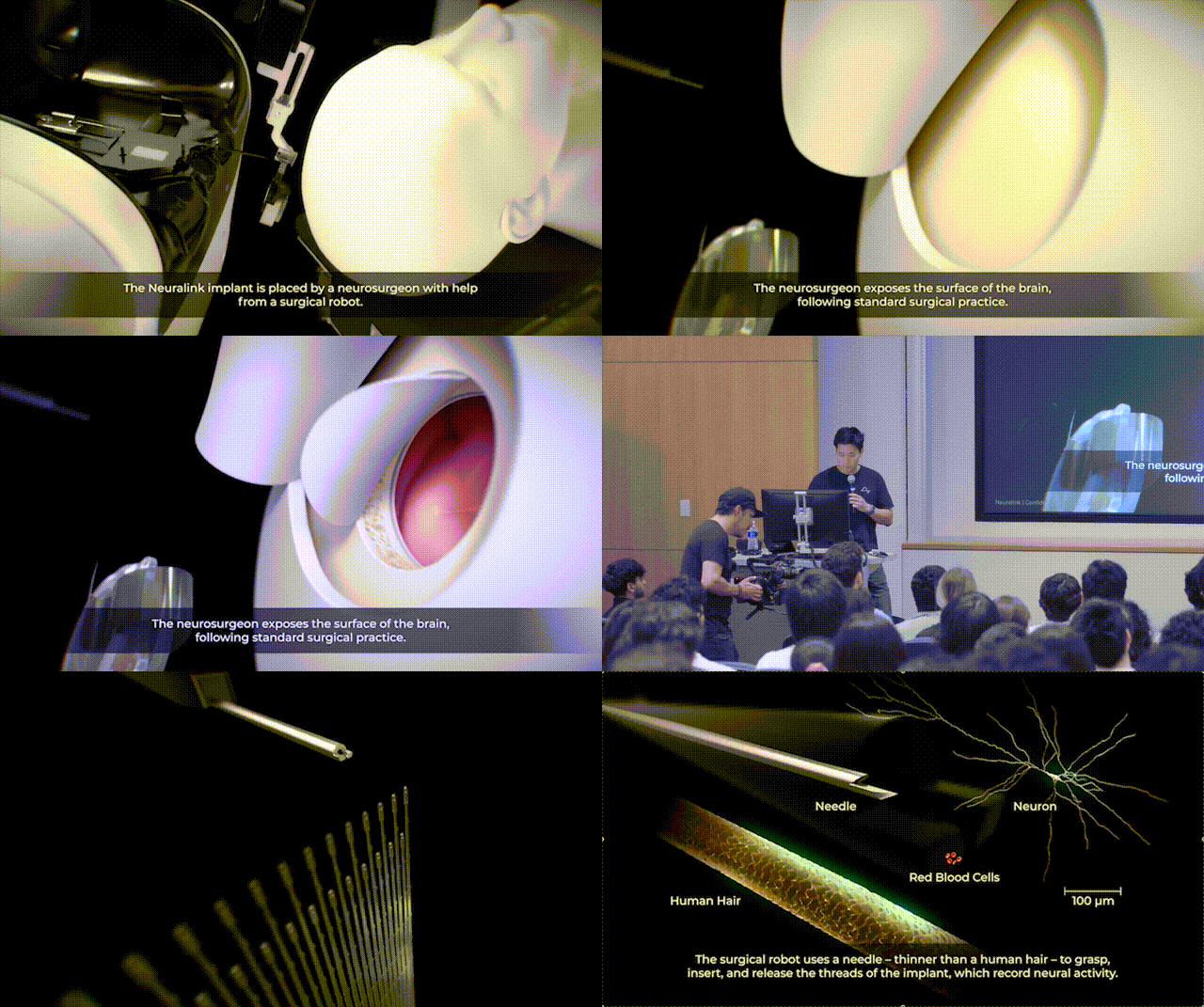
Next, it all depends on the robot's needle, which is thinner than a red blood cell, to pick up a flexible electrode wire, find a safe path among the dense cerebral blood vessels, and then insert it steadily.
This set of actions has to be repeated 128 times without touching any blood vessels; otherwise, the surgery has to be interrupted.
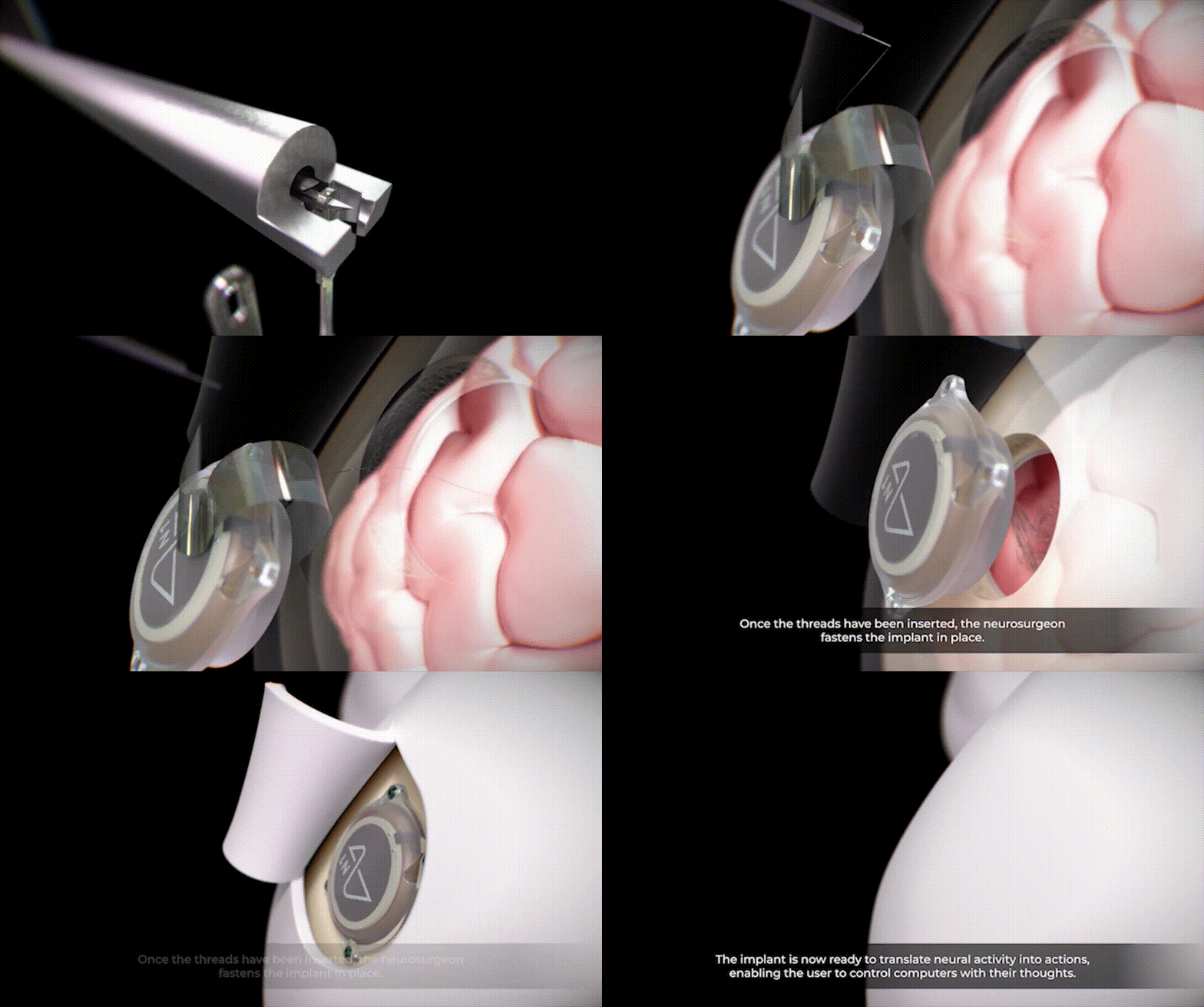
It sounds like an impossible task, but Neuralink has already done it on a real person and succeeded.
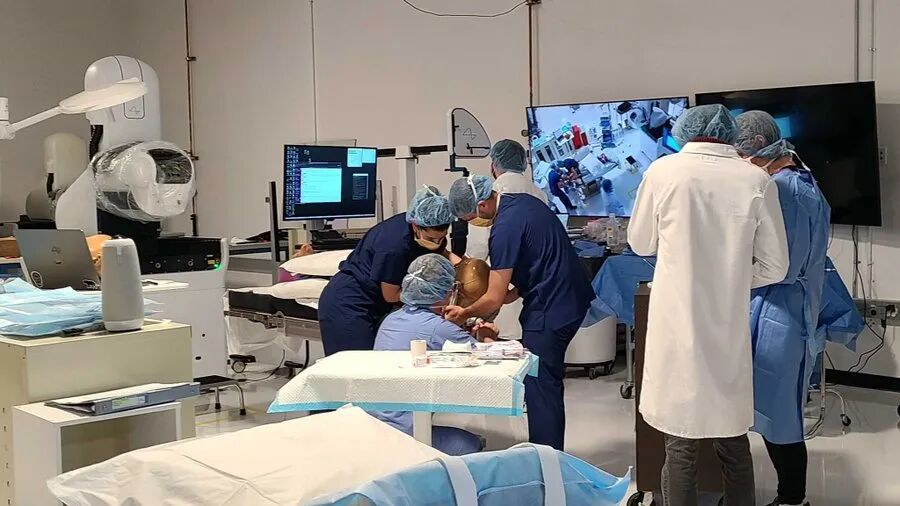
To enable the robot to see clearly and insert accurately, they developed a complete set of composite vision structures.
Neuralink mentioned a key point:
No off - the - shelf microscopic camera can meet the required precision. We finally solved it by using six sets of microscopes + OCT.
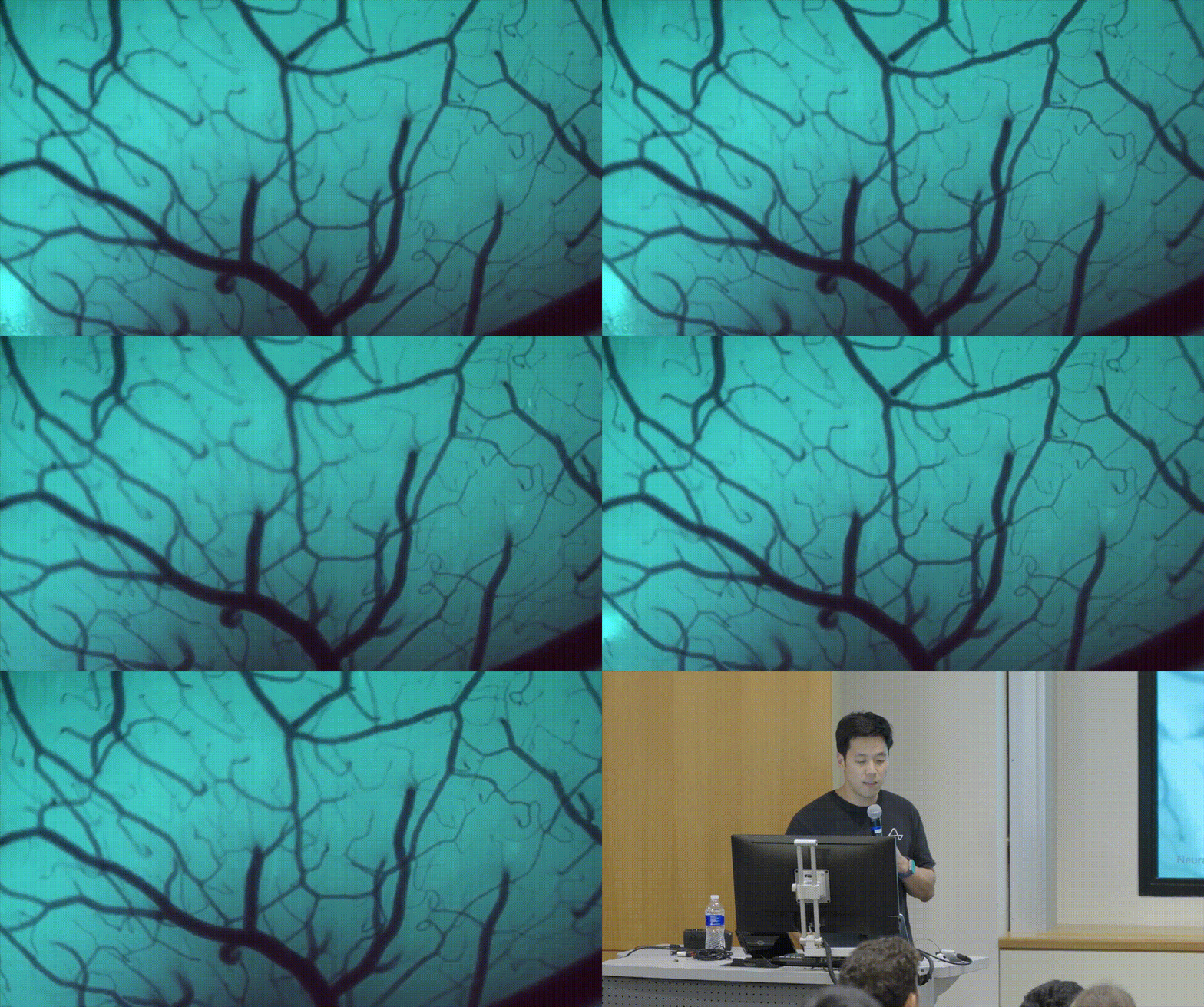
Neuralink integrated this set of devices into the "vision system" of the surgical robot, which can synchronize brain tissue movement, predict paths, and control force within milliseconds.
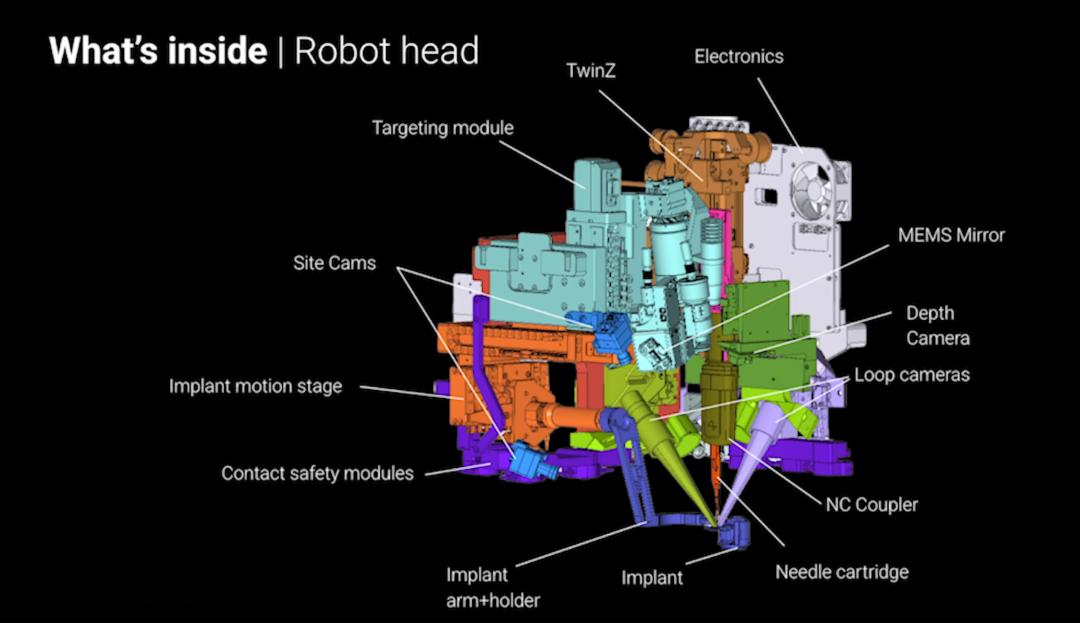
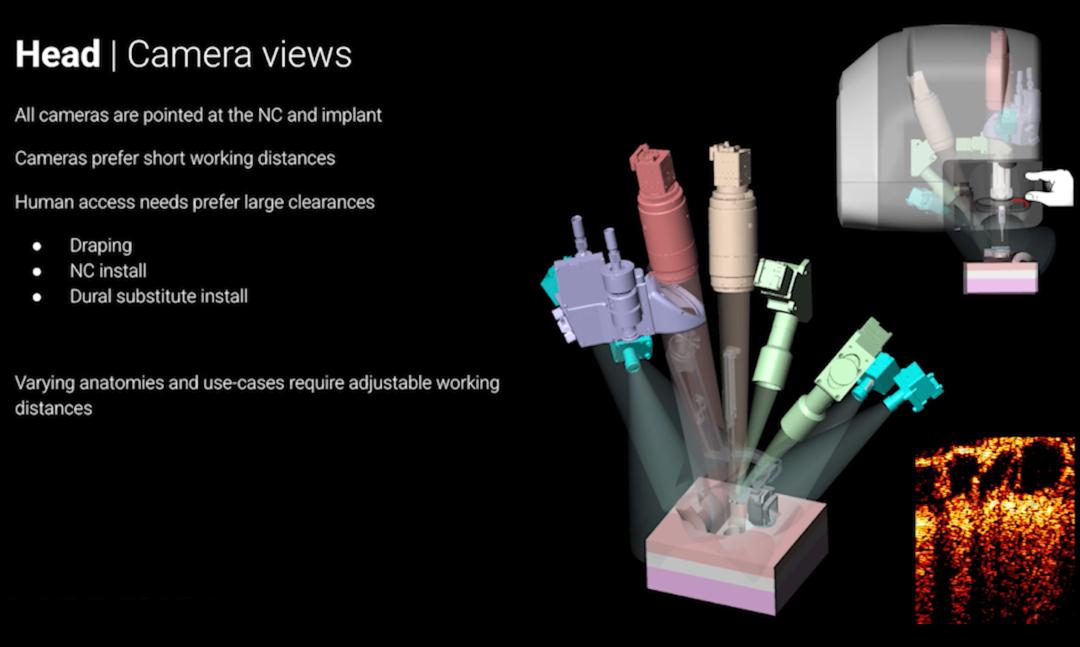
Schematic diagram of the multi - camera vision system on the head of the Neuralink surgical robot: Multiple sets of microscopes monitor the craniotomy window from different angles simultaneously, and in combination with OCT (bottom right), they track the depth and movement of brain tissue in real - time.
Almost no other company can replicate these details because it is not only an optical problem but also a systematic project involving mechanics, force control, and algorithms.
What really shows the technological gap is the change in surgical speed.
While the old - version robot is still inserting the first electrode, the new - version Rev10 has already inserted more than a dozen.
For patients, the faster the implantation, the shorter the craniotomy time and the lower the risk.
However, just being fast is not enough. The next - generation robot needs to be able to "insert deeper".
Currently, the electrodes only reach 4mm into the cortical area, which is enough for patients to move the mouse and control the robotic arm with their thoughts. But to restore vision, they need to reach deeper layers of the visual cortex.
To achieve this, Neuralink has to solve a series of challenges, such as the registration of pre - operative and intra - operative images, the safety of deep insertion paths, and the control of electrode deformation.
What Neuralink has created is an automated factory that can achieve micron - level precision in soft tissues, and its maturity determines whether this future can be realized for ordinary people.
Next step: Enhance human cognition
When the robot successfully implants the electrodes, it's just the beginning.
In 2024, Neuralink's first human subject successfully received a brain chip implant and recovered well after the surgery.
One month later, this patient could even control the mouse with just "thoughts".
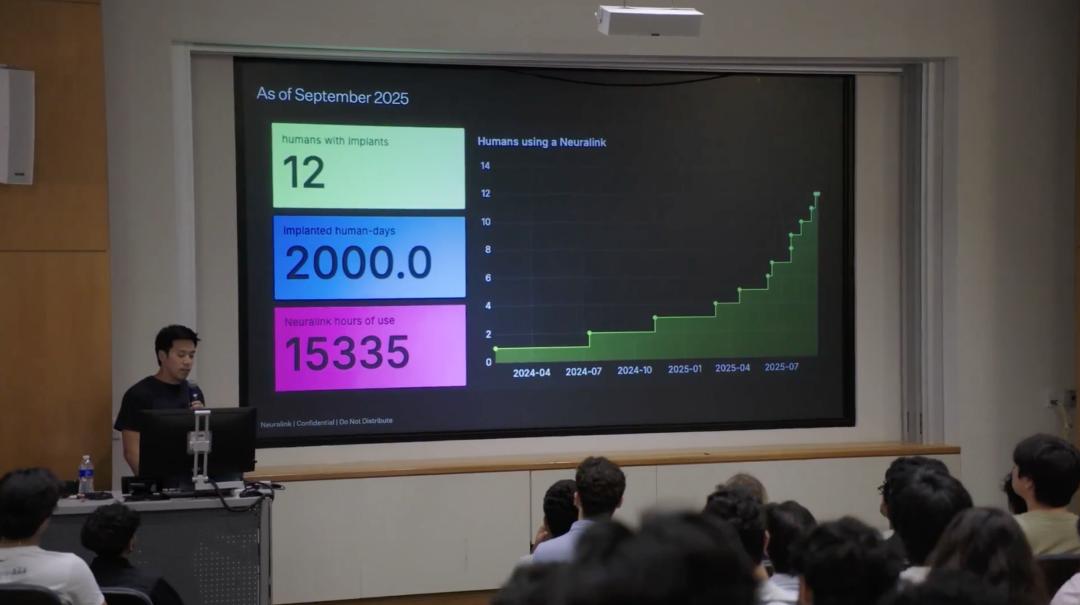
As the clinical trial progresses, the number of participants has exceeded 12, including those with spinal cord injuries, quadriplegia, and ALS.
An ALS patient can control a robotic arm to perform daily actions such as drinking water with just the implant device and neural signal decoding.
Neuralink's vision goes beyond just enabling movement.
They see this as a long - term goal towards "functional recovery", "language recovery", and "sensory reconstruction".
Internally, the company divides its products into "Telepathy" (movement/control), "Blindsight" (vision recovery), and a more in - depth brain stimulation/regulation system.

The ultimate vision is to be able to read and write any brain area, help treat patients' cognitive disorders, and even "enhance human cognition" ability.
In the official view, this is not a single experiment but a complete, future - oriented brain - computer system.
For some people, this will be a real opportunity to regain life autonomy.
Over 10,000 people are waiting, but only a few can get it
When the technology moves from the laboratory to the clinic, the real challenges begin.
There are already 13 subjects in the world using this brain - computer interface, but there are more than 10,000 people on the waiting list.
Data shows that patients with a brain - computer interface implant use it for an average of 8 hours a day.
If the brain - computer interface is to be scaled up, the steps from manufacturing, surgery, to maintenance all need to be reinvented.
Manufacturing is the first hurdle. Inside the 25mm round chip, there are thousands of flexible electrodes, each thinner than a hair. They need to withstand a decade in the body and maintain stable signals.
For implantable devices, "invention is difficult, and mass production is even more difficult".
Currently, Neuralink can only use the MEMS process to mass - produce in its own cleanroom and then put hundreds of test samples into a high - temperature "accelerated aging pool" to find 0.1% of potential failure points.
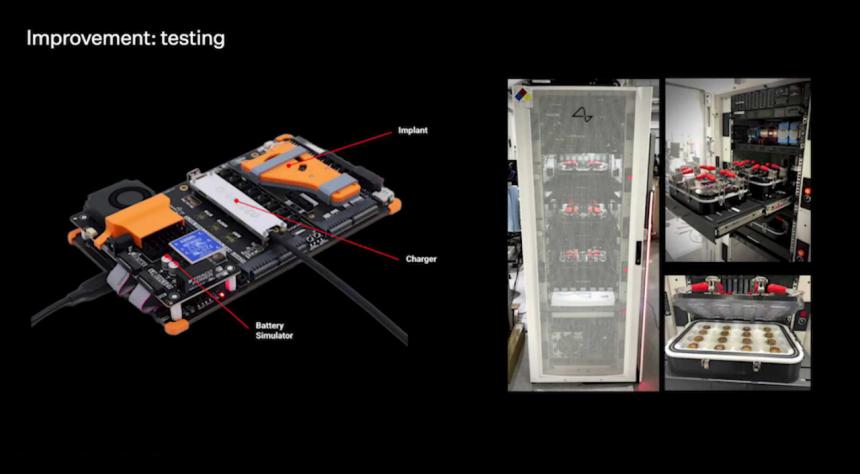
Neuralink's implant testing system: On the left is the hardware test board for the implant + charging and battery simulator. On the right is the multi - layer rack - type aging test device and the high - temperature "brain fluid" accelerated aging pool.
Besides production, the surgery itself can't be easily replicated.
Neuralink's robot still requires engineers to monitor every action on - site, control the path, track the movement of the brain tissue, and avoid micro - blood vessels.
To make the surgery available on a large scale, all judgments need to be automated, allowing the robot to "execute with one click" like Lasik.
Their ultimate goal is to shorten the surgery time to be "doable during a lunch break" and possibly even complete it while the patient is awake.
More importantly, "long - term use" is crucial.
Neural signals change every day. A decoding that is accurate today may be off in a few days, requiring recalibration.
