Record of the world's top 13 teams' upsets, robots' ultimate survival, more brutal than science fiction movies
[Introduction] A top - level event over the weekend completely shattered the "filter" of the laboratory! Robots from 13 elite teams around the world tumbled one after another: getting their legs stuck on the suspension bridge and falling while climbing stairs. It was like a "wilderness survival" for robots.
Over the weekend, inside the Lingnan Stadium of The Chinese University of Hong Kong, screams and gasps echoed one after another!
However, there were no human athletes in sight. There were only a group of robots "surviving at the limit" in the real world.
Here, there was no flat indoor floor, no constant lighting, and there were few remote operators hiding behind the scenes.
The camera suddenly zoomed in. First on the stage was the LRL Challenge Team from The Chinese University of Hong Kong. As a performance guest, it tried to answer the questions in a fully autonomous form.
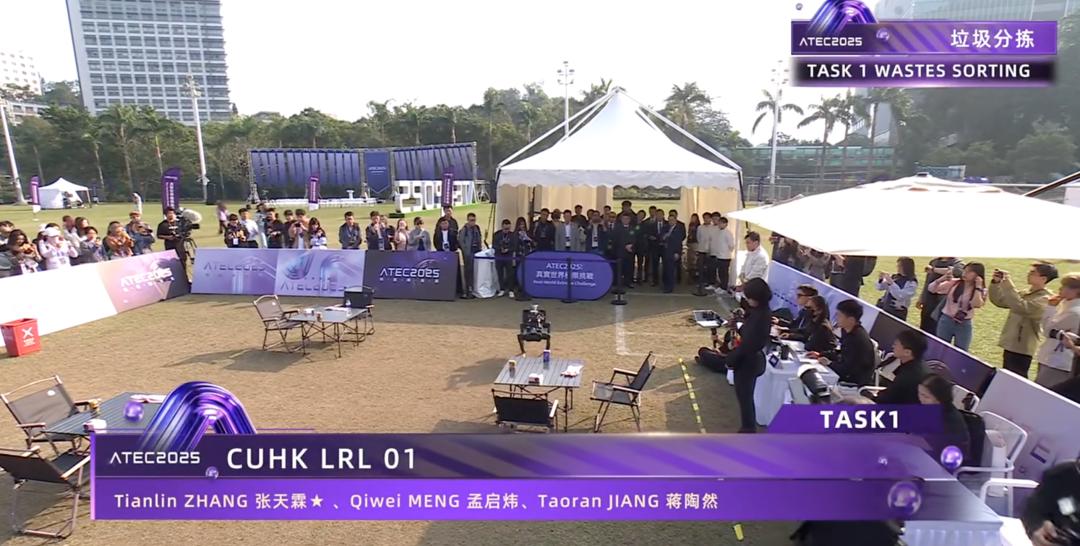
The challenge was filled with real "cruelty" right from the first plastic bottle.
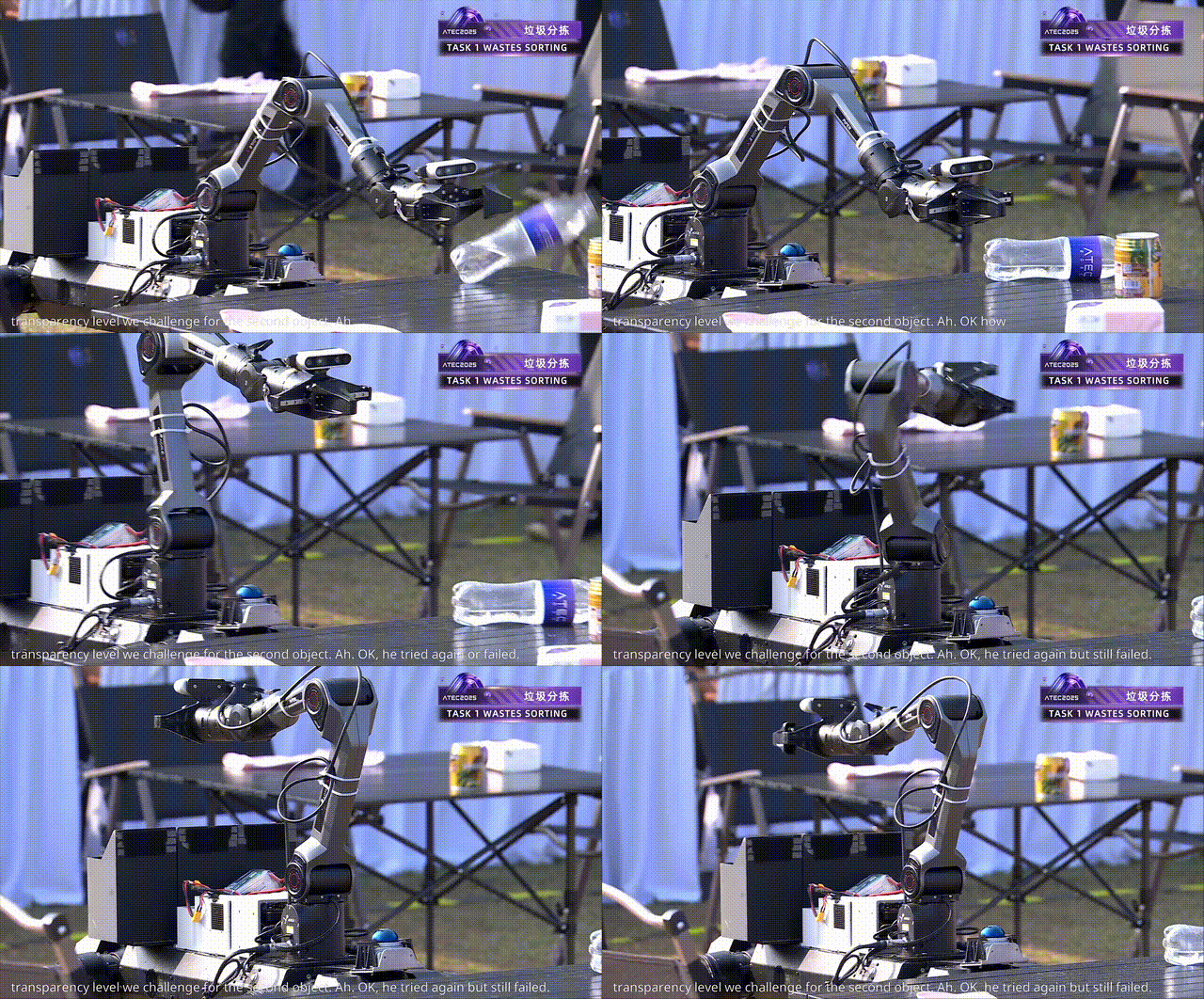
It walked towards the plastic bottle on the table in the field, reached out its hand and paw - "Clang"! It failed to pick up the bottle and knocked it down instead.
After being "carried away" by the LRL team members for debugging, it stubbornly started its second attempt.
To the dismay of the whole audience, it failed again!

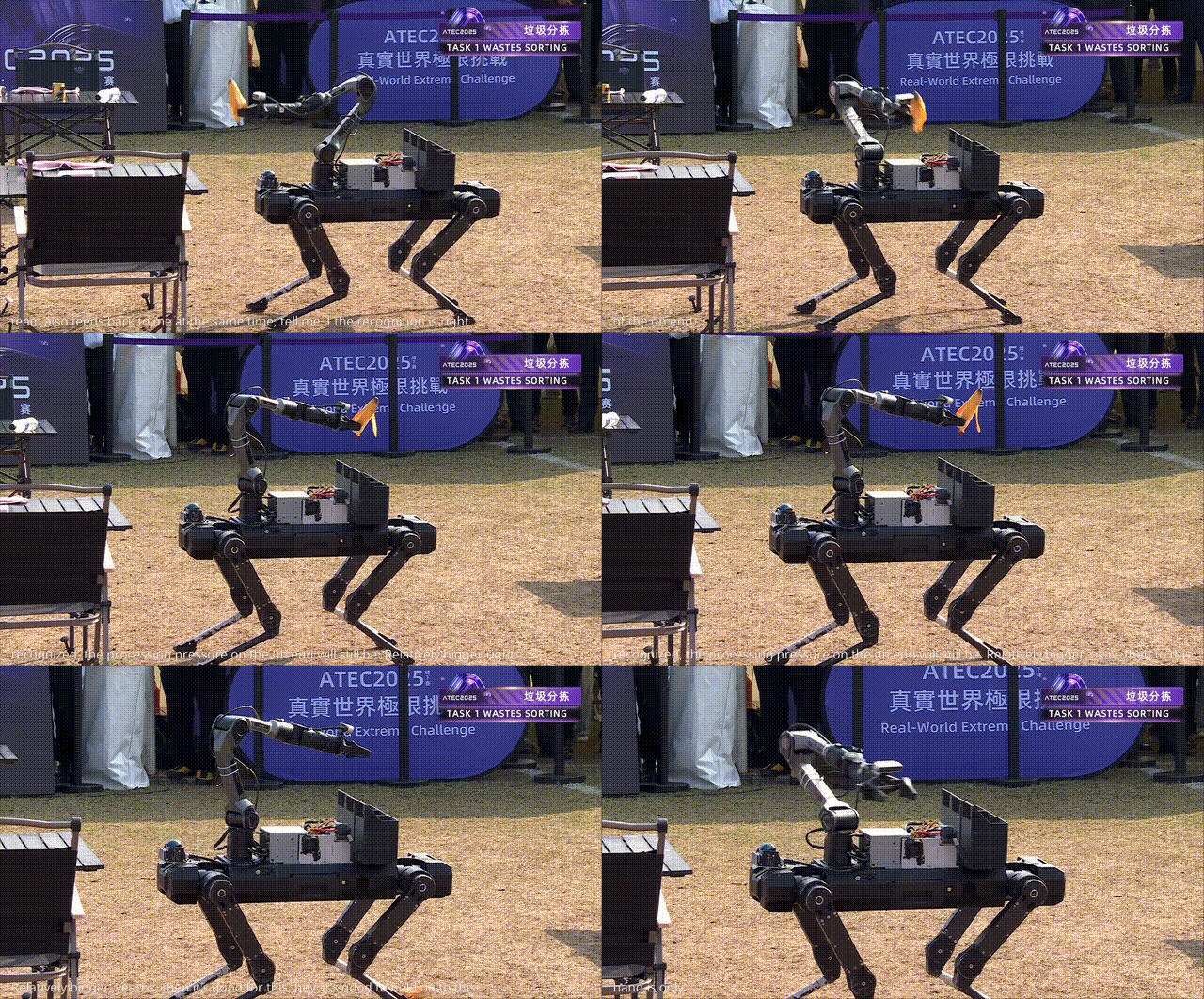
Moreover, the banana peel that the robot finally managed to grab was thrown perfectly outside the bucket with a stylish parabola...
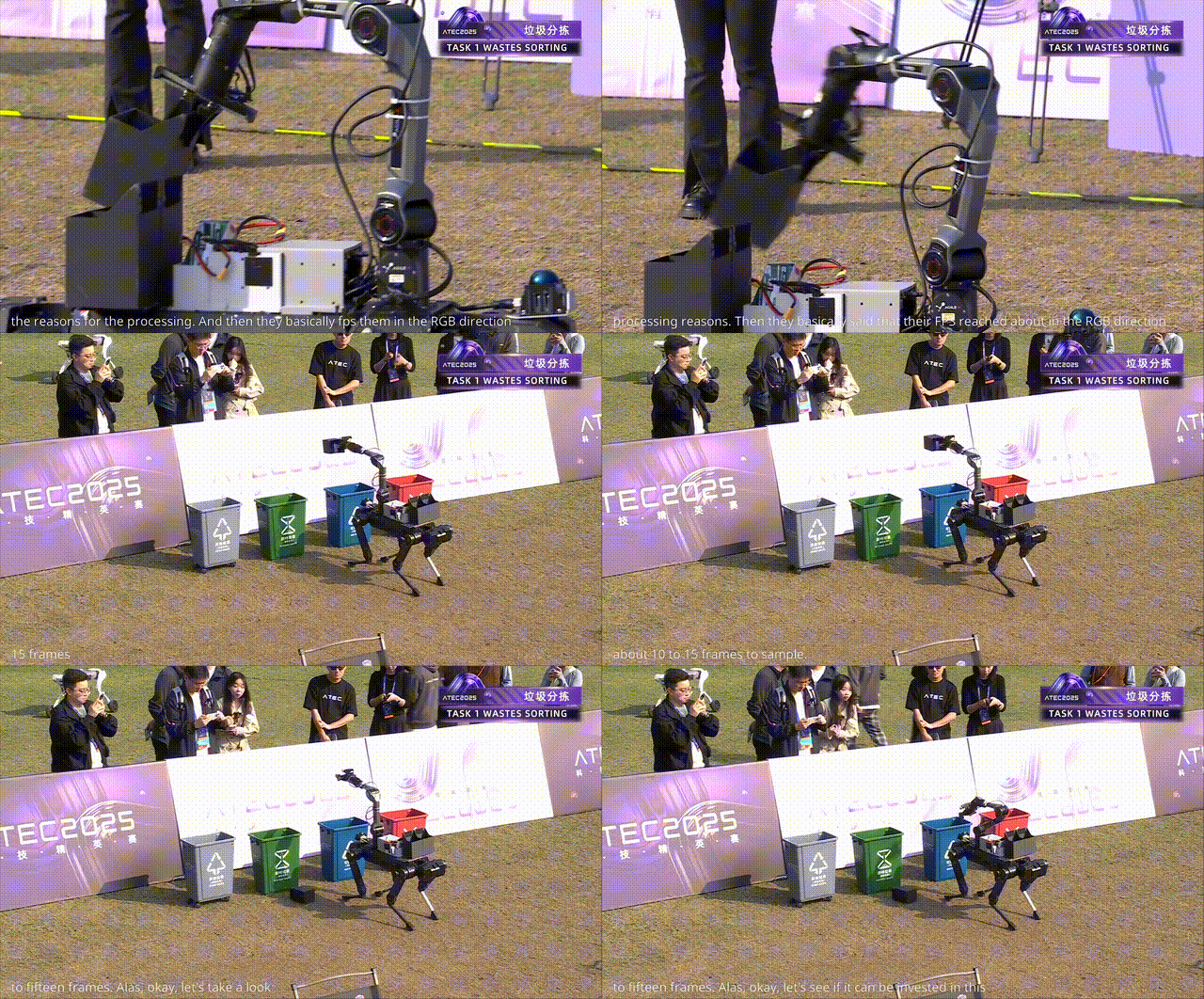
The only cardboard box it managed to pick up fell beside the trash can with a thud at the final moment of delivery, as if delivering the last "comic blow".
The camera switched to the adjacent competition area. The bipedal robot of the CUMAE team was holding a kettle and "precisely watering" a row of white flowers.
It hit all six flowers right in the center!
The operation seemed effortless, but it was actually full of skills: not only had to stabilize the chassis, but also calculate the angle of the kettle, the height of the flower plants, the spatial distance...
Each movement was an extreme tug - of - war between balance, vision, and force control.


However, behind this smooth set of movements, there still needed to be a human operator on standby.
It was still one step away from true full autonomy.

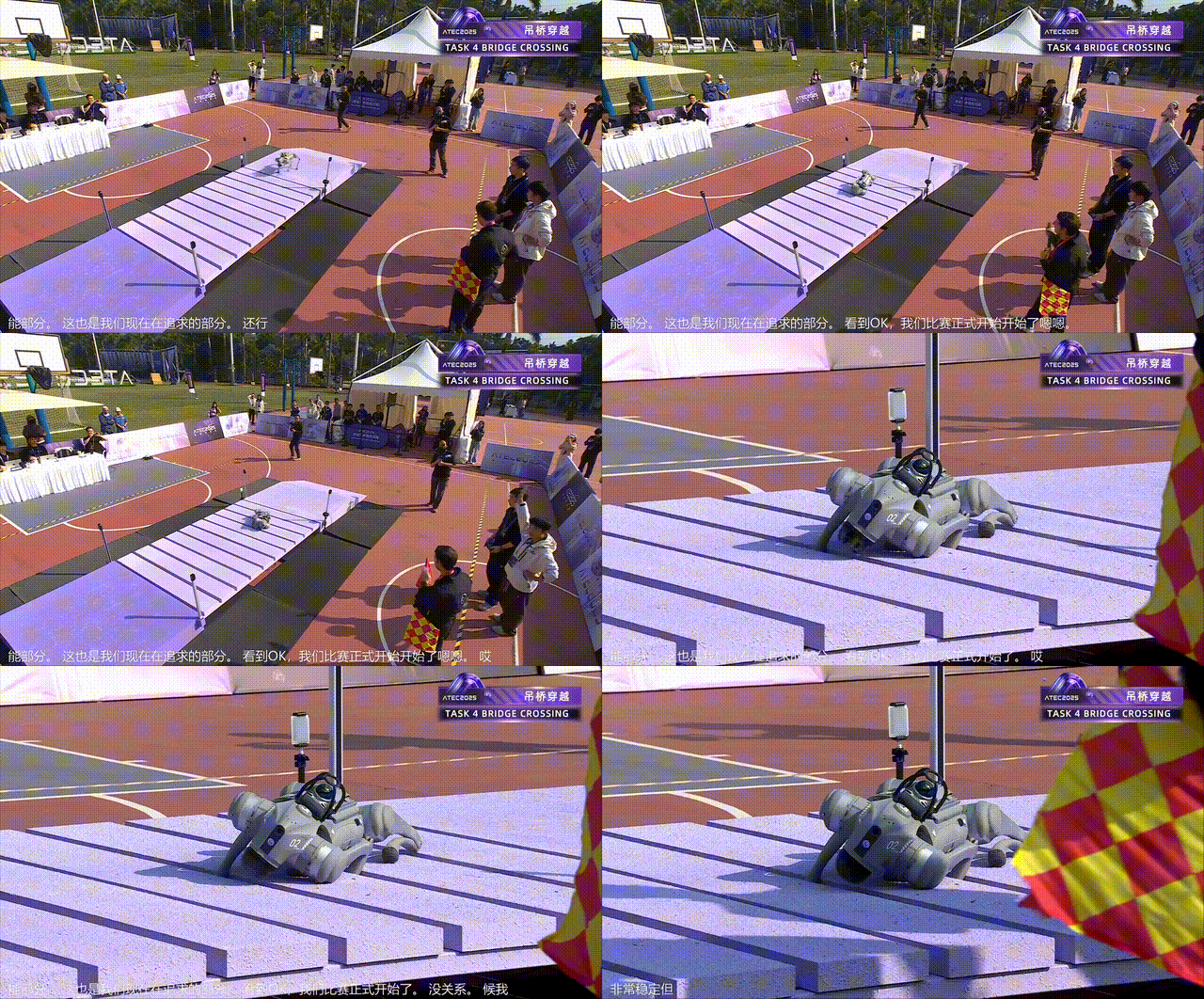
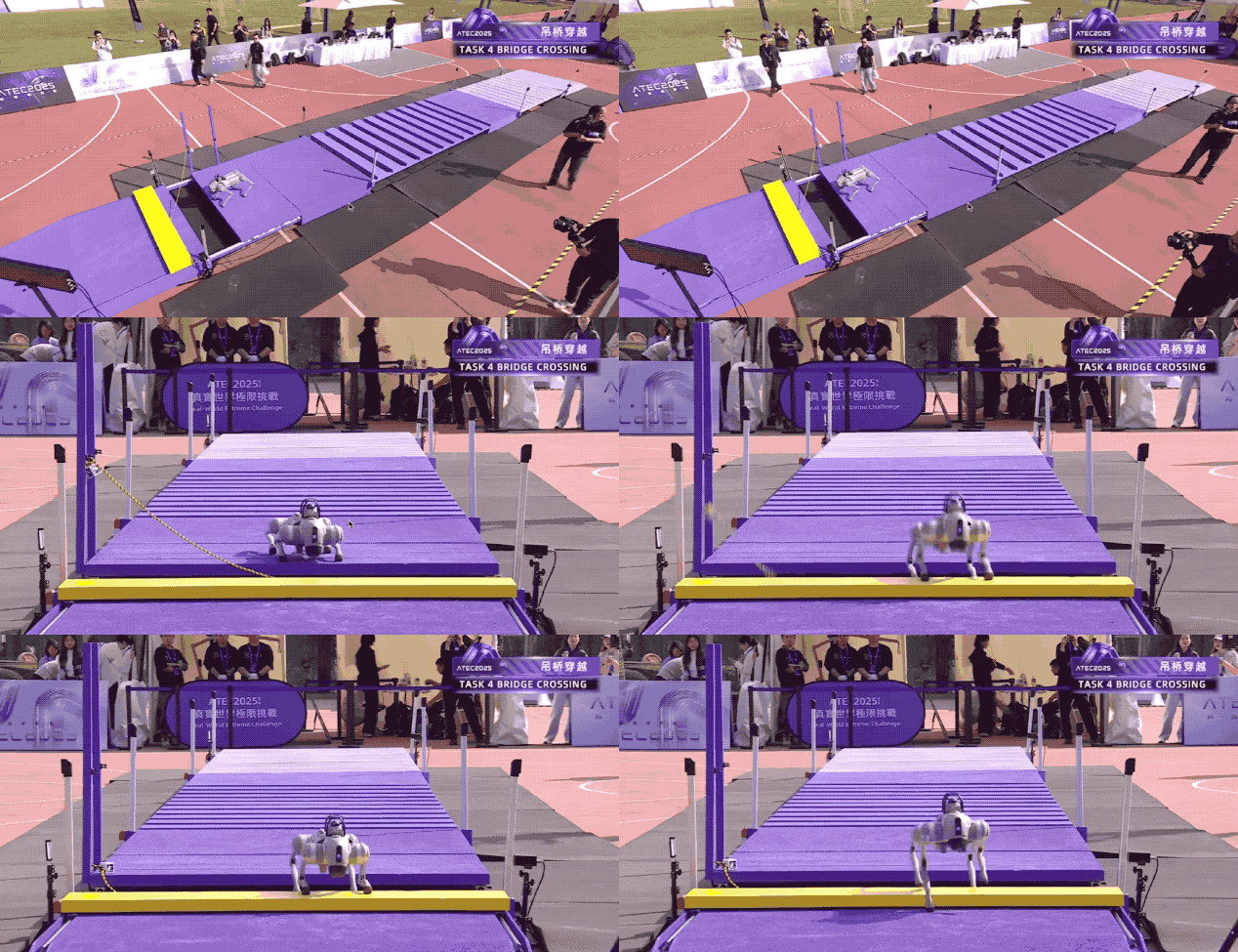
On the other side, the quadrupedal robot of the IRMV team was standing at the starting point of the suspension bridge, ready to go.
As soon as the referee blew the whistle and it took two steps forward, one of its feet got firmly stuck in the gap of the bridge board.
After its teammates rushed to rescue it, there was a broken bridge with a larger gap right in front. It landed cleanly on the first jump, as steady as a rock.
On the second jump, all four legs were in the air, and it got stuck again in an embarrassing way.

These real - life cases were just the tip of the iceberg of the "high - energy plot" of a robot challenge.

The "Toughest" Robot Competition
This was the fifth ATEC Technology Elite Competition (off - site competition) · Real - World Extreme Challenge.
It might be the toughest public "execution" of robots globally before the end of 2025, and it might also be the closest sprint towards "general embodied intelligence".
Why do we say so?
In most robot competitions, what we often see is -
Indoor standard venues, single - tasking, and there is always a group of remote controllers standing behind, ready to "rescue the robot" at any time.
However, this year's ATEC Technology Elite Competition aimed to break out of these "comfort zones"!
For a long time in the past, robots in the public eye often had a halo around them: in carefully - crafted demonstration videos, they could do backflips, fold clothes slowly, and even make delicate facial expressions like humans.
However, the organizer of this competition, The Chinese University of Hong Kong, along with the co - organizers ATEC Frontier Technology Exploration Community, Peking University, Beijing Normal University, and Ant Group, jointly decided to break this "comfort zone".
The fundamental purpose of this competition was to answer a core question in the industry: Can robots truly leave the laboratory and enter and adapt to the complex human world?
In fact, the organizer stated bluntly before the competition: "We predicted that there would be a large number of 'failure scenes'."
As one of the initiators of the competition, the person - in - charge of the Technology Strategy Department of Ant Group said that Ant Group has long supported the ATEC competition, stemming from a belief: The future of AGI technology development is to achieve the in - depth integration of machine intelligence and the physical world.
On the road of promoting artificial intelligence from "data cognition" to "environmental interaction" and "action execution", we are looking forward to another fundamental breakthrough in technology.
This year, the ATEC Organizing Committee chose a difficult but real path. They put the competition venue in mountains, grasslands, stone steps, and suspension bridges; let the robots face the disturbances of the real world; and designed each question not for the robots to "perform well", but for them to expose their real weaknesses in the collisions.
Because if the problems are not real, there will be no real technological progress. Only "real problems" can let the industry know what to break through next.
Before robots enter the real world, these mistakes are inevitable. Instead of covering them up, it's better to let the technology grow in real challenges.

The "Real - World Extreme Challenge" was the core topic of this competition. So, where exactly did the "real" and "extreme" aspects manifest?
Tear Off the "Puppet" Mask
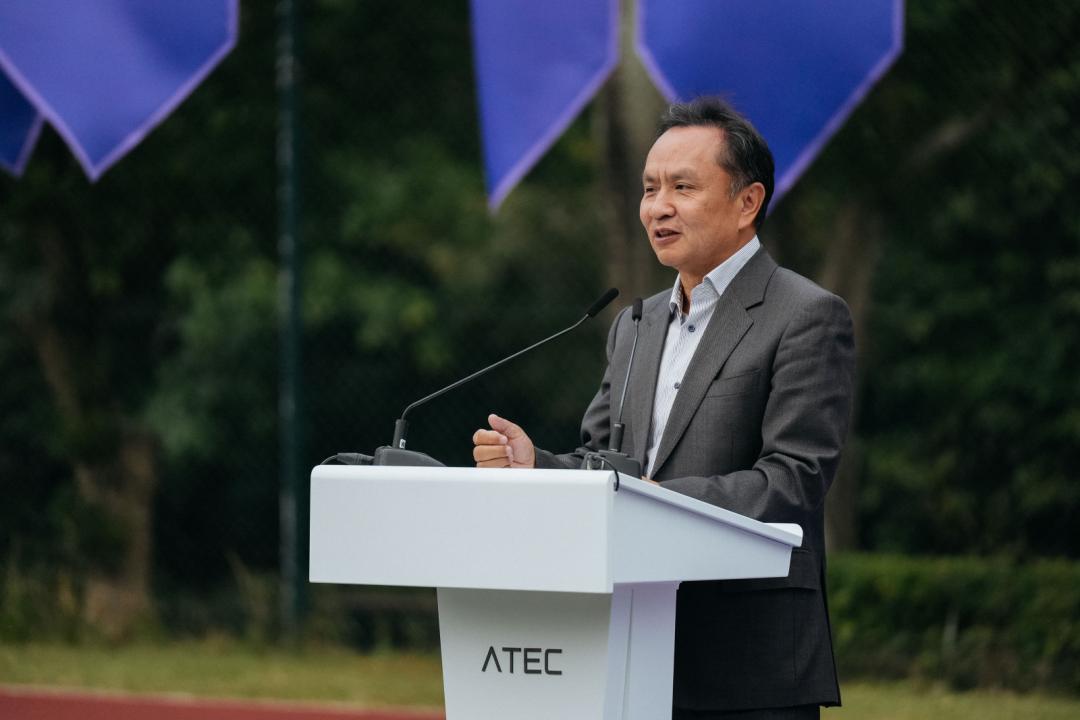
Liu Yunhui, the chairman of the ATEC 2025 Competition Expert Committee and an academician of the Hong Kong Academy of Engineering Sciences, pointed out that robots need to have three core abilities - walking, operating, and transforming the environment to survive in the real world.
The organizer and co - organizers used this as a technical proposition to construct an unprecedented testing framework for "real - world adaptability".
The essence of "real" first had to return to the "real world".
Completely Outdoor Real Scenarios
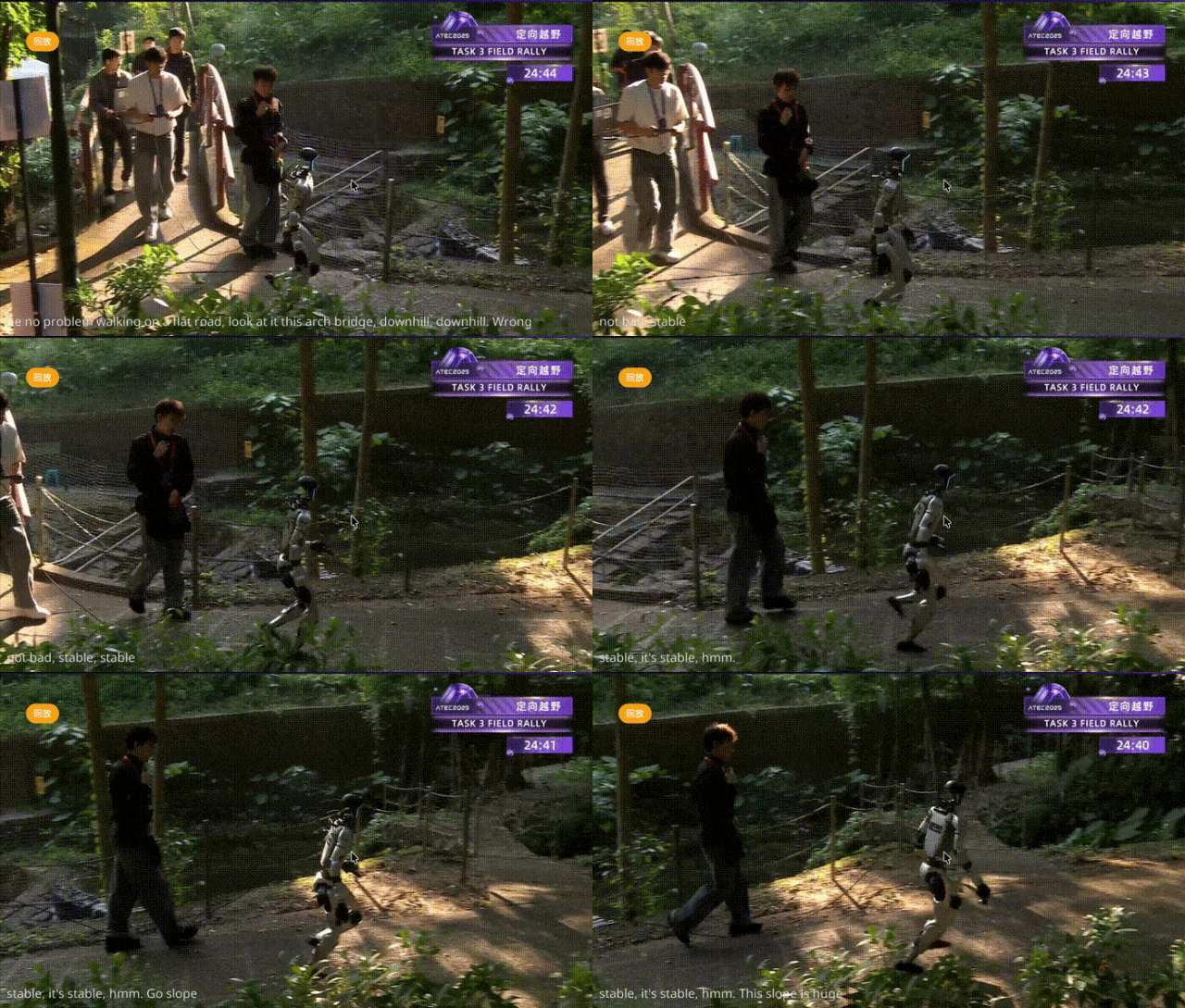
The competition venue was directly chosen to be the Lingnan Stadium of The Chinese University of Hong Kong & the small bridge and flowing water ecological area. It was not a standard indoor venue but a completely outdoor real scenario.
Here, there were arch bridges, mountains, gentle slopes, stone steps, and other diverse terrains.
In addition, with factors such as changing sunlight and fluctuating wind power acting together at different times, the robots' performance would face greater challenges.
This was also the best way to test their perception robustness and physical adaptability in a real environment.
Strong Incentive for "No Remote Operation"
Moreover, this year's ATEC Technology Elite Competition was the first to explore the "no - remote - operation" technical path in a completely outdoor real scenario.
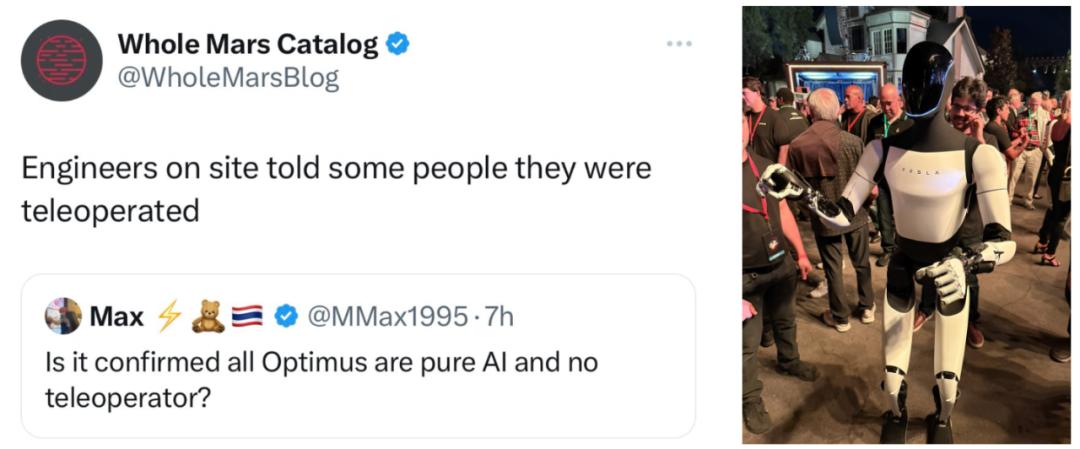
Currently, behind many amazing robot videos on the Internet, there is often an operator.
A survey by Outlook News Weekly also confirmed this situation: "Many high - difficulty demonstrations are essentially still 'puppets on strings'."
In this competition, the scoring rules strongly guided the teams:
It clearly rewarded the fully autonomous "no - remote - operation" method and offered additional points. As long as it was autonomous enough, the additional points ranged from 10 to 25 points depending on the task and the robot's form.
This operation forced each team to improve their "AI brains" and try to get rid of the remote "substitute" of the operator.
The goal was only one: to upgrade the robots from obedient "tools" to autonomous decision - making "intelligent agents"!
Four Task Chains
There was more to the task design of this competition. It included a total of four tasks -
Waste sorting, autonomous flower - watering, orienteering, and suspension bridge crossing
These might seem like small things one by one, but what was being tested was not single - point difficulty but a continuous "task chain".
Waste sorting: Identify → Grab → Classify → Dispose
Autonomous flower - watering: Get the kettle → Fill with water → Water the flowers → Put the kettle back
Orienteering: Four sub - sections, real - time decision - making on complex terrains
Suspension bridge crossing: Judge the distance → Get the auxiliary board → Build the bridge → Cross
It could be seen that each task was testing the robot's ability of "multi - modal perception fusion and continuous decision - making", not something that could be achieved by just showing off its skills.

The b