The Doubao phone strongly supported by Luo Yonghao holds the ultimate finale of the Android ecosystem.
In December 2025, it is destined to leave a profound and unique mark in the history of consumer electronics development.
While major mobile phone manufacturers were engaged in fierce competition for year - end sales and comparing specifications, the spotlight in the tech circle unexpectedly fell on an engineering verification machine model nubia M153.
If you only look at the hardware specification sheet, this is obviously not a flagship device designed for spec - chasing. It bears the ZTE Nubia brand, uses a proven and reliable mold design, and its configuration focuses on practicality. When you hold it in your hand, the simple and unadorned feel of this engineering verification machine seems to silently tell you: In the AI era, the value of hardware lies not in its luxurious appearance, but in the weight of its soul.
However, this unassuming device unexpectedly triggered a phenomenal craze in the second - hand market. The transaction price on Xianyu soared to 12,000 yuan at one point. Moreover, even if you had the money, you might not be able to get one, because in the eyes of astute tech enthusiasts and geeks, it has long transcended the definition of a mobile phone itself and is regarded as a “ticket” to a new world.
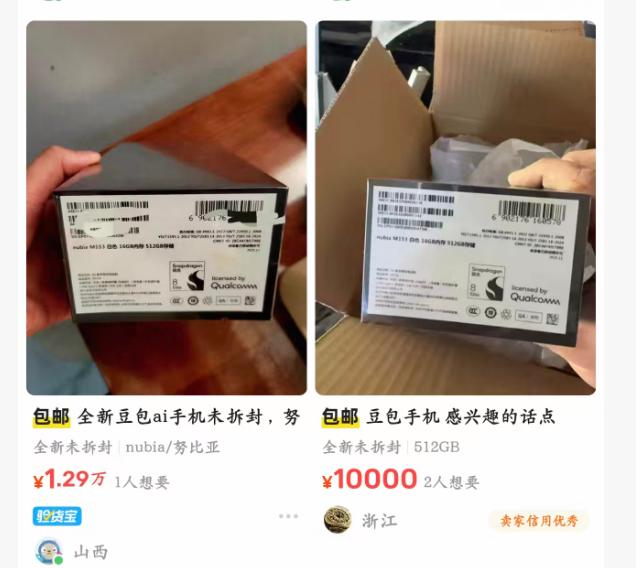
Are people crazy? No.
Behind the crazy rush to buy is a bet on a new possibility: This is the first truly implemented AI Agent with system - level highest privileges in the Android ecosystem.
Luo Yonghao shouted on Weibo that “the technological revolution is unstoppable”, while Zhou Hongyi predicted that “the mobile phone operating system is about to change”. WeChat, on the other hand, responded in a way that conforms to its security logic: it detected an abnormal environment and forced the user to log out.
This is not just the release of a mobile phone; it is more like a declaration of war on the interaction paradigm. This device equipped with the “Doubao Mobile Assistant” is like a catfish breaking the deadlock, crashing head - on into the world of App islands that we have long been accustomed to.
Today, let's not talk about those boring benchmark scores. Instead, let's talk about this ongoing fundamental war over who is the real master of the mobile phone.
See that “ghost finger”?
What makes this mobile phone so exciting to insiders?
The core lies not in the hardware, but in the Doubao Mobile Assistant. Don't be deceived by the word “assistant”. It is completely different from Siri and Xiaoai Tongxue.
To understand the significance of this, we need to talk about some in - depth underlying logic.
In the existing Android permission pyramid, Google has designed a strict sandbox mechanism. Usually, App A cannot directly control App B. Previously, those plugins that helped you grab red envelopes or skip ads usually used the AccessibilityService. However, such auxiliary services have limitations such as high latency and are easily blocked by App manufacturers through signature recognition.
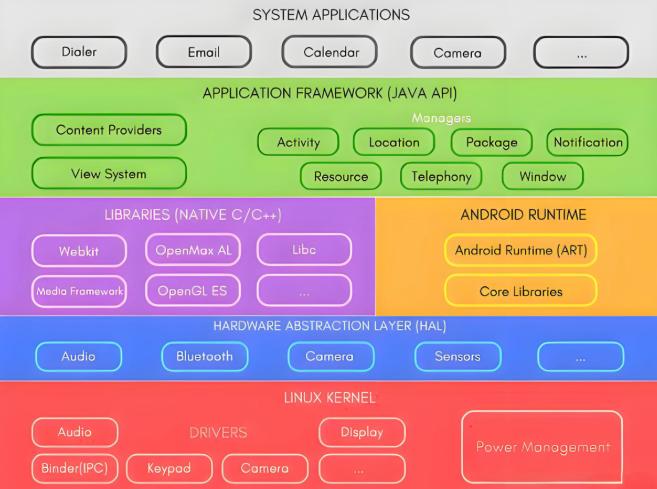
Compared with the high latency and easy blockage of traditional auxiliary services, Doubao chooses to directly call the system - level System Signature permission. The industry generally believes that this is to pursue a more stable and efficient user experience.
With this permission, it is no longer restricted by the UI tree at the application layer and the accessibility service. Instead, it can directly inject events into the Input Subsystem of the Linux kernel. Even without turning on the screen, the system kernel will still receive the electrical signal of a finger click.
Put simply, this is a ghost finger that only code can see. The click instructions it sends are almost indistinguishable from the electrical signal instructions generated by a real user touching the screen in the eyes of the underlying input_event structure.
This is a game - changing move. In the past, AI could only “see” the screen (through CV recognition). Now, Doubao can not only see but also act.
In the past, if you wanted to buy a box of milk, you had to open Taobao, search for keywords, calculate prices in live - streaming rooms and among ads, claim coupons, and finally place an order. Now, based on the LAM logic, you just need to say to your phone: “Help me buy the cheapest box of milk.”
The AI will automatically wake up the e - commerce App in the background, compare prices, bypass marketing traps, and place an order directly, like a seasoned worker. In front of it, Taobao and Meituan instantly degenerate into a simple product database and logistics interface.
It is worth emphasizing that the Doubao Mobile Assistant has publicly stated that when calling the INJECT_EVENTS permission, user authorization is required, and it is clearly disclosed in the permission list. It is understood that currently, all AI assistants in the industry need to use such system - level permissions or similar accessibility permissions to provide mobile phone operation services.
WeChat has no choice
Facing this system - level takeover, WeChat reacted the fastest and most fiercely, directly blocking it.
Many users who got the engineering machine found that once they used the Doubao Assistant to operate WeChat to send messages, it would immediately trigger the security risk control, resulting in their WeChat accounts being forced to log out.
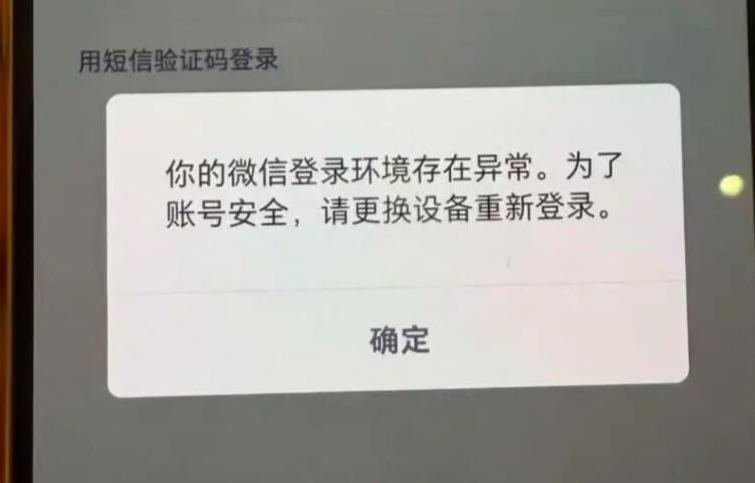
Behind this is the core problem of human - machine verification. The core of all risk control models is to confirm that the operator is a human. When an AI has the highest permission to simulate clicks and cannot be isolated by the application - layer sandbox, it is extremely difficult to distinguish it from a malicious automated script in essence.
For apps like WeChat and Alipay, which involve fund security and core privacy, if the background cannot identify whether it is the owner or an AI in front of the screen, the entire risk control model will face collapse.
Although Doubao has taken multiple safeguards (such as users need to manually take over for payment and identity verification), once its AI instruction set or cloud reasoning system is maliciously exploited, the potential risk is not limited to a single app. It may lead to a large - scale malicious takeover of user operation rights, which cannot be defended by application - layer risk control.
This is the deadlock in the implementation of the AI Agent - the trust chain is broken.
In response to external doubts, the Doubao Mobile Assistant has publicly refuted the rumors and made adjustments:
Regarding financial security, Doubao clearly stated that during the process of user - authorized operations, there is no system permission to directly skip authentication links such as passwords and face recognition. All sensitive operations, such as querying bank card balances, still require users to manually complete real - person detection and password input as required by the bank App.
Regarding active restrictions, on December 5th, the Doubao Mobile Assistant issued a statement saying that it would further restrict the operation ability of financial apps such as banks and Internet payment platforms and suspend the automatic operation ability related to score - brushing and incentive - brushing to ensure fund security with a prudent attitude.
Regarding active communication, Doubao said that it would actively communicate with relevant manufacturers, hoping to jointly formulate clear and safe AI operation behavior guidelines.
WeChat is guarding its fortress, but what is locked inside this fortress is not only traffic but also the asset security of hundreds of millions of users. The conflict between the two is not simply a battle for monopoly but a generational contradiction between AI trust and traditional risk control.
Apps are becoming plugins
Although it has been blocked and is controversial, Luo Yonghao, the “big - mouth”, might be right this time: this trend is unstoppable.
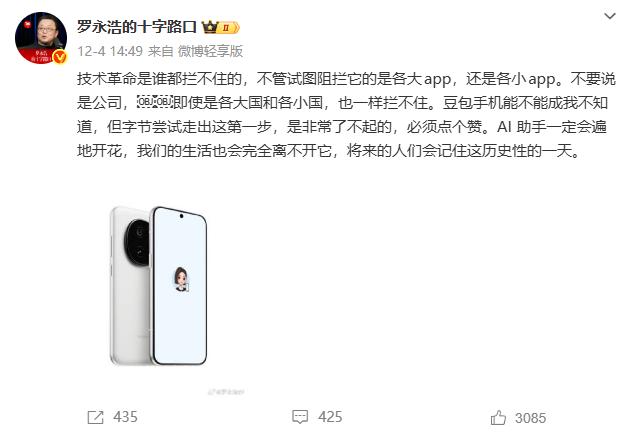
He said bluntly on Weibo: No one can stop the technological revolution, whether it is the big apps or the small ones... I don't know if the Doubao mobile phone will succeed, but it is very remarkable for ByteDance to take this step... AI assistants will surely become ubiquitous, and our lives will be completely inseparable from them. People in the future will remember this historic day.
His words are not just blind support. They point out a harsh reality: we are standing at the crossroads of a major migration of the interaction paradigm.
From CLI, GUI, Touch UI to the current LUI (Language User Interface), each transformation means a leap in efficiency.
Why did TNT fail back then? Because it was a “dumb AI”. Now, with the support of the Transformer architecture and large - scale models, AI truly has the ability to reason and plan. It can understand a vague instruction like “Help me buy the cheapest ticket to Beijing” and break it down into a series of operation steps.
More importantly, users are lazy. Laziness is the primary driving force for technological progress.
The wave of de - appification is coming in the form of Agents. In the future, the operating system of mobile phones will become the largest AI, and all apps will degenerate into its back - end plugins or API providers.
This also explains why ByteDance launched such an experimental product that takes an unconventional approach.
ByteDance missed the early stage of the operating system market expansion. Caught between Android and iOS, it is just an app developer. However, the AI Agent gives it a chance to overtake on a curve. Since it can't develop the underlying OS, it can create a super - OS that stands above the OS.
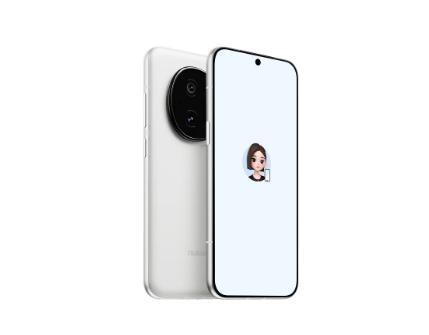
It is worth noting that the Doubao Mobile Assistant released this time is a technical preview version, an exploratory product for the industry and AI technology enthusiasts. Its goal is to collect feedback and promote the formation of industry consensus and rules.
Although the nubia M153 is a semi - finished product, a “special forces soldier” pieced together with mature hardware, it has grasped the essence of the next - generation OS. In the face of this trend, no matter how big an app is, it either evolves and integrates into the AI ecosystem or becomes a relic of the old era, waiting to be swept away by history.
Hand the keys to the black box?
Don't just cheer. There is a problem that we can't avoid.
When we transfer the operation right to AI, we also introduce a huge black box.
When your phone allows an AI to simulate clicks, it means that it has theoretically unlimited operation rights. This operation right is highly concentrated. In the past, your data was scattered across dozens of apps. Now, the system - level AI Agent knows everything. It has an all - knowing and all - powerful perspective.

More importantly, the current large - scale AI models are themselves black boxes. We don't fully understand the internal reasoning logic of the models.
Regarding user privacy, Doubao has promised that the mobile assistant will not store any user screen content in the cloud, and the operation process will not be stored on the server side. Relevant content will not be used for model training. However, this promise is more based on corporate self - discipline rather than technical hard constraints.
This concentrated power distribution still triggers the ultimate question about supervision: We cheer that Doubao has broken the monopoly of WeChat and Taobao and returned the right of choice to users. But has it really?
No, we have just concentrated and packaged the operation rights that were originally scattered in different apps and handed them to ByteDance. This brings great convenience, but it also means that we have a new central authority with highly concentrated power that is more difficult to supervise under the traditional framework.
In the era of full - scale AI trusteeship, who will supervise this super - butler? How can we ensure that it won't turn into a super - supervisor? Liu Xiaochun, the director of the Internet Rule of Law Research Center at the University of Chinese Academy of Social Sciences, said that for such innovative technologies, an inclusive and prudent attitude should be adopted to accurately regulate risks while leaving room for innovation. This is the most urgent problem that the industry needs to solve right now.
Finally
As a technical preview version, the mission of this nubia M153 has been completed.
It tested the boundaries of the Android ecosystem in an almost radical way and tore open the walled garden carefully woven by the giants. It forces all major manufacturers to think about a question: In the future, will a mobile phone be a container for apps or a carrier for AI?
People in the future will remember this day. Not because of this re - branded ZTE mobile phone, but because it pressed the accelerator button for the interaction revolution. It shows us a glimpse of the post - App era, rough but shocking enough.
As the Doubao Mobile Assistant has called for, protecting users' right to reasonably use AI is the red line, while technology serving humanity is the bottom line. Before that day truly arrives, the industry needs to solve the problem of how to break the App islands while rebuilding a security protocol that truly reassures humans.
After all, what we want is a sensible “Jarvis”, not a potentially out - of - control “Skynet”.
This article is from the WeChat official account “Technology Can't Be Cold”. Author: Ba Lang. Republished by 36Kr with permission.