Molly Tea's Overseas Expansion Gains Further Momentum: How Does This Eastern Modern Tea Win the Hearts of Global Consumers?
On November 21st, Molly Tea opened two stores simultaneously in Jakarta, the capital of Indonesia, officially entering its sixth country globally.
As the growth of the Chinese tea - beverage market slows down and competition intensifies, going global has changed from an "optional choice" in the past to a "must - answer question" for brands today. Nevertheless, most tea - beverage brands still prefer to start from Southeast Asia, where the culture is similar and the cost is friendly, taking the first step in internationalization in a tentative manner.
However, Molly Tea has chosen a path completely different from the industry norm. Instead of starting from the easiest place, it directly targeted the United States, a high - potential market with a mature global consumer market and strict standards, as its first stop. Then it gradually expanded to countries like Canada, the UK, and Indonesia, forming its unique rhythm of global layout.
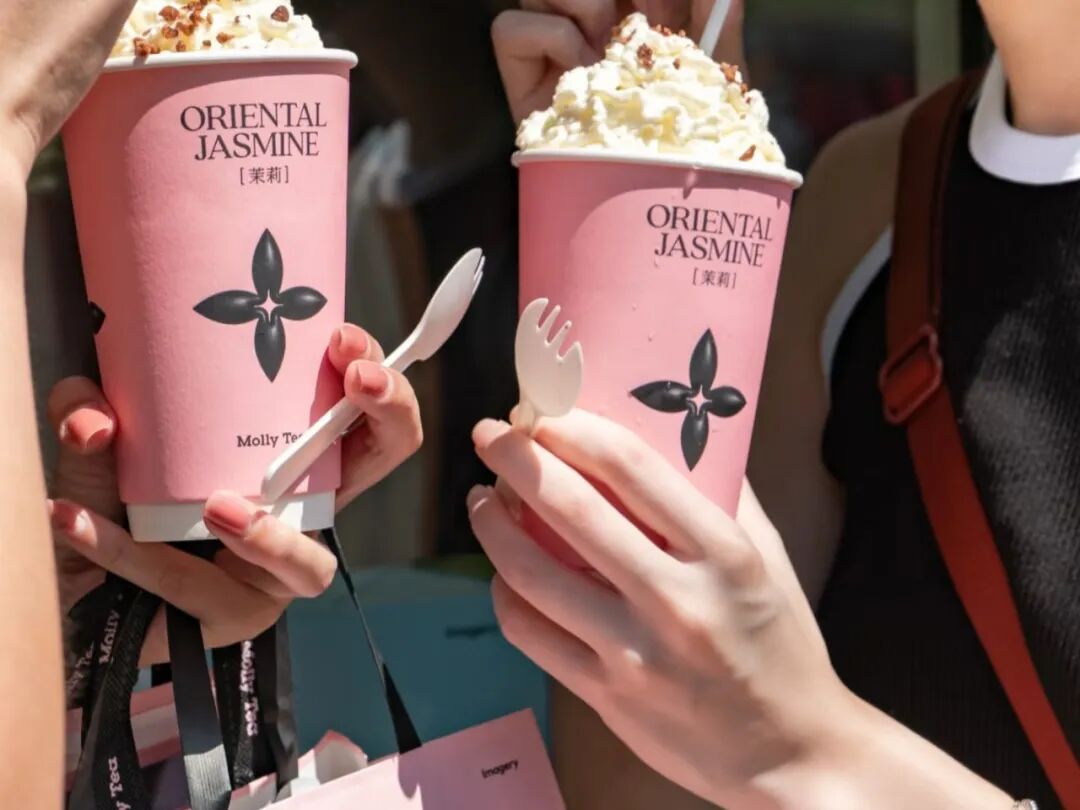
Against this backdrop, a deeper question emerges: What does a Chinese consumer brand truly rely on when going global?
Molly Tea's approach may provide an answer: Globalization is never simply about expanding stores. It is a set of systematic capabilities, from product strength to operational strength, and then to aesthetic and brand - culture expression. The real ability to go global lies not only in the physical expansion of stores but also in whether the brand can achieve a systematic leap from product output to operational systems and then to cultural expression.
Perhaps this is the key dividing line for Chinese new tea - beverage brands to move from "going out" to "going in."
01 The Sixth Footprint of Globalization: Entering Indonesia
Recently, the new tea - beverage brand Molly Tea officially entered Indonesia and once again achieved remarkable results in Southeast Asia. Within three days of opening, the turnover of the two new stores exceeded 700 million Indonesian rupiahs (approximately 280,000 RMB), and the total sales volume was nearly 17,000 cups. Among them, over 7,200 cups of the signature product "Molly Tea" were sold. This figure means that on average, each store needs to produce nearly 3,000 cups of beverages per day at a high - intensity pace, indicating its operational efficiency and market popularity.
The two new stores are located in the two core commercial districts of Gandaria City and Mall Kelapa Gading in Jakarta, the capital of Indonesia. These areas are also gathering places for local young people who focus on lifestyle and quality, highly overlapping with Molly Tea's target consumer group.
As the most populous country in Southeast Asia, Indonesia has a large young population base and a growing middle class. According to the latest research data from the global market research institution Apollo Research Reports, the non - alcoholic beverage market in Indonesia is on the verge of an explosion. Its scale is expected to soar from 15.0167 billion US dollars in 2023 to 28.3949 billion US dollars in 2033. Among them, the tea - beverage market, as the growth engine, is expected to reach a market scale of 10.7242 billion US dollars in ten years, with a compound annual growth rate of 6.28%.
The grand opening also became a hot topic in the Jakarta business circle. Although the stores officially opened at 10 a.m., long queues had formed in front of the stores as early as six or seven in the morning. Inside the stores, a large number of young women could be seen holding the iconic pink cups, taking photos at the check - in points and uploading them to social platforms such as Instagram. This spontaneous secondary dissemination has formed a social currency effect of "checking in at Molly Tea" among the young people in Jakarta.
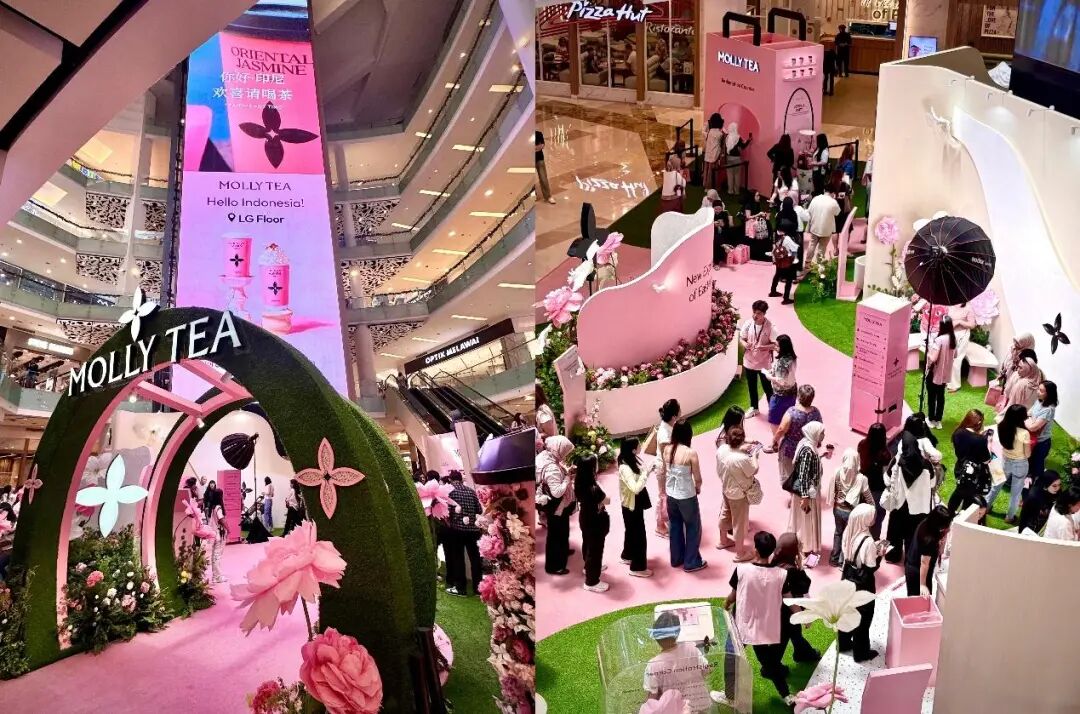
Different from simply copying the domestic model, Molly Tea's success in the Indonesian market is largely due to its in - depth "localization" strategy.
To better integrate into the local culture, Molly Tea cleverly incorporated the unique batik craftsmanship elements of Jakarta into the design of its peripheral products, launching the exclusive "Limited Batik Fridge Magnets" for the Indonesian market. In addition, combined with the brand's characteristic of "identifying tea by fragrance," it also launched the fresh and elegant "Jasmine Plaster Fragrance Hanger." These limited peripheral products have become a link between Chinese tea culture and Indonesian local customs, greatly enhancing the emotional identification of local consumers. Coupled with diversified offline activities such as lucky draws and flash check - ins, the brand has successfully reached the young customer group who values lifestyle quality and experience.
After the United States, Canada, Australia, the UK, and Thailand, the success of the first store in Indonesia marks that Molly Tea's global journey has entered a new acceleration phase. From exporting a cup of tea to exporting a lifestyle, Molly Tea is writing a new chapter for Chinese brands going global with remarkable data and solid operations.

02 A New Sales Record in the US: Gradually Penetrating the Local Customer Group
Simultaneous with the opening in the Indonesian market, Molly Tea has further accelerated its expansion in the US market. The four new stores opened in the US cover the core areas of Utah and California. Currently, the total number of stores in the US has reached 12, further improving the layout in the North American market.
For every brand trying to go global, the strategic importance of the US market is self - evident. It is a large consumer country with a population of over 330 million, a per - capita GDP of over 70,000 US dollars, and consumer spending accounting for about 70% of GDP. Not only is the market scale huge, but also the purchasing power is strong.
More importantly, there is plenty of room for imagination. According to the "2025 US Fresh - made Tea - beverage Data Report" by MenuSifu, milk tea has strong growth potential in the US market, with an annual sales growth rate of 9.1%, the highest among all beverage categories. At the same time, there is currently no single milk - tea brand with a market share of over 5% in the US market, and there is no "Starbucks - like" chain giant yet. The market space is still vast.
On the other hand, it is also a challenging and difficult market. Brands not only have to face fierce competition from the most powerful international giants and various innovative emerging brands but also overcome the cultural differences that lead to acclimatization, as well as the soaring costs of the supply chain, labor, and rent. Therefore, although the market potential is huge, entering the US requires more precise positioning, innovative product strategies, and solid local - operation capabilities; otherwise, it is difficult to break through.
Choosing the more difficult US market as the first stop for going global itself reflects Molly Tea's ambition in globalization. However, this is not a reckless adventure. On the contrary, compared with the strategy of some tea - beverage brands of "going all out" and opening a large number of stores overseas at the beginning, Molly Tea attaches more importance to winning steadily and is more like building a set of replicable long - term strategies.
In the initial stage, the brand chose to start from areas where the core target customer group was relatively concentrated, streamlined the single - store model, cup - output efficiency, supply chain, and local - flavor adjustment, and then gradually expanded to other cities in the US and other markets.
This is a step - by - step strategy: establishing a solid brand awareness and operational foundation in the starting market, and then spreading and penetrating into more mainstream consumer groups and regions through product strength and brand power.
In terms of products, on the basis of retaining the core menu, Molly Tea adjusted the sweetness and tea flavor according to the taste preferences of North American consumers. In some specific areas, such as Salt Lake City, where there are many Mormons, Molly Tea added a special list in addition to the basic menu, providing milk products without tea, showing more flexible market - adaptation ability.
In the construction of the supply chain, Molly Tea adopted a dual - track model of "cross - border + local." For raw materials such as fresh milk, it directly cooperated with local leading suppliers, established partnerships with high - quality local suppliers, and simultaneously implemented strict quality - control standards to ensure the stable and unified quality of products in global stores.
Currently, Molly Tea's stores in the US cover core cities such as New York, Los Angeles, Chicago, San Francisco, and Seattle, forming an initial scale effect. Since entering the US market in 2024, in just over a year, the average monthly GMV of Molly Tea's first store in the US has stabilized at around 500,000 US dollars. In 2025, it achieved even better results. During the opening of the new store in Salt Lake City, the highest daily turnover reached 35,000 US dollars, and the highest daily sales volume exceeded 5,000 cups, setting a new single - day sales record for the brand in the US market.
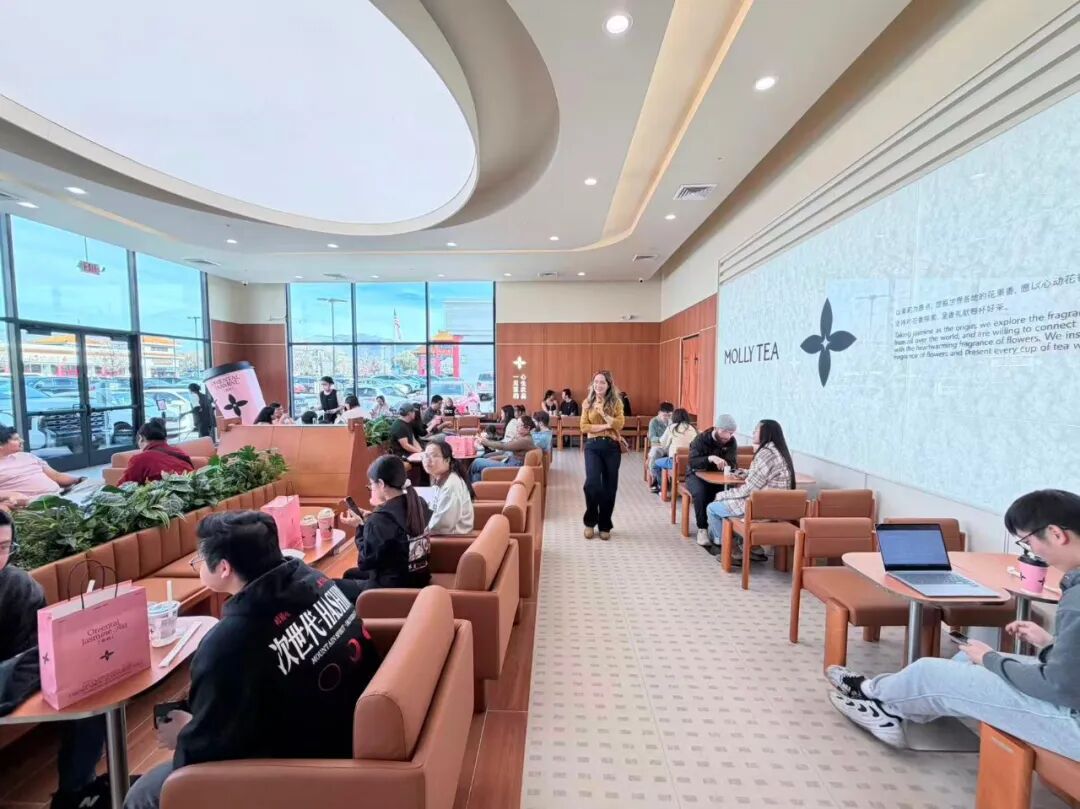
This means that Molly Tea has not only "tested the waters" in the US but also built a sustainable and scalable business model, laying a solid foundation for further expansion in the global market.
03 Oriental Modern Aesthetics: Building Global Brand Identity
In fact, the reason why Molly Tea can stand out in the highly competitive global market is not only its product strength that can meet consumers' tastes but also a whole set of brand - aesthetic system output, which is committed to interpreting Oriental culture in a modern way.
From beginning to end, Molly Tea has always emphasized one thing: going back to the product itself. From the first step of selecting high - quality tea leaves and continuously researching and innovating product flavors, it tries to let global consumers truly feel the unique charm of Oriental modern aesthetics through a cup of tea.
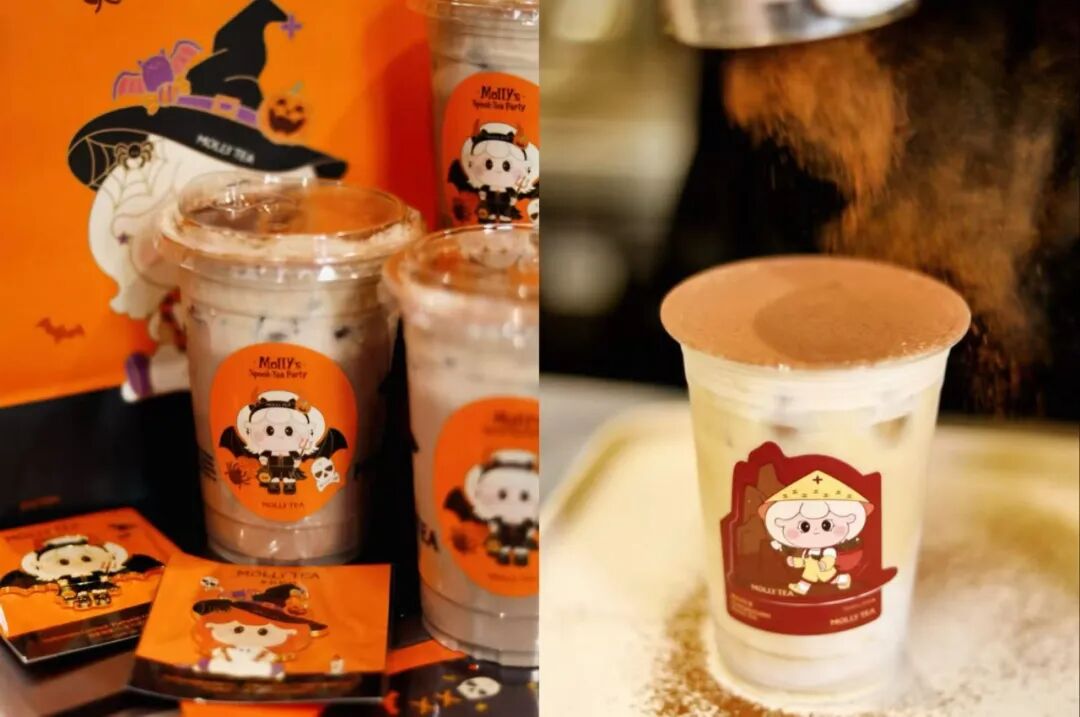
Looking at the word "jasmine" in the brand name, this word naturally carries the perception of freshness and elegance in both Chinese and Western contexts. In the common cultural memory of global consumers about the East, "jasmine flower" is a symbol that is both recognizable and amiable. It can not only awaken the overseas consumers' impression of the East but also convey the gentle Oriental temperament to them, thus establishing a clear brand identity in the global context.
This cultural expression is further strengthened in the spatial and visual design of the stores. For example, the London store uses log - colored and white DuPont paper light boxes to create a modern Oriental temperament through a simple stacked - level structure. The "Molly Tea Garden" flash garden created during the opening of the new store in Indonesia allows local consumers to immerse themselves in the brand aesthetics through a scene - based approach.
At the brand level, Molly Tea also enhances its awareness through cooperation with global cultural and sports IPs. For example, it became the official partner of the Brooklyn Nets of the NBA - the first Chinese fresh - made tea - beverage brand to cooperate with the NBA, which is crucial for enhancing its global popularity.

From good - looking visuals, to good - tasting products, to good space and service experiences, ultimately, consumers get a brand label that can be socialized. When young people hold Molly Tea on the street, it's like when people first held Starbucks: it's not just a beverage but also an external manifestation of a certain lifestyle, self - image, and cultural taste. The portable aesthetics and identity created by Molly Tea are the key to the brand's global expression.
Today, against the backdrop of the saturation of the domestic tea - beverage market, the global path demonstrated by Molly Tea shows how to regard going global as a long - term global cultural - expression ability - building project. In the future, when Chinese consumer brands globally enter the "second growth curve," going global will no longer be an ancillary option but will become one of the core growth engines.
The significance of the Molly Tea model may lie in that it provides a template for the industry to refer to: Chinese consumer brands are fully capable of moving from single - point success to systematic global layout and building sustainable competitiveness in the global market through products, aesthetics, and culture, making "Oriental Modern Tea" a modern lifestyle choice that transcends cultural boundaries.