Not only Li Auto Quark, but we also have the latest news on AI glasses from seven major manufacturers | Exclusive from Intelligence Emergence
Text by | Qiu Xiaofen
Edited by | Su Jianxun
By the end of 2025, the battle for AI glasses among major tech companies was intensifying. After Baidu and Alibaba's Quark released their glasses products, Li Auto also launched its AI glasses, Livis, on the evening of December 3rd.
To seize the market, Li Auto's glasses were not pre - sold like those of other manufacturers. Instead, they were directly shipped, and the AI glasses with Zeiss lenses were priced as low as 1,699 yuan.
An insider at Li Auto told Intelligent Emergence that less than two hours after the press conference, "(the product) was out of stock, and most of the inventory was sold out."
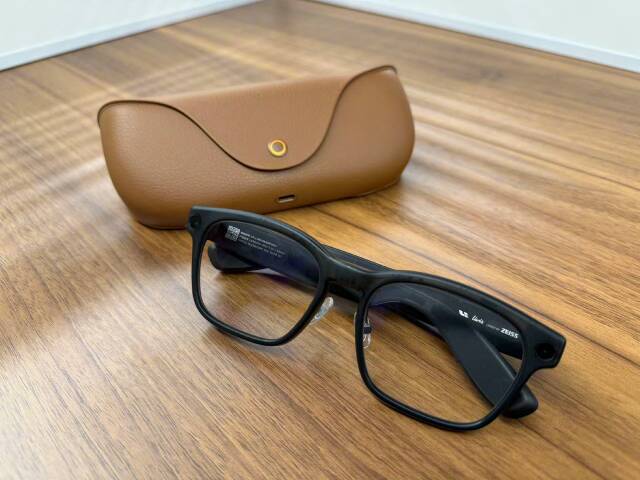
△ Li Auto's AI glasses, Livis
Besides these well - known major tech companies, there are more players lurking in the shadows, coming on strongly. Intelligent Emergence recently exclusively learned about the developments of some major tech companies regarding AI glasses:
Among overseas tech giants, Intelligent Emergence reported exclusively not long ago that two AI glasses products of Google had entered the POC stage, and Google had chosen Qualcomm (for chips), Samsung (for reference design), and Foxconn (for production) as partners.
Reference article: Google Restarts AI Glasses: Manufactured by Foxconn, Designed by Samsung, May Be Released in Q4 2026 | Exclusive Report by Intelligent Emergence
Among mobile phone manufacturers, Vivo has been continuously evaluating the AI glasses project in the past year;
Xiaomi has been preparing its second AI glasses product for a long time. After the departure of its product leader, Li Chuangqi, this project was taken over by Dou Zifei (formerly the director of Xiaomi's XR products);
Some giants in the consumer electronics niche markets have also set their sights on the AI glasses category, including Insta360 (sports imaging equipment) and Ezviz (security cameras).
Among Internet giants, Tencent has been relatively conservative. Internally, it has started small - scale research on the direction of AI glasses.
ByteDance prefers to place multiple bets. In addition to the Doubao mobile phone, ByteDance launched two AI glasses projects last year.
Intelligent Emergence exclusively learned that the release of ByteDance's glasses with an optical display solution has been postponed to Q4 next year. ByteDance has also developed a dedicated spatial computing chip for it. Its glasses without a display solution are expected to be released in Q1 next year.
This pair of glasses weighing less than 50 grams holds the infinite imagination of major tech companies.
For major tech companies with a consumer electronics background, AI glasses are an extension of the original hardware experience and a strategic defensive move.
For Internet giants, AI glasses are an entrance that needs to be filled after their battles in models and applications, with more profound data considerations behind.
When major tech companies with different backgrounds and agendas enter the same arena, the battle of a hundred AI glasses has just begun.
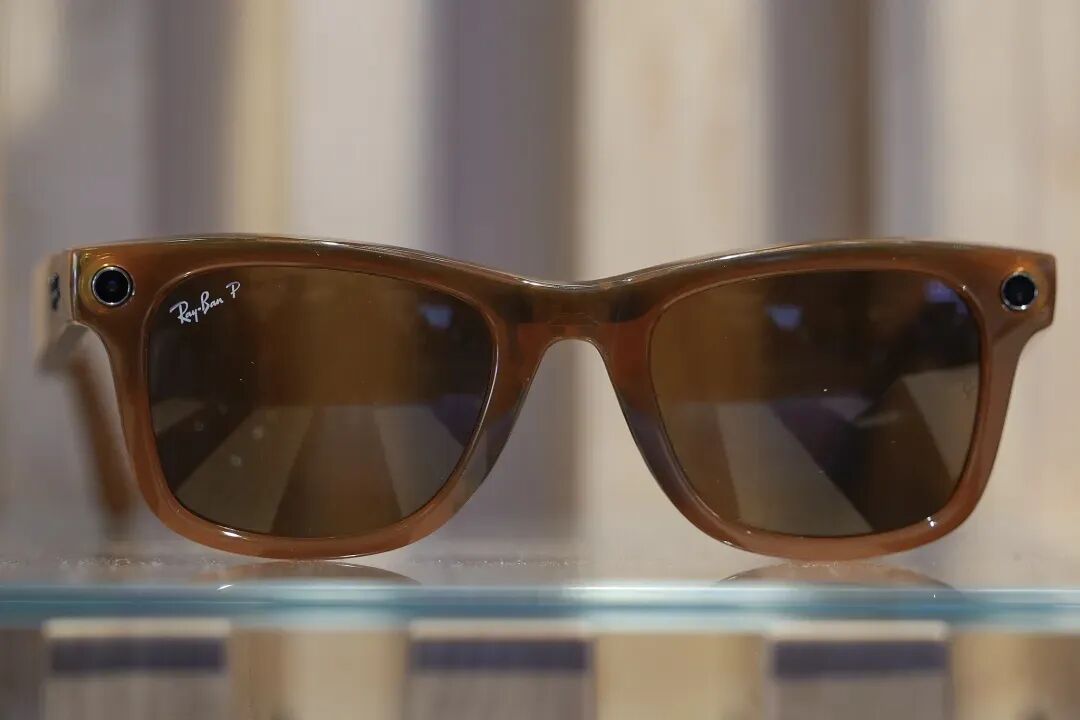
△ Second - generation Ray - Ban Meta product. Image source: Visual China
The Hidden Data Battle
"Li Auto's current task should be to develop L4 autonomous vehicles first," at a meeting at the end of 2024, Wang Xing, the founder of Meituan and an investor in Li Auto, rejected Li Auto's idea of making glasses.
Wang Xing's veto directly caused the glasses project at Li Auto to stagnate for several months.
However, in April this year, Li Xiang still decided to launch the project. In the eyes of the internal team, a pair of AI glasses was just "the cost of a bumper in a car."
The AI glasses are just a small part of Li Xiang's ambition.
People close to Li Xiang told Intelligent Emergence that Li Xiang has never thought that "Li Auto is just a car company." He showed interest in AI glasses as early as three years ago and had in - depth private conversations with Luo Yonghao, the founder of "Thin Red Line."
At that time, Li Xiang's key judgment on this category was that AI glasses are the best carriers for collecting real - world data.
Li Xiang's judgment three years ago exactly hit the current data problem in the AI industry.
As models gradually move towards multi - modality and world models, Internet text and video data have become redundant, while data from the physical world is severely lacking.
In the future, precious physical - world data will be the deciding factor in AI. Whoever has real - world data can develop a large - scale physical - world model and achieve further scaling laws.
Of course, talking about world models may be too far - reaching. In the short term, users' operations and interactions on hardware are also a rich mine targeted by major tech companies.
In the past, user data was basically held by mobile phones, tablets, and computers, and there were various "permission walls" on hardware platforms.
In the future, AI glasses on the edge side are not only terminals for model distribution but also data collectors to ensure the continuous evolution of models.
Every time a user calls an application, interacts, or shows personal preferences on the edge side, this data will in turn improve the model's capabilities.
From this perspective, the battle for the hardware entrance behind AI glasses is essentially a battle for data.
Software Giants Attack, Hardware Giants Defend
For all - around players like Alibaba, Google, and Baidu, expanding the hardware entrance is almost an unavoidable choice.
In the ecological maps of these three companies, almost all the competitive elements of the battle of a hundred AI glasses are present - they have the computing power required for AI glasses, powerful base large models, mature and active application ecosystems (search/payment/navigation), a stable user base, and Google even has its own operating system.
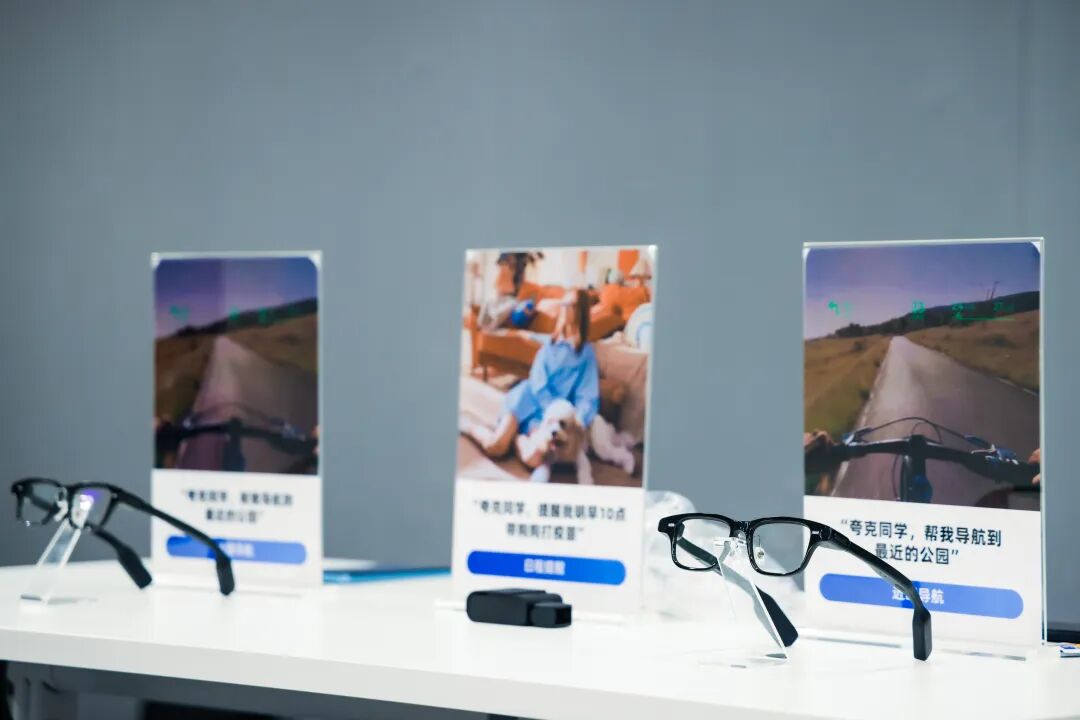
△ Quark AI glasses
As the next - generation hardware entrance, AI glasses are the only missing link in the maps of these players. This is why, among many major tech companies, Alibaba and Baidu's offensive postures are particularly aggressive.
An Alibaba insider said that Alibaba is conducting a "saturation attack" in the glasses field, both at the hardware and software levels.
Song Gang, the person in charge of the intelligent terminal business of Alibaba's Smart Information Business Group, also said bluntly in a group interview after the Quark glasses press conference that Alibaba will maintain a continuous and long - term investment attitude towards AI glasses.
A Baidu glasses insider told Intelligent Emergence that AI glasses are defined as an S - level strategic product within Baidu and are highly valued - at the World Conference at the end of last year, Baidu preemptively released the Xiaodu glasses. In the past year, the company re - examined the product definition internally and "didn't hesitate to scrap the product and redo it."
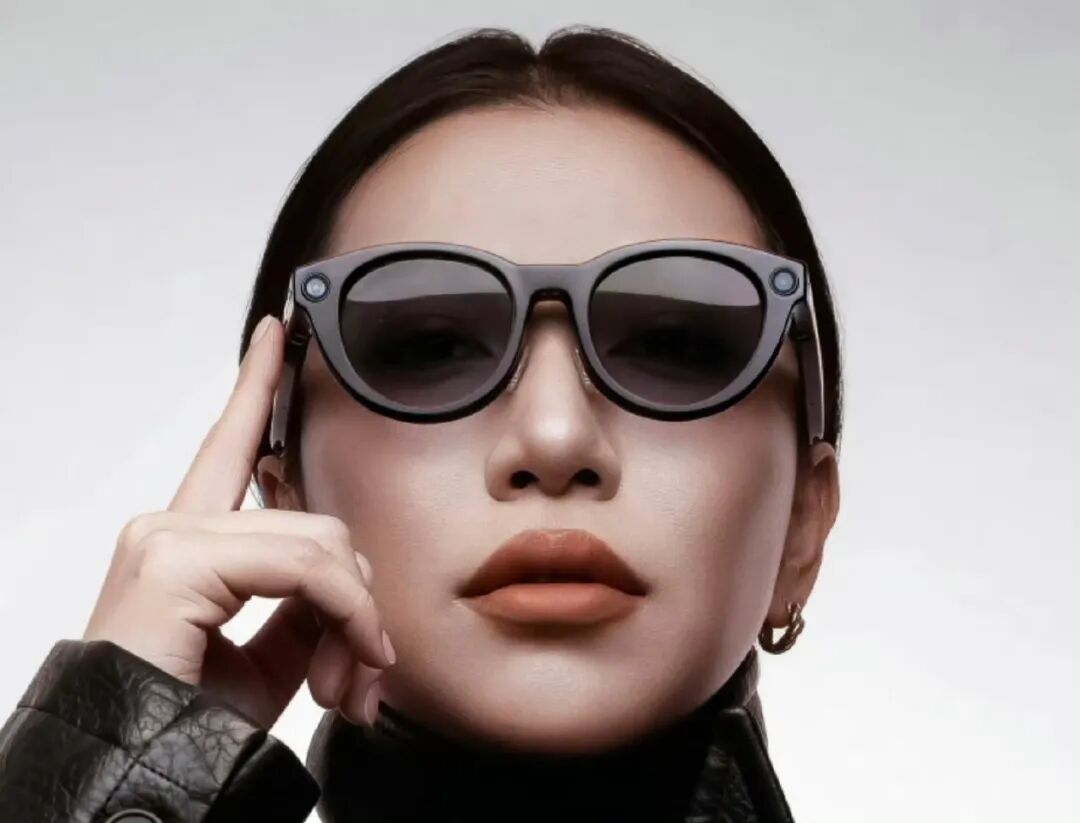
△ Xiaodu AI Glasses Pro
Compared with the aggressiveness of Internet giants, most consumer electronics giants have a slightly more moderate attitude towards glasses.
A pair of AI glasses is basically a combination of daily glasses/sunglasses, wireless earphones, a voice recorder, and a sports camera.
Consumer electronics giants' involvement in AI glasses is not only an exploration of the second growth curve but also more of a defense of their original hardware territories.
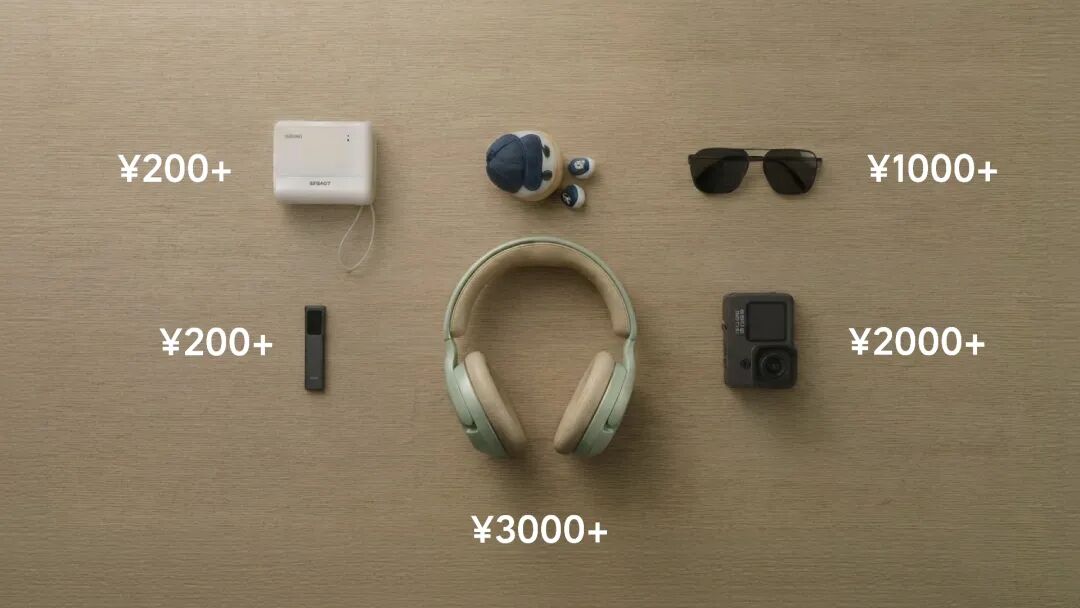
△ AI glasses = earphones + voice recorder + camera + …
An industry insider in the AI glasses field who has contacted several mobile phone manufacturers told Intelligent Emergence that, except for Xiaomi, mobile phone manufacturers such as Vivo and Oppo have been a bit hesitant about AI glasses in the past year.
"They have been waiting and watching. If the industry takes off, they will quickly follow up; if not, they will put it on hold but continue to explore."
A Comprehensive Competition
The prerequisite for the battle of a hundred AI glasses to start is that the hardware threshold has dropped significantly.
With the entry of major tech companies, many existing mobile phone supply chains have also bet on AI glasses, including Goertek, Luxshare Precision, Foxconn, etc.
There are already some common versions in the AI glasses field. For example, in the wave of AI glasses products to be released at the end of this year and next year, the dual - chip solution of "Qualcomm AR1 + BES2800 from BES" is basically a standard configuration.
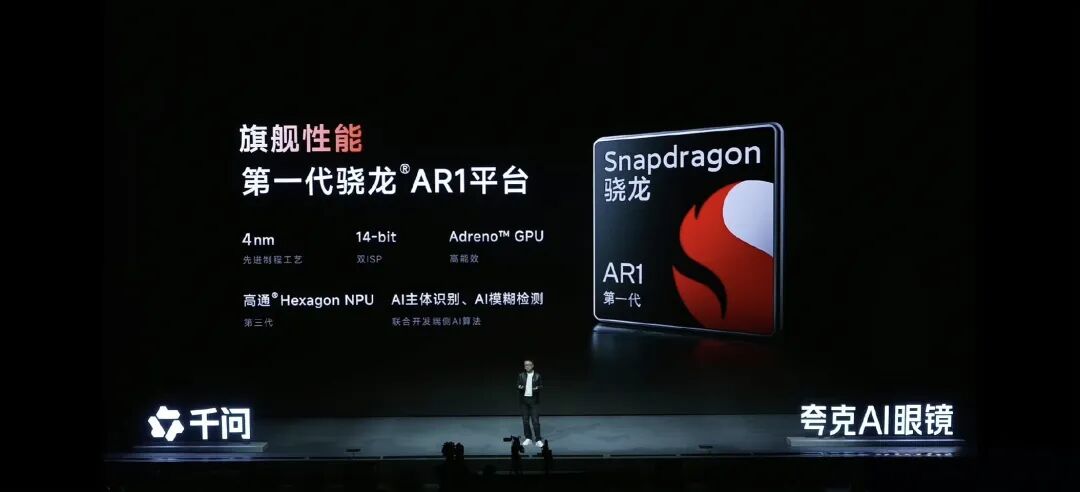
△ Qualcomm's first - generation Snapdragon AR1 chip
A senior insider in the glasses field told Intelligent Emergence that the current speed of China's AI glasses supply chain is - samples can be produced in three months, mass - production can start in six months, and products can be shipped in nine months.
The collective efforts of the hardware supply chain have not only shortened the project cycle but also made the hardware cost controllable.
"If you take a walk in Huaqiangbei, you'll find that AI Bluetooth audio glasses can be bought for 35 yuan in a package; AI glasses with a camera cost 499 yuan; and glasses with a single - green display cost 999 yuan," the aforementioned insider said.
However, when the hardware threshold drops to the point where players with different backgrounds can obtain an AI glasses product at low cost and high efficiency, what are the key points in this industry?
Many industry insiders told Intelligent Emergence that the future of AI glasses will be a "comprehensive competition."
The cruelty of this category lies in its zero - tolerance for flaws. Any shortcoming in the product may lead to its failure.
There have already been some cautionary tales in the industry this year.
The return rate of Xiaomi's first - generation AI glasses was as high as 40%, and the "Sharge" selfie glasses faced delivery difficulties. The Achilles' heels behind them were not actually major, either the Bluetooth connection was not well - optimized, or there were problems with chip selection or adaptation.
In this battle of a hundred AI glasses, major tech companies with abundant resources are the most powerful competitors. However, this also tests how much strategic patience they are willing to invest in this battle for the entrance.

end