Lernen von Elon Musk? Der chinesische "Falcon 9" hat seinen Erstflug erfolgreich absolviert, die Rückgewinnung fehlt noch ein wenig.
Shortly after 12 noon on December 3rd, a huge steel arrow fell from the sky over the desert in Minqin County, Gansu Province.
This rocket is called Zhuque - 3 and comes from a private company named Landspace.
The first stage has just completed its launch mission and successfully propelled the second stage into the sky. Subsequently, the second stage separated perfectly and successfully placed the payload into the planned orbit at an altitude of 200 kilometers.
What this first stage is now attempting is something that the Chinese space industry has never done before - return to Earth and land vertically after an orbital launch mission.
Watch the entire attempt of the first - stage landing of the Zhuque - 3. Pay attention to the sound at the end.
Now it has flown for about 8 minutes and is still about 3000 meters above the ground. According to the plan, 5 out of the 9 rocket engines should ignite simultaneously to generate a strong counter - force so that this huge steel arrow, as tall as a multi - story building, slows down and then lands gently.
The engines ignited, and the flames can be seen. But almost at the same time, a column of smoke appeared in the picture, indicating that one of the engines had problems.
The Zhuque - 3 trailed smoke and crashed into the desert with a loud bang. The impact point was only a few dozen meters away from the planned recovery platform.
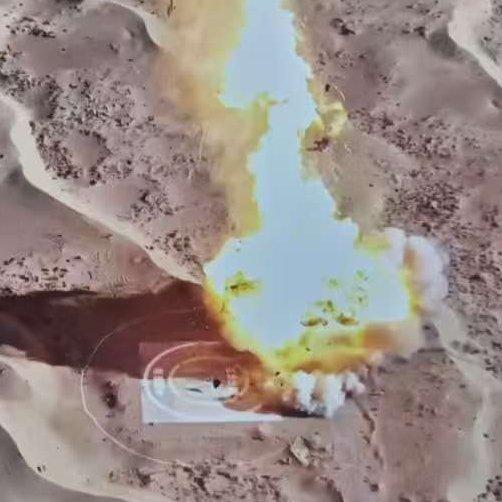
The crash point was quite close to the recovery platform, indicating that the recovery accuracy was good.
China was so very close to successfully recovering an orbital - capable carrier rocket for the first time.
Why should rockets fly back?
About 60% of the cost of a rocket goes to the first stage, that is, the lower part of the carrier rocket, which contains the most fuel and the engines. In a conventional rocket launch, the first stage is discarded after completing its thrust mission and falls into the ocean or the desert, where it breaks into pieces.
But if the first stage can be recovered, repaired, and reused, the costs can be significantly reduced.
This is a fact that has already been proven.
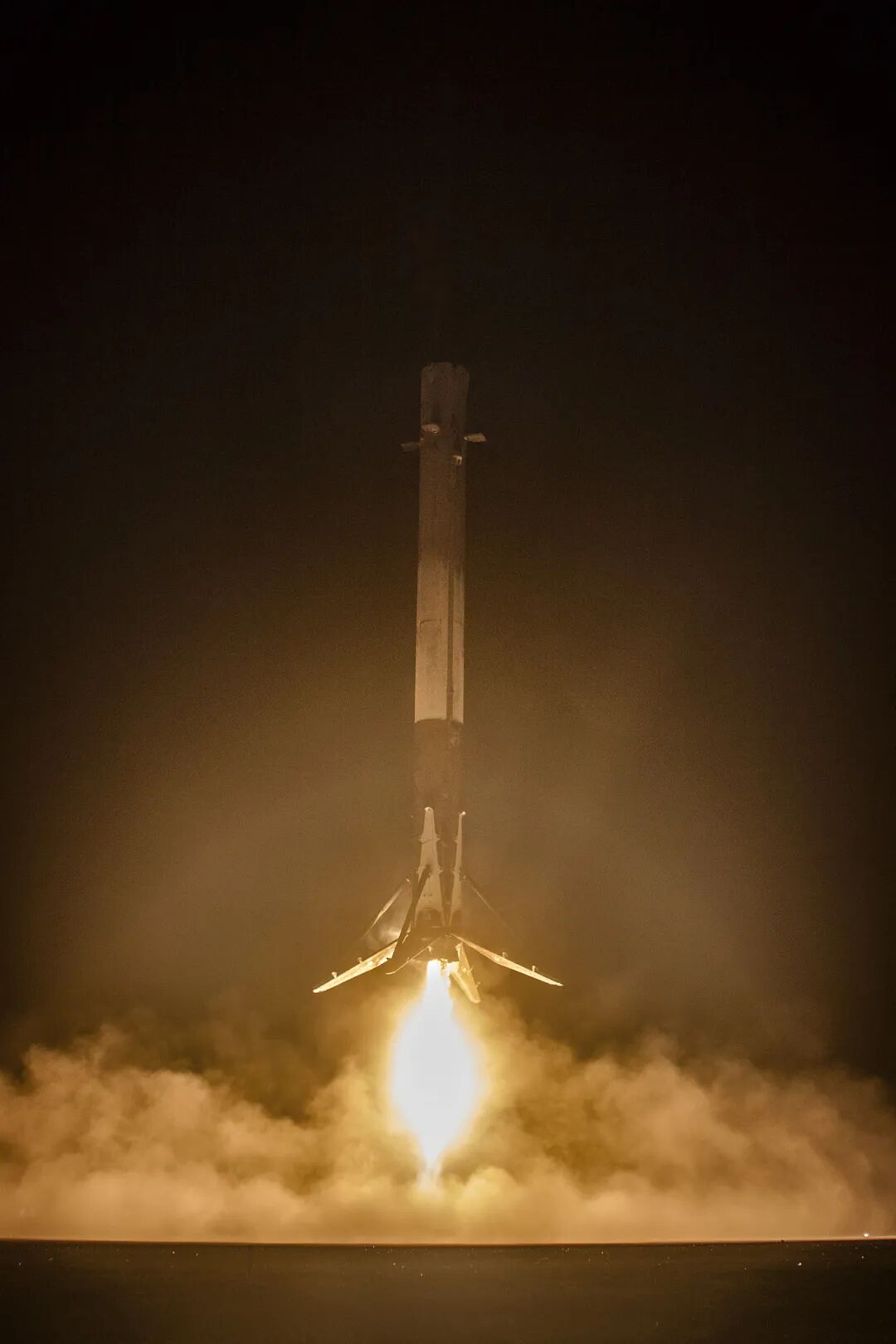
After several failed attempts, SpaceX recovered the first stage of the Falcon 9 for the first time on December 22, 2015. It's almost 10 years now | SpaceX
In December 2015, the American company SpaceX recovered the first stage of the Falcon 9 rocket for the first time.
In the following 10 years, the Falcon 9 series was launched 582 times and successfully recovered 542 times. Among them, 506 launches were carried out with a recovered rocket. A rocket core numbered B1071 has already been reused 30 times and has sent a total of 1001 satellites into orbit.
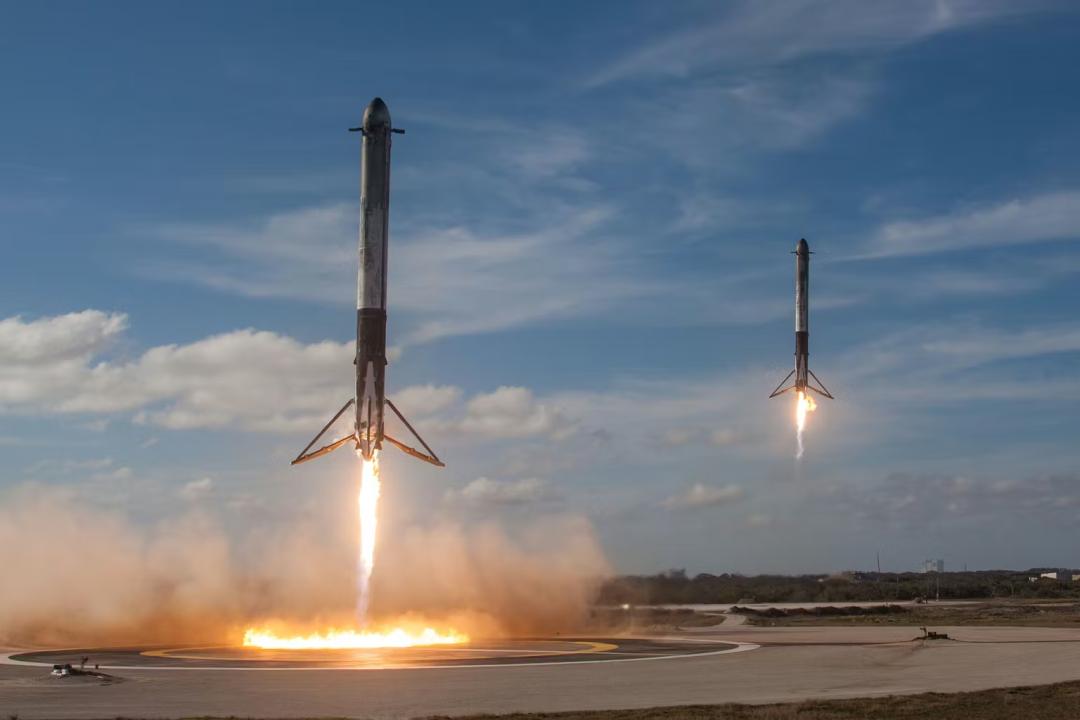
During the first flight of the Falcon Heavy in 2018, two boosters landed simultaneously, which impressed the world | SpaceX
The cost advantage of reuse is astonishing. According to SpaceX's data, a launch with a new rocket costs about 50 million US dollars, while a launch with a recovered rocket only costs about 20 million US dollars - that's a savings of 30 million US dollars, about 200 million yuan, each time.
More importantly, reusable rockets make frequent launches possible. In 2025, the Falcon 9 is expected to carry out 159 launches throughout the year. This number exceeds the sum of the launch numbers of all other rockets in the world. If a new rocket had to be built for each launch, such a high launch frequency would not be possible at all.
Why does China urgently need reusable rockets?
The answer is the low - Earth - orbit satellite internet.
Elon Musk's Starlink has already placed more than 6000 satellites in low - Earth orbit, making it possible to connect to the Internet anywhere in the world.
China is also building its own low - Earth - orbit satellite internet, including projects such as China SatNet and the Qianfan Constellation. According to the plan, we need to launch thousands of satellites in the next 10 years.
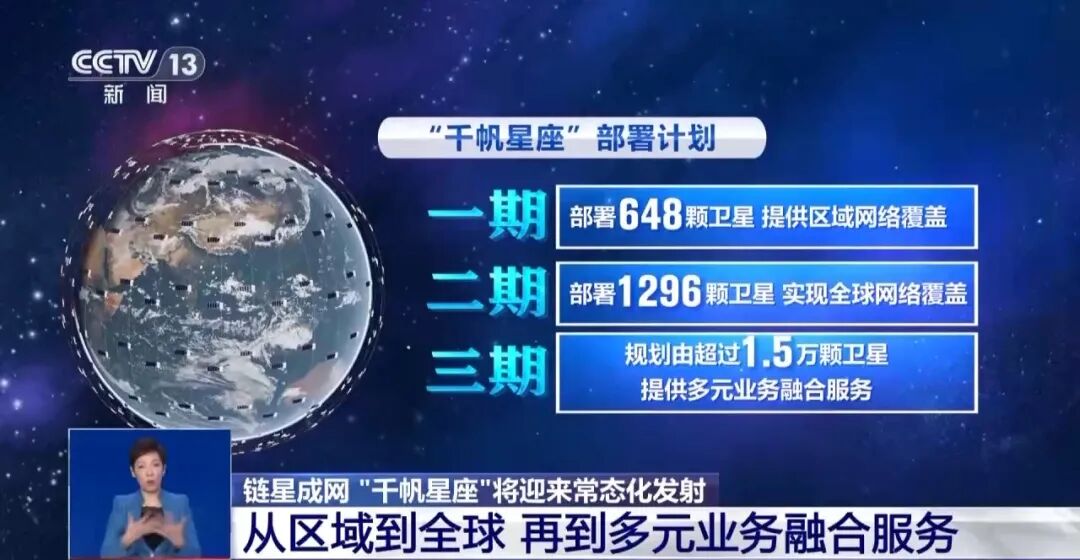
The placement plan of the "Qianfan Constellation" | Screenshot from CCTV news
But we lack rockets that can carry out frequent launches.
According to the data from the China Radio Conference 2023, more than 80% of the land area and more than 95% of the oceans in the world have no network coverage. Even in China, where the ground base stations are the most developed, it is estimated that at least 50% of the land area still has no signal coverage.
The recovery platform of the Zhuque - 3 in the depths of the desert in Minqin County, Gansu Province, is a complete signal - free area.
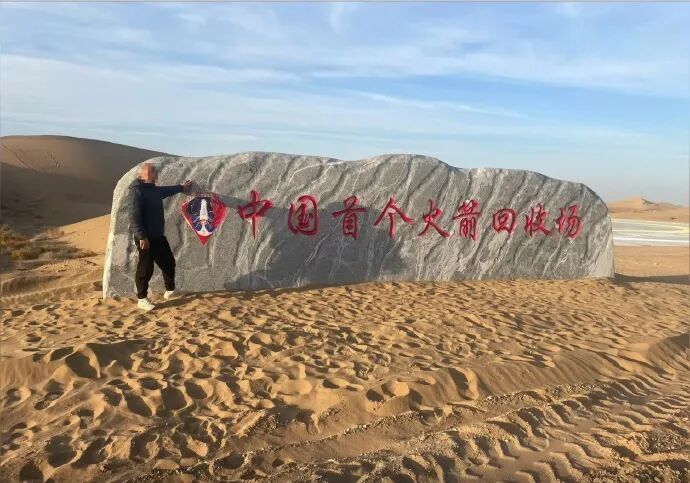
The recovery platform of Landspace in the depths of the Minqin desert in Gansu
To cover these areas, satellite internet is the only solution. And to quickly build a satellite constellation, reusable rockets that can carry out frequent and cost - effective launches are needed.
This is the significance of the Zhuque - 3.
What did the Zhuque - 3 do right?
The journey of the Zhuque - 3 was an exciting high - wire act.
At 12 noon local time yesterday, the 9 engines of the first stage ejected flames simultaneously and lifted this steel giant off the ground. The rocket shot straight into the sky and got faster and faster.
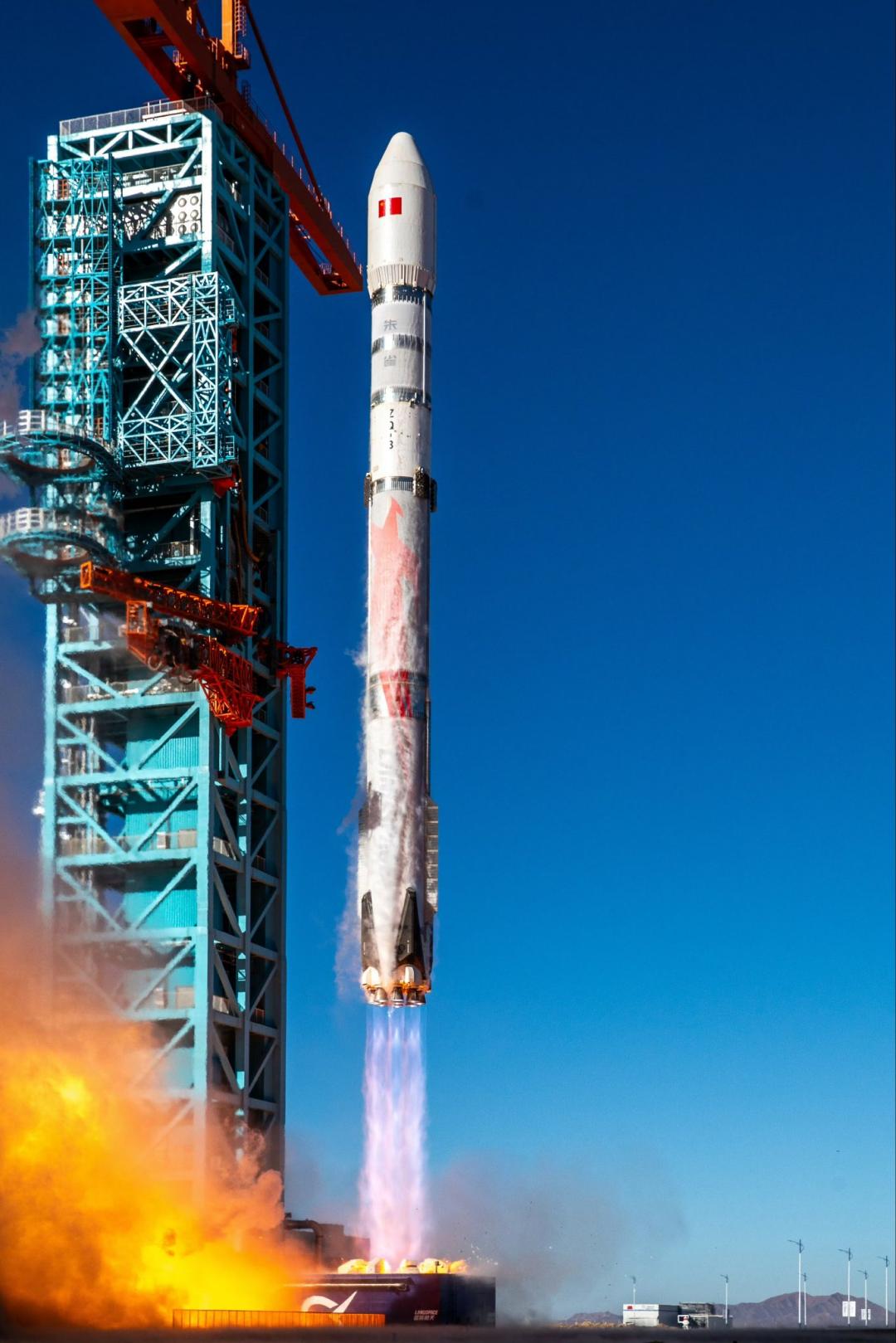
The moment of the Zhuque - 3 launch | Landspace
129 seconds after the launch, the rocket reached an altitude of about 70 kilometers. The first stage was shut down and separated from the second stage. The second stage continued to accelerate and sent the satellite into the 200 - kilometer - high orbit. The first stage continued to fly upward due to its great inertia and only fell back after reaching an altitude of 138 kilometers.
In this process, the first stage turned around in the air and pointed the engine downward. 371 seconds after the launch, 3 out of the 9 engines ignited briefly to reduce the speed to subsonic values before the rocket entered the dense atmosphere.
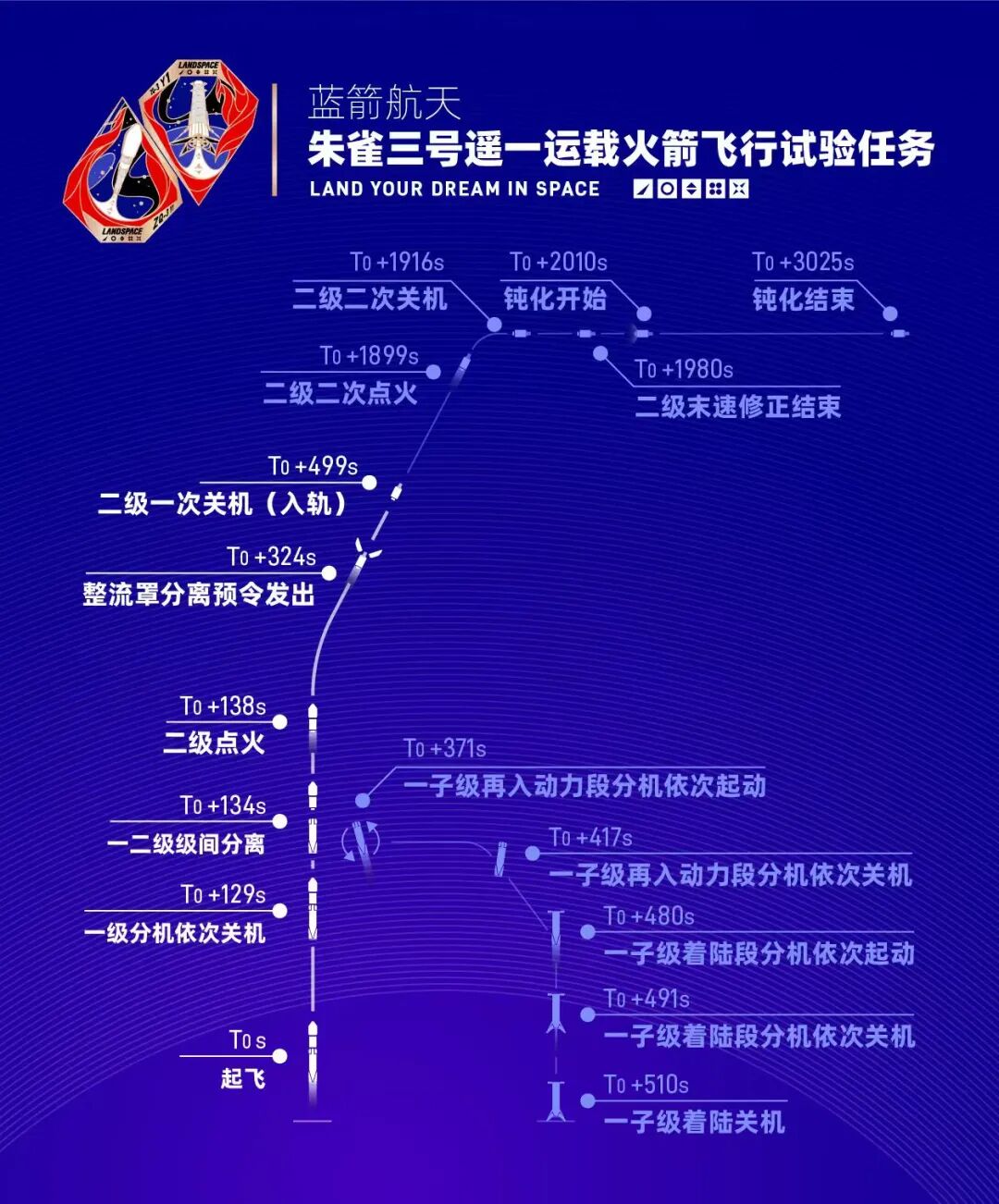
The launch schedule of the Zhuque - 3 mission | Landspace
After that, four grid fins at the top of the rocket opened and controlled the inclination, wobbling, and yawing of the rocket through constant angle adjustments. In contrast to the grid fins of the Falcon 9, which are distributed at 90 - degree intervals, the grid fins of the Zhuque - 3 are arranged at 120 - degree intervals.
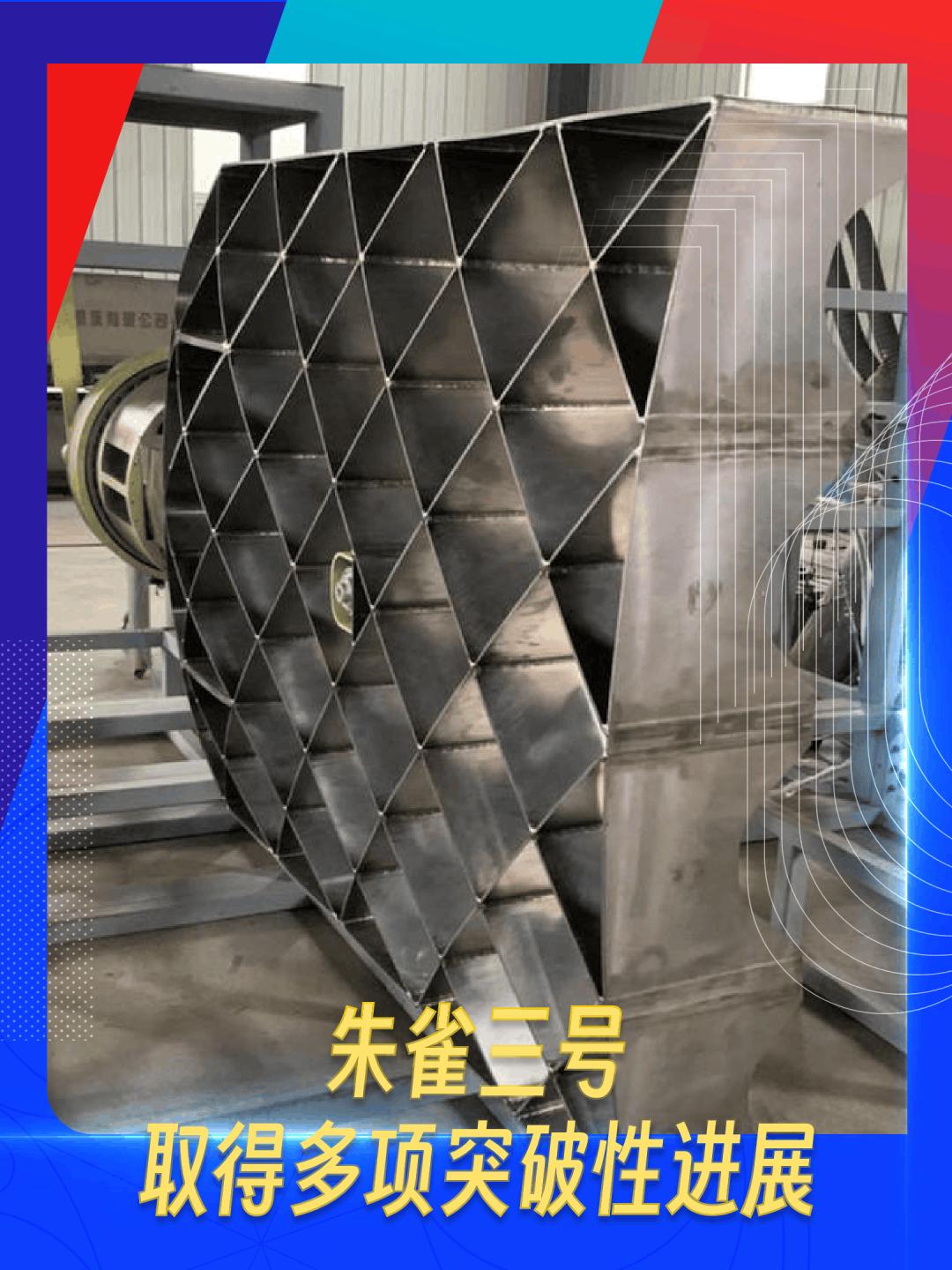
The grid fins of the Zhuque - 3 | Landspace
There are also two long side wings on both sides of the rocket. These side wings can generate lift so that the rocket does not fall straight down but can glide. In this way, one can control both the impact point and consume the excess speed during gliding.
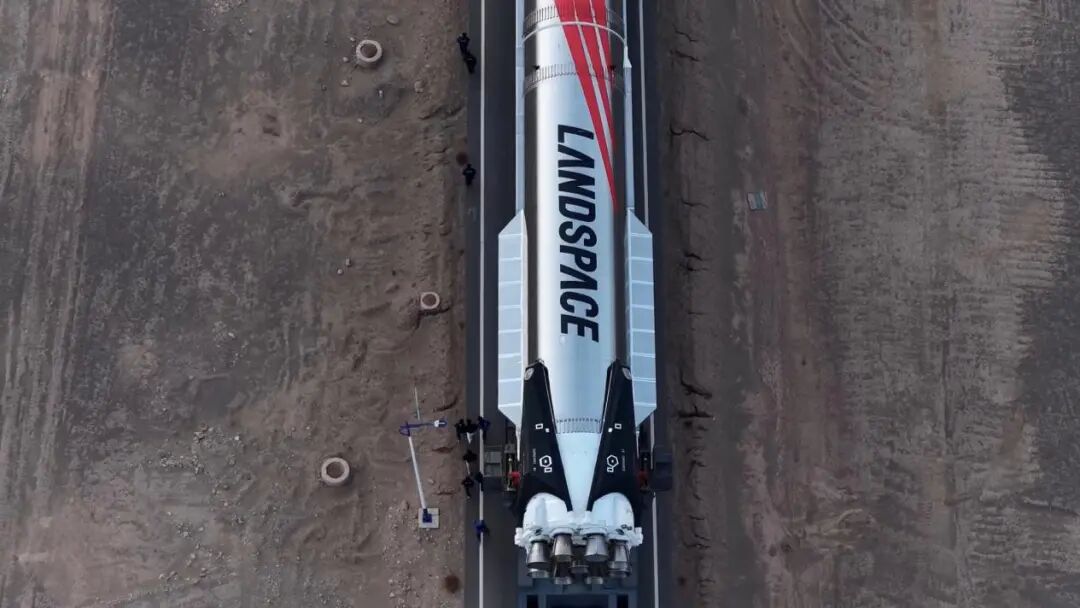
The side wings of the Zhuque - 3 | Landspace
Then came the scenario at the beginning of this article. The huge steel arrow fell from the sky, and at an altitude of about 3000 meters above the ground, the rocket still had a speed of several hundred meters per second.
According to the plan, 5 engines should ignite simultaneously and eject strong flames to quickly reduce the speed of the rocket. In the last few meters, only the middle engine should continue to work, and together with the 4 extended landing legs, each 7 meters long, the rocket should hover and then land gently and safely.
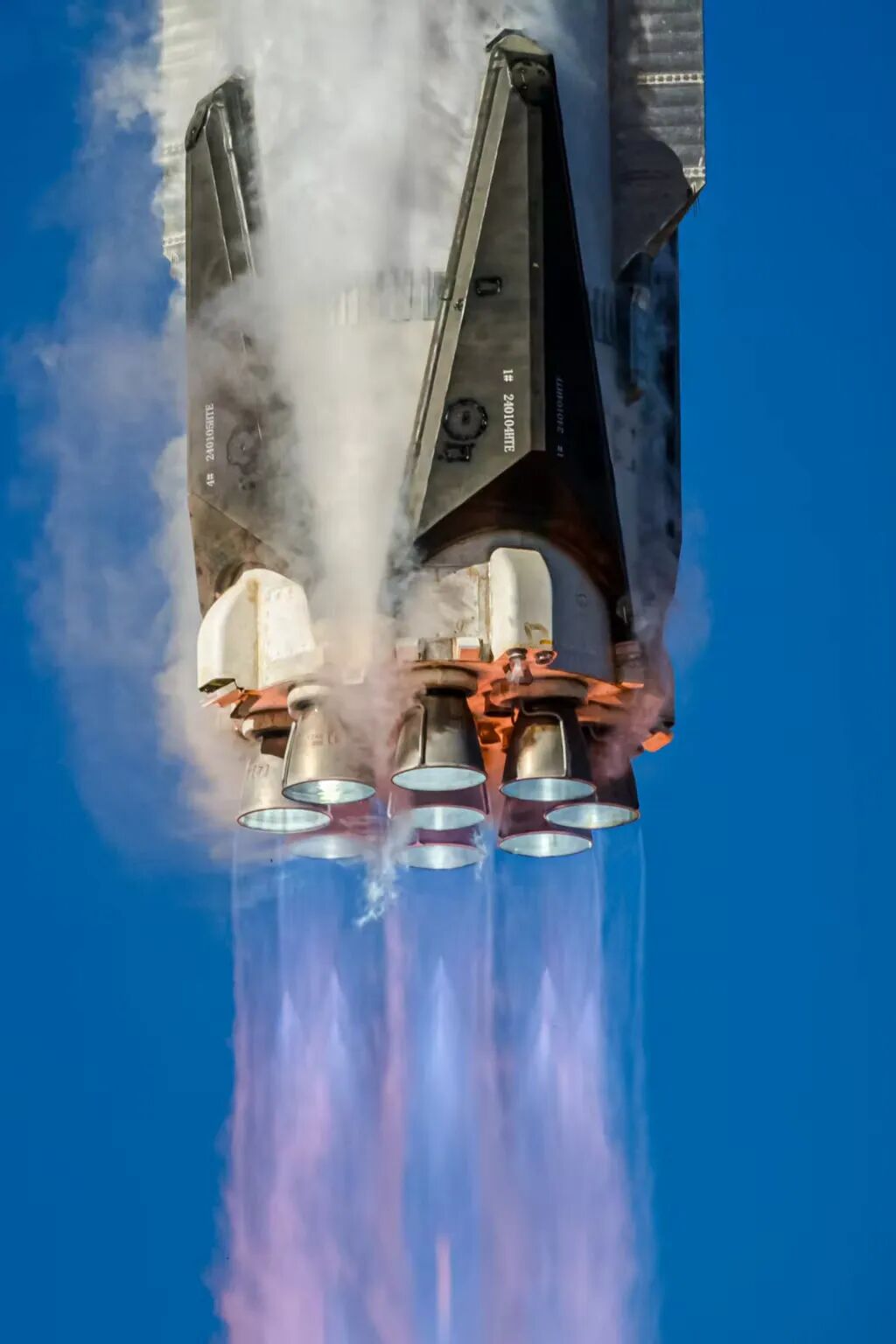
A close - up of the landing legs of the Zhuque - 3 at launch | Landspace
Unfortunately, an engine failure occurred in the Zhuque - 3 after ignition for landing. It lost sufficient thrust and could not slow down to a speed required for a safe landing. Finally, it crashed in the desert only a few dozen meters away from the recovery platform.
A few dozen meters is really a very short distance for a rocket that has just traveled a distance of 390 kilometers and returned from space above the Kármán line at supersonic speed. This shows that all the previous steps, including orbit calculation, flight attitude control, and gliding entry, were successful.
Although the Zhuque - 3 crashed in the last step, it has already overcome most of the difficulties in reusable rockets and proven its strength.
Falcon 9 + Starship + Chinese Adaptations
Even before the first flight of the Zhuque - 3, Elon Musk commented on X: They have integrated the features of the Starship into the architecture of the Falcon 9.
This comment precisely shows the technological path of the Zhuque - 3: It is not simply a reference but a fusion of the design essence of two reusable rockets from SpaceX.
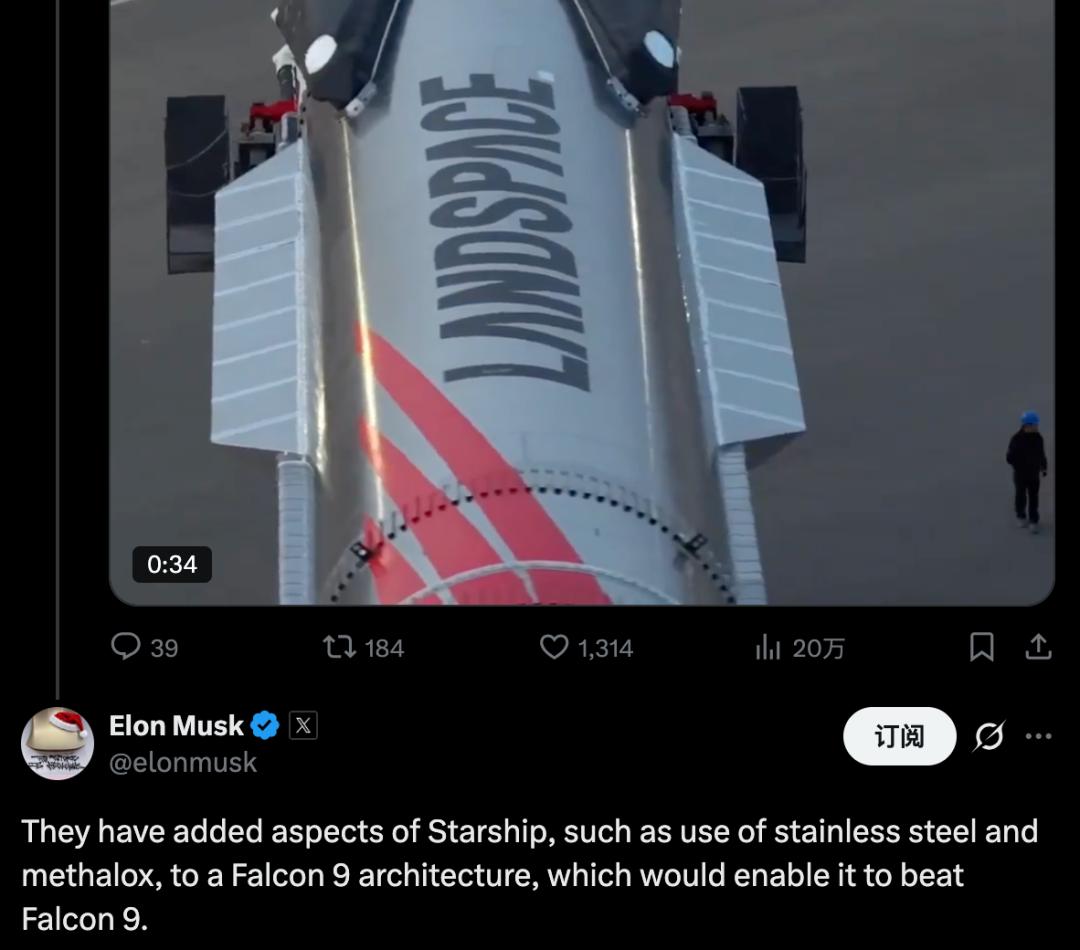
Elon Musk commented on the Zhuque - 3 on X and believes that it will be able to beat the Falcon 9 in the future.
Most notably, the Zhuque - 3 uses steel as the material. This is also the choice of the Starship.
When the Zhuque - 3 entered the planning phase in 2022, aluminum was the dominant material for carrier rockets. The density of steel is 3 times that of aluminum, which means that a rocket body of the same size would be much heavier.