Leaving Shenzhen: The "Precision" of Domestic Robots Lies in the Yangtze River Delta
The wind in Beijing has started to bite. Looking back at the end of 2025, the robotics circle this year gives a strong sense of disconnection.
In the previous article about the Pearl River Delta, we witnessed the Shenzhen speed: seemingly overnight, making robots became easier than making mobile phones. Any factory could assemble one. Subsequently, there was a dazzling video arms race - open your WeChat Moments, and you could see new demonstration videos every day. The robots in the videos were all lively, able to run and jump, and even regarded backflips as a standard feature.
But it is recommended that you turn off the speed - up function and turn off those exciting background music, get closer, and stare at the robot's hand for three seconds. You will find a phenomenon that makes practitioners blush: shaking.
When posing statically, they are artworks full of a sense of the future; once they reach out to pick up a cup or do delicate work like threading a needle, the visible high - frequency tremors immediately turn them from "Terminators" into "Parkinson's patients".
This is the second war we are going to talk about today - the precision war. If the Pearl River Delta determines whether robots can be born, then the "Shanghai - Suzhou - Hangzhou" intelligent manufacturing corridor in the Yangtze River Delta determines whether robots can do delicate work.
So, we can't just focus on the bustling Shenzhen Bay. We should also look at the Yangtze River Delta. Although it seems quiet there, it determines the ceiling of Chinese robotics.
Shanghai not only equips robots with brains but is also the cruelest "training ground"
In many people's impressions, Shanghai is delicate, decent, and even a place where people do business over coffee. But in the robotics landscape, Shanghai plays a much rougher and tougher role: it is a high - ground for motion control and a battlefield in the automotive industry chain.
Currently, robots generally have a sense of disconnection between high intelligence and low ability. Everyone is competing in large - scale models, even wishing to make robots recite Tang poems. But as soon as you let them take a few steps, the slowness is obvious. Their "brains" clearly know to walk in a straight line, but their "legs" don't cooperate and are always half a beat slow.
To put it simply, it's that the body can't keep up with the "internet speed" of the brain. The eyes see, and the computing power keeps up, but by the time the current reaches the motor, hundreds of milliseconds have passed. In the physical world, with a 100 - ms delay, the center of gravity has already shifted. To avoid falling, the robot can only make crazy adjustments, resulting in a "cross - stepping" like a drunkard.
The key to solving this problem lies in Shanghai. Here, there is the spill - over Occupancy Network from Tesla, forcing the domestic control system to evolve from a "rule - based" to a "learning - based" system. Is this approach effective? There was an incident at the beginning of this year that illustrates the point well.
ZhiYuan Robotics announced in January that it had produced its 1000th mass - produced robot. Many people didn't believe it at that time, but those in the know understood: the reason they dared to do so was that they had a different way of thinking.
Traditional robots operate in a "see - think - transmit - move" mode, with too many intermediate steps, so the reaction is definitely slow. ZhiYuan developed a ViLLA architecture. Don't be intimidated by this academic term. Translated into plain language, it means directly translating what the eyes see into hand movements.
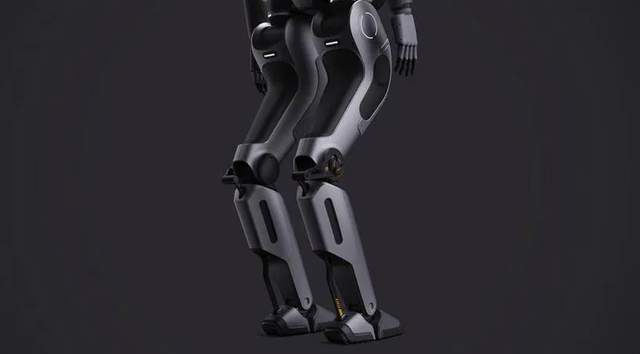
This is like human intuition. When you reach out to catch a ball, you don't calculate in your mind; your body just knows how to move. ZhiYuan wants to instill this intuition into machines, making their movements smoother without pauses.
To train this intuition, they let virtual avatars fall hundreds of millions of times in the AgiBot Digital World, developing muscle memory, and then downloading it to the physical body. This is a typical Shanghai school approach: not competing with brute force but using skill to overcome strength.
What's more interesting is that they open - sourced the design codes of Lingxi X1. The subtext is obvious: the robot body itself is not valuable; the "cerebellum" that can control the body without shaking is the real barrier. But the more important value of Shanghai is that it provides the cruelest testing ground in China.
SAIC, Tesla, and the surrounding automotive industry chain are the first places for humanoid robots to "intern". It's not a big deal for a robot to walk steadily in the laboratory. It's really something when it can walk steadily in an automobile assembly workshop full of oil stains, electromagnetic interference, and narrow passages.
Shanghai is imposing the century - old standards accumulated in automobile manufacturing on robots. Only those that can survive here are qualified to talk about precision.
Suzhou and Kunshan cure "Parkinson's" with the help of local master craftsmen
If Shanghai solves the "cerebellum" (control) problem, then Suzhou and Kunshan are responsible for solving the problems of muscles and joints. Here is the arsenal for hardware precision.
On - site, the sound I fear most is the high - frequency "hissing" sound from the joints when the robot is hovering. Laypeople think it is a sign of high - tech, but insiders know it is the servo system screaming. The motor makes thousands of fine - adjustments within a few milliseconds: pushing forward a bit too much, then pulling back a bit too much. While there is a fierce battle inside, it just looks like shaking from the outside.
At this time, we should look at Suzhou. Inovance Technology has improved the torque density of servo motors; Green Harmonic has reduced the price of reducers. But in 2025, we have to admit a physical fact: wear and tear.
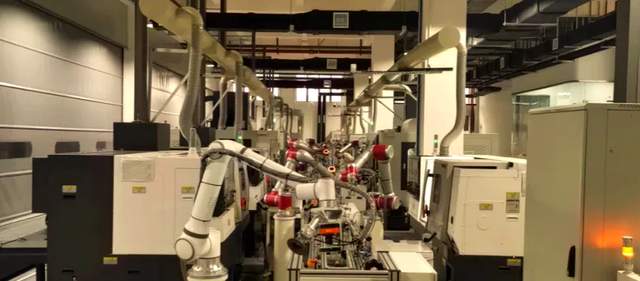
New machines have good precision when they just leave the factory. Try having it carry a 20 - kilogram load for a month. There will be a micron - level clearance in the gear meshing. Transmitted to the end of the arm, trying to pick up a cup may end up knocking it over. It's like a person whose meniscus is worn out and will surely wobble when walking.
This battle is not about algorithms but about materials science and precision machining. This is exactly what Kunshan is good at. There are more than 200 precision parts enterprises here. For example, Kunshan Huachen Precision can achieve a machining precision of ±1 micron.
The factories here are very quiet. There are no roadshows, only the low humming of machine tools in the constant - temperature workshops. In the Yangtze River Delta, those in the hardware industry often say: "Software can be iterated, but once hardware is worn out, it's irreversible."
A war about "inertia" in Hangzhou
Shanghai equips robots with brains, and Suzhou trains their muscles. So what is Hangzhou doing? Hangzhou is helping robots lose weight and equipping them with a pair of AI eyes.
Take a look at the products of Unitree Technology, and you will be amazed at their lightness. Why is precision related to weight? Because of inertia. It's extremely difficult to stop a 100 - kilogram iron block immediately once it starts moving. There will definitely be overshoot, meaning it can't stop in time. But if the weight is reduced to below 50 kilograms, the inertia is halved, and the difficulty of precision control drops exponentially.
The new - materials industry chain around Hangzhou (such as the carbon fiber from Huaju Materials) is transforming robots from bulky iron blocks into nimble gymnasts. At the same time, Hangzhou has AI. The visual technology accumulated by Hikvision and Dahua, combined with the AI genes of Alibaba and NetEase, make Hangzhou's robots better at "seeing".
Combining visual AI and lightweight design, the robot finally shows some signs of being a living thing. It is no longer a reckless brute bumping around but can avoid obstacles like a cat. The control from Shanghai, the precision from Suzhou, and the lightness from Hangzhou - together, they finally bridge the damned Sim2Real gap.
Without precision, there is no dignity
Why is it so important to strive for precision? Because the hierarchy in the robotics industry is very cruel. If the precision can only reach the centimeter level, robots can only be used to serve dishes, distribute flyers, and be a mascot with more gimmicks than practical value. Only when the precision reaches 0.1 mm can robots enter BYD's assembly line and Luxshare's production line to do high - value - added work.
Precision is the dignity of robots as a labor force.
In this war, there is no shortcut. You can't solve gear wear with open - source codes, and you can't solve motor overheating with financing. It can only be achieved through materials science, dynamics, and precision machining, ground out day by day in those unassuming factories in the Yangtze River Delta.
Finally
When we broaden our perspective, we will find that the first and second articles actually form a complete map of Chinese robotics: the Pearl River Delta is responsible for building the robot body, and the Yangtze River Delta is responsible for training it.
In the first speed war, we won with the response speed of the supply chain; but in this second precision war, there is no room for shortcuts or impatience. It is these engineers who are grinding gears in Suzhou, adjusting parameters in Shanghai, and researching materials in Hangzhou that determine whether domestic robots can truly make money with dignity.
Because in the industrial field, customers won't pay for your PPTs and financing amounts but for the stability when the robot picks up a tiny screw.
After solving the problems of the body (speed) and coordination (precision), the third and most mundane and brutal mountain in front of domestic robots arrives: cost.
How to reduce the price of this high - tech precision product from "hundreds of thousands" to "99,000 with free shipping"? In the next article, we will enter a more cruel reality - "The Cost War".
This article is from the WeChat official account "Science and Technology Must Not Be Cold", written by Ba Lang, and published by 36Kr with permission.