Doubao AI mobile phones go on sale, delivering what Apple promised last year, but it's not recommended for ordinary people to buy.
At the iPhone 16 launch event last September, Apple's AI was officially unveiled, demonstrating what an "AI phone" is all about.
However, even today, several months after the release of the iPhone 17, this feature is still not available.
On December 1st, the technical preview version of Doubao Mobile Assistant was officially launched. It is a mobile AI assistant resulting from the cooperation between Doubao and mobile phone manufacturers at the operating system level.
Judging from the official demonstration video and users' hands - on experience, it not only turned Apple's promises into reality but also offers more powerful functions.
For example, with just one sentence, it can automatically search for a certain product on Taobao, Pinduoduo, and JD.com, compare prices, and provide the cheapest one for you to place an order.
More importantly, the engineering prototype of Nubia M153 equipped with this function is on sale simultaneously, starting from 3,499 yuan.
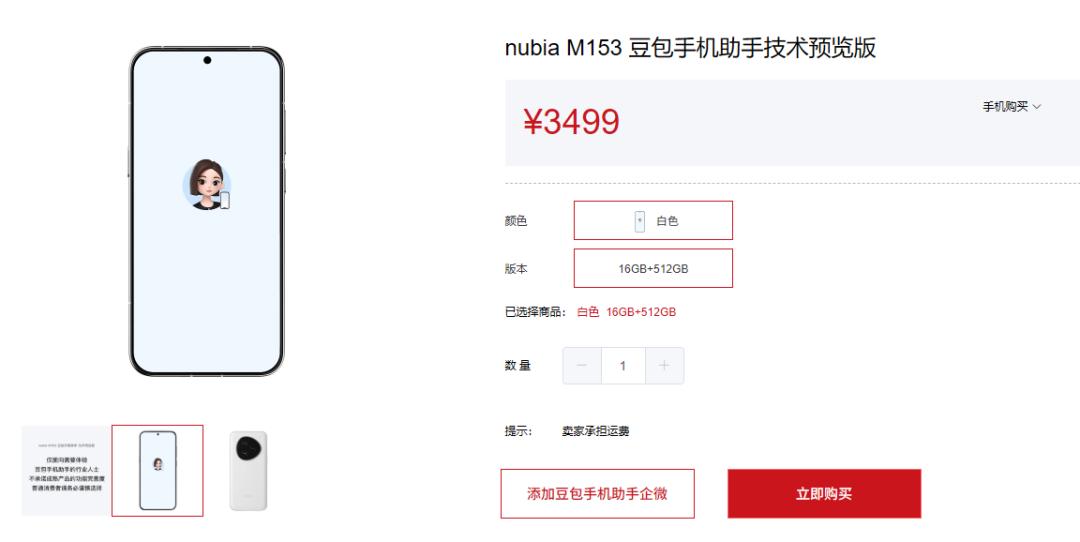
As soon as the news came out, ZTE's stock price hit the daily limit today.
It's worth noting that this is just an engineering prototype for users to experience Doubao Mobile Assistant. It is targeted at industry insiders, and there is no guarantee of the functionality completeness of a mature product. Ordinary consumers should choose carefully.
Meanwhile, Doubao has no plan to develop mobile phones. Currently, it is promoting cooperation plans with multiple mobile phone manufacturers to implement the mobile assistant.
01
A Personal Assistant Who Really Understands You
Complete Various Tasks with Just One Sentence
Since the Doubao large - model has been integrated into the operating system, on this engineering prototype, you don't need to manually open the Doubao App. You can directly call it through voice or the AI button on the side of the phone.
It will appear as an overlay, sometimes as a half - screen card and sometimes as a floating bubble, without affecting the current App process.
In this way, asking questions to Doubao can save a lot of operations.
For instance, when you see a landscape photo on Xiaohongshu and want to know where it is, in the past, you had to save the photo to your phone and then upload it to the Doubao App. Now, it will directly understand the screen content and give you the answer.
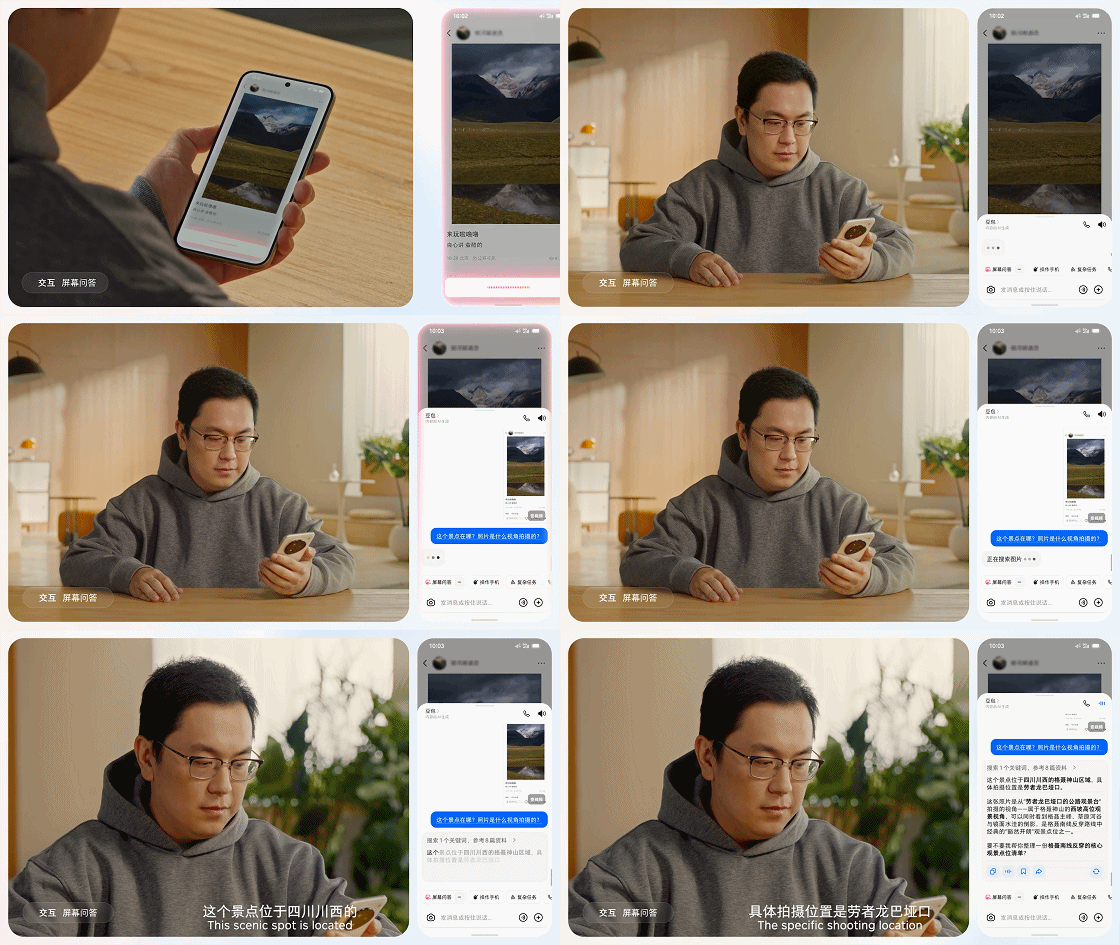
Functions such as photo editing and video calls that already exist in the current Doubao App can also be quickly operated through voice or the AI button.
Providing information is just the basic function of Doubao Mobile Assistant. Its real specialty is to perform complex operations across applications.
When you see a bottle of shampoo on Xiaohongshu and want to place an order, you can directly call out Doubao and let it compare prices on all shopping Apps and choose the cheapest one to place an order.
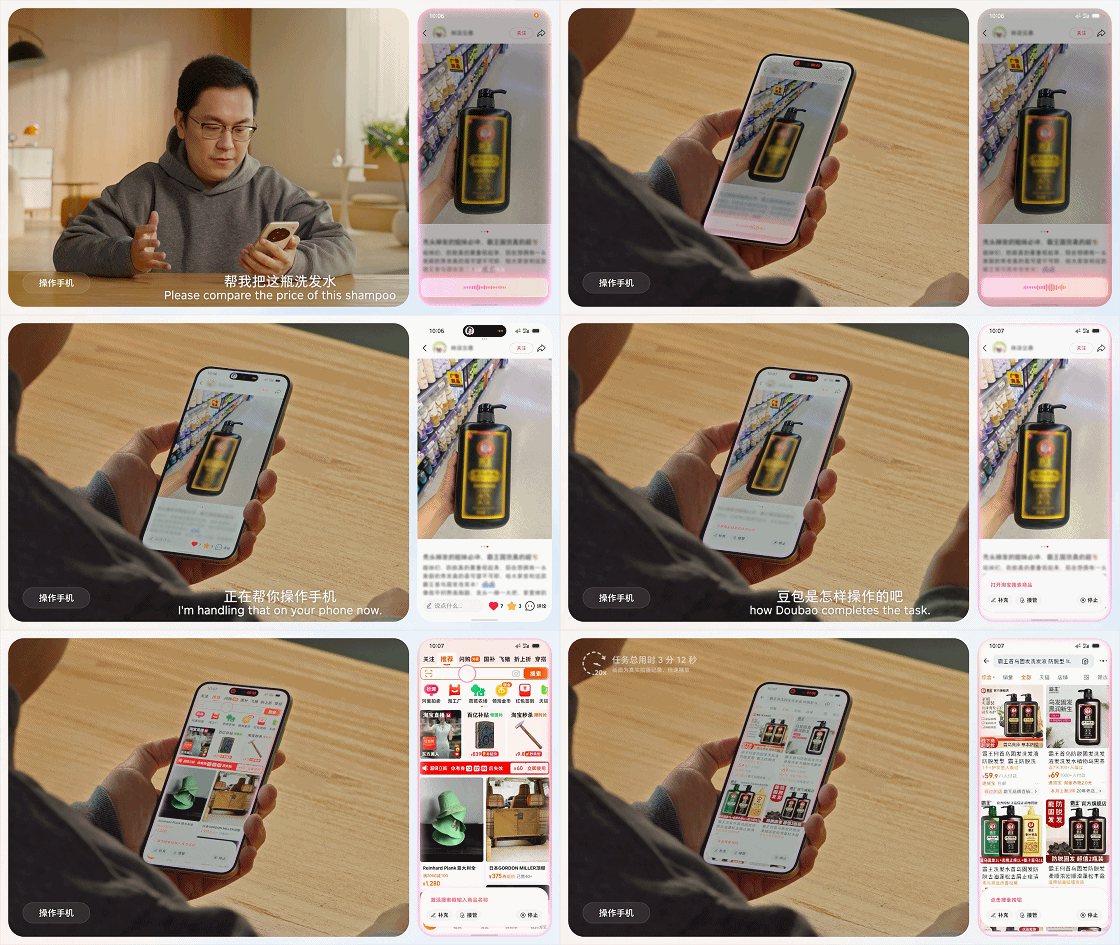
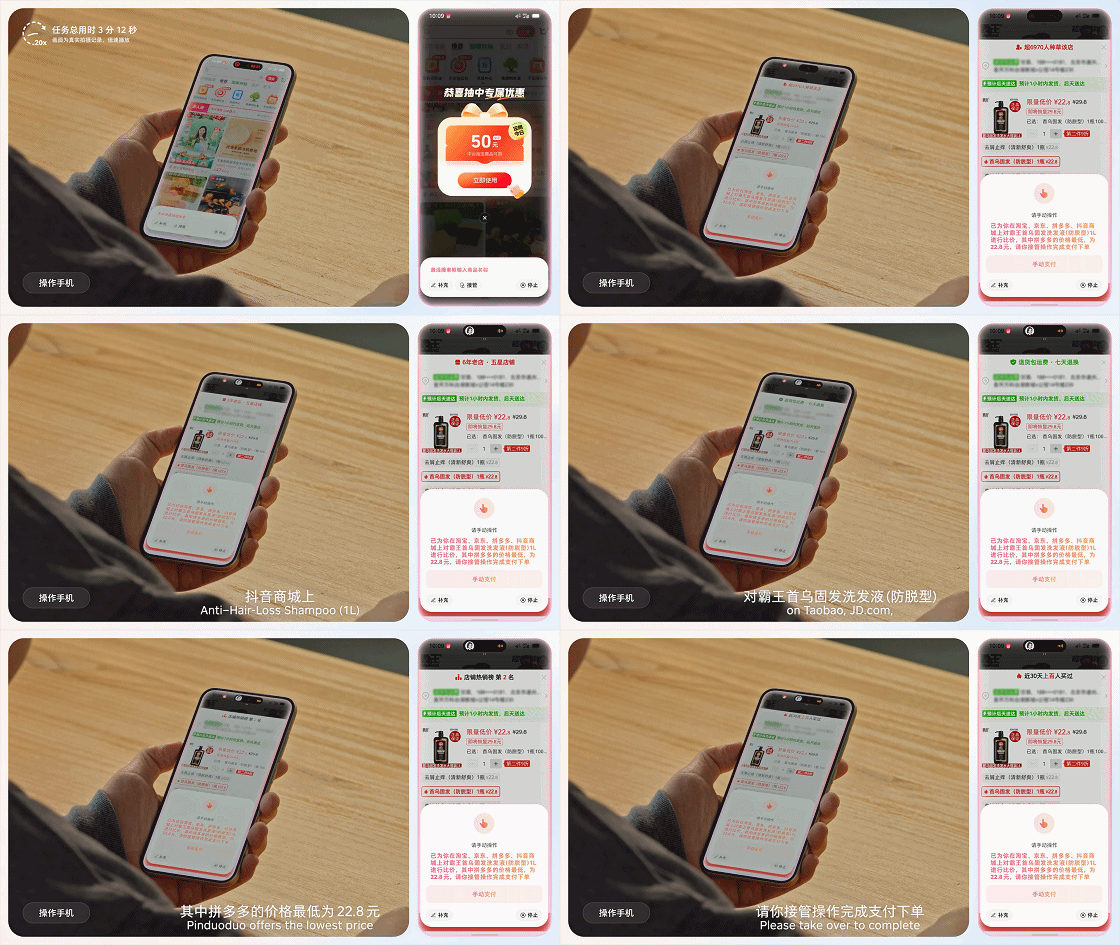
At this time, Doubao will automatically identify the screen information, then open Taobao, JD.com, Pinduoduo, and Douyin Mall one by one to search for the corresponding product, compare prices, and finally provide the cheapest one for you to pay manually.
Although Doubao belongs to ByteDance, it doesn't give preference to products from Douyin Mall. Instead, it provides a link from Pinduoduo.
In another scenario, Doubao automatically completed tasks such as querying podcast updates and adding them to the playlist, remotely opening the front trunk of a car, booking a restaurant, submitting a leave application and business trip report on Feishu, and booking a high - speed rail ticket for an early - morning train on Monday, all based on voice commands.
When you turn on the memory function, Doubao will become even more powerful. It will convert the recorded content into text and save it locally, intelligently identify meeting minutes, summaries, or key schedules, and generate to - do lists, reminders, etc. based on this.
It will remember which seat you booked on 12306, which express locker your Taobao purchase is placed in, and even the coffee shop your friend mentioned in the last chat. When you ask a question, it will quickly give you the answer.
In other words, it is no longer "performing an operation according to an instruction" but has evolved into "continuously completing tasks based on the user's long - term preferences", which is something that most mobile AI at this stage cannot achieve.
Still not satisfied? Check out the Pro mode of operating the phone that Doubao is currently exploring. In addition to simulating clicks, it can also directly call tools, making the execution more efficient and reducing the frequency of inquiries during the triggering process.
You just need to say, "I'm going to Paris next month. Help me mark the Parisian restaurants I've collected on social media on the map. Then check which museum has an exhibition I like on the day after I arrive and book a ticket for 10 a.m. on a travel platform. Organize the relevant information into a memo."
It will automatically check the restaurants you've collected on Xiaohongshu and Dianping, then mark them on the map; based on the memory information, it will determine your preference for Van Gogh and lock in the Musée d'Orsay; without asking for time confirmation again, it will complete the ticket booking; and finally, it will organize the whole process record into a memo.
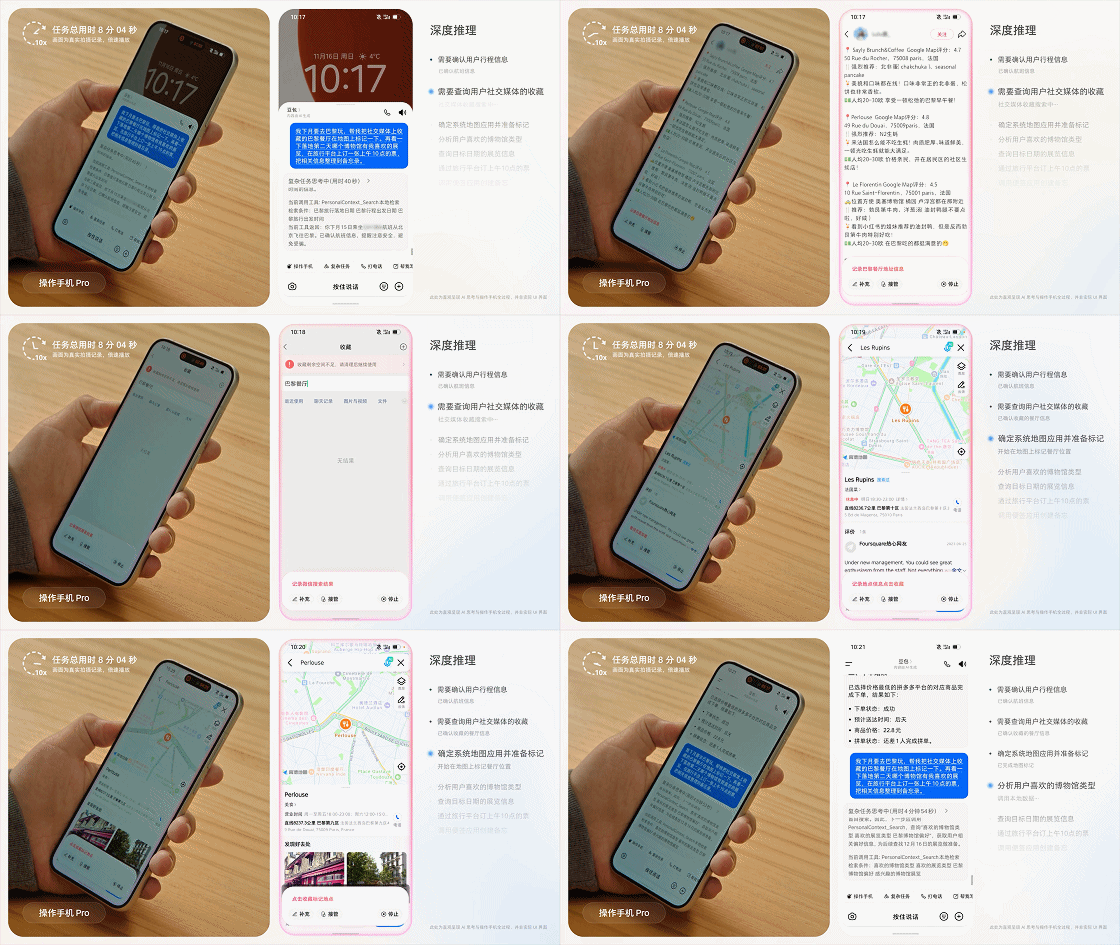
After watching the whole video, it feels like Doubao Mobile Assistant has become a personal assistant who really understands you. You don't need to do everything yourself. You just need to give a few instructions, and it will automatically complete the tasks for you.
Similar scenarios have appeared at many mobile phone launch events in the past. Even Tim Cook has described a future where AI becomes the main interaction layer of the device and handles complex tasks on behalf of users.
However, among the mobile phones that can be mass - produced at present, Doubao Mobile Assistant performs the best.
02
Even the Best Has Its Weaknesses
Doubao Mobile Assistant is excellent, but it is not perfect.
At the end of the demonstration video, the Doubao Mobile Assistant team said that due to the uncertainty of the large - model, the above operations cannot be completed 100% of the time.
It would be quite frustrating if you wait for a few minutes and find that the AI hasn't completed the task for you.
In the scenario of searching for shampoo and comparing prices, it took a total of 3 minutes and 12 seconds. This speed is obviously not fast. The author of this article tried it himself and could complete it in about a minute. Manual operation is more efficient.
Meanwhile, Doubao didn't compare prices after getting coupons, didn't try to combine orders, didn't use the cash - back platform, and didn't check which payment method, such as debit card, digital RMB, Alipay, or UnionPay QuickPass, would offer a discount on the payment page.
Some products seem to cost 89 yuan, but after getting a coupon, the total price for buying two is only 99 yuan.
When using Doubao Mobile Assistant, a large amount of server resources are required. In the future, it is very likely that users will need to pay for its use. In this case, how many people will be willing to pay?
There is also an issue that cannot be ignored: privacy.
After you turn on the memory function, you basically hand over all your data to Doubao Mobile Assistant. It knows what you've been looking at, chatting about, eating, and buying every day. It can be said that it understands you better than you understand yourself.
If something goes wrong with this data, it's hard to imagine how serious the consequences could be.
In response, the Doubao Mobile Assistant team said that they will adopt strict privacy protection strategies in data usage. The relevant data usage and storage methods have been disclosed in the privacy white paper on the Doubao Mobile Assistant official website.
03
Striving to Be the Operating System in the Mobile AI Era
But It Needs Its Own "Seres"
On November 27th, the Quark AI glasses, the first smart hardware equipped with Qianwen Assistant, were launched. This marks Alibaba's Qianwen's first step out of the screen and into the physical world.
Users can call out Qianwen anytime and anywhere. Combining the real - time audio and video data obtained by the glasses, they can experience an assistant ability completely different from that of a mobile phone APP.
On December 1st, the technical preview version of Doubao Mobile Assistant was officially launched. Although the paths are different, the two products share the same strategic logic:
Both "liberate" the AI assistant from the screen into the physical world to achieve more natural and convenient interaction; both obtain richer perception capabilities (vision, voice, movement, etc.) through hardware to improve the accuracy and response speed of AI services.
Alibaba takes the path of heavy - asset investment, integrating self - developed hardware with Qianwen AI deeply to build a complete "hardware + software + service" closed - loop.
ByteDance adopts a light - asset model, focusing on AI algorithms and interaction design, while mobile phone manufacturers are responsible for hardware manufacturing and system adaptation.
If successful, ByteDance will no longer have the "entry anxiety" it has long suffered from. It will no longer be an APP parasitic on others' operating systems, facing the risk of being overthrown at any time. Instead, it will become the "operating system" provider in the mobile AI era, standing firm.
But why would major mobile phone manufacturers like Huawei, Xiaomi, OPPO, vivo, and Honor choose Doubao Mobile Assistant instead of developing their own?
The author of this article has already experienced many functions of Doubao Mobile Assistant on the Huawei Mate 80 Pro Max. Although it is not as powerful as Doubao, it's only a matter of time before it catches up.
When Huawei tried to sell its assisted - driving technology, car manufacturers refused to give up their "souls." It wasn't until Yu Chengdong created the example of AITO that the sales picked up.
So, the question is, can ZTE become ByteDance's "Seres"?
This article is from the WeChat official account "Technology Daily Push" (ID: apptoday). Author: Technology Daily Push. Republished by 36Kr with permission.