With 10 new companies and 9 unicorns, what makes this new arena so appealing to Silicon Valley venture capitalists that they're pouring in money like there's no tomorrow?
A valuation of tens of billions, yet hardly any products. This is the craziest AI capital narrative at present.
Recently, Thinking Machines Lab, founded by former OpenAI CTO Mira Murati, is planning a new round of financing of $4 billion to $5 billion at a valuation of up to $50 billion. All it has to offer is an API interface called Tinker, whose interface remains to be verified.
Compared with traditional business logic, this is nothing short of a high - stakes gamble: what capital is betting on is no longer the product, but the people, the golden label of "OpenAI founding veterans" attached to the founders.
Murati's lab is the most prominent wave in the neolab (new - generation laboratory) trend sweeping Silicon Valley. According to a tweet by Deedy, a partner at well - known foreign VC Menlo, 9 out of 10 emerging neolabs in the AI field have achieved a valuation of $1 billion at the seed stage.
A group of top researchers who have left giants such as OpenAI and DeepMind are reconstructing the logic of AI research with a new paradigm in a rebellious stance. They don't talk about revenue or commercialization, but only about seemingly far - fetched directions: emotional intelligence, AI society, automated scientists, etc.
Capital's reaction is more direct and enthusiastic: Humans& achieved a valuation of $4 billion within a few months of its establishment, SSI aimed at super - intelligent security has a valuation of $32 billion, and Periodic Labs raised $300 million in its seed round... These labs, which "have nothing" from a traditional perspective, are gobbling up billions of dollars with astonishing valuations.
When the smartest minds decide to start anew, capital's choice is to ignore the PPT and only recognize the resume, voting with real money for their intuition and purity, betting that they can exchange their resumes for a different future.
01
5 labs secure $2.5 billion
As the valuations of OpenAI and Anthropic soar to the level of $183 billion and become "exorbitantly expensive", the flood of capital is quietly flowing towards a group of more mysterious and elite new - type laboratories, neolabs.
According to The Information, just five neolab startups have completed or are in talks for financing of up to $2.5 billion in the past month.
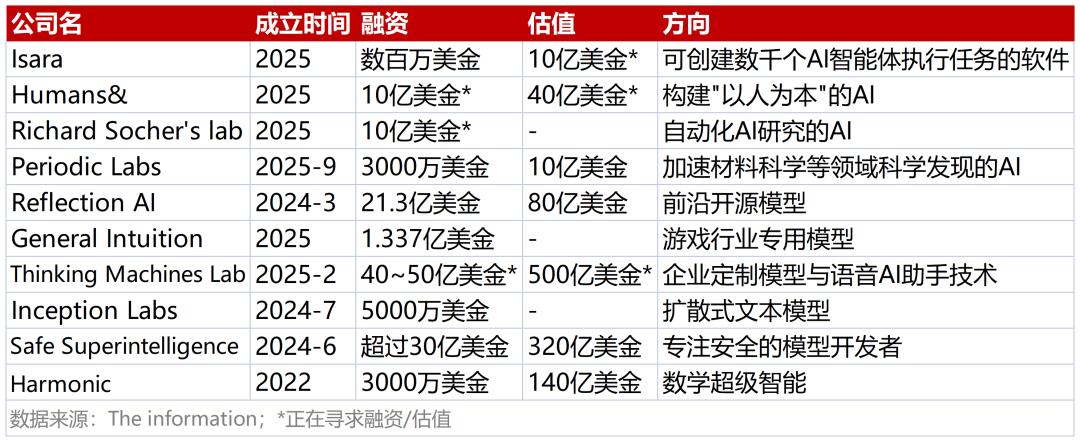
If we only look at the research directions, there is almost no consensus among neolabs: some are working on multi - agent digital societies, some are researching emotional intelligence, some are working on automated scientists, some are exploring embodied intelligence, some are advancing experimental physical materials, and some are approaching the boundaries of general intelligence.
The only thing they have in common is that their founders are all the most capable people who have left the giant labs. Almost all the founders of these neolabs have left giants such as OpenAI, DeepMind, and Anthropic, and their personal wealth has already reached tens of millions or even billions of dollars. However, they gave up the stability and high salaries of the giants and chose to go all - in on a new AI paradigm.
It is this purity brought about by financial freedom that constitutes the core charm of neolabs. They can ignore short - term commercialization pressure and focus on high - risk, long - cycle explorations that the giants disdain or are unable to touch.
As a result, we see an unprecedented diversification of research directions:
Eric Zelikman, a former xAI researcher, raised $1 billion to build the emotional AI startup Humans&. He doesn't pursue faster reasoning speed, but rather enables AI to understand emotions, make value trade - offs, and establish long - term relationships.
Eddie Zhang, a former OpenAI security researcher, founded Isara, a "multi - agent digital society", trying to make thousands of AI agents autonomously divide labor, collaborate, and govern like a real company.
Ilya Sutskever, the former chief scientist of OpenAI, founded SSI with the sole mission of "developing controllable super - intelligence", with security taking precedence over everything. It is rumored that its valuation has reached $32 billion.
In contrast, the giants seem to be confined to the single path of large - model optimization, pursuing the linear growth of parameters and computing power. Neolabs, on the other hand, pursue iterative intelligence. Their mission is not to make the model bigger, but to discover new intelligent structures. This purity also allows them to maintain an extremely small and elite team, maximizing the "technological compound interest".
Of course, this has also given rise to the spectacle of "dream - driven valuations". These labs generally have extremely low or even zero revenue and no mature products, yet they obtain astonishing valuations in the early stage due to the halo effect of the founders and their disruptive visions.
The most typical example is Thinking Machines Lab, founded by former OpenAI CTO Mira Murati. With only a preliminary developer tool, Tinker, launched and its product capabilities yet to be verified, its valuation is rumored to be as high as $50 billion.
Compared with the giants, a $1 billion valuation for a neolab is almost a bargain. For example, the label of Mira Murati as an OpenAI founding veteran alone is worth tens of billions.
02
Emotional intelligence, game video models... Nine out of ten get a $1 billion valuation in the seed round
Next, we will introduce these neolabs one by one.
① An OpenAI "founding veteran" goes solo to do super - intelligent insurance
Safe Superintelligence (SSI) was founded by Ilya Sutskever, the former chief scientist of OpenAI, in collaboration with Daniel Gross and Daniel Levy. Its sole mission is to "develop controllable super - intelligence", with security taking precedence over short - term commercialization. The team focuses on elite scientific research and security engineering rather than consumer - grade productization.
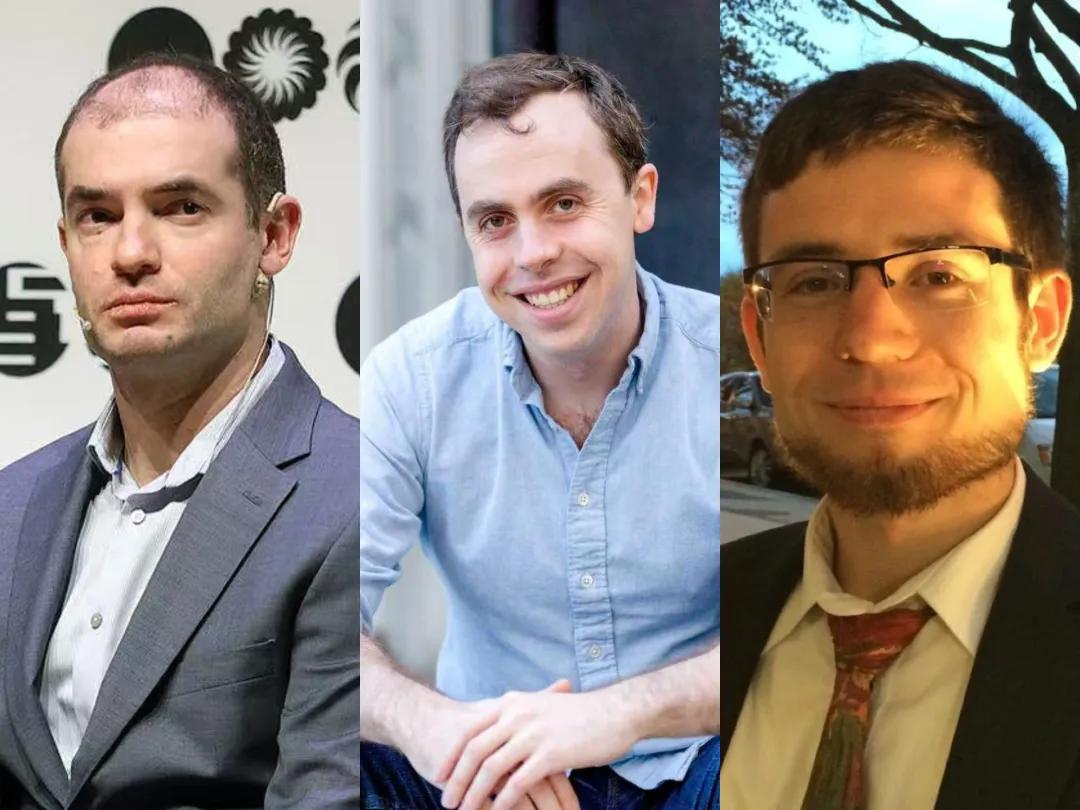
▲ Ilya Sutskever, Paul Christiano, Daniel Kokotajlo (from left to right)
The disclosed financing scale is close to or exceeds $1 billion, and it has a strategic cooperation with cloud infrastructure providers to ensure computing power. Technically, it needs to solve three core issues: ensuring that the safety boundary leads when advancing capabilities, engineering theoretical alignment, and maintaining transparent governance without product pressure.
In the short term, SSI is a high - intensity laboratory for "scientific research + safety verification". Although it currently has no commercial products, it has received investments from Google (with TPU support) and Nvidia, and its valuation is reported to reach the level of $32 billion, indicating that capital has confidence in AGI labs with a "long - cycle and extremely high safety" nature.
② The former OpenAI CTO leaves to start a business, focusing on "enterprise - customized models"
Compared with Cursor's valuation of $29 billion, Thinking Machines is almost valued at $50 billion with nothing to show. The reason is that its founder, Mira Murati, adds a huge bonus to it. This former OpenAI CTO and interim CEO has a technical background focusing on engineering R & D, product implementation, and handling cutting - edge AI technologies. She left to found a new company this year.

▲Mira Murati
The new company focuses on "interpretable group intelligence" and a symbol - probability hybrid architecture, organizing a large number of lightweight models into a hierarchical "workflow factory" to achieve auditable multi - agent collaboration in high - risk scenarios such as financial risk control and drug discovery through verifiable protocols.
The experimental directions include task - decomposition languages, cross - agent trust scores, and dynamic contracts (labeled with weakly supervised reward streams), with the safety boundary set as the primary principle. In October, Thinking Machines launched Tinker.
Recently, Thinking Machines Lab is raising $4 billion to $5 billion. It had previously raised $2 billion in funds, and its most recent valuation was $10 billion.
③ A former xAI researcher raises $1 billion to build emotional AI
Eric Zelikman from xAI is a rare researcher in the industry who focuses on "modeling emotions, values, and long - term relationships". His direction doesn't pursue faster reasoning speed or longer context, but rather makes AI more human - like. It can handle tasks that take weeks or even months, understand emotions, make value trade - offs, and establish long - term relationships.
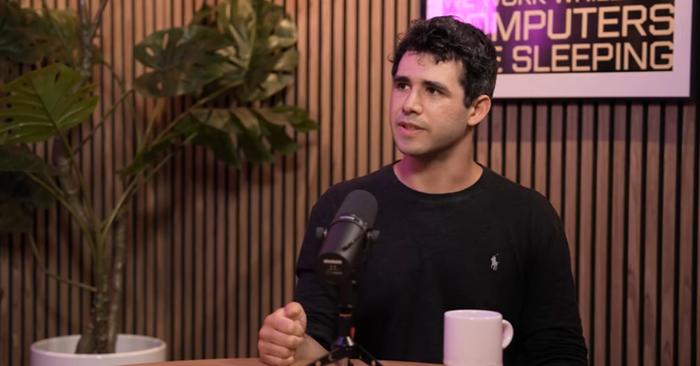
▲Eric Zelikman
Humans&, founded by Zelikman, is committed to building "emotional intelligence" AI, extending traditional reinforcement learning from minute - or hour - long tasks to real - world tasks that take weeks or even months, such as long - term decision - making, strategic planning, and companion - style interaction. Its goal is to make AI no longer pursue "getting the answer right once", but rather "long - term optimality", with the ability to model self - emotions and coordinate long - term goals.
Although the research has not been commercialized and there is no mature product, Humans& is still in talks with investors to raise $1 billion at a valuation of $4 billion within a few months of its establishment. People familiar with the matter said that both Nvidia and AMD are interested in investing, hoping that such new labs will become major consumers of next - generation computing power.
④ A 12 - year veteran of DeepMind starts Reflection AI, chasing the dream of super - intelligence
Misha Laskin, the CEO of Reflection AI, is a former research scientist at DeepMind. He led the RLHF training system and reward model architecture design of Gemini from its first generation to 1.5, and was responsible for the closed - loop optimization of the model and human feedback. He is a Ph.D. in theoretical physics from the University of Chicago and a post - doctoral fellow at Berkeley. He started a business in AI demand forecasting in 2017 and was included in Forbes' "30 Under 30" at the age of 25.
Ioannis Antonoglou, the CTO, is a 12 - year veteran of DeepMind and the core architect of AlphaGo, AlphaZero, and MuZero. He was directly involved in the construction of strategy search and value networks, promoting breakthroughs in reinforcement learning in complex chess and decision - making tasks.
The two founders joined hands to lead a 60 - person team, most of whom are from DeepMind and OpenAI, focusing on high - performance model training, reinforcement learning algorithm optimization, and large - model architecture design. Their goal is to closely combine reinforcement learning, reward modeling, and large - scale generative models. First, they will build autonomous coding agents that can self - optimize, plan, and execute in complex programming tasks, and then gradually expand to general reasoning and cross - domain problem - solving.
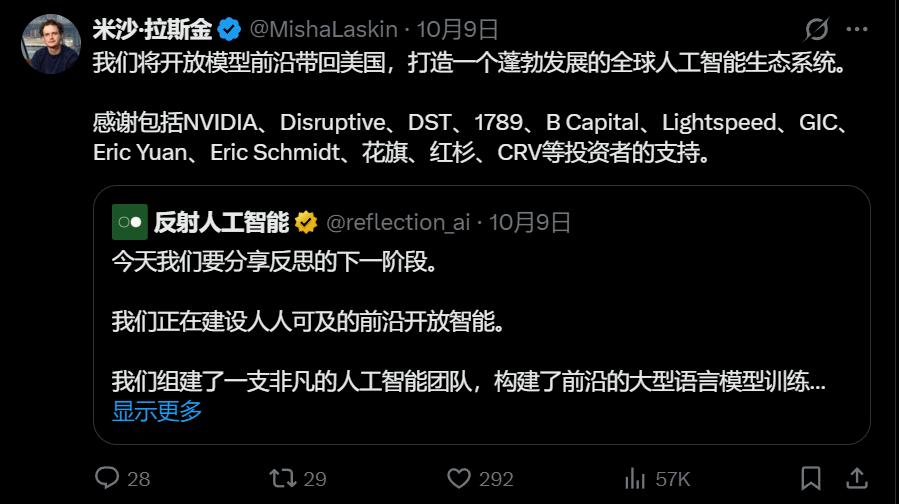
Investors directly invested $130 million, and the valuation in Series A was $555 million. Sequoia, Nvidia, and Reid Hoffman, the co - founder of LinkedIn, are all on the shareholder list.
⑤ The CEO of You.com fights on two fronts, building an AI lab with $1 billion
Richard Socher, the former chief scientist of Salesforce, the founder of You.com, and a Ph.D. in NLP from Stanford, is preparing to establish a new - type research institute named after himself, aiming at "automated AI research". The eponymous research institute, Richard Socher, plans to raise nearly $1 billion during the preparatory stage.
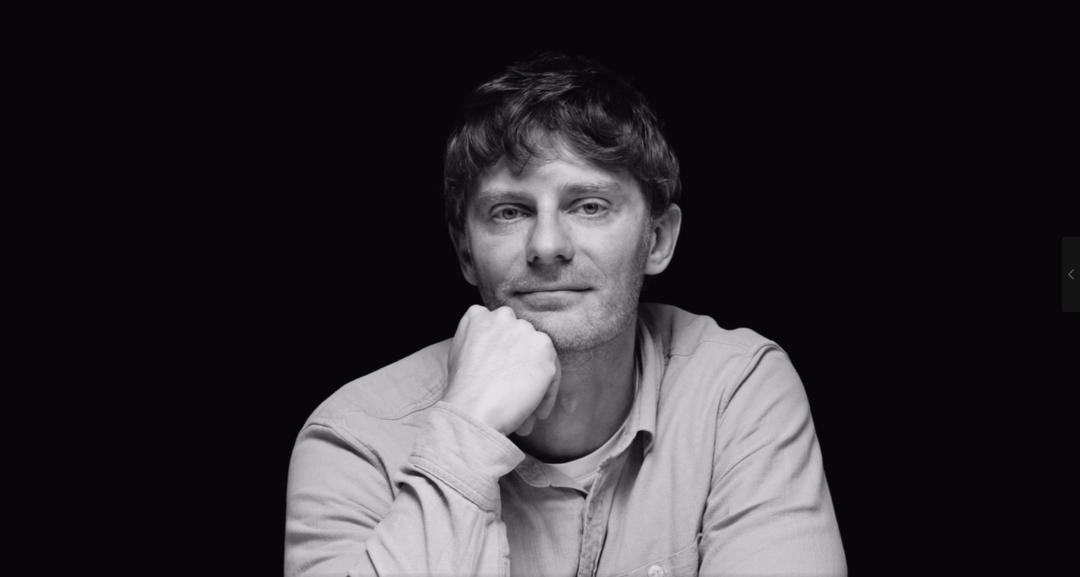
▲Richard Socher
Socher's idea is to completely mechanize the scientific research process: building a closed - loop system that can automatically complete model design, experiment execution, and iterative optimization, enabling AI to autonomously generate new ideas, self - reflect, and automatically verify, thereby significantly shortening the cycle from concept proposal to reproducible results. This concept aims at "system - level liberation of research productivity".
In the short term, the capabilities of Socher's team are particularly attractive to high - experimental - density industries such as drug R & D, materials science, and semiconductors. This direction is not about piling up computing power, but rather reconstructing the way scientists work.
The team emphasizes three core paths: 1) automated experiment design and hyperparameter search to reduce manual repeated debugging; 2) enhancing the reproducibility of experiments and building a perfect closed - loop verification system; 3) standardizing the output of "automated research" into engineerable modules so that they can be truly applied in enterprise - level scenarios.
⑥ Bigwigs from OpenAI and DeepMind leave and join hands, betting on "AI in science"
Periodic Labs was founded by Liam Fedus, the former vice - president of post - training research at OpenAI, and Ekin Dogus Cubuk, a former senior researcher at DeepMind. Its goal is to build "AI scientists": not only generating papers and making predictions, but truly starting the full - link automated scientific research process from "simulation → design → experiment → verification".
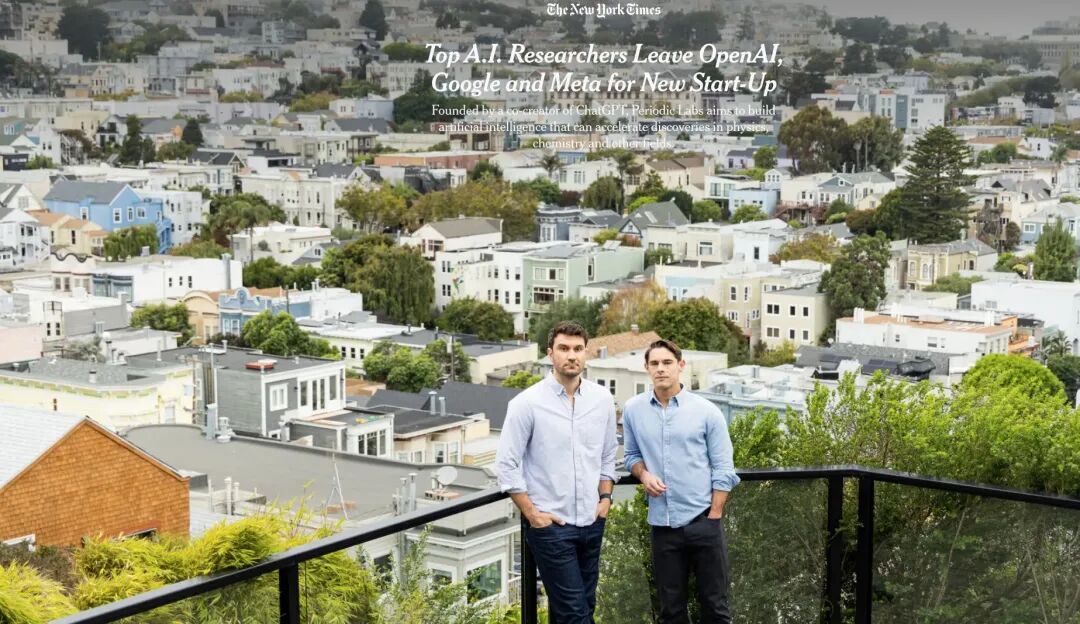
▲Ekin Dogus Cubuk (left) and William (Liam) Fedus (right)
Periodic Labs' primary research direction focuses on high - barrier, experiment - intensive fields such as low - energy - consumption superconducting materials, new materials, and catalysts. Its vision is to make AI not just a theoretical tool, but capable of autonomously proposing hypotheses, designing synthesis routes, conducting physical experiments, and providing result feedback in the laboratory, realizing the closed - loop of a "true AI scientist".
According to public financing documents, Periodic Labs has completed its first - round seed financing, with an amount of approximately $300 million, led by venture capital firms Andreessen Horowitz (a16z) and Felicis Ventures.