Tang Binsen, Kering, and Lei Jun have invested in a high-end Chinese gold brand.
Text by | Ren Cairu
Edited by | Qiao Qian
36Kr learned that "Baolan", a high - end gold jewelry brand focusing on filigree inlay and ancient gold craftsmanship, recently completed over 100 million yuan in Series A financing. This round was led by Challenger Venture Capital, with Kering Group and Shunwei Capital following. The funds will be mainly used for four core strategic directions: brand value enhancement, omnichannel layout, supply chain resilience upgrade, and core talent empowerment.
Founded in 1988, "Baolan" has adopted the ancient Chinese royal gold - making techniques for nearly four decades, especially focusing on the continuation and innovation of "filigree inlay", an intangible cultural heritage.
Condensing the sense of ritual and inheritance in jewelry consumption into tangible craftsmanship details, "Baolan" has become a well - recognized brand in the high - end jewelry field with its exquisite craftsmanship, distinct cultural identity, and emotional connection.
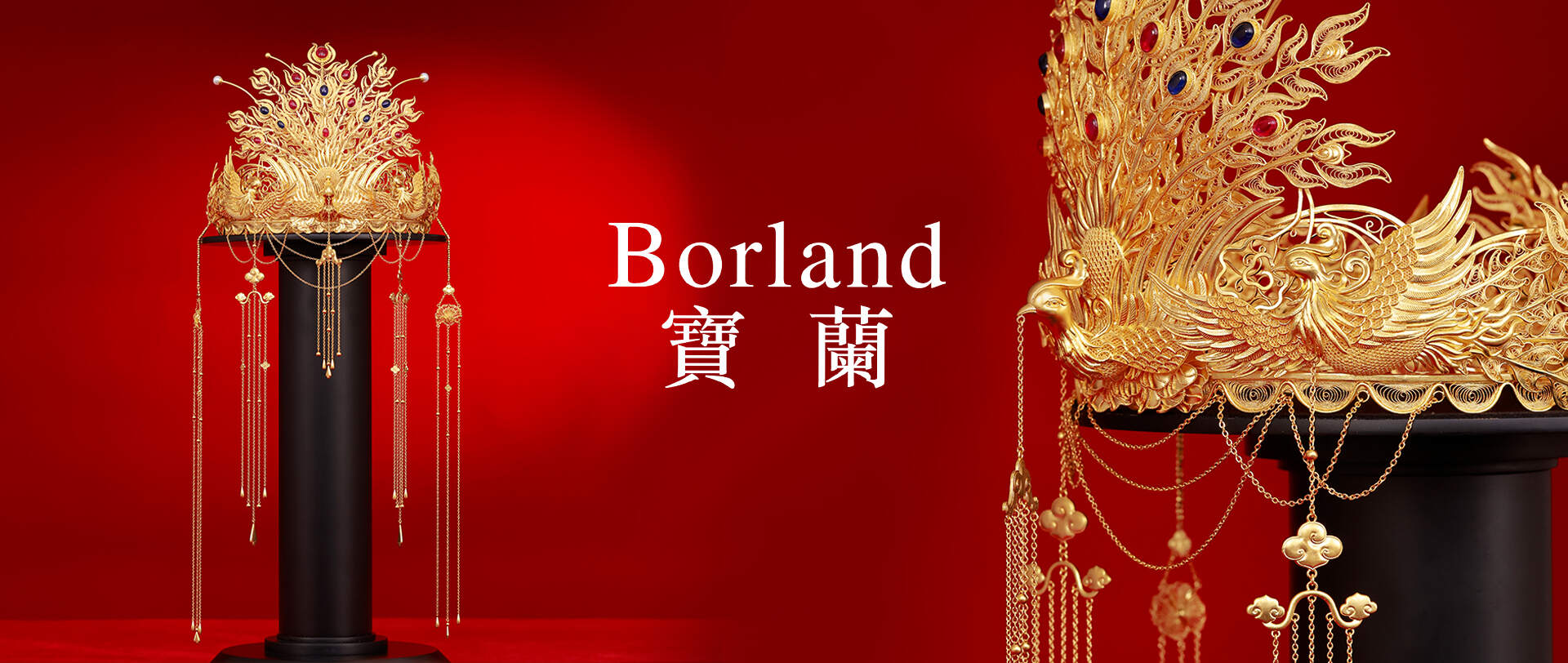
The high - end gold jewelry brand "Baolan"
Originating from a family of "filigree inlay" craftsmen
Ancient gold is crafted using an ancient gold - casting process, presenting a matte texture overall, which echoes the "reserve" of Eastern culture. Its value lies in the complex traditional craftsmanship and the design language with strong Eastern aesthetics. It requires skilled craftsmen to invest a great deal of energy, and the production time is several times longer than that of ordinary gold jewelry produced by mass - casting molds.
In the ancient gold craftsmanship, "filigree inlay" is a court craftsmanship with a history of three thousand years and is known as the crowning pearl of the "Eight Masterpieces of Yanjing". This craftsmanship requires craftsmen to hammer and draw gold into filaments, and then perform dozens of delicate processes such as pinching, filling, piling, and welding with their fingertips, so that the gold wires finer than hair can be intertwined, piled up, and woven into vivid and complex three - dimensional patterns over time.
Baolan's characteristics stem from its mature "filigree inlay" capabilities — Baolan originated from a family of gold and jewelry craftsmen. The founder began to study traditional gold - making techniques intensively in his teens. Later, he went north to Beijing to open a goldware workshop and started the jewelry business, laying a profound foundation of Eastern aesthetics and craftsmanship genes. During its development in Beijing, the goldware workshop met and recruited several inheritors and their disciples of the national intangible cultural heritage "filigree inlay" technique.
From a product perspective, the design inspiration of many Baolan works comes from traditional Chinese cultural patterns and artifacts, combining exquisite craftsmanship with auspicious meanings:
Take the "Filigree Butterfly Brooch Pendant Series" as an example. The neatly symmetrical butterfly shape represents structural balance and stability and the harmony of yin and yang in feng shui. Craftsmen use several weaving techniques to make it show a colorful effect even on goldware with a single color tone. The "Flowering Peony Pendant Series" takes the peony flower as the design image, symbolizing wealth, prosperity, holiness, and nobility. The "Palace Lantern Earrings Series" is a reproduction and improvement of the "Qing Dynasty Gold Filigree Palace Lantern - shaped Earrings" in the collection of the Capital Museum. It is a masterpiece of filigree craftsmanship, and its six - ridge design also expresses people's wishes for good luck and disaster relief.
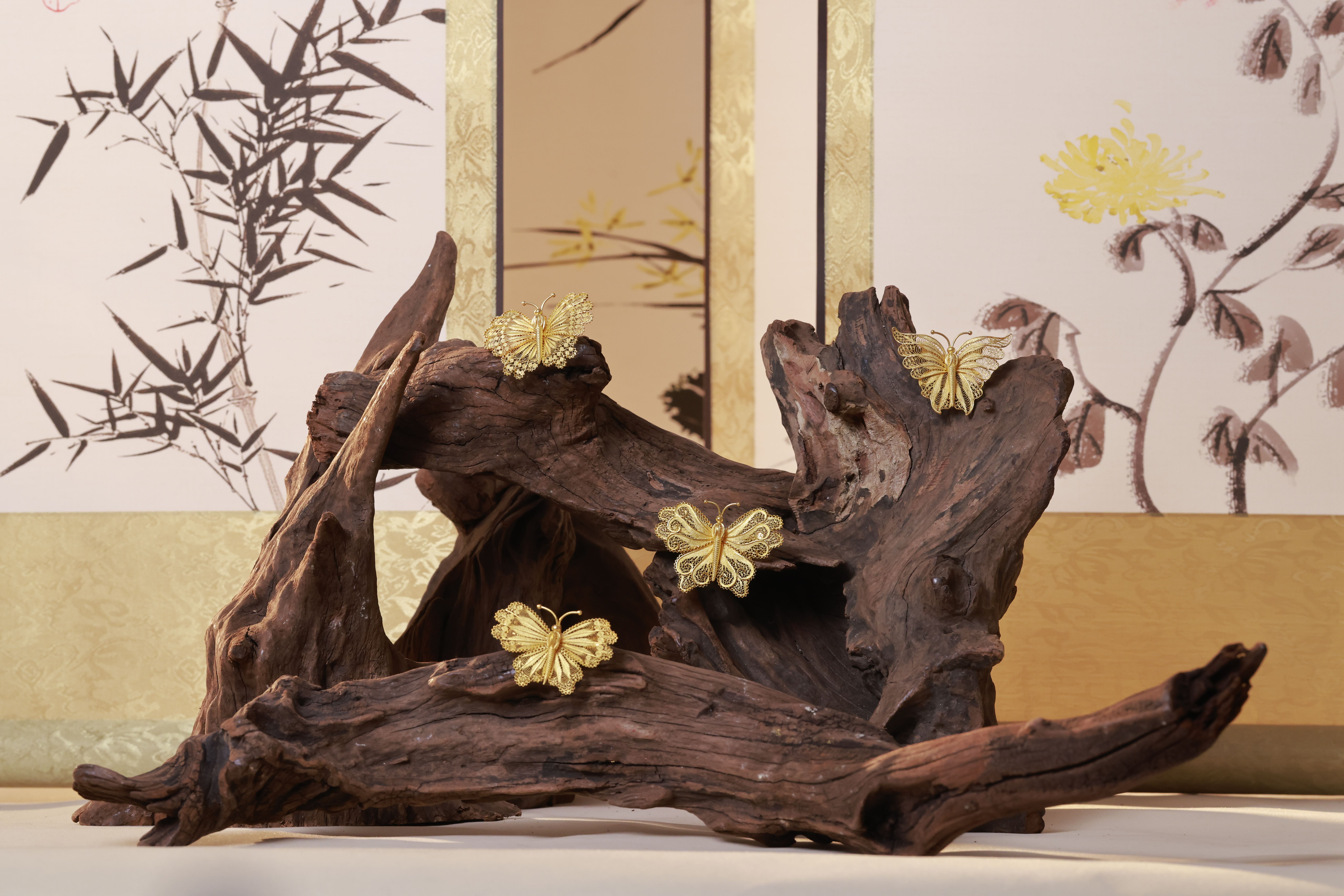
The "Filigree Butterfly Brooch Pendant Series" of "Baolan"

The "Filigree Inlay Floral Handbag" of "Baolan" in production
A new narrative for gold: from tradition to the future
According to the statistics of the China Gold Association, the consumption of gold jewelry decreased by 25% year - on - year in 2024, but the market for "ancient gold" continued to be booming. "Laopu Gold", the most well - known brand in the field of ancient handmade goldware, has shown rapid growth in the past two years. In the first half of 2025, it achieved a revenue of 12.354 billion yuan, a year - on - year increase of 251%, and the sales of a single store exceeded that of some international luxury brands.
In a report, "BoF" pointed out that the revival of gold in China is not out of nostalgia but towards the future; it is not a return to tradition but a reinterpretation of tradition. As the ancient gold craftsmanship has moved from a niche to the mainstream, the meaning attached to gold jewelry has become more and more abundant — from mainly for wedding and gift - giving scenarios in the past to today's "accessorization" and "fashionization", and even becoming a new consumer product with social attributes. Whether it is a traditional family heirloom carrying family emotions or a cultural expression and symbol of individuality pursued by the younger generation, products with more delicate craftsmanship and richer cultural connotations are winning the favor of a wider range of consumers.
For a long time in the past, Baolan was not well - known to the public, but its "luxury sense" has existed since day one. In January 2019, at the "Top Luxury Goods Appreciation Fair" held in Shanghai, Baolan was the only jewelry brand invited to participate, along with several luxury watch brands such as Vacheron Constantin and Jaeger - LeCoultre. Many of Baolan's classic products from that time are still popular today.
Compared with several other high - end gold jewelry brands that have also attracted attention, Baolan's offline expansion has not been fast in recent years. Its first store opened in Hangzhou Tower. In June 2020, it opened its second offline store in Hangzhou MixC, and simultaneously launched a limited - edition of thirty "Filigree Golden Arowanas" nationwide. It wasn't until March 2025 that Baolan opened a store across regions, opening its first store in South China in Shenzhen MixC.
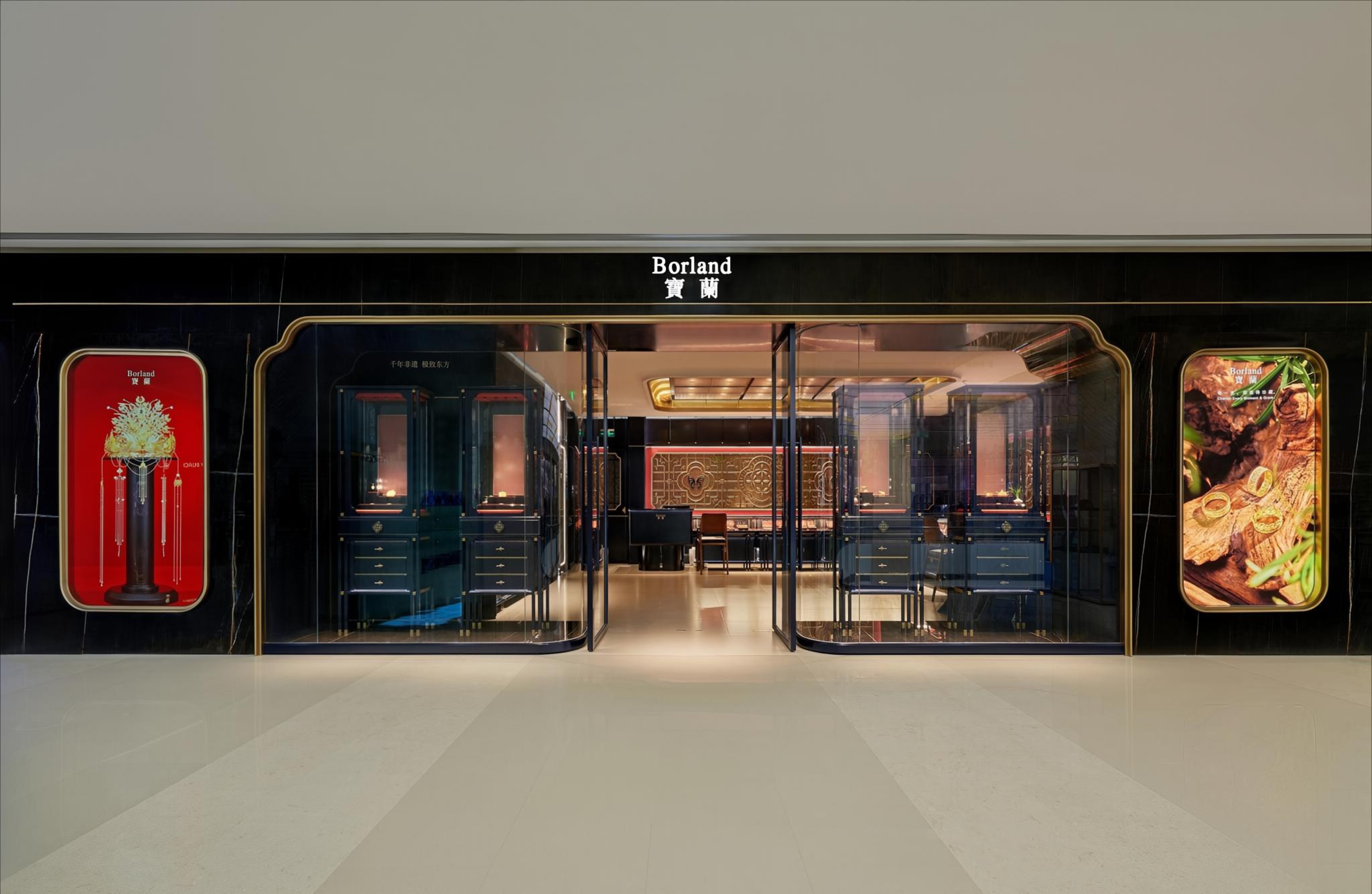
Baolan's store in Hangzhou MixC
Today, global brands are turning their attention to the East, and the next luxury era is brewing in China. Similar to several high - end gold jewelry brands that have emerged in the past two years, Baolan has exquisite craftsmanship. Buyers describe it on social platforms as "exquisite and delicate", "a work of art", and "worth collecting".
From a scale perspective, Baolan still has great potential to be tapped in terms of channels and brand, which also forms its future development prospects.