This Japanese brand has reaped the benefits of China's "badminton boom."
Author | Xie Yunzi
Editor | Zhang Fan
Cover Image Source | VCG
The skyrocketing price of badminton has become an "irreversible" fact.
In July this year, YONEX, the world's number one badminton brand, issued another price adjustment notice. The prices of its mainstream badminton models all increased by 14% to 31%. The price of its main product, the "AS-05EX badminton", has risen from 210 yuan per dozen (12 pieces) in April 2024 to 350 yuan per dozen today.
This is YONEX's third price increase in the past two years. According to reports from multiple media outlets, mainstream badminton brands such as Li-Ning, VICTOR, and RSS also had price increases of varying degrees.
Generally, the "lifespan" of a badminton is at most 30 minutes. The continuous price increase of badminton has also made most badminton enthusiasts joke that "playing badminton is like throwing money into the sky" and "even those with a monthly income of 20,000 yuan can't afford to play badminton".
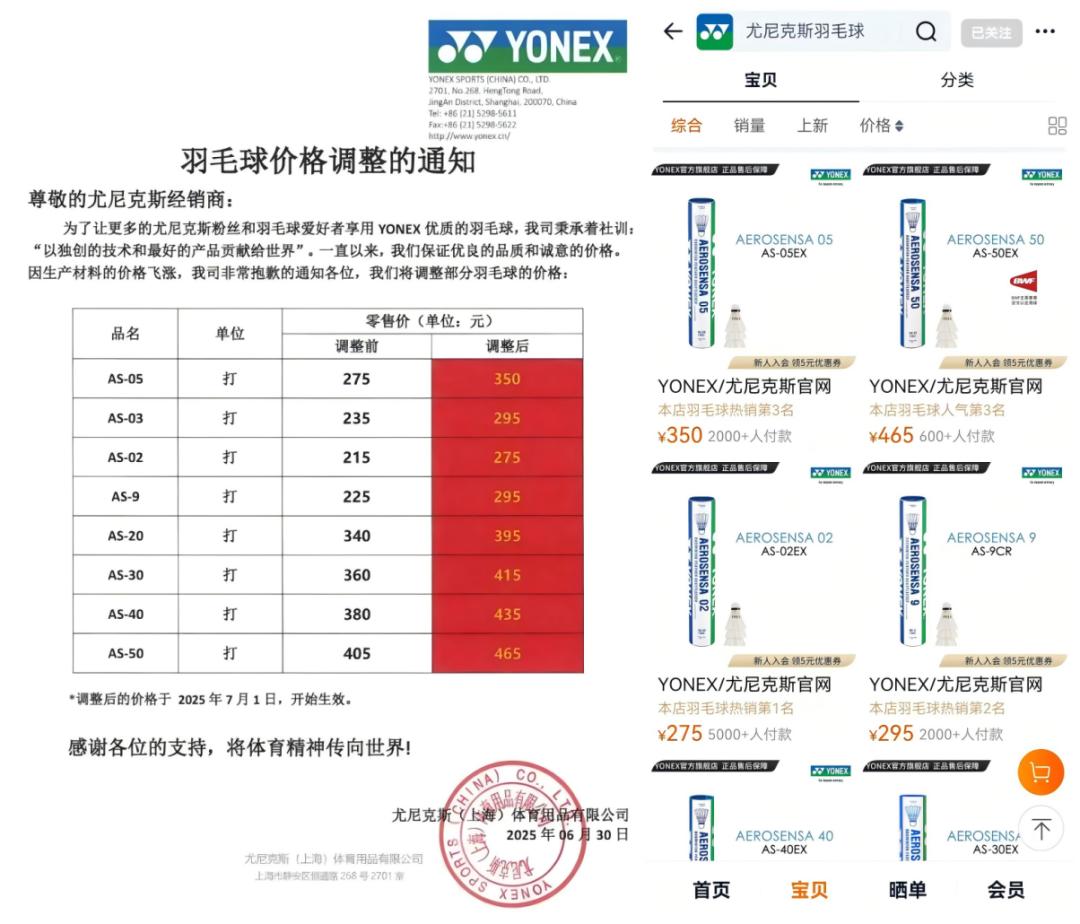
Compiled by 36Kr based on public information
However, while the Chinese middle class is "complaining bitterly" about this, YONEX has continuously set new revenue records.
Not long ago, YONEX released its semi-annual report for the fiscal year 2026. In the six months ending September 30, 2025, YONEX's net sales increased by 18.8% year-on-year to 79.532 billion yen (approximately 3.595 billion yuan, the same below).
In terms of operating profit, during the reporting period, YONEX's operating profit increased by 15% year-on-year to 8.847 billion yen (approximately 400 million yuan), and its net profit attributable to the parent company increased by 17.4% year-on-year to 6.371 billion yen (approximately 288 million yuan).

YONEX's semi-annual financial report for the first half of fiscal year 2026
Feather price increase, YONEX makes a fortune
YONEX was founded in 1946. Initially, it was just a small factory in Japan that produced wooden badminton rackets. In 1961, YONEX launched its first aluminum badminton racket, making breakthroughs in materials and technology. It gradually developed into a leading high-end and professional badminton and tennis brand.
As a sports goods company focusing on a niche market, in recent years, YONEX's revenue and stock price have been rising continuously. Some industry insiders believe that this is mainly due to the increase in the price of badminton.
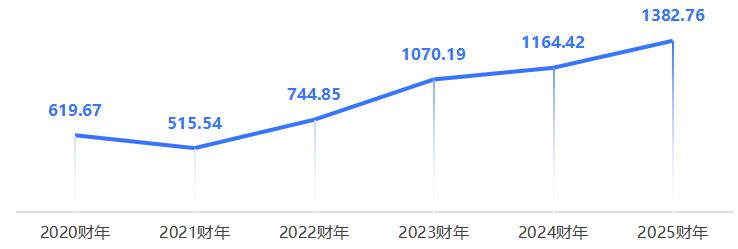
YONEX's total sales data, data from Wind; Unit: 100 million yen
The commonly used feathers for badminton mostly come from the "flight feathers" of ducks and geese. The key to determining the quality of a badminton often lies in the quality of the feathers.
China has always been the world's largest badminton producer. However, in recent years, the low price of pork and the increasing consumption of pork have led to a significant reduction in the scale of duck and goose farming, and the supply of duck and goose feathers has naturally decreased.
An analogy to badminton is the price trend of "down feathers" in the down jacket industry chain.
According to Yurongjinwang, since 2025, the price of white duck down has risen from less than 480 yuan/kg to over 570 yuan/kg. Compared with the upstream of the down jacket industry, the production enterprises of badminton are more concentrated. Therefore, the price of badminton raw materials is mostly "negotiated and determined" by several large factories.
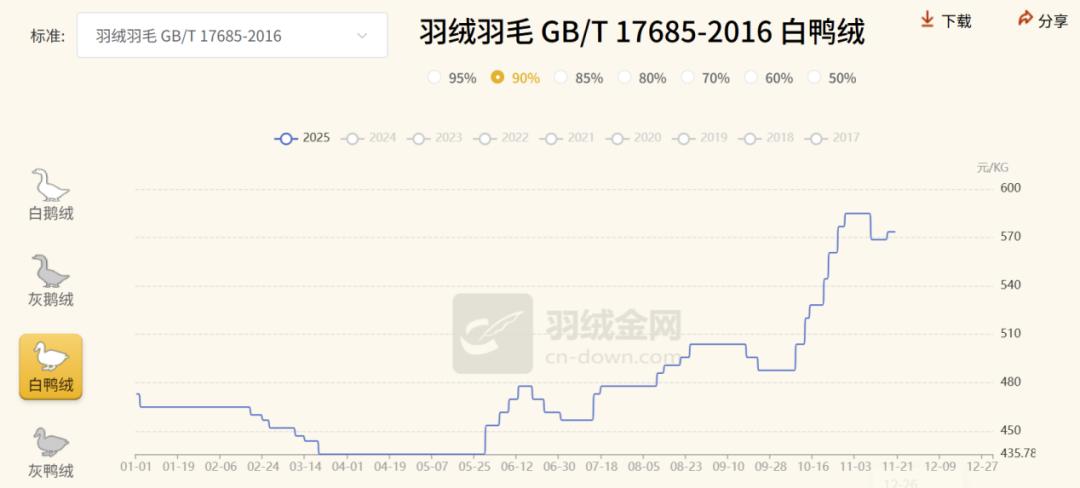
Screenshot from Yurongjinwang
Lao Zhao (a pseudonym)'s badminton factory is located in Anhui. He told 36Kr that the gross profit margin of badminton products is generally between 10% and 15%, which is much lower than that of badminton rackets. However, badminton itself is a product with "high turnover" and "high consumption". This is similar to the early Kodak Company. While dominating the market with its camera products, film still contributed a significant proportion of its revenue.
In contrast, in the badminton industry, since the Spring Festival in 2025, the prices of upstream raw materials have shown an obvious differentiation trend. The prices of raw materials for non-venue badminton have dropped significantly, while the prices of raw materials for mid - to high - end venue badminton have continued to rise, with an increase of up to 25% by early September. In order to leave more gross profit margin to cope with the rising costs, brand owners have passed on the costs to consumers and also increased their own revenue and net profit.
Of course, in addition to the revenue growth caused by price increases, YONEX's rapid development in recent years also benefits from the Chinese market.
Signing with the national team, reaping the benefits of the Chinese market
Looking back over a longer period, the friendship between this Japanese brand and China can be traced back to the early 1980s.
It was also from this period that YONEX sponsored the Chinese National Badminton Team for nearly 30 years until it was replaced by Li-Ning in April 2009.
In 2015, YONEX officially took back the agency rights of Weijian in the Chinese market and signed a contract with the famous Chinese badminton player Lin Dan at a price of 100 million yuan, which was valid until 2020. In March 2021, YONEX signed a contract with the Chinese National Badminton Team again, marking its deep binding with the Chinese market.
In the fiscal year 2024, YONEX's sales in the Chinese market reached 48.4 billion yen (approximately 2.35 billion yuan), exceeding its home market in Japan and becoming its largest single market in the world. The data for the fiscal year 2025 announced in August this year also showed that YONEX's revenue in the Chinese market reached 68 billion yen (approximately 3.3 billion yuan), a year-on-year increase of 24%, accounting for 49.2%, further consolidating its market position.
In the latest semi-annual report, YONEX also emphasized that its Chinese sales subsidiary has been continuously deepening its presence in the badminton market, giving full play to the influence of the national team, and continuously activating market vitality through grass - roots promotion activities and "head - to - toe" brand promotion.
During the reporting period, the company's sales in Japan increased by 11% year-on-year to 31.278 billion yen; in the Asian market outside Japan, sales increased by 26.2% year-on-year to 40.931 billion yen, and operating profit increased by 19.2% year-on-year to 6.044 billion yen.
Looking at the development of the Chinese badminton industry, although it is also a "racket sport" like tennis, due to the immaturity of the event system, professionalization level, venue construction and other aspects, the commercial value of badminton is relatively low.
The "Report on the Current Situation of National Sports" released by the General Administration of Sport of China showed that as of 2023, the number of people participating in badminton in China had reached 250 million, making it the second - largest national fitness project after walking.
In 2025, the central government invested 5 billion yuan to support venue construction. The "14th Five - Year Plan" also clearly requires that the proportion of badminton courts in newly built community sports facilities should not be less than 15%. Compared with tennis, badminton, which can be played in doubles, has more social attributes. The increase in venues has also attracted more young people to join this sport, thereby driving up the per - capita consumption amount.
YONEX's performance report for the fiscal year 2025 also stated that the per - capita annual consumption of badminton in China has risen from 300 yuan a decade ago to nearly 3,000 yuan. According to data from the Zhongyan Puhua Research Institute, as of 2025, the market scale of the badminton industry in China reached 32 billion yuan, and it is expected to exceed 45 billion yuan by 2030.
Increasing competition, has the price increase reached the critical point?
Of course, with the rapid rise of the entire industry, competition among peers is also intensifying.
At the earnings conference in the first half of 2025, Qian Wei, the co - CEO of Li - Ning Group, told 36Kr that the proportion of its badminton category in the group's overall revenue had increased to 7%. On the other hand, VICTOR, a badminton brand from Taiwan, China, has always been a strong competitor to YONEX.
While the prices of mid - to high - end brands such as YONEX, VICTOR, Li - Ning, and RSS are rising more and more sharply, relatively inexpensive brands such as Kawasaki and Double Happiness are attracting young customers with their "affordable and durable badminton" as the core selling point.
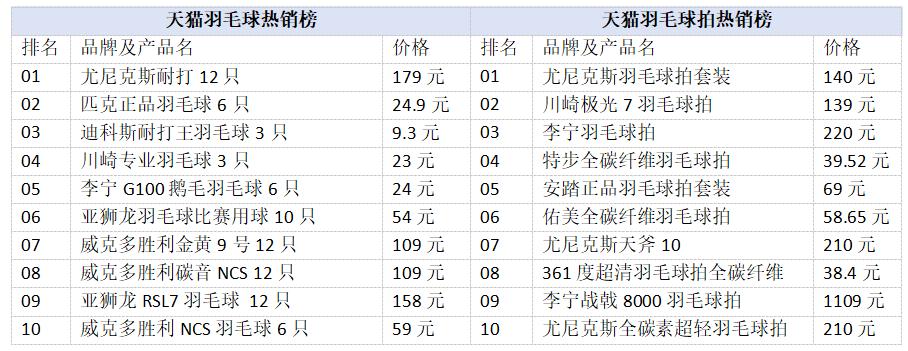
Compiled by 36Kr based on the Tmall APP. The prices are the post - coupon prices including promotions and other activities.
In order to maintain a certain market share, YONEX has increased its market promotion and marketing investment globally.
As a leading badminton brand, since 1984, YONEX has been the title sponsor of the All England Open Badminton Championships. In 2021, YONEX became the official equipment partner of the BWF World Championships. In the Chinese market, YONEX has also sponsored key events such as the "Paralympic Badminton International Ranking Tournament" and the "Shanghai Badminton Open".
In addition to badminton, YONEX is also increasing its investment in tennis and golf. In June this year, YONEX's "Platinum Tennis Balls" became the designated balls for the three major ATP Asian tournaments in the 2025 season. All these may have led to YONEX's "selling and general administrative expenses" reaching 26.028 billion yen in the first half of the fiscal year 2026, a year - on - year increase of 15.4%.
Of course, the growth of YONEX's sales still ensures the stability of its operating profit.
However, from the perspective of the entire upstream supply, the impact of the current pig cycle is still ongoing. The arrival of the cold wave will also increase the demand of down jacket enterprises for upstream goose and duck down, which may further increase the production cost of badminton. In the future, badminton brands including YONEX also need to pay attention to the "consumer sentiment" backlash caused by product price increases.
In Lao Zhao's observation, due to the frequent price increases of badminton products, the frequency of people playing badminton has decreased. In his factory, the sales of low - end badminton products have stagnated, and the sales of mid - to high - end competition - level products have also begun to decline, gradually shifting from short supply to a slight inventory.
In contrast, YONEX's price increase strategy is not limited to badminton products. The prices of its badminton rackets, shoes, clothing, and grip tapes have all increased across the board. Frequent price increases of core categories in the short term will inevitably erode the brand's future premium ability. For YONEX at present, it still needs to find a balance between price and sales volume in its main business of badminton.
As of November 25, YONEX Sports was quoted at 3,530 yen per share. Since 2025, its stock price has increased by more than 66% in total; and with a total market value of 327.834 billion yen (approximately 2.098 billion US dollars), it has exceeded the American sports brand Under Armour.
*Disclaimer:
The content of this article only represents the author's views.
The market is risky, and investment should be cautious. In any case, the information in this article or the opinions expressed do not constitute investment advice to anyone. Before making an investment decision, if necessary, investors must consult professionals and make decisions carefully. We have no intention of providing underwriting services or any services that require specific qualifications or licenses for the parties involved in the transaction.
This article is from the WeChat public account "36Kr Finance", author: Xie Yunzi, Zhang Fan. Republished by 36Kr with permission.