Fünf neue Fahrzeuge auf einmal vorgestellt: Das Premium-Segment von Zunjie startet den Legionseinsatz. Liegen zwei potenzielle Risiken dahinter?
Originally, people thought that the strategy of "the more models, the better in the competition" was a scenario for mainstream brands. No one would have thought that even super - premium brands would adopt this tactic.
According to a report from "36Kr Auto", Zunjie will launch SUV and MPV models next year. Both models will be available in standard and long - wheelbase versions, and there will also be a high - end customized version for the Zunjie S800.
Together with the current Zunjie S800, Zunjie's product portfolio will expand to three model series and six models next year.
The report further points out that the planned SUV and MPV models will be positioned slightly below the Zunjie S800, but still be tailored for the high - end market.
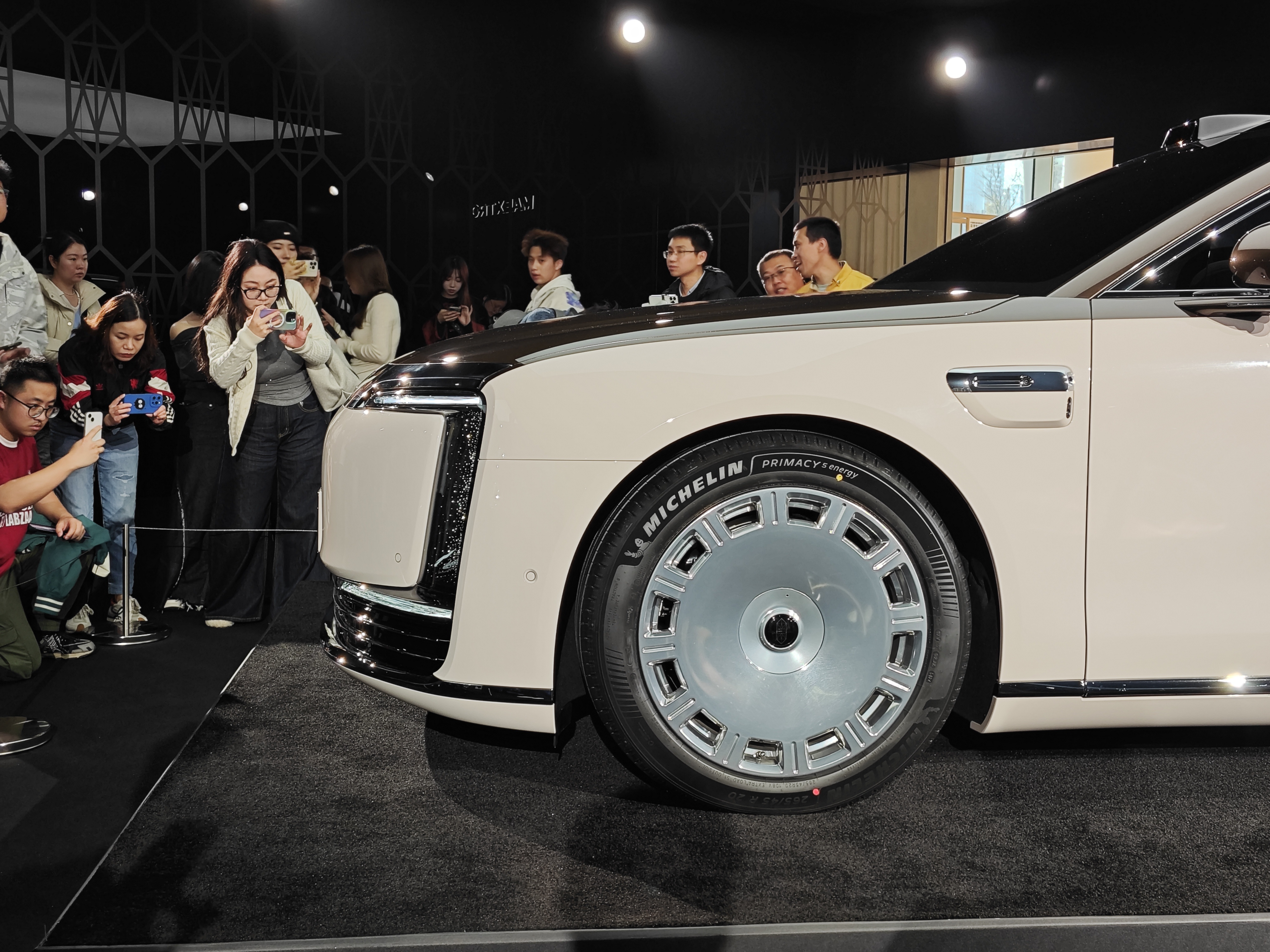
Image source: Photo from Dianchetong
From the above information, the following can be easily deduced:
1. Completion of the product portfolio in three categories. By covering sedans, SUVs, and MPVs, Zunjie is gradually moving into the core position of the super - premium market.
2. Price reduction and breaking down barriers. The price of the Zunjie S800 ranges from 708,000 to 1,018,000 yuan. Since the two new models will be positioned below the Zunjie S800, it means that the prices of the new models will be below 700,000 yuan. Super - premium brands are thus deliberately breaking their own price barriers.
3. Raising the upper price limit. The launch of the high - end customized version of the Zunjie S800 further raises the price limit and forms a three - dimensional product strategy that covers both downwards and upwards.
As soon as the news came out, it caught the attention of the automotive industry: Is the luxury market above 500,000 yuan already so competitive that automakers have to massively expand their product portfolios?
We must consider that traditional luxury brands such as Maybach, Bentley, and Rolls - Royce have mainly focused on sedans and SUVs in recent years and only occasionally tested concept cars for the sports car market. In contrast, Zunjie has initiated an expansion into all vehicle categories in just a few years.
Essentially, super - premium brands are a "business of influence". An "intensive new product launch" does not necessarily mean success. Zunjie will aggressively enter the market with six models next year. From Dianchetong's perspective, this aggressive strategy both shows the ambition to reshape the structure of the super - premium market and is a reality check on whether the brand can maintain market competitiveness for all models.
Zunjie accelerates expansion, supported by technology, production capacity, and financial resources
Zunjie's "aggressive" strategy of launching five new models in one year is not based on blind self - confidence. Behind this strategy lies the solid market foundation laid by the first model, the S800.
The Zunjie S800, with a starting price of 708,000 yuan, reached over 18,000 firm orders 175 days after its market entry. In October alone, 1,970 vehicles were delivered, which is more than ten times that of the NIO ET9 in the same price segment. It has outperformed traditional luxury models such as the Maybach S - Class and the Porsche Panamera and also dominates in monthly sales.
It can be said that the Zunjie S800 has laid a solid "foundation of trust" for the brand's further product development with its actual sales figures.
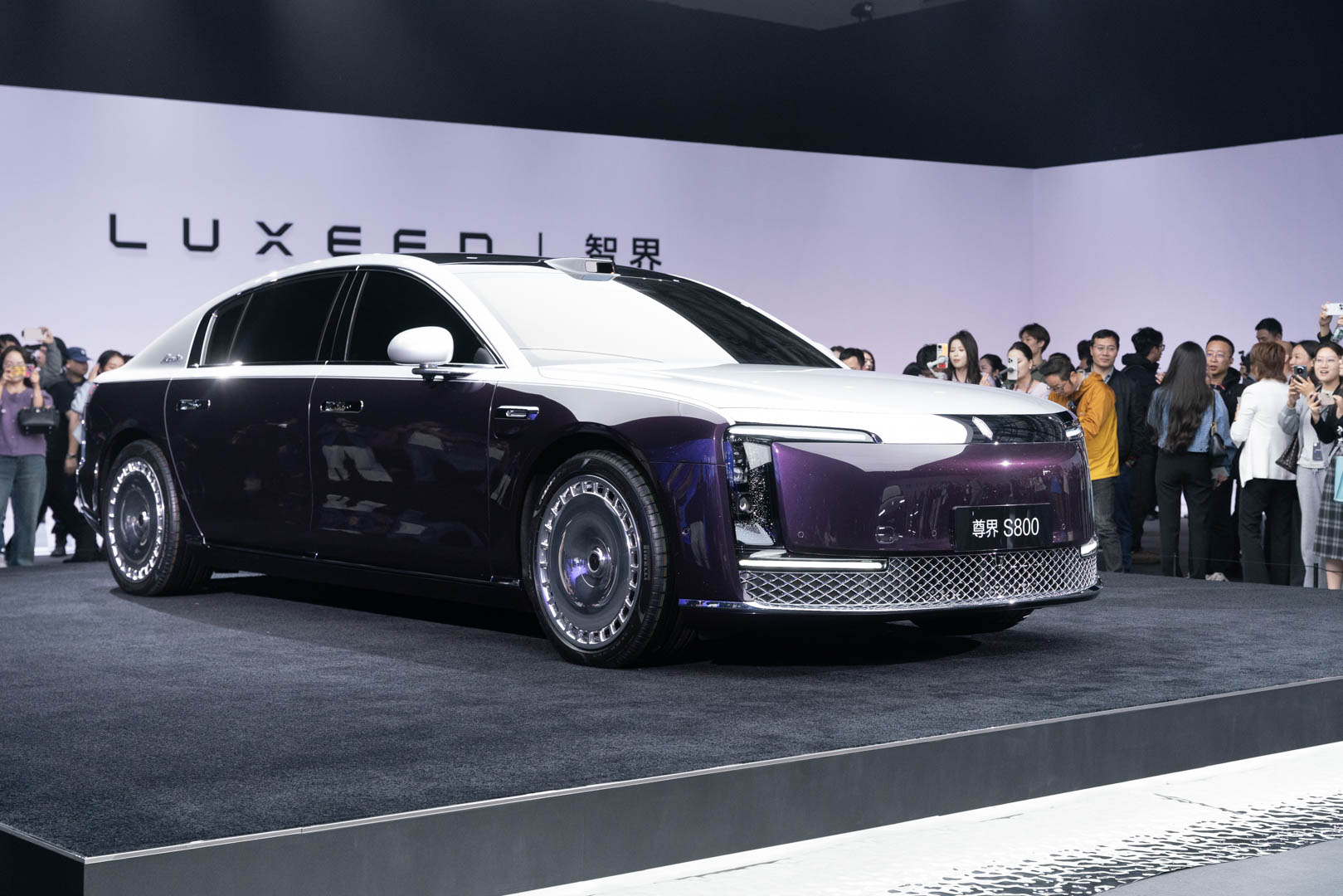
Image source: Photo from Dianchetong
However, some have questioned whether the success of the Zunjie S800 is only based on the "low price". If price were the only explanation, how can we explain that the NIO ET9 in the same price segment has not achieved the same market boost?
From Dianchetong's perspective, the success of the Zunjie S800 cannot be simply attributed to the price, but to the fact that it has correctly recognized the "core problems" and "hidden needs" of super - premium customers:
The dual - motor strategy with series - hybrid and pure - electric motors solves the customers' range anxiety problem. The Tuling Longxing platform enables a system decision - making reaction time in the millisecond range. Comprehensive technologies such as Huawei Qiankun Intelligent Driving, the intelligent cockpit, and Xinghe Communication, together with the "Angel Seat" active safety system, form a protective barrier...
These advanced technologies have now become a technological shield that other luxury brands can hardly overcome in the short term.
In the past, brand awareness was almost the only key to the luxury market. Today, as customer needs are gradually changing, the traditional understanding of technological experience is gradually being reshaped.
Today, when mobile phones and tablets have become an "extension of humans", the intelligence of a car as a "second living space" is a decisive reason for purchase. As Zhou Hongyi said: "I sold my Maybach S600 to test a new luxury car."
Behind this statement lies the strong demand of high - end customers for technological equipment and a new definition of luxury. Traditional luxury brands are thus more vulnerable to market opportunities from electric vehicle manufacturers.
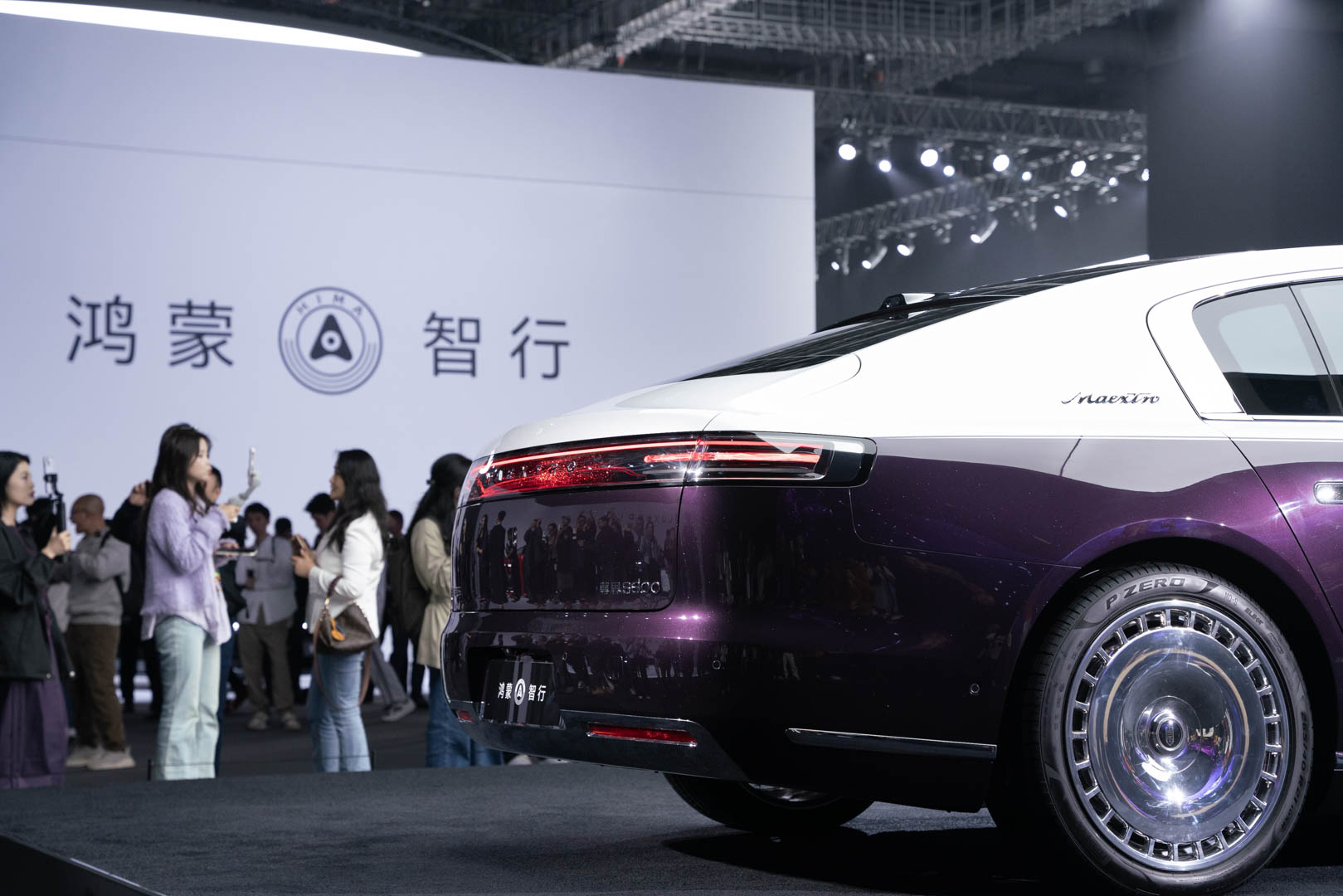
Image source: Photo from Dianchetong
Thanks to Zunjie's high - end breakthrough, Jianghuai Automobile has also reversed the sales decline in the past five quarters and recorded an increase in both sales and profit margin in the third quarter. This trend of stabilization and recovery surely forms a solid financial foundation for the continuous research and development of future products.
What's more remarkable is that although currently only the sedan model S800 of Zunjie is on the market, according to previous official information, the Tuling Longxing platform on which the Zunjie S800 is based has high scalability. It is compatible with two - to four - motor configurations, has a wide adjustment range for power, torque, and load - carrying capacity, and covers various body styles such as sedans, SUVs, and MPVs.
This means that Zunjie is technically capable of bringing multiple models in different forms to the market.
Moreover, according to the environmental report on Jianghuai's construction project for the annual production of 200,000 high - end intelligent electric vehicles published by the environmental protection department of Anhui Province, the total investment in Zunjie's super - factory will be about 3.981 billion yuan, including about 2.298 billion yuan for new equipment investment. The planned annual production capacity is 200,000 electric vehicles.
Currently, the monthly sales volume of the Zunjie S800 is about 2,000 vehicles. If future models can reach a similar sales level, the monthly sales volume would rise to about 12,000 vehicles, which exactly matches the production capacity of Zunjie's super - factory.
Technical feasibility, sufficient production capacity, and financial resources support Zunjie's plan to launch five models at once. However, it must be noted that building a good reputation is a long - term process. Future models must maintain the quality control standards and customer experience of the Zunjie S800 to avoid a deterioration of product quality due to overly rapid expansion. Otherwise, the previously established foundation of trust could collapse.
Two potential risks in Zunjie's "army - style strategy"
Zunjie has the ability to implement the "blitz strategy" of "five new models in one year". However, upon closer inspection, there could be two serious challenges.
Firstly, there is a risk that product differentiation could end up in a situation where form takes precedence over substance.
To ensure high efficiency, Zunjie's six models will most likely be based on the Huawei Tuling Longxing platform and share the drive system, intelligent system, and core design language. While this is an advantage in cost control and accelerating new product launches, in the super - premium market, which emphasizes individual identity and exclusive experiences, this could lead to a "homogeneity trap".
According to the currently known information, the new SUV and MPV will meet the needs of business customers and family customers through their long - wheelbase and standard - wheelbase versions respectively. However, this differentiation currently remains limited to the basic levels of body, wheelbase, and seating capacity and does not extend to higher levels such as driving environments, functional equipment, or the core of the driving experience.
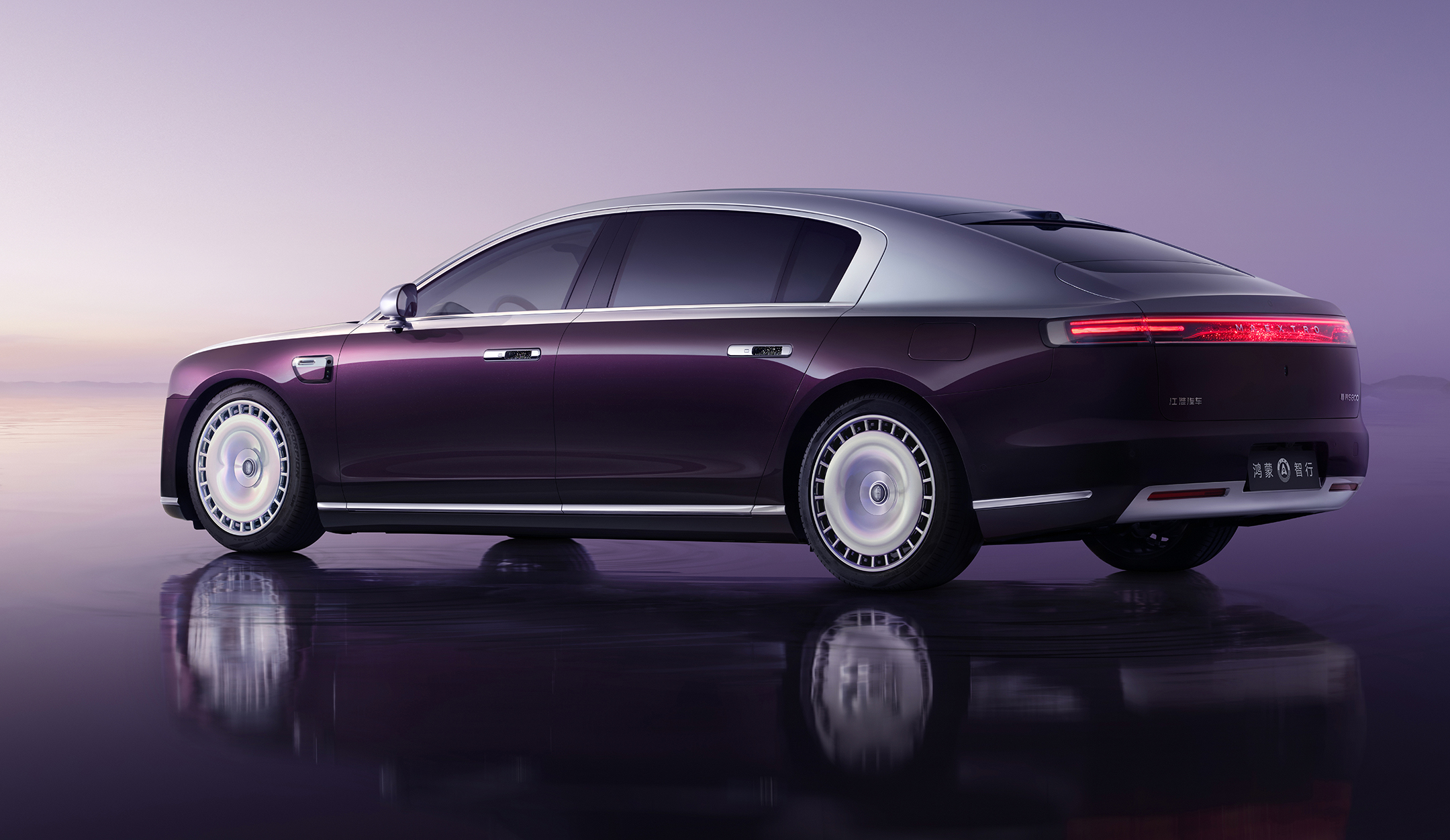
Image source: Official from Zunjie Auto
This differentiation strategy of "new body, same core" could effectively separate customer flows by price and functions in the mainstream market, but in the super - premium market, it does not meet the core requirements of the target group for individual identity and situation - specific exclusivity.
A central question is: Can the standard - wheelbase SUV ensure driving quality for family customers, but can it also not meet the driving needs of business customers?
Dianchetong has noticed that the product portfolios of super - premium brands are not very extensive, but each model has a clear positioning.
Take the Yangwang U8 Luxury version and the Yangwang U8L Ding Shi version as an example. Apart from the differences in wheelbase and body size, the U8L Ding Shi version has comprehensively upgraded its equipment for high - end business situations and private luxury experiences. Even though both models can cover both family and business situations, the U8L Ding Shi version has created a significant difference from the U8 Luxury version due to its exclusive luxury equipment.
If Zunjie's long - and standard - wheelbase versions are only differentiated based on basic parameters and no significant differences are created in the driving experience, exclusive equipment, and luxury experience, customers' choices will ultimately come down to budget or aesthetic preference. In this case, the market value of the multi - version strategy will be severely limited.
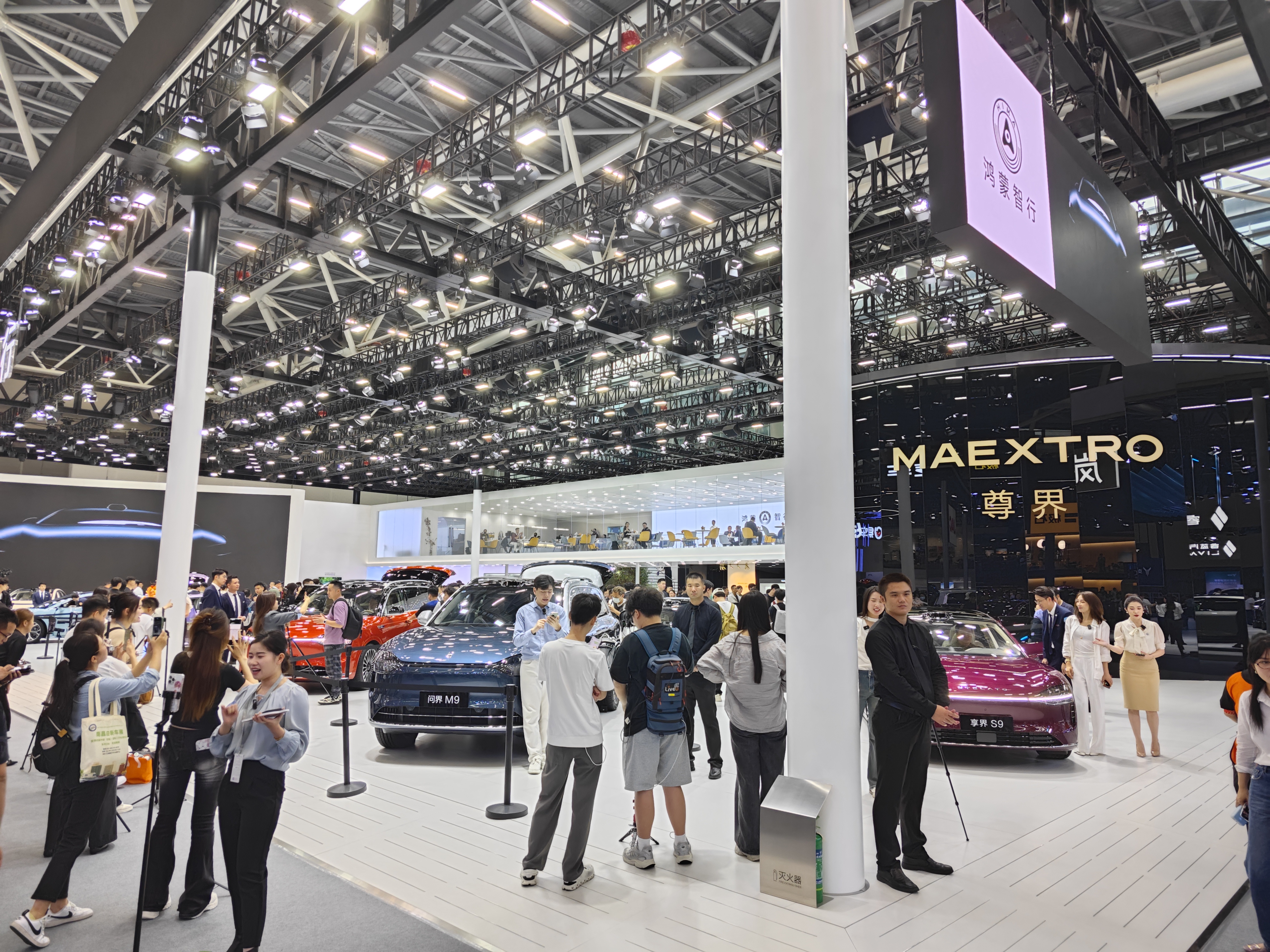
Image source: Photo from Dianchetong
Secondly, the brand faces a severe test of market competitiveness when expanding into the high - end market.
It has only been half a year since the launch of Zunjie's first model. The brand's market competitiveness mainly relies on Huawei's technological support and the good reputation of the Zunjie S800 in the market. Whether this market competitiveness can be transferred to the entire high - end series of SUVs and MPVs still needs to be tested by the market.
Take the high - end SUV market above 500,000 yuan as an example. Currently, a competitive scenario has formed between new and old market players: Electric models such as the Wenjie M9 and the Zeekr 9X are competing with traditional combustion - engine vehicles such as the Mercedes - Benz GLC, BMW X5, and Toyota Prado.
In detail, the logics of market competitiveness differ significantly: The Wenjie M9 and the Zeekr 9X rely on their dominance in "technology" and "technology architecture", while the Mercedes - Benz GLC and the BMW X5 rely on their long - established "brand reputation" and "mechanical quality" to maintain customer loyalty.
Under these circumstances, if Zunjie's new SUV does not have a clear...