Gemini 3 Pro actual test: Arts students can really create their own websites now.
After the release of Gemini 3 Pro, the market was filled with cheers. The most eye - catching feature is its “Vibe Coding” ability. That is, users can command the AI to write their own code just by describing it in natural language.
However, in the past two years, there have been too many “explosive” moments in the AI circle. In terms of quantity, it may only be second to the movie circle. When there are too many “explosions,” it always seems suspicious. Compared with existing Vibe Coding products on the market such as Crusor and Trae, what new changes does Gemini 3 Pro actually have?
The Hedgehog Commune decided to send a liberal arts student as a representative to test what an ordinary user with no coding foundation can do with Gemini 3 Pro.
Test 1: Generate a Retirement - Clock


The Retirement - Clock is the simplest case in this test. At the interaction level, users only need to select the planned retirement time, work - start time, and work - end time. The rest is calculation and front - end display. Without any debugging, the final result is almost flawless.
The only issue worth discussing is that the power consumption progress bar in the lower - right corner of the page uses green instead of gray. However, since users can go off work when the power consumption reaches 100%, and the state is indeed happier than when at work, it's hard to say whether this is a bug or a feature.
When dealing with such simple front - end requirements, the advantages of Gemini 3 Pro over other Vibe Coding products are quite obvious:
1) It has lower requirements for product requirement instructions. It can understand the user's core requirements from natural language without structured instructions.
2) It can organize the interaction logic and display hierarchy according to the product requirements.
3) It can match suitable UI and copywriting styles according to the product features.
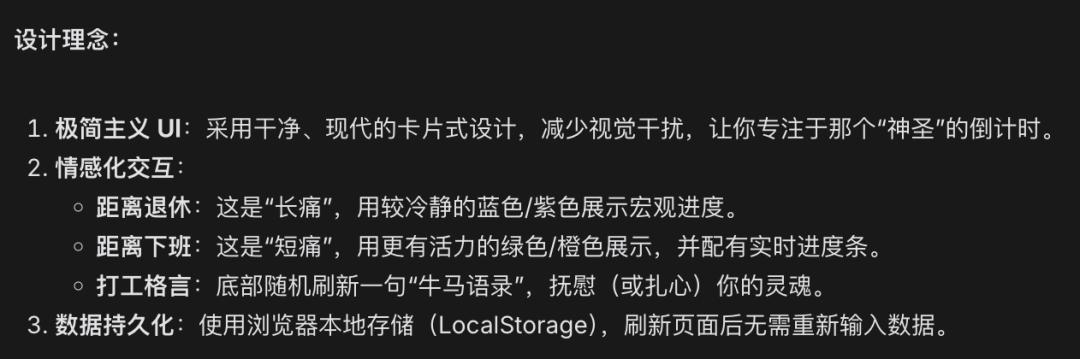
Judging from the thinking process, this AI really thought seriously about the interaction and UI solutions. It even created a set of “Retirement Quotes” that randomly refresh at the bottom, which were not required in the prompt.
When making such simple web pages, the improvement of Gemini 3 Pro is equivalent to having better interaction designers and UI designers. It can upgrade the user's one - sentence requirement into a complete and usable interaction plan, then deliver the design drawings, and complete the development with the technical plan. From the moment I input a one - sentence requirement to the final delivery of the web page, it took a total of 81 seconds.
By analogy, for countdown products like Day Master, ordinary people can completely customize them for themselves and their friends. For example, if your friend likes Mayday, you can completely customize a Mayday - style countdown tool for him.

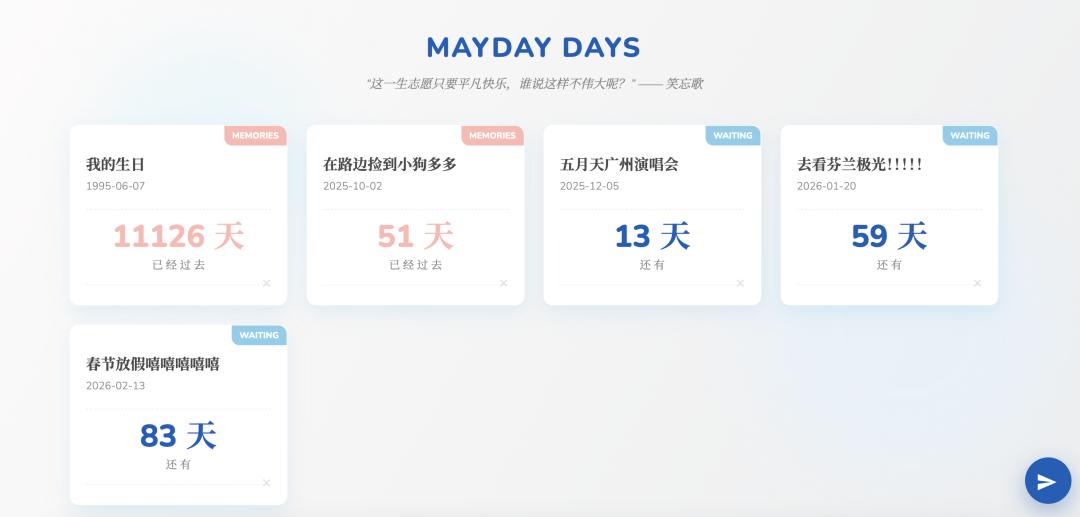
I asked Gemini how to turn it into a web page that can be shared with others. Following its detailed step - by - step instructions, I registered a Github account and deployed my first web page in life. The usage effect after opening it on the mobile phone is as follows:

Test 2: Generate a Web Page for Demonstrating the Proof of the Pythagorean Theorem
After successfully creating the first type of tool web page, I began to wonder if Gemini 3 could create some small applications for educational scenarios, such as demonstrating the proof of the Pythagorean theorem to primary school students.

Since the target audience is primary school students, Teacher G finally created a website with four pages. First, it reviews the formulas for side lengths and areas, and then completes the proof through the movement of figures. Since I required it to “pay attention to guidance and interactivity” in the prompt, Teacher G designed several operations where primary school students need to click the mouse themselves.
Test 3: Personal Photo Editing Tool
If you think the existing photo - editing software is not good enough, or if the features you like require payment, it's completely okay to spend two minutes customizing a photo - editing tool for yourself.

After 92 seconds, a customized photo - editing web page was born:

I also added a grainy effect function. The exported photo looks like this:

You can also ask Teacher G to add some new features, such as adding a message to the photo and supporting self - set dates.

Test 4: Generate a Web Page for Making Electronic Wedding Invitations
Another applicable scenario is electronic wedding invitations. Although existing marriage - related APPs support users to make electronic invitations for free, it's difficult to achieve customized effects, and users have to endure the watermark of the marriage - related APP on the invitation. Can Gemini be used to make a web page for making electronic invitations?

Compared with the previous requirements, the invitation maker adds the call of a third - party map. After the actual test, there is no problem with local display and jumping.

However, a real invitation is meant to be shared with others. Supporting users to upload photos and allowing the shared person to directly open the link and load the uploaded photos cannot be achieved by simple front - end code alone, and it also exceeds the technical boundary of this liberal arts student.
If it's just for practical use, there is a simpler way: Hard - code! Hard - code everything in the code! Instead of making a complex invitation generator and then using it to generate an electronic invitation, it's better to directly tell Teacher G the information and let it directly write a shareable invitation web page. So the prompt was modified as follows:

After several rounds of debugging, a shareable customized invitation was born. Teacher G seemed to be brainwashed by the song “Passing by the World” recently and wanted to insert the lyrics into the invitation several times. It didn't stop until I reminded it for the second time that “Passing by the World” is not sung by Yoyo Lin. At this point, can the show “Sound of Our Time: The Chinese Wave” let Yoyo Lin cover “Passing by the World” and turn Teacher G's bug into a feature? (There is no advertisement here, just 100% personal preference.)

In short, after about 10 minutes of debugging, I successfully obtained a customized wedding invitation that can be directly shared with guests.

Test 5: Generate a 24 - Point Card Dealer and Scorer
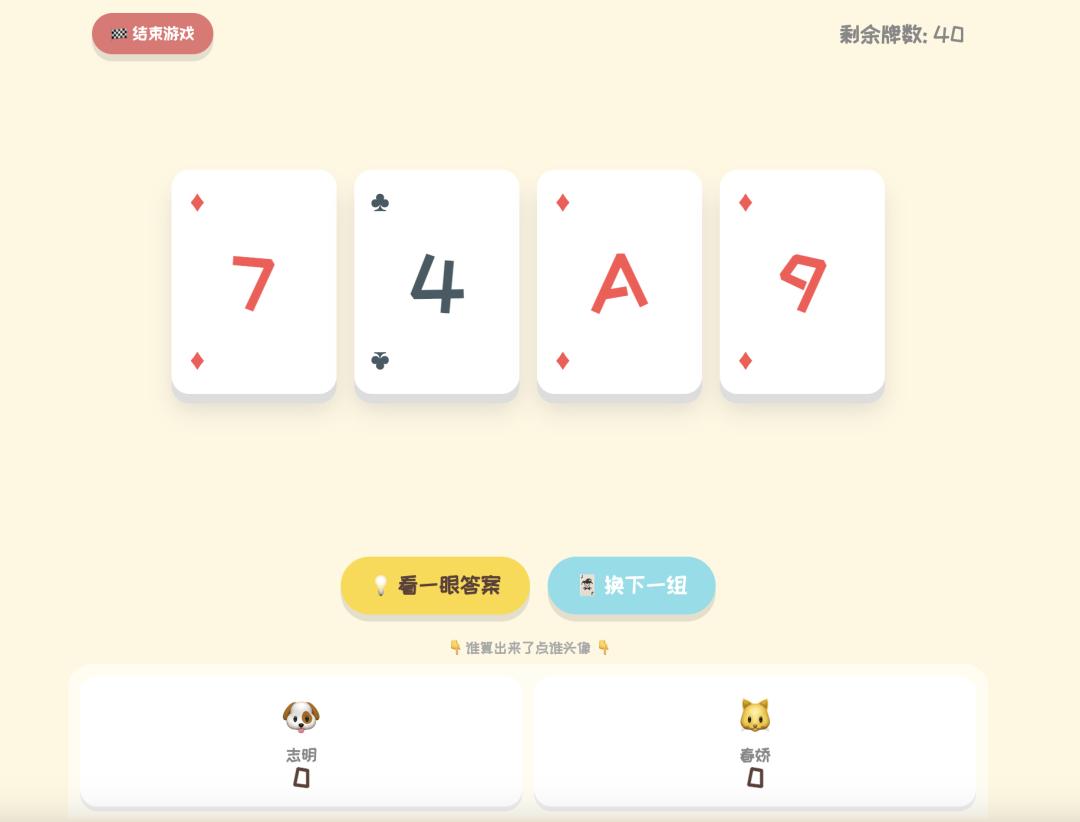
Beyond tool and teaching scenarios, Gemini 3 Pro can already generate practical game tools. For example, it can customize a 24 - point card - dealing and scoring tool for offline gatherings. The prompt had a total of 102 characters, and it took a total of 124 seconds from thinking to completing the code.

After testing once, the main process has no problems at all and can be directly used in offline gathering scenarios. By analogy, for many offline small games where it's hard to find a suitable tool, a special gameplay tool can be customized with Gemini 3 Pro.

After two days of testing Gemini 3 Pro, as a liberal arts student with zero coding ability, besides exclaiming “Teacher G is powerful,” there are also some small insights worth sharing.
1. The more abstract the requirement, the more complete the delivery
Compared with other Vibe Coding products, Gemini 3 Pro has an extremely strong ability to understand “requirements.” Here, the requirement is not the kind of requirement document delivered by product managers, which needs to clearly define various functional boundaries and exception - value handling. Instead, it's the most core one: what I want to do and what I want to achieve. It can fill in the rest of the interaction logic, implementation details, and even the design style for you.
In real life, interaction designers and developers hate it when product managers put forward “one - sentence requirements” or “I have an idea.” However, this AI is best at executing such abstract requirements. And it especially doesn't like users “telling it what to do.” Even when asking it to make adjustments, a more effective way is to describe which requirements are not currently met, rather than telling it to add a specific