Die beliebtesten Schlagwörter des Jahres 2025 sind da: Begriffe im Zusammenhang mit KI dringen immer häufiger in unser Leben ein.
Quick Overview of Key Points
· Recently, major authoritative dictionaries and institutions have successively released their Words of the Year for 2025. More and more English words related to AI are evolving from technical terms into high - frequency words in daily life and social interactions.
· The Word of the Year chosen by the Collins Dictionary in the UK is “vibe coding”, which means “atmospheric programming”. It refers to using artificial intelligence to convert natural language into computer code.
· Among the Words of the Year released or short - listed by major authoritative dictionaries in recent years, many are directly related to AI, such as “agentic”, “clanker”, “slop”, “hallucinate”, etc.
· Apart from AI, the Words of the Year selected by various dictionaries and institutions this year also reflect the latest trends in society in terms of technology, health, work, and lifestyle. For example, the official Word of the Year 2025 announced by Dictionary.com is “67”.
vibe coding
Hot Words of the Year 2025
In 2025, the Collins English Dictionary in the UK announced its Word of the Year: “vibe coding”.
The popular Chinese translation of “vibe coding” is “atmospheric programming”, which means using artificial intelligence to convert natural language into computer code. Simply put, it means telling the AI what you want, and the AI will automatically generate, modify, and optimize the code, without programmers having to write code line by line.
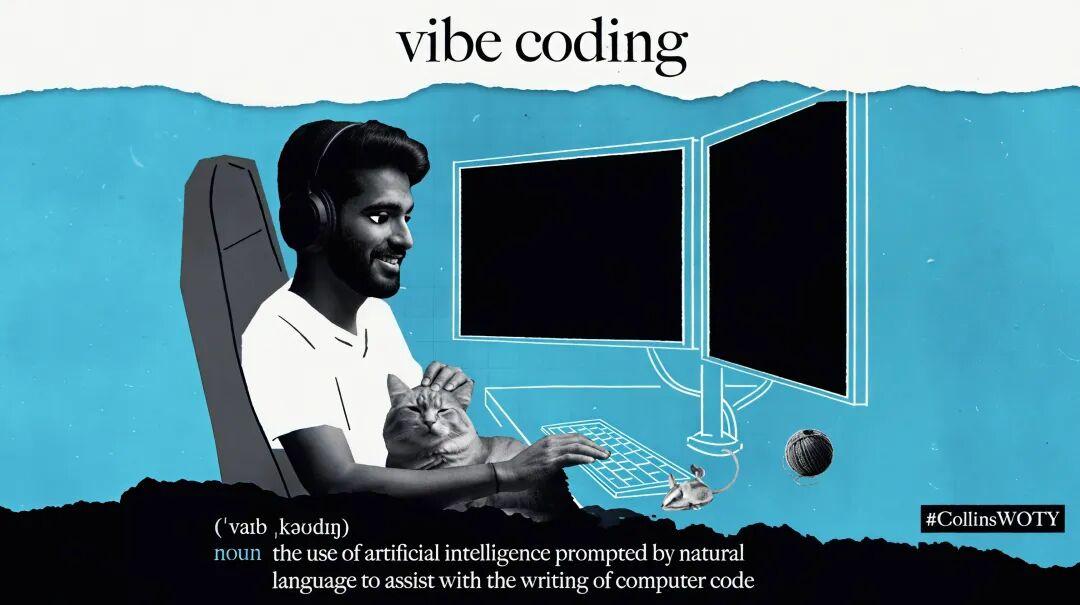
This term was first proposed in February this year by Andrej Karpathy, the co - founder of OpenAI and the former head of AI at Tesla. He said on a social platform that it is a new way of programming, where people “are completely immersed in the programming atmosphere and even forget about the existence of code”.
In just a few months, the global usage frequency of the term “vibe coding” skyrocketed. It quickly went beyond the technical circle and entered the realm of common vocabulary. Linguists at the Collins Dictionary captured this trend from a corpus containing 24 billion words and believe that this word fully reflects the evolution of language over the past year.
A Google report in 2025 pointed out that the adoption rate of artificial intelligence among software development professionals has soared to 90%, a 14% increase from last year. The selection of “vibe coding” marks a major transformation in the field of software development - artificial intelligence is making programming more accessible to the general public, and “AI can help me write code” has become part of public perception.
AI is Becoming a High - Frequency Word in Life
Actually, as early as 2023, Collins directly selected “AI” as the Word of the Year. According to the definition in the Collins English Dictionary, AI is an abbreviation for Artificial Intelligence, which means the imitation of human mental functions by computer programs. The publisher of the dictionary stated in a statement that AI is regarded as the representative of the next technological revolution.
If the selection of AI in 2023 represented humanity's first collective awareness of the existence of generative intelligence, then this year's choice of “vibe coding” as the Word of the Year by Collins represents humanity's start of working with AI. After two years of development, AI can not only generate articles, images, and music but also generate code, build software, and deploy applications using natural language, integrating more deeply into people's lives.
In addition, among the Words of the Year released or short - listed by major authoritative dictionaries in recent years, many are directly related to AI.
■agentic
In 2025, the word “agentic” was short - listed for the Word of the Year by Dictionary.com. Originally, it is a psychological and sociological term referring to the ability of humans to act independently, make choices, and shape the environment.
However, with the rapid development of AI, it is used to describe technologies that can perform tasks and make decisions autonomously, namely “agentic AI”. This word reflects the reality that the boundary between humans and machines is becoming increasingly blurred.
■clanker
The word “clanker” was short - listed for the Collins Word of the Year 2025. “Clanker” comes from the verb “clank” and usually refers to an object that makes a metallic clanging sound. Since the mid - 2000s, in the Star Wars film series and games, “clanker” has been a derogatory term for robots and artificial intelligence.
With the popularity of AI technology, “clanker” has become popular again and has become a special term for netizens to complain about AI or robots, meaning similar to “artificial stupidity” in Chinese context.
■parasocial
The Cambridge Dictionary selected “parasocial” as the Word of the Year 2025. It describes a one - way, virtual interpersonal relationship, usually referring to the one - sided emotional connection and intimacy that an audience has with media personalities (such as celebrities, streamers, influencers), while the other party does not know or understand the audience.
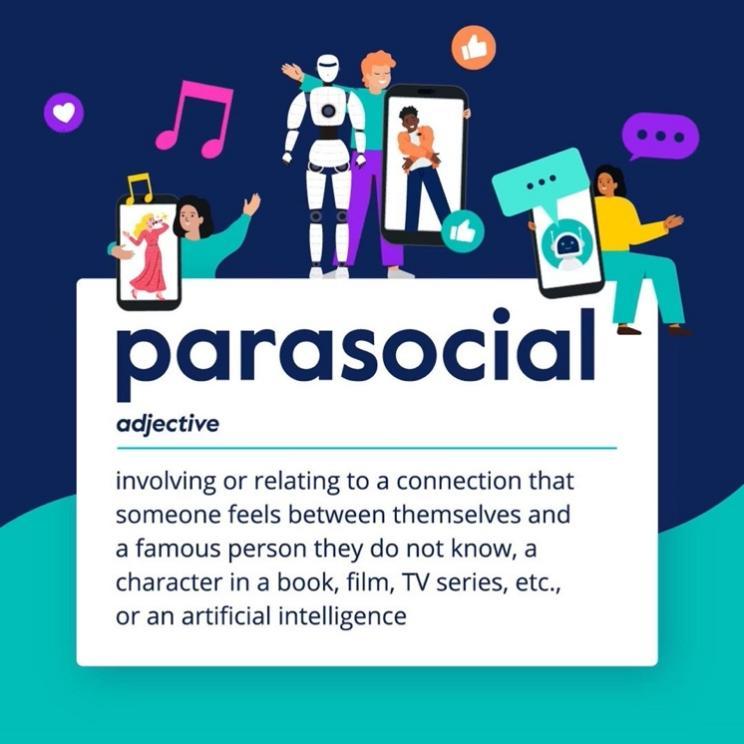
As many people regard AI tools as “friends” that provide positive affirmation or substitutes for therapy, the parasocial trend is taking on new dimensions. Simone Schnall, a professor of experimental social psychology at the University of Cambridge, said: “The rise of parasocial relationships has redefined the fan circle, celebrity culture, and how ordinary people interact online with the support of artificial intelligence.”
■slop
Another word directly related to AI, “slop”, was also short - listed for the Cambridge Dictionary's Word of the Year this year. This word was also short - listed for the Oxford University's Word of the Year candidate list last year.
Since the mid - 19th century, “slop” has gradually been used to describe worthless or meaningless cultural content. With the popularization of AI - generated content, this word has been given new connotations and is often used to describe low - quality content generated by AI, such as false information and inauthentic reports. Such information can not only affect individual judgment but also trigger a more far - reaching trust crisis at the social level. The popularity of “slop” reflects that while AI technology is constantly developing, people are also always vigilant about AI - generated content.
■brain rot
In 2024, the Oxford University Press in the UK named “brain rot” the Word of the Year. It is translated as “mental decline” in Chinese, referring to the deterioration or regression of a person's mental or intellectual state, especially the state caused by excessive browsing of boring or low - quality content (especially current online content).
The term “brain rot” can be traced back to 1854 when American writer Henry David Thoreau used it in Walden to satirize human mental laziness. In the digital age, it precisely captures people's general unease about information overload. Data shows that from 2023 to 2024, the usage frequency of the term “mental decline” increased by 230%, making it a popular self - deprecating term among Generation Z and Generation Alpha.
In the era of social media, fragmented content is becoming a breeding ground for “mental decline”, and the use of a large number of AI tools is also accelerating “intellectual outsourcing” in a more subtle way. Casper Grathwohl, the head of the language department at the Oxford University Press, said: “‘Brain rot’ shows one of the known dangers of virtual life and how we use our free time. This seems to be the next chapter in the human - technology culture dialogue.”
■hallucinate
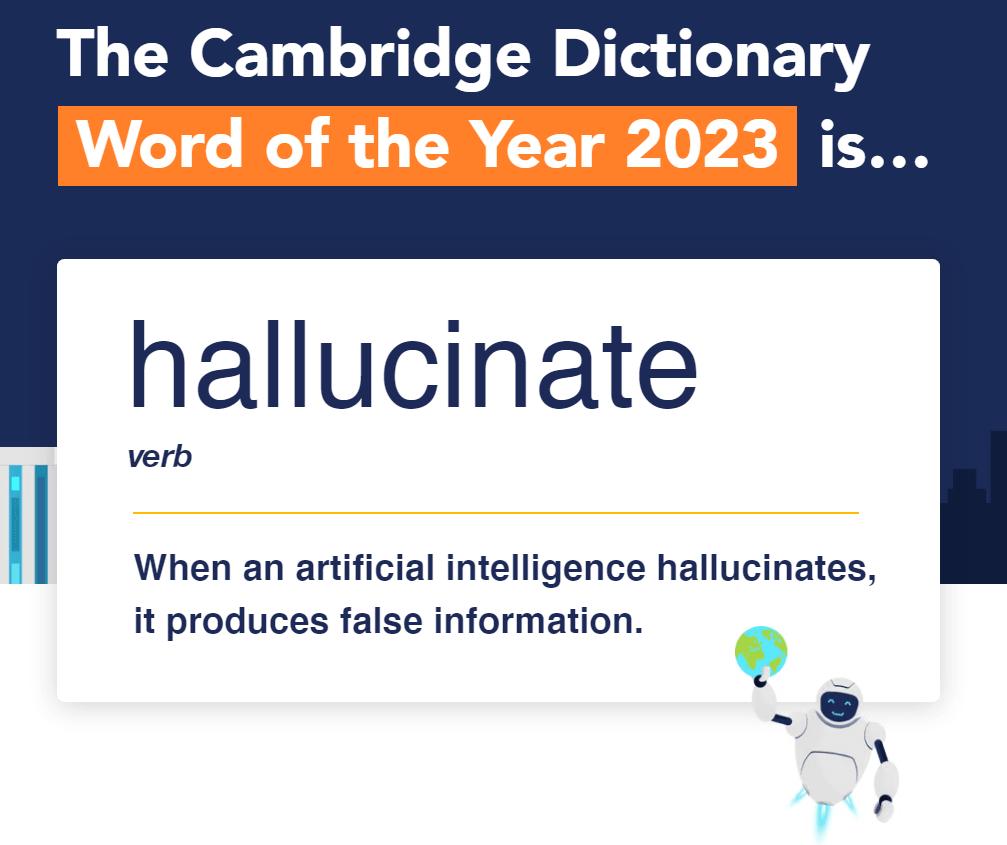
The Cambridge Dictionary in the UK chose “hallucinate” as the Word of the Year in 2023. Originally, “hallucinate” mainly refers to having hallucinations or seeing non - existent things due to illness or side effects of medication. In the AI era, it has been given a new technical meaning, and people use it to describe the phenomenon of large language models fabricating false information.
■authentic
Merriam - Webster Dictionary chose “authentic” as the Word of the Year in 2023, which means real and genuine. Although this word has existed for a long time, when AI - generated content is everywhere on the Internet and becoming more and more realistic and difficult to distinguish from the real, people's attention to “authentic” has skyrocketed. People are now more than ever cherishing the authenticity of people and information.
From “AI”, “hallucinate”, “authentic” in 2023 to “vibe coding” this year, AI - related words have become the Words of the Year again and again. This not only reflects the popularity of AI but also accurately captures the psychological state of humanity in the stage of artificial intelligence development. People are amazed by the birth of AI, vigilant about its flaws, in search of the authenticity diluted by technology, and have learned to co - exist and cooperate with AI.
Today, we are starting to use more delicate words like “vibe coding” to describe the experience of co - existing with AI, which marks that our relationship with AI is moving towards a new stage: from instrumental use to symbiotic dialogue.
Beyond AI
New Life Trends Reflected in the Words of the Year
It's not just about AI. The Words of the Year selected by various dictionaries and institutions this year also reflect the latest trends in society in terms of technology, health, work, and lifestyle.
Dictionary.com officially announced “67” as the Word of the Year 2025, pronounced as “six - seven” instead of “sixty - seven”. According to the official statement, the lexicography team at Dictionary.com analyzed a large amount of data, including news headlines and social media trends, and found that since June 2025, the search volume for “67” has increased significantly.
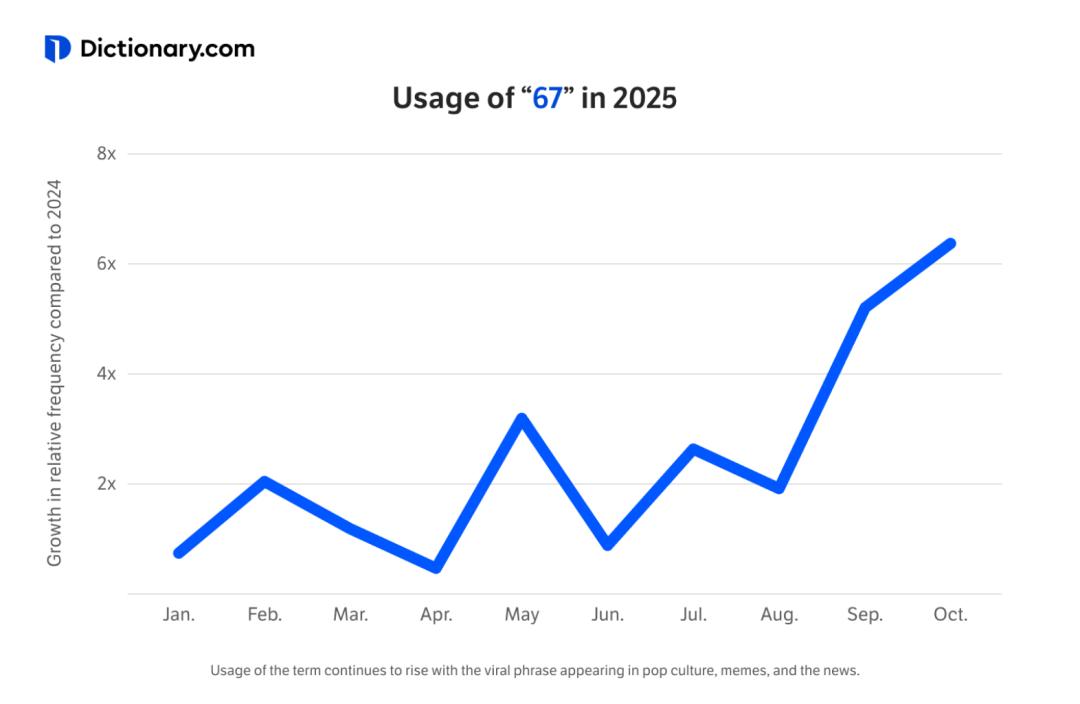
Young people use “67” as a catchphrase, meaning something like “not bad”, “so - so”, “just okay”. Dictionary.com pointed out that “67” is meaningless, ubiquitous, and absurd. But perhaps the essence of its popularity lies in its “undefinability”. For users, it creates a sense of connection.
In addition, words such as “biohacking”, “micro - retirements”, “coolcation” also made it onto the Collins 2025 Word of the Year candidate list.
“Biohacking” is translated as “biohacking”, referring to modifying the natural functions of the human body in various ways in an attempt to achieve better health and a longer lifespan. From cryotherapy to nutrigenomics, “optimizing life” has become mainstream. Under workplace pressure, “micro - retirements” are becoming more and more popular. This term is translated as “mini - retirements” and is often used by Generation Z and millennials to describe taking a break between different employment periods to pursue personal interests. Retirement doesn't have to wait until old age; one can press the pause button on work at any time. As for real vacations, “coolcation”, or “cool vacation”, is popular. Climate change is changing people's vacation maps. Summer is no longer just about the beach, and people are turning to cooler destinations such as Norway, Iceland, and Scotland...
These Words of the Year are not only records of the times but also mirrors that reflect the multi - dimensional picture of human life and ultimately point to a core proposition: In a world accelerated and reshaped by technology, how can we live more wisely, preserve our authenticity better, and rediscover the real sense of connection that has been drowned out by the noise, whether it is with others, with nature, or with ourselves.
This article is from the WeChat public account “Sequoia Capital China”, and is published by 36Kr with authorization.