The proactive pursuit of health needs has become the underlying theme of consumption, and Tmall has emerged as the primary battlefield for health brands to break through.
Health is becoming a prerequisite for consumption.
It permeates every corner of life: probiotic gummies on the breakfast table, oral liquids in the office drawer, medical facial masks in the bathroom, sanitary pads and colored contact lenses in the bag.
"Early health consumption focused on solving problems, such as calcium supplementation and treating insomnia. Now users are more pursuing prevention, experience and self - pleasure. Health has become a daily need just like eating and drinking," Jiang Xia, the person in charge of the Tmall Health Marketing Center, told 36Kr. From the platform's perspective, health consumption is shifting from passive to active and from targeted to daily.
Behind the trend change is the reorganization of consumer psychology.
Health is no longer a choice to solve problems, but a way to maintain a state. People are moving from treating diseases when they occur to preventive management, from passive consumption to active management, and from purchasing functional products to choosing a lifestyle. From diet to care, from the body to emotions, people are starting to take care of themselves in a more delicate way: for peace of mind, for comfort, and for a more stable state.
If this year's Double 11 is regarded as a surging consumption wave, health is the silent undercurrent: calm, yet reshaping the order of every life scenario.
01. "She" in Health Consumption: From Functional Consumption to Lifestyle
It cannot be denied that in this consumption wave with a "health background", women are still the first to perceive the changes and take action.
According to Tmall Health data, the main consumer group in the health sector this year is still concentrated among women aged 20 to 40. They are not only the decision - makers for the family's health expenditure but also the core group for self - care.
Their health needs are also shifting from treating diseases to state management and even a sense of self - pleasure. Jiang Xia summarized it into three keywords: "external beauty, internal conditioning, and daily care". The core characteristic is the pursuit of multiple things in the field of health consumption: both nourishment and beauty, attention to both the body and emotions, and emphasis on both science and experience.
The most direct manifestation of this change is the increasing refinement of consumption scenarios. In the past, health products were mainly focused on general functions, such as calcium supplementation, sleep - aid, iron supplementation, and anti - fatigue. In this year's Double 11 consumption wave, you can see more segmented needs and categories: menstrual care, emotional soothing, hormonal balance, sexual relationship, qi and blood management, sports recovery, and skin barrier repair.
These scenarios are specific enough, specific to a certain moment in a day, a certain cycle of the body, or a certain emotional fluctuation. Each need corresponds to a completely different product logic. They do not appear out of thin air but originate from real slices of daily life.
Due to the refinement of needs, the "medical standard" has begun to penetrate the consumer field in a very natural way, becoming an intersection between ordinary consumer goods and health consumption. It must be admitted that the term "medical" used to have an obvious consumption boundary, and traditional consumption concepts such as "every medicine has some toxicity" were relatively common. However, as women pay more attention to "security", medical facial masks, medical - grade sanitary pads, medical oral liquids, medical intimate care products... These standards originally belonging to professional scenarios have begun to become synonyms for safe use.
From the user's perspective, this is a two - way drive of emotion and rationality; from the industry's perspective, this is the redrawing of the boundaries of health categories. From the platform's perspective, Jiang Xia summarized this change into two trends.
First, the daily use of medical - grade products. The rapid growth of categories such as medical facial masks, medical sanitary pads, and medical cold compresses during this year's Double 11 shows that users have accepted the "daily use of medical standards", allowing ordinary daily necessities to have a higher safety threshold and more explicit efficacy support.
Second, the food - like transformation of tonics and health foods. The transformation of traditional tonics towards a younger audience is also accelerating. Categories such as ready - to - drink oral liquids, polygonatum drinks, donkey - hide gelatin syrup, and yuling paste have become lifestyle products for young people again with the help of modern packaging and ready - to - drink forms. These were originally tonics for the elderly.
The common point of these two trends is that health has been brought back from the professional scenario to life.
"Health consumption has shifted from the pharmacy logic to the living - room logic, office logic, and sports logic," Jiang Xia believes that behind this is a new consumption logic: health is no longer a defense line against diseases but a standard for the quality of life. The "pharmacy logic" she mentioned means that consumers used to regard health as an isolated area; while the living room, office, or sports are all specific scenarios in life.
From a business perspective, it is a consumption migration from "hidden needs" to a "category revolution". Users' active investment in state management has continuously magnified the small needs hidden in the details of life: body temperature changes before and after menstruation, back pain after sitting for a long time, emotional fluctuations during seasonal changes, sleep problems caused by unstable work and rest... These subtle and real scenarios have opened up new incremental space for the industry and also made a number of brands on Tmall that saw the trend in advance and achieved results emerge.
02. Precise Needs in Scenarios are the Endogenous Driving Force for Growth
The awakening of the demand side will always lead to the reshaping of the supply side.
In the past, health brands preferred to use the same language in communication: formula, technology, raw materials, and efficacy.
But during this year's Double 11, a significant change in the health sector is that popular products have emerged from scenarios. Brands have begun to re - examine users' life rhythms: when do they need the product? In what mood do they face the product? What they really want is a sense of security, physical experience, or a certainty of being taken care of?
Jiang Xia believes that this round of health consumption upgrade is essentially a re - verification of the principle that "demand determines supply". "Consumers' needs are becoming more and more specific and emotional. Only by finding answers in real - life scenarios can brands find growth points."
Tmall Health's backend data shows that during Double 11, categories such as donkey - hide gelatin syrup, medical gynecological sanitary pads, hair removal devices, and scar removal creams all achieved high - speed year - on - year growth. The starting point of many new products that performed well in segmented tracks during this year's Double 11 was almost always the professional exploration of precise scenarios.
The more detailed the scenario, the more willing users are to try; the more specific the need, the more likely the supply can find a breakthrough.
Jiuzhitang: The Young - oriented Experiment of an Old - Brand from Medicinal Paste to Ready - to - Drink
In the past, when people mentioned Jiuzhitang, they would naturally associate it with traditional Chinese medicine. Such a traditional brand has also been making new attempts.
Yuan Yinghui, the person in charge of Jiuzhitang's e - commerce, told 36Kr that they noticed a very clear change: the inconvenience of carrying traditional medicinal paste and its slow absorption are common pain points for users. The core needs of female users "have shifted from simple efficacy to a comprehensive need for high - efficiency, convenience, and experience. They want to scientifically supplement qi and blood and also pursue lightweight health preservation."
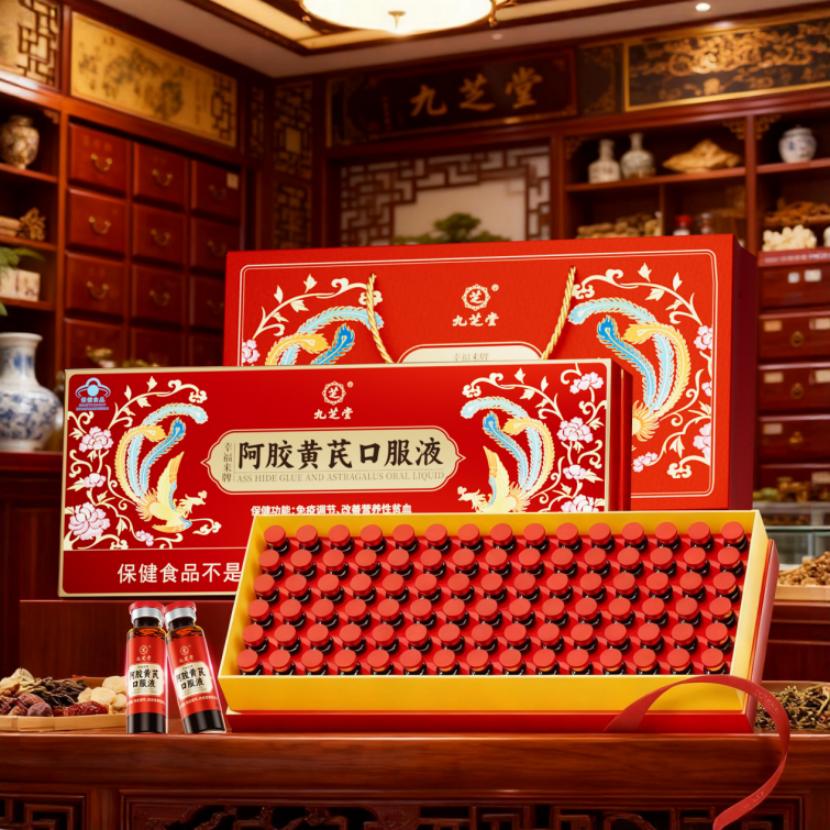
Therefore, instead of strengthening the "tradition", Jiuzhitang made a subversive innovation to its products: turning the medicinal paste into a ready - to - drink oral liquid that can be easily opened. For example, the donkey - hide gelatin and astragalus oral liquid accurately targets the "light - health - preservation scenario": it can be taken at the work desk, during business trips, before and after sports, or during late - night overtime.
The form has become lighter, the threshold has been lowered, and the scenarios have been expanded. The sales volume of Jiuzhitang's product quickly exceeded 10 million, ranking among the top 5 in the donkey - hide gelatin paste category. During this year's Double 11, the sales volume of the donkey - hide gelatin and astragalus oral liquid also doubled.
This is a typical case of "demand driving supply": it's not that young people don't take tonics, but the way of taking tonics must adapt to their life rhythms.
beU: A Sample of a New - Generation Brand from the "Female Perspective"
The rise of beU further verifies the value of female needs. It cannot be denied that the condom industry has long been narrated from a "male perspective". From standards to expressions, women's experiences are often regarded as additional feelings.
What beU is doing is to put this ignored position at the forefront.
"The sexual scenario is a scenario with great individual differences in feelings, but women's segmented needs have not been fully met," Cola, the founder of beU, gave an example. Compared with the "thinness" which is traditionally considered the core requirement of condoms, female users often care more about "moisture" and "safety".
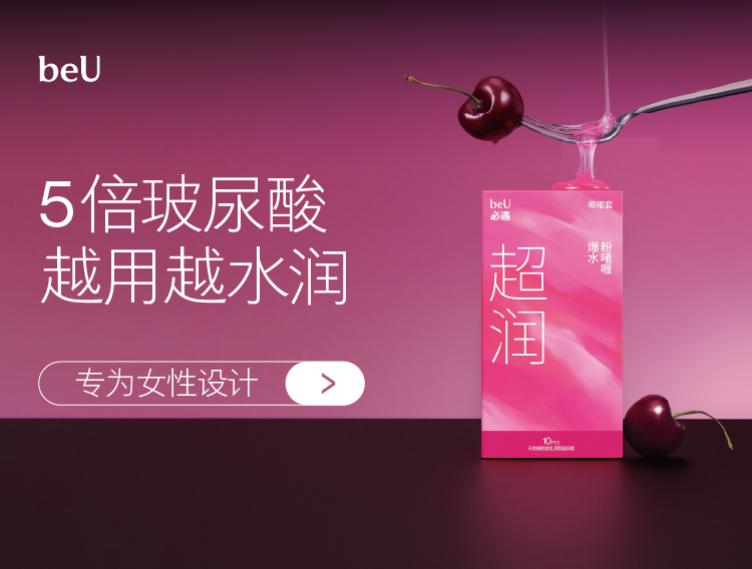
Specifically, the beU Dudu condom launched by the brand takes "lubrication, comfort, and emotional security" as the core of its design. Through joint content construction inside and outside the platform and social marketing with Tmall Health, the target user group has learned about a product designed specifically for women, activating the real user needs.
"We don't try to please everyone, but make a professional product specifically for women," Cola said. This precise positioning has allowed beU to break through in a seemingly saturated and even rigid traditional category. The beU Dudu condom has become a popular product with sales of tens of millions, once ranking among the top 8 in the Tmall condom industry. During this Double 11, the product's sales volume increased by more than 500% year - on - year. It shows a strong momentum for a new - generation brand.
Oushushuang: "The Daily Use of Medical Standards"
If other brands target explicit needs, Oushushuang focuses on the often - ignored but highly - used implicit needs in women's health: daily care outside of the menstrual period.
According to the conventional logic, sanitary pads are standardized daily necessities with limited "room for improvement". But Oushushuang started from the actual frequency of use by users: women are more sensitive to hygiene care during periods such as before and after menstruation, ovulation, and the recovery period from inflammation than the industry imagines.
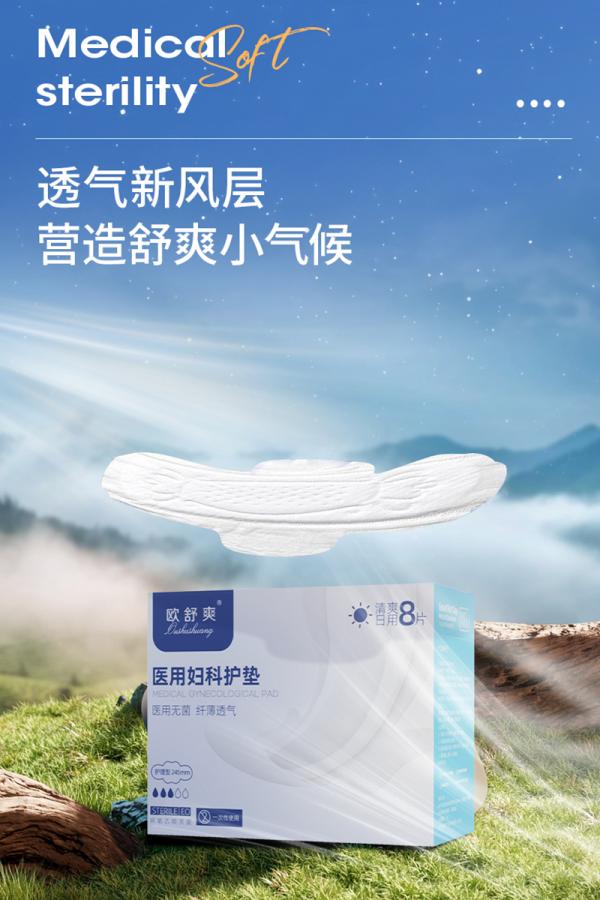
Therefore, the brand chose to introduce the "medical - grade sterilization standard" into its sanitary pad products. For real users, this solves long - existing but rarely - expressed problems: irritation, stuffiness, and uncertainty. The medical grade is no longer a professional product with a high threshold but a safety standard that can support daily life.
This has allowed Oushushuang, a new merchant that entered Tmall in 2025, to grow rapidly, once ranking first in the medical gynecological sanitary pad category. As a new store, its sales volume increased by more than 100% month - on - month during this Double 11. Its success fully shows that the "medical grade" is becoming a new consumer language.
Jiuzhitang, beU, and Oushushuang are not just individual cases but a microcosm of many health brands rising on Tmall. They jointly depict a trend: the competition in health consumption has shifted from a simple functional narrative to a lifestyle. "Efficacy" is no longer the end but the starting point; the real barrier is whether a brand can understand the real details of life and respond to users' physical experiences.
03. Needs Vary, but the Position Remains
Consumer trends may change, but brands always need to find a certain foundation to rely on.
In this year's Double 11 health sector, whether it is the rejuvenation of century - old brands or the breakthrough of new - generation brands in segmented scenarios, they all ultimately point to the same business foundation: Tmall Health.
Compared with a "traffic platform", the health industry needs a "business position" more. The health consumption chain is longer, and the trust threshold is higher. The cold start of new products often depends on verification rather than exposure. Therefore, whether the platform can help brands find the first batch of real users and whether it can make the trends be repeatedly verified is more important than short - term explosions.
Both sides can benefit from cooperation. The platform also needs some new supplies that can meet the needs. At the platform level, the trends in health consumption are accurately captured and magnified. Jiang Xia revealed that Tmall Health has provided mechanisms such as traffic weighting, first - sale support, and joint marketing feedback for new merchants and new products. Brands that meet the conditions of "new launch" and "new upgrade" can get up to 1.5 million exposures and 500,000 yuan in feedback incentives.
This allows innovative brands to enter the track with a lower trial - and - error cost and also helps established brands find new growth points in structural adjustments. "What the platform provides is not just traffic but a growth logic for new products and new merchants," Jiang Xia emphasized. In a structural track like health consumption, "growth is not about chasing trends but verifying trends".
The boundaries of health consumption are still expanding. In addition to the structural directions such as the daily use of medical - grade products and the food - like transformation of tonics, the weight of new scenarios such as emotional health, family health, and pet health is increasing rapidly in the search and transactions on Tmall Health this year.
As these trends extend and intersect, the supply - and - demand relationship in the health industry is being rewritten. Users no longer start from diseases but from life; brands need technical support and more scenario insights. What the platform needs to do is to quickly align these changing clues: let new products reach real users, let trends find real needs, and keep the trial - and - error cost within a controllable range.
For brands, the performance of Tmall Health means a more realistic certainty: no matter how the trends change, as long as users' needs occur, are recorded, and are responded to here, they have a chance to occupy a better position in the next round of growth.