AI-Kopfhörer stürmen 2025: Der Zugang für die Giganten, die enge Pforte für die Gründer
Seven years ago, Google's Google Pixel Buds made their debut, painting an imaginative picture for the market. After pairing with a mobile phone, it could transform into a portable Google Assistant. According to a report from The Verge at that time, users only needed to say "Translate for me in French," and the real - time translation function would be instantly activated. This product not only supported mutual translation among up to 40 languages but also offered a series of functions such as notification alerts, message sending, and navigation guidance.
However, the ideal is plump, but the reality is harsh. Constrained by the still - immature machine translation technology, underdeveloped noise reduction technology, and the poor performance of voice recognition in complex environments, the category of smart headphones failed to truly trigger a consumer wave in the following six years.
The turning point came in 2023. With the explosion of large model technology, the wearable AI hardware industry witnessed a new wave of entrepreneurial enthusiasm. From the controversial AI Pin by Humane in Silicon Valley to the Rabbit R1, and the AI voice recorders Plaud and TicNote with annual revenues approaching hundreds of millions of dollars, various new forms of devices emerged like mushrooms after rain. They carry the common expectations of manufacturers: to become the "key scenario" for the large - scale implementation of AI technology.
As one of the wearable devices that users wear for the longest time and use most frequently, headphones naturally become a prominent player in this wave. According to Canalys' prediction, by 2025, the global AI headphone market will maintain double - digit high growth, and the annual shipment volume may even exceed 100 million pairs. The key driving force behind this comes from the maturity of large language models and multimodal technologies, which significantly enhance the naturalness and accuracy of headphones in semantic understanding, context inference, and multi - round free conversations.
The warming up of the market is obvious to all. Whether it's Ola Friend launched by ByteDance or the latest multilingual simultaneous interpretation conference headphones from iFlytek, they are all trying to seize this emerging market. However, a notable trend is that the competition focus of high - end AI headphones is no longer limited to the single function of "translation" but is gradually expanding to the construction of a "content ecosystem." Compared with iFlytek's pursuit of perfection in translation technology, the preliminary voice content and service ecosystem built by Ola Friend seem to offer more possibilities for users.
Even Apple, which has always been cautious, seems to be "impatient." In the recently leaked iOS 26 Beta 6 system files, developers found a schematic diagram of AirPods surrounded by "Hello" in multiple languages, and the file was simply named "Translate." Considering Apple Intelligence's continuous strengthening of real - time translation in calls, messages, and even FaceTime in recent years, it's not hard to see that Apple's expectations for AirPods have long gone beyond the simple scenario of "face - to - face translation" and are pointing towards a deeper and more seamless future of voice interaction.
In an era where C - end products are strongly dominated by giants with ecosystems and scale, how startups and players in niche markets can break through with agility and focus has undoubtedly become the core issue that the industry closely follows.
However, behind this seemingly promising market, a fundamental contradiction is quietly emerging: on one hand, technology giants hope to leverage their technological foundation and ecological advantages to turn headphones into the next universal and all - powerful AI entry point; on the other hand, startups are forced to retreat to niche scenarios, trying to prove that there is a vast space between "universal" and "perfect," called "specialized" and "good enough."
01. Drive Growth with Content
The shift of the technological paradigm is the underlying logic of this transformation.
The traditional "word segmentation - alignment - decoding" pipeline architecture relied on by Bluetooth translation headphones often produces rigid and fragmented translation results, and the accuracy is also difficult to guarantee. In contrast, AI headphones integrated with large model capabilities have gained a better understanding of grammar, semantics, and context, closer to that of humans, through learning from massive amounts of language data.
A typical example is that after connecting to a large model, the Timekettle W4 Pro can accurately translate "hand - brewed" as "pour - over coffee" in a specific context, rather than a literal translation. Behind this is a crucial step for AI from "recognizing language" to "understanding intention."
Meanwhile, the role of headphones is also being quietly reshaped. They are no longer just auxiliary tools for audio playback but have evolved into intelligent terminals integrating voice assistants, large model services, and multimodal interaction capabilities. As predicted by Counterpoint Research, in the future, AI headphones will penetrate deeply into vertical fields such as education, hearing assistance, and sports health, aiming to connect the information flow and perception channels between different devices.
Market data confirms the explosive power of this trend. According to statistics from Lotu Technology, the sales volume of AI headphones on e - commerce platforms in China reached 315,000 pairs in 2024, a year - on - year increase of 260.9%. By the first quarter of 2025, this figure further jumped to 382,000 pairs, nearly a tenfold increase year - on - year. The entire market is expanding at a steep curve.
Currently, the market mainly consists of two types of players with different backgrounds.
On one hand, there are AI - native companies such as ByteDance (Doubao), Xiaodu, and iFlytek. They possess model capabilities and urgently need a physical entry point to reach C - end users and transform their technological advantages into tangible service experiences. For example, in its promotion, Doubao Ola Friend emphasizes its capabilities in information query, travel companionship, language learning, and even emotional communication. Users can ask about the background of exhibits in a museum at any time, and the headphones will act like a knowledgeable personal guide.
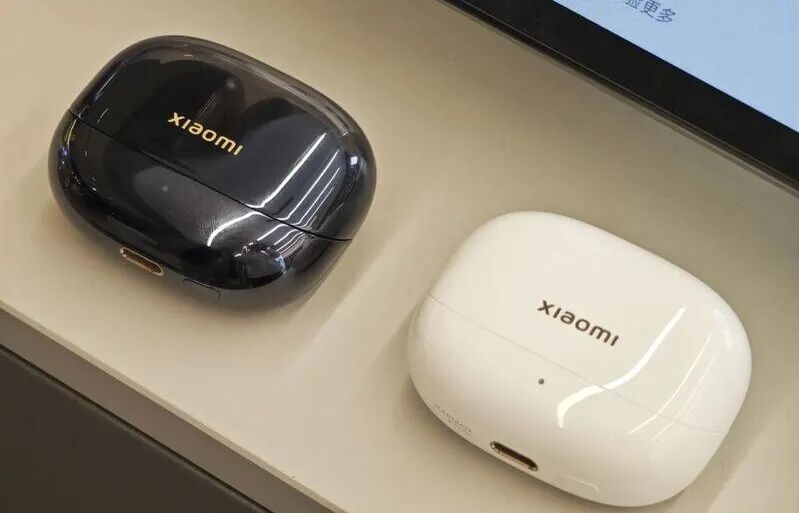
On the other hand, there are traditional terminal manufacturers such as Xiaomi, Huawei, and Honor. They deeply integrate AI headphones into their own ecosystems and expand the boundaries of scenarios through a hardware - software integrated approach. Xiaomi's Buds series continuously optimizes the voice interaction of its "Xiaomi AI"; Huawei's FreeBuds Pro and FreeClip, powered by HarmonyOS, achieve smart subtitles, whisper mode, and health linkage with wearable devices; OPPO's Enco series explores the integration of Bluetooth and AI algorithms and introduces differentiated functions such as heart rate monitoring and intelligent noise reduction.
The convergence of these two forces is actually a collision of two industrial logics: AI platform companies are "from software to hardware," and their anxiety lies in finding a tangible carrier for abstract algorithms; intelligent terminal manufacturers are "from hardware to software," and their challenge is to enable traditional acoustic hardware to break through physical limitations and evolve into intelligent nodes that can perceive the environment.
In short, the former is making up for the lack of hardware knowledge, and the latter is making up for the lack of AI knowledge. This "two - way pursuit" ultimately tests who can bridge the last gap between technology and user experience first.
Notably, sports and health are becoming an important anchor point for the function expansion of AI headphones. Take the ARC 5 as an example. Some of its versions have added blood oxygen detection and hearing assistance functions certified by the CFDA, which can provide voice feedback and data recording during sports. Manufacturers such as Huawei and Honor even regard headphones as an extended part of the health monitoring network, collaborating with bracelets and watches to build a personal health management system.
As the product manager of Cleer said, "We hope that headphones are not just a 'listening' tool but an intelligent partner that accompanies users in sports, work, and life." Looking at the current market, AI headphones are clearly in an era of "adding functions." From real - time translation and meeting transcription to health monitoring and voice assistants, manufacturers are sparing no effort to expand their capabilities.
However, beneath this prosperous scene of "function stacking," the current market education is more like testing "what you might need" based on "what I have" rather than satisfying "what users really need" based on "I understand you."
This gradually widening gap between breadth and depth may be the starting point for market differentiation in the next stage.
02. The Battle for the "Entry Point" is Essentially a Battle of "Mindsets"
On October 14, iFlytek released its new generation of simultaneous interpretation technology and translation headphones, the iFLYBUDS Pro2. The eye - catching "voice stand - in" function allows users to record sentences when their voices are not suitable, and the headphones will simulate their voice and perform real - time translation. With the technical indicators such as "two - second response and over 98% accuracy" emphasized in its promotion, iFlytek seems to have delivered an excellent report card in terms of parameters.
However, in the increasingly complex market competition, parameter leadership alone is no longer sufficient to build a sustainable moat. What really tests manufacturers is how to transform their technological strength into services that fit users' real scenarios and build a content ecosystem to support them. As pointed out in an IDC report, AI translation is evolving from the "usable" stage to the "easy - to - use" stage.
When the hype about technology fades, the market will ultimately favor players with clear positioning and firm direction. In 2021, Future Intelligence chose a different path. While the industry was generally chasing software, models, and cloud services, they returned to the hardware itself and focused on an ordinary but high - frequency office scenario.
Its CEO, Ma Xiao, once said, "In the early days of entrepreneurship, what we cared most about was not how complex the model was but whether users would be willing to use it a second time." This concept gave birth to the product philosophy of "the more specialized, the more useful."
Future Intelligence started with accurate voice transcription and gradually expanded to meeting minutes generation, task automatic organization, real - time translation, and even voice summarization, key point extraction, and title automatic generation. By deeply cultivating the vertical scenario of office efficiency, they completed the closed - loop from technology to product and then from product to commercial value. They achieved profitability in just two years after establishment, and during this year's 618 promotion, the sales volume of the new Air2 increased nearly six times month - on - month. In an area where technology often has difficulty reaching ordinary consumers, such achievements are already convincing.
In sharp contrast is the overseas expansion path of Timekettle. Objectively speaking, whether in terms of translation ability or headphone technology, Timekettle may not be the best in the industry. However, its success lies in its in - depth cooperation with overseas content creators, which precisely addresses the core pain points of cross - border users in cross - language communication through real usage scenarios and communication narratives.
More importantly, its user profile has gone beyond just "travel enthusiasts" and covers a wide range of scenarios such as education, business, medical care, and even diplomacy. A user survey in 2024 showed that more than 60% of buyers were motivated by "cross - language communication needs in work or study," which laid a solid foundation for its stable growth in the B2B market. Since its launch in 2020, Timekettle products have been sold in 171 countries and regions, and the global sales volume of its M2 translation headphones has exceeded 100,000 units.
Whether it's Future Intelligence's in - depth exploration of the office scenario or Timekettle's global breakthrough through real narratives, they jointly illustrate a core logic: what really impresses users is often not the most advanced technology but the most suitable solution for the scenario.
In contrast, although iFlytek's iFLYBUDS Pro2 has reached the industry's benchmark level in translation response speed and accuracy, compared with other manufacturers' systematic layouts in vertical fields such as health and life, iFlytek still seems too focused on single - point breakthroughs in technology and lacks the ability to provide closed - loop services for users' full - scenario needs.

Behind this difference is actually a collision of two product philosophies.
Companies like iFlytek represent the "technology - driven" path, whose underlying logic is "I have top - notch technology, and users need my products." The advantage of this path is that it can build high technological barriers, but the risk is that it assumes that users' primary or even only requirement is extreme translation performance.
On the other hand, Future Intelligence and Timekettle have chosen the "scenario - driven" path, whose logic is "There are clear pain points in a specific scenario, and I provide the most suitable solution." They may not have perfect single - item technology, but they excel in the overall experience of solving users' actual problems.
Therefore, the question that iFlytek may face is: After showing off its technology, what "unique" value does it create for users? When translation ability gradually becomes the "infrastructure" of AI headphones, just like noise reduction function becomes more and more common, can the difference in response time of 2 seconds and 1.8 seconds still form a solid moat? The solution of these minor pain points is the key to the functional differentiation of future AI headphones, and differentiation often comes from in - depth exploration of scenarios rather than pursuit of parameter improvement.
03. It's Hard to Grow Grass Under the Big Trees
"What if Tencent, ByteDance, and Alibaba also enter this market?"
This may be the "soul question" that every C - end product entrepreneur in China is forced to answer during the financing process. At an industry conference this year, a partner from Fusion Fund gave an even more cruel prediction: In the future, 90% of C - end AI products will be occupied by large companies.
The presence of giants is indeed everywhere. They have almost zero - cost user access channels, mature distribution systems, and complete ecological closed - loops. In this emerging field of AI headphones, when a product has not yet truly proven its independent value, giants can easily reach tens of millions of users by simply opening an entry point in their existing ecosystems.
More importantly, voice interaction - the core experience of AI headphones - precisely falls within the technological comfort zone of large companies. While entrepreneurs are still struggling to figure out "how to make good hardware," giants are already thinking about "how to reconstruct the next - generation entry point for human - computer interaction."
Looking back at ByteDance's technological roadmap in the past year, its strategic intention is very clear: from the release of the flagship voice model Seed - TTS in 2024 to the launch of the real - time voice model at the beginning of this year, then the open - source of the bilingual TTS model in April, and finally the recent podcast voice model, ByteDance is systematically building its technological closed - loop for voice interaction.
Currently, this technological system is being rapidly implemented. With the announcement that ByteDance's simultaneous interpretation large model 2.0 will be integrated into the Ola Friend headphones in August, a real - time and natural voice interaction experience will soon become the core selling point of the product. In contrast, most manufacturers' solutions still remain at the primary stage of "voice input, text output," lagging far behind in the naturalness of interaction.
Facing such a huge competitive gap, do startups have no way out?
Jenny's analysis framework proposed in the article Zero or Hero: A Technical Framework for Valuing AI Companies may provide some inspiration: The key to evaluating the value of an AI company lies in the combination level of the verticalization degree of its functions and the technical complexity. These two dimensions jointly determine whether a startup can cross the value threshold for survival.
Using this framework to examine, the success of Timekettle and Future Intelligence becomes clearer. Their degree of "verticalization" is extremely high - one focuses on "cross - language communication," and the other deeply cultivates "office efficiency." At the same time, their "technical complexity" also builds barriers. Timekettle continuously optimizes the delay, accuracy, and network adaptability in cross - language communication; Future Intelligence keeps deepening its exploration in the accuracy of voice transcription, semantic understanding, and task extraction.
These are not easily defeated by a general voice assistant through "function overwriting." Large companies can develop a better general translation tool, but it's very difficult for them to specifically optimize voice recognition in noisy environments for an extremely