Der „scheinbare Reichtum“, der durch Subventionen aufrechterhalten wird, ist endlich von den Gastronomen verstanden worden.
On October 16th, hundreds of catering businesses gathered at the China World Summit Wing in Beijing. This might be the first large - scale catering industry conference since the end of the food delivery war.
In the past six months, the anxiety and struggle of the merchants were condensed in two sets of data announced on - site: during the food delivery war, 75% of the incremental orders had an actual payment price of less than 15 yuan, and the average customer spending in dine - in restaurants directly dropped back to the level of 2015.
This set of data is like a mirror, reflecting the "false prosperity" of the subsidy war. In the past six months, some platforms created an illusion of a sharp increase in orders through large - scale subsidies, but behind it was the cruel reality of compressed merchant profits and continuously declining average customer spending.
The PPT on - site stayed on the page of "The era of super cost - effectiveness" for a long time. These eight simple words truly reflected the macro - environment that the catering industry has faced in the past three years.
Regarding the current situation of the catering industry, Wang Puzhong, the CEO of Meituan's core local business, mentioned the concept of "anti - involution" again, which has also been Meituan's consistent attitude during the food delivery war.
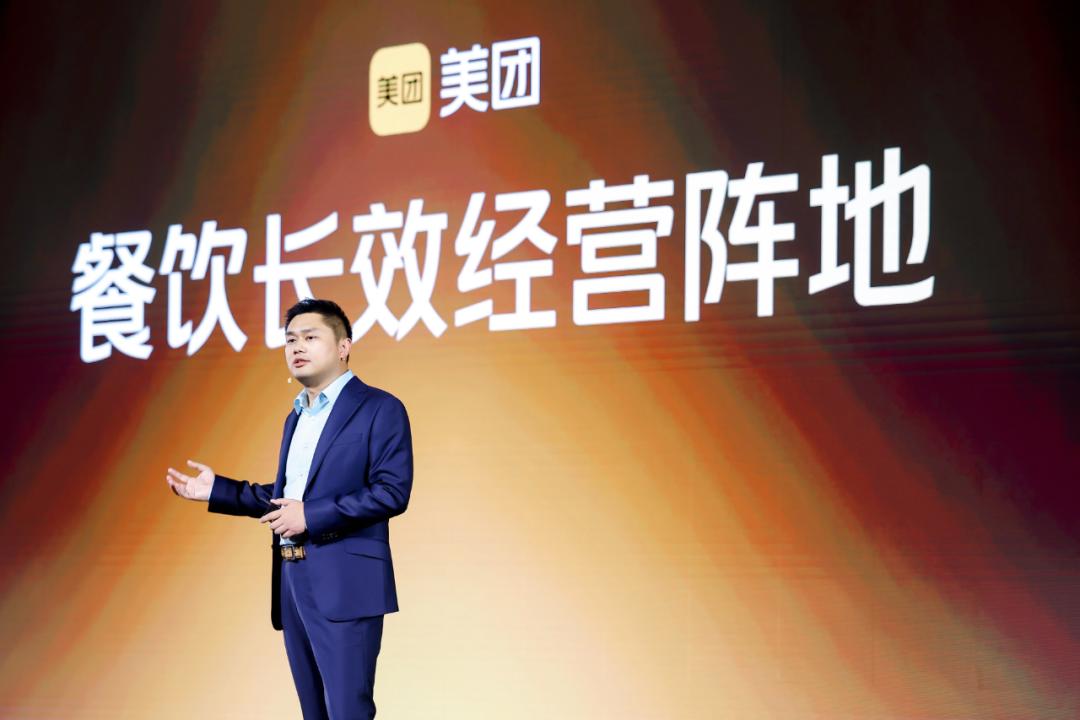
Wang Puzhong, CEO of Meituan's core local business
When talking about how to achieve super cost - effectiveness in the catering industry, Wang Puzhong said that cost - effectiveness should not rely on involution among peers. Instead, merchants need to leverage their structural cost advantages to achieve an all - round improvement in business management.
The cause of the food delivery war was not complicated. Platforms just wanted to attract traffic through the catering industry. After six months, the war consumed nearly 100 billion yuan, almost equivalent to the entire food delivery industry's profits in three years. Now that the war is over, it's ultimately up to millions of catering businesses to clean up the mess.
Looking back, what exactly did this food delivery war that swept through the catering industry change?
The food delivery war gave rise to "false prosperity", leaving catering operators complaining
Early in the morning of September 2025, a popular "Thai lemon tea" shop that had only been open for three months in Yuzhong District, Chongqing, was completely demolished by three workers in less than 40 minutes.
Two refrigerators, an ice - making machine imported from Italy, and a water purifier imported from the United States were all labeled with equipment status labels and loaded onto a truck, then transported to a second - hand catering equipment warehouse on the outskirts.
This kind of scene has become the norm in major catering equipment recycling markets across the country recently.
Master Zhang, a recycler, has to make three or four trips a day to pick up goods. He said, "In previous summers, it was the peak season for the catering industry, and most of the recycled equipment was from old stores being renovated. This year is different. All of them are from closed and transferred stores. The warehouse is full of refrigerators, operating tables, ice - making machines, and sealing machines. When some stores closed down, the protective films on the machines hadn't even been removed."
Related reports show that a second - hand catering equipment recycler saw a year - on - year increase of over 100% in the recycled second - hand equipment from hot pot restaurants in the first eight months of this year. In July alone, this recycler packed up and recycled the second - hand equipment from 53 hot pot restaurants.
In contrast to the slump of offline restaurants, the online food delivery war was in full swing. Reports of upgraded subsidies, a sharp increase in orders, and daily order volumes exceeding 100 million created an illusion of prosperity.
With such a lively food delivery war, why did so many restaurants close down?
The answer lies in the bubble of "false prosperity".
At the beginning of 2025, the catering industry showed a glimmer of recovery: the recovery of consumer confidence drove the gradual return of dine - in customers, the average customer spending of some regional merchants increased slightly, and many small and medium - sized merchants planned to expand their stores or upgrade their dishes as originally planned.
However, the sudden food delivery war directly disrupted the normal development track of the catering industry.
Data disclosed at the catering industry conference showed that since April this year, the average customer spending in the catering industry has dropped sharply. July and August are usually peak seasons with strong demand and potential for price increases. However, due to the continuous intensification of the subsidy war, the overall average customer spending still dropped to a phased low, forcing merchants to maintain orders by lowering prices.
The person - in - charge of a chain fast - food brand in Shanghai calculated an account at an industry symposium. Previously, a signature set meal was sold for 22 yuan with a gross profit of 10 yuan. Now, forced to participate in platform subsidies, the average customer spending on food delivery has dropped by 7 to 10 yuan, and after bearing platform commissions, marketing fees, etc., the gross profit per set meal is only 2 yuan. Basically, each order results in a loss.
Even worse, this low - price competition has formed a vicious cycle.
A special questionnaire survey conducted by Lixin Consulting on high - frequency food delivery consumers in high - tier cities in August this year showed that 75% of consumers had given up dine - in because food delivery was cheaper, and 86% of consumers would switch to food delivery when the dine - in price was higher than the food delivery price.
Merchants that originally relied on dine - in for profits either had to be forced to join the subsidy camp or watch helplessly as their customers left. Eventually, they would exhaust their capital chain in the "low - price involution".
This is the paradox of the food delivery war: platforms exchanged subsidies for order data, while merchants were squeezed dry of their profits in the "lively" war and ultimately became victims of the traffic game.
Perhaps this wave of equipment recycling will make the market realize that the core competitiveness of the catering industry has never been low prices, but quality, service, and innovation; the relationship between platforms and merchants should not be traffic plundering, but symbiosis and win - win.
A sudden "involution"
How did this involution start?
Traffic in the Internet industry is becoming more and more expensive. E - commerce platforms are facing challenges such as slow user growth, intensified competition, rising customer acquisition costs, and traffic monetization. At this time, high - frequency and essential food delivery has become a very attractive traffic entry point.
Then, the story began. Right after the Spring Festival in 2025, a nationwide food delivery subsidy war suddenly broke out. E - commerce platforms entered the market, followed suit, and intensified the competition. Meituan started to fight back, and the competition situation became even more intense.
In less than 100 days, an ordinary subsidy war, like a snowball, became the largest subsidy war in the Chinese Internet.
Why do market voices classify this melee as "irrational"? We can get a glimpse from the increasingly absurd subsidies: at first, there were sporadic "10 - yuan off for every 20 - yuan spend" coupons, and then it quickly escalated to "16 - yuan off for a 16 - yuan purchase", which means getting products for free.
Catering merchants involved in it can truly feel the helplessness of being dragged into the "subsidy war".
Zhang Lei, who runs a breakfast shop in Hangzhou, experienced an extreme moment during the food delivery war.
He picked up a food delivery order as an example. Two large pork buns cost 9.9 yuan, a lotus - leaf - wrapped sticky rice chicken costs 8.9 yuan, a cup of soy milk costs 5 yuan, a tea - egg costs 2.8 yuan, and the packaging fee is 3 yuan, totaling 29.6 yuan. The merchant's subsidy for the customer is 18 yuan, and the amount after the discount is 11.6 yuan. After deducting platform commissions, delivery service fees, and other expenses from this 11.6 yuan, the estimated final income is only 3.2 yuan.
Zhang Lei said helplessly, "Since the subsidy war started, there have been more and more extreme orders. Now, some consumers even come to the store, check the food delivery price first, and if it's cheaper, they place an order for self - pick - up directly."
At that time, Zhang Lei calculated that if the subsidy war continued for another two months, he would have to close his store.
In addition to the general survival crisis faced by small and medium - sized merchants, leading catering brands are also having a hard time.
Wang Guoyu, the founder of Nanchengxiang, once publicly stated that since the food delivery war started, the daily total turnover of Nanchengxiang has increased by about 30% to 35%, but the dine - in business has not increased. In fact, the business of some stores has declined.
More importantly, in addition to the short - term decline in average customer spending and profit margins, in the long run, it will be difficult for product prices to return to normal levels, and consumers will think that low prices are normal.
Liu Jingjing, the founder of Jiahe Yipin, also complained on a social platform, "If merchants don't participate in subsidy activities, they won't get traffic. If they are forced to participate, they will receive unprofitable orders. The employees are almost exhausted, and the restaurant is on the verge of bankruptcy."
It can be seen that in a vicious competition environment, neither chain catering brands nor small and medium - sized catering stores can stay out of it.
Fortunately, the timely intervention of the regulatory authorities put the brakes on this melee. The State Administration for Market Regulation has interviewed relevant platforms several times, requiring them to standardize subsidy behaviors and avoid excessive competition.
In this melee, Meituan was dragged into the war passively and has always maintained an "anti - involution" attitude.
In terms of the flow of subsidies, e - commerce platforms are used to offering tens of billions of subsidies, while Meituan is more inclined to support catering merchants. As early as the end of last year, Meituan launched a support fund program, and a single store could receive a maximum of 50,000 yuan in support funds. During the most intense summer of the food delivery war, small and medium - sized merchants still received support funds.
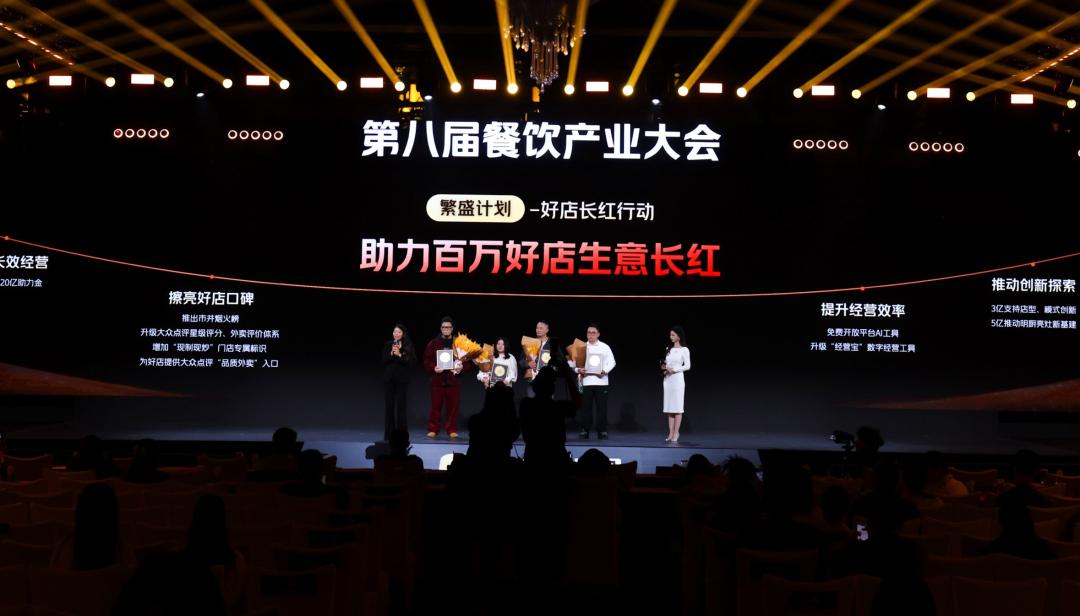
At the event site, the owner of a small food store shared the behind - the - scenes story of running the store
At the 8th Catering Industry Conference, Meituan's "anti - involution" action was more specifically implemented. The "Prosperity Plan" was further upgraded, with an additional 2.8 billion yuan to help merchants maintain profits and operate steadily. 2 billion yuan in support funds will be directly distributed to merchants, covering both dine - in and food delivery merchants to relieve the cash - flow pressure of small and medium - sized merchants.
This action of the platform shows that as the subsidy bubble gradually dissipates, the catering industry can only achieve sustainable growth by returning to the essence of business operations, improving efficiency through supply - side innovation and refined operations.
From "grabbing subsidies" to "having a good meal", business management ability is the "iron rice bowl" for merchants
The food delivery war has disrupted the industry. How can catering merchants survive better?
Those catering operators who were the first to find the "survival code" have given the answer. It requires product innovation and model innovation, rather than simply engaging in low - price competition.
Laoxiangji is a typical example. This Chinese fast - food brand that adheres to "new products every month" actually accelerated the pace of product innovation during the most intense period of the food delivery war.
The farmhouse stir - fried pork rice set meal jointly customized by Laoxiangji and Pinhaofan sold over 2 million orders from January to September, with a single - day maximum sales volume exceeding 40,000 orders, becoming a hit on food delivery platforms.
It is reported that as of July 2025, more than 5,000 catering brands such as Burger King, Laoxiangji, Nanchengxiang, Mixue Bingcheng, and Cha Baidao have settled on Pinhaofan. A survey by Huatai Securities showed that after launching on Pinhaofan, merchants' orders can increase by 30%, and operating costs can be reduced by 20%.
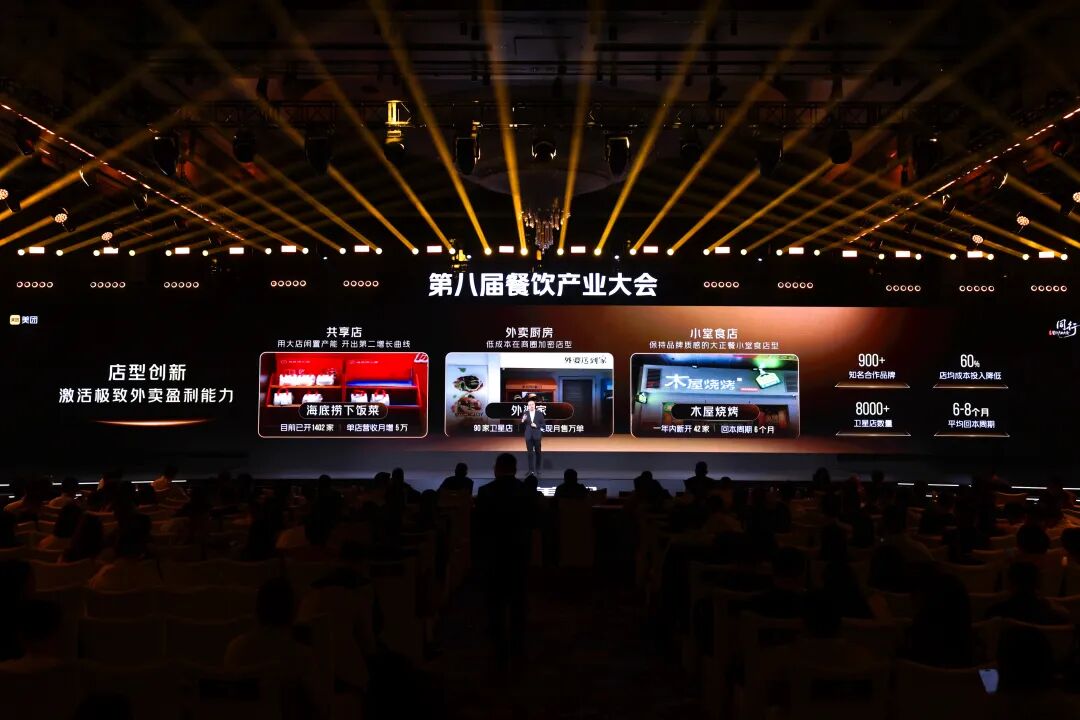
In addition to Pinhaofan, Laoxiangji has also developed a new store model - satellite stores, which are food delivery - only stores dedicated to receiving online orders and covering areas outside the radiation range of dine - in stores, forming a strategic complement to large stores.
At the 8th Catering Industry Conference, Shu Xiaolong, the chairman of Laoxiangji, revealed, "The sales volume of Laoxiangji's Meituan satellite stores ranks among the top three in their respective business districts. Many food delivery satellite stores can process 1,000 to 1,500 orders a day. In the future, we will continue to develop Meituan satellite stores to improve food delivery operation efficiency and customer experience."
Among the 2.8 billion yuan in subsidies mentioned above by Meituan, in addition to the 2 billion yuan in support funds directly given to merchants, a special fund of 300 million yuan has been set up to encourage store - model innovation, supporting merchants to explore new income - generating models such as satellite stores, food delivery self - pick - up, and Pinhaofan.
In addition, 500 million yuan in subsidies will be used to promote the new infrastructure of "transparent kitchens". Through live - streaming of the kitchen and publicizing the source of ingredients, it will help merchants regain consumers' trust in food safety.
This is especially important for small street restaurants focusing on the local flavor. In addition to subsidies, many small and medium - sized merchants gain trust through the platform's lists and evaluation systems, which are also the main sources of online traffic for restaurants.
Taking the Must - Eat List on Dianping as an example, in 2025, nearly 80% of the listed restaurants were small local food stores, over 50% were non - chain small stores, and nearly 40% were local old stores that had been in business for more than 10 years.
These small stores did not participate in subsidies, never spent money on marketing, and many merchants had never even heard of the Must - Eat List. However, because of customers' trust, they have obtained a stable flow of customers.
In Xi'an, Ma Wenzhang's Fatty Zenggao stall sets up at 7 am every morning, and four pots of zenggao are often sold out before 9:30. With its authentic flavor and affordable price, it has been on the Must - Eat List for many years. In Nanjing, Xiaji Breakfast Shop, a community breakfast shop that has been in business for more than 30 years, insists on making glutinous rice balls and black rice with Chinese sausage by hand at 1 am every day and is still a must - eat breakfast for neighbors.
These "small restaurants" have proven with their own experience that competing on quality and value, rather than on traffic, can also help them gain a foothold in the market.
If trust is the foundation for the survival of catering enterprises, then efficiency is the detail that determines whether they can continue to operate. In the "era of super cost - effectiveness", how to reduce costs and increase efficiency has become the key word for catering operators.
Zhang Ting, who runs a spicy hot pot shop in Shanghai, recently sought business advice from the "Intelligent Shopkeeper". The AI adjusted the menu based on the existing set meals in the store and the ordering data of surrounding customers and designed