Nichtkonsens ist in frühen Investitionen sehr gefährlich.
For a long time, venture capital has been regarded as a business of "anti-consensus".
Excellent venture capitalists often seek out characteristics that go against the mainstream, such as inexperienced founders, niche markets that few understand, or products not yet accepted by the mainstream, to earn excess returns. So-called "venture capital" relies on the firm judgment of investors to capture these opportunities, rather than following the herd mentality. Therefore, the personas of successful entrepreneurs and the investors who support them in the industry are often those who can see what others can't and are ultimately proven right.
However, Martin Casado, a partner at a16z in charge of AI application infrastructure investment, recently questioned the value of non-consensus investing.
Martin Casado is an investor who transitioned from being an entrepreneur. During his PhD at Stanford, he promoted the rapid development of OpenFlow/Software Defined Networking (SDN). In 2007, he founded the network virtualization company Nicira, which was sold to VMware for approximately $1.3 billion in 2012, catapulting him to fame.
In 2016, Casado joined a16z as the 9th partner. He has invested in well - known projects such as Cursor and DeepMap. Now, he is in charge of a16z's $12.5 billion AI application underlying technology investment fund. His investment portfolio includes star startups like OpenAI, Databricks, and Elevenlabs.
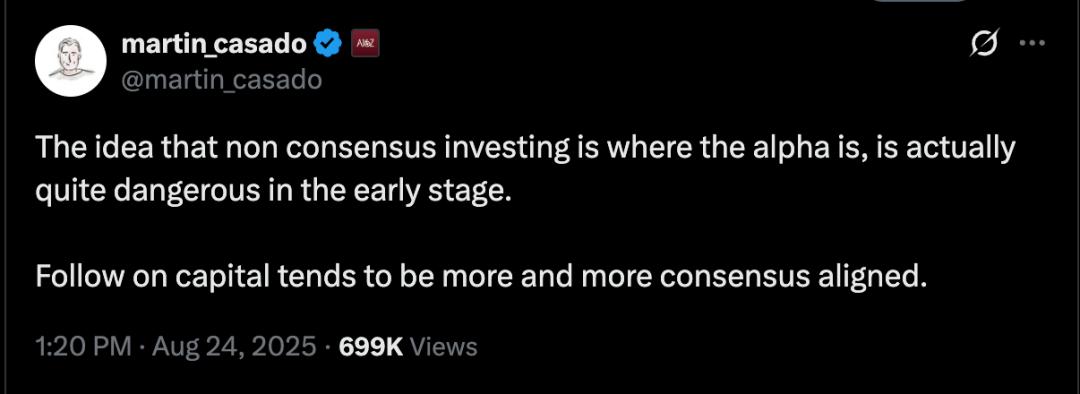
Recently, Casado posted on the X platform, stating: The idea that non-consensus investing can generate alpha is very dangerous in early-stage investments; capital tends to align with "more consensus" projects.
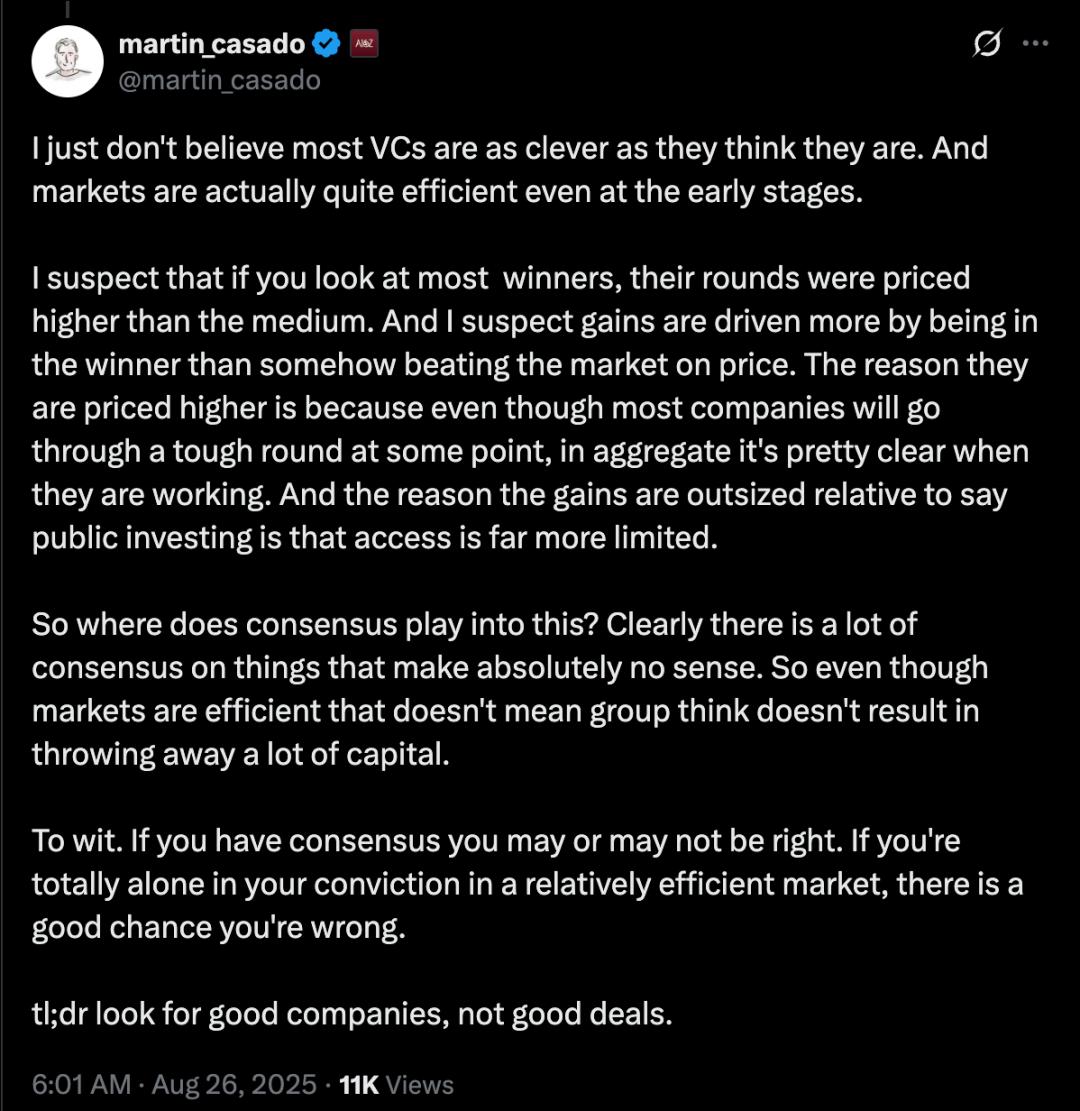
Subsequently, Casado continued to express his views on the X platform, stating that he doesn't believe the majority of VCs are as insightful as they think.
He believes that successful startups are those that gain wide recognition during their early-stage financing. He also said that excess returns are more likely to come from investing in these winning startups, rather than from picking up undervalued startups overlooked by the mainstream at a low price.
The reason is that the early-stage venture capital market is a relatively efficient market. "When your investment view gets no support from others in a relatively efficient market, there's a high probability that your view is wrong."
On September 4th, Martin Casado and Leo Polovets, an early investor in Robinhood, participated in a16z's special podcast "Is Non-consensus Investing Overrated", sharing their more specific views on non-consensus investing.
Casado emphasized that he doesn't completely deny the potential of non-consensus investing to generate huge returns. However, he believes that over - pursuing non-consensus investment targets may bring high risks that don't match the returns, because startups that are not understood or favored in the early stage often fail to succeed.
During the discussion, Casado presented their research method:
Divide startups into two groups: "successful" and "all other companies". Then compare whether the valuation multiples of "successful companies" in each early - stage financing round are higher than the median valuation multiples of "all companies" in the same round. He believes that the valuation multiples in each round can reflect the intensity of competition among investors in that round, and the competitiveness of each round can reflect the market's consensus on the company.
In other words, if the valuation of "successful companies" is higher than the median valuation of all other companies in the same round, it indicates that startups that gain market consensus in the early stage are more likely to succeed and bring excess returns to investors.
Subsequently, Casado showed the preliminary research results of his team on the X platform.
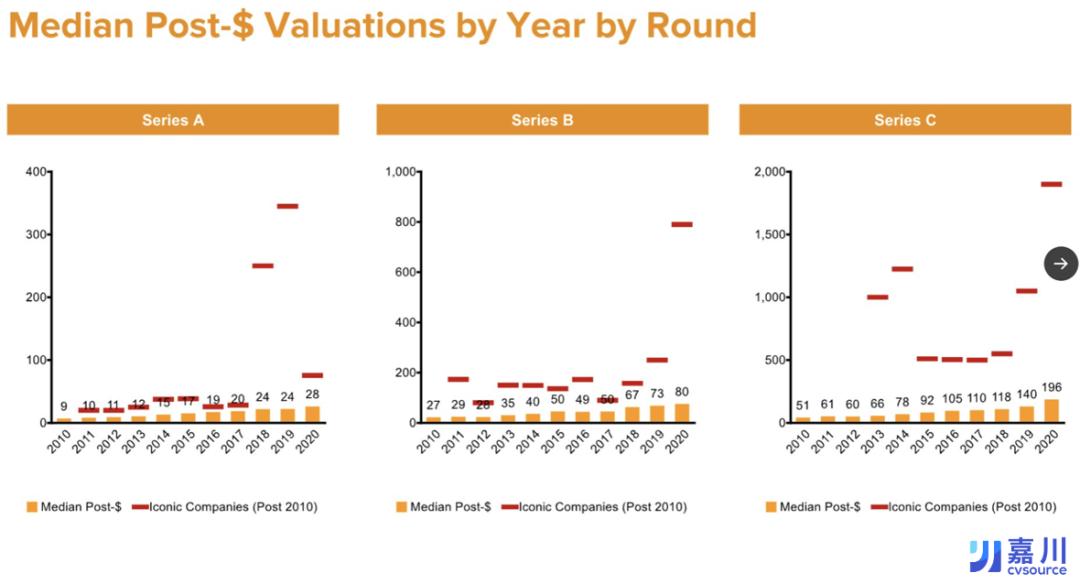
When screening successful companies, Casado's criteria are startups founded after 2010 that currently have a valuation of over $5 billion, listed companies, or high - value late - stage private companies that are not yet listed (such as Strip and Databricks).
The content in the chart shows that in each year from 2010 to 2020, the post - investment valuations of the successful company group in rounds A, B, and C were higher than the median post - investment valuations of other companies in the same rounds of the same year.
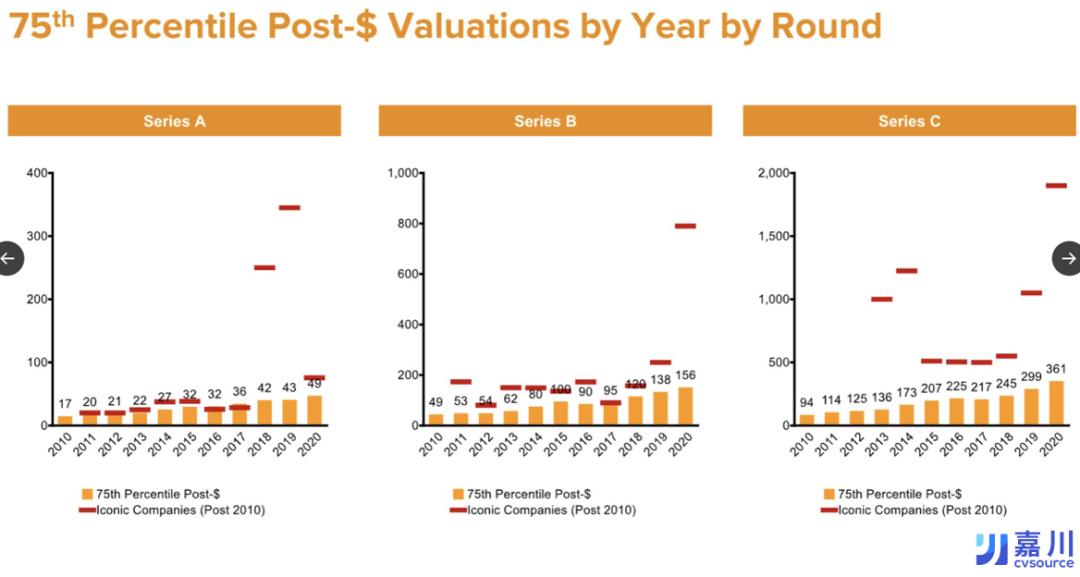
When the median is replaced with the 75th percentile (upper quartile), although the valuation gap between the successful company group and other companies narrows in rounds A and B, overall, the post - investment valuations of the successful company group are still higher than the upper quartile of the post - investment valuations of other companies.
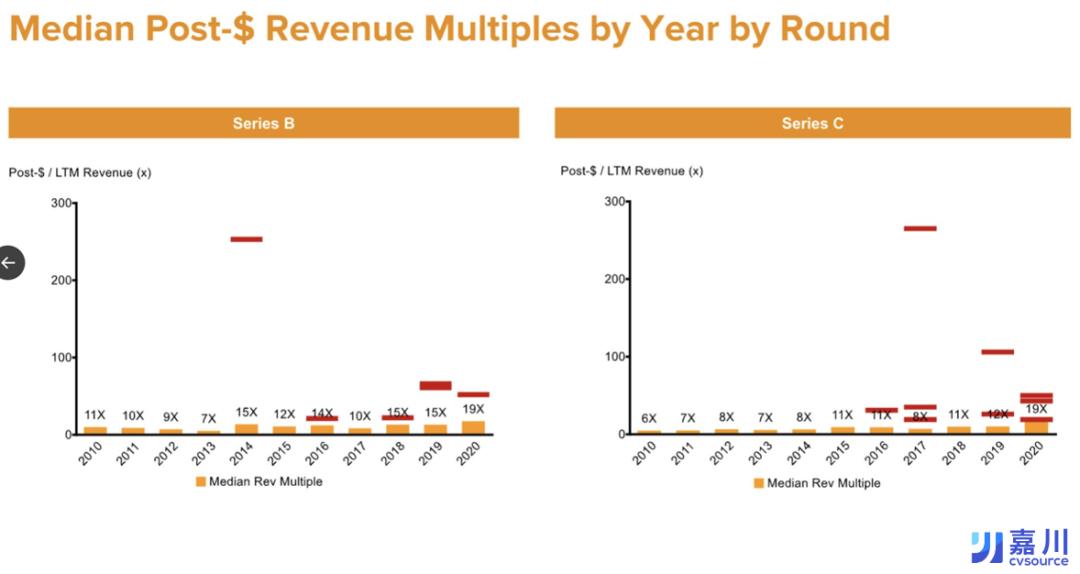
When comparing using the price - to - sales (P/S) valuation multiples, the results still show that the valuation multiples of the successful company group are higher than the median valuation multiples of other companies.
These three dimensions of investigation seem to confirm Casado's view: Startups that gain investor consensus in the early stage are more likely to succeed.
However, although the above research supports Casado's view, it may not be rigorous enough. For example, the research doesn't break down the industries or perform weighted calculations, doesn't control for more factors that may affect the valuations of successful companies, and doesn't show the sample size of successful companies.
Secondly, there may not be a consensus on the concepts of "consensus" and "non - consensus" themselves. Each investor may have their own understanding of these two concepts.
This is reflected in the debate on the podcast. Investor Leo Polovets thought that Alexander Wang was only 18 years old and didn't have the typical image of a Silicon Valley founder, so he considered the company Scale AI founded by Alexander Wang to be a non - consensus opportunity in the early stage.
But Casado said that Polovets' definition of consensus was too narrow. Since the niche industry where Scale AI was located was already well - known to investors at that time, and it received investment from top investors like Dan Levine in round A, Casado believed that Scale AI was a consensus investment opportunity.
There are many similar disagreements among investors under Casado's tweets. Although using post - investment valuations to represent consensus is a relatively objective standard, reaching a broad conclusion like "startups that gain consensus are more likely to succeed" requires verification through more criteria and data.
However, even if Casado's research can't fully prove his view, it undoubtedly raises a thought - provoking question —
There may be far fewer investors in the VC industry who pursue non - consensus investments than we think.
This article is from the WeChat public account "Beyond the J Curve", author: Song Zixiang. Republished by 36Kr with permission.