The most challenging year for BBA in China
The just-concluded Q3 earnings season can be described as a "misery contest" for German automakers.
In Q3, Volkswagen posted revenue of 75.277 billion euros and an operating loss of 5.86 billion euros, marking its largest single-quarter loss in the past decade; in the first three quarters, its revenue reached 233.378 billion euros, with 6 million vehicles sold and a profit of only 71 million euros.
Looking at the automotive business alone, revenue in the first three quarters dipped slightly from 213.132 billion euros in the same period last year to 205.617 billion euros, but operating profit turned negative to 1.972 billion euros from 2.216 billion euros a year earlier.
The problem mainly lies in one-off expenses: the software company CARIAD and the battery business accrued 2.3 billion euros, Porsche's goodwill impairment reached 6.4 billion euros, plus the asset shrinkage of Chinese joint ventures amounted to 1 billion euros. Adding back these losses, the financial results are actually not that bad.
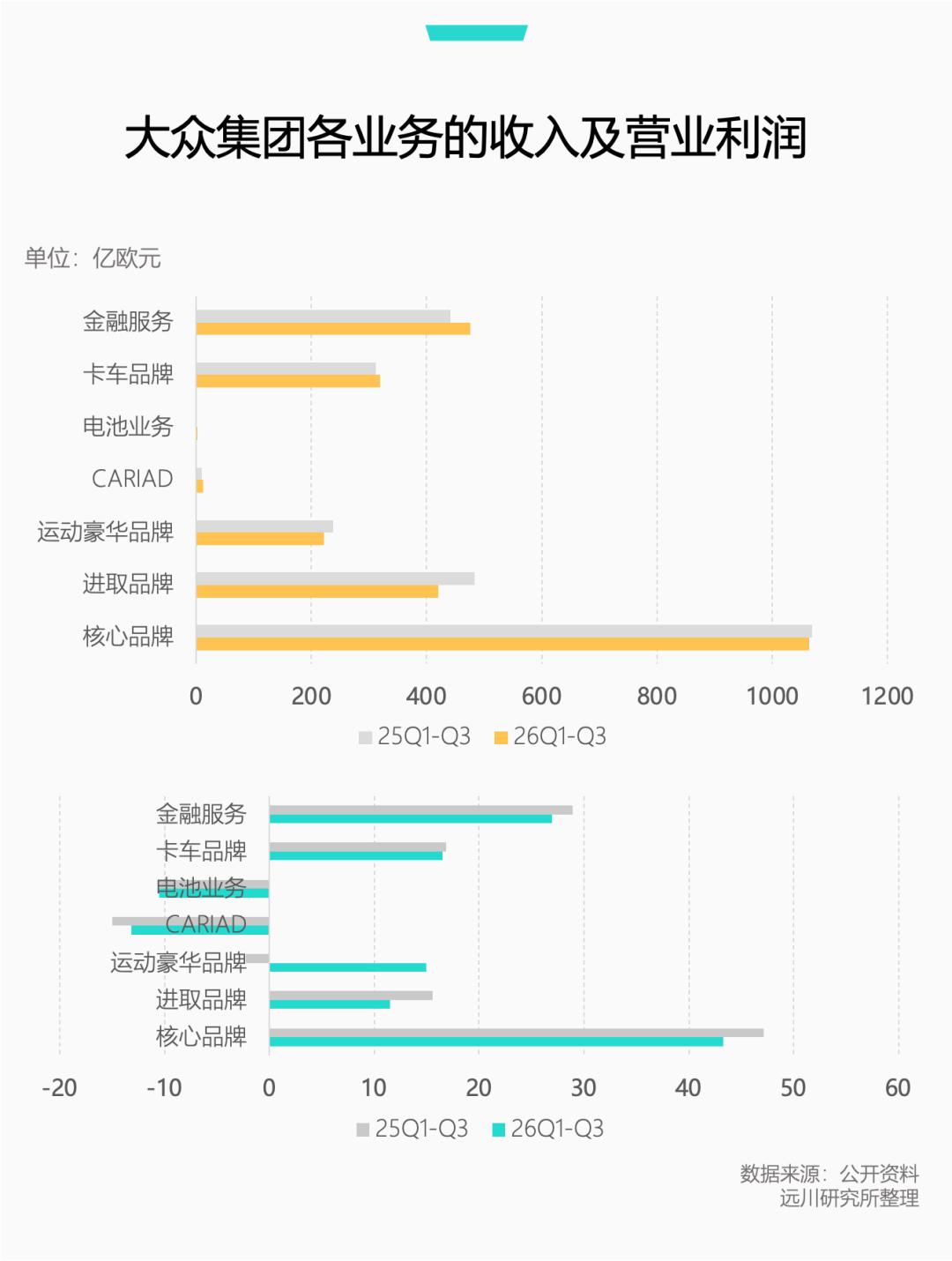
The revenue and profit of each brand business in the table do not consider offset items
As the facade of Germany's high-end manufacturing, BBA is under considerable pressure.
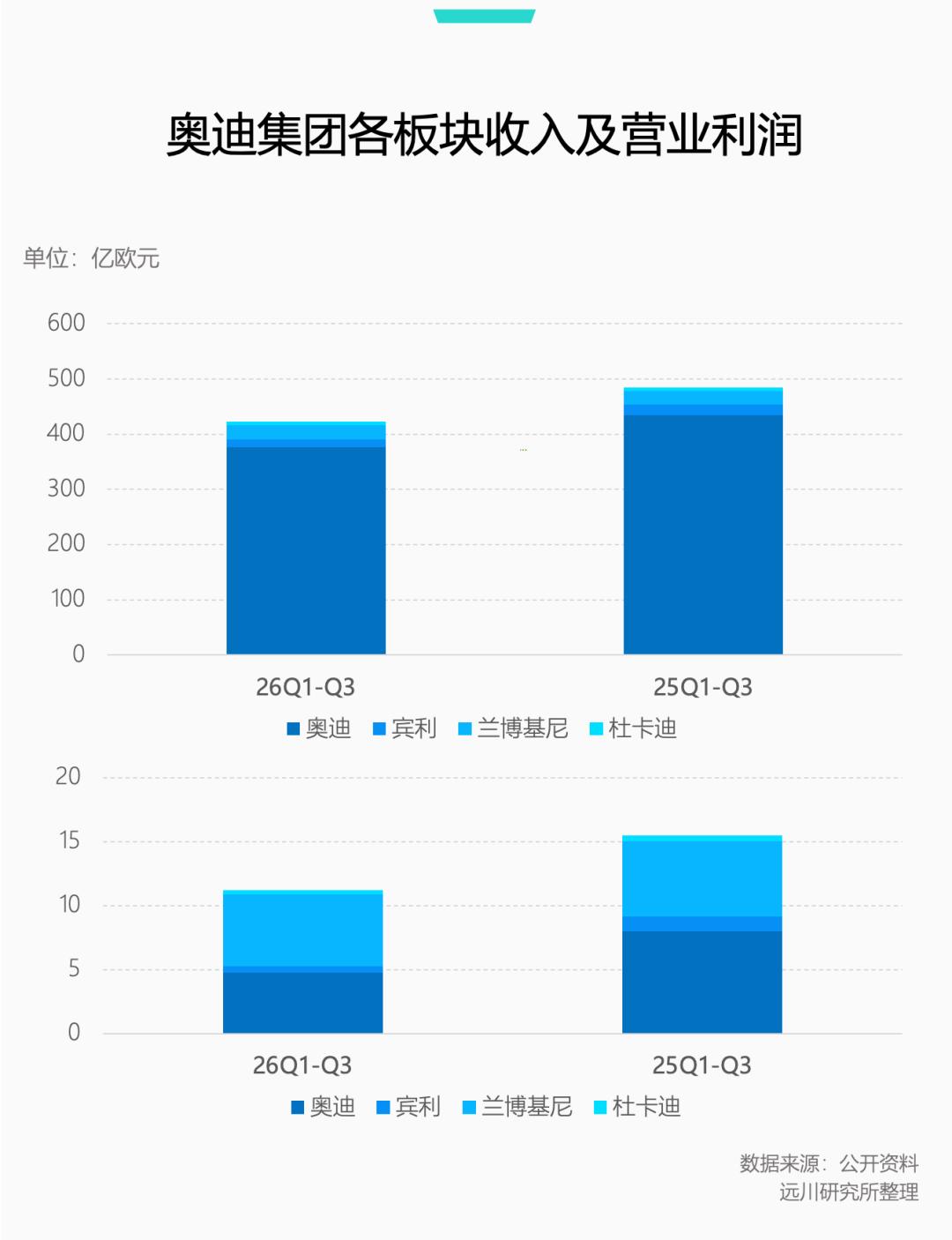
Audi's financial report covers four brands: Audi, Bentley, Lamborghini and Ducati, which is the "Progressive Brand Group" under Volkswagen.
However, the performance of the Progressive Brand Group in Q3 was far from progressive: revenue reached 12.886 billion euros, down 18.5% year on year, and operating profit was 29 million euros, plummeting 93.9% year on year.
Audi contributes more than 90% of the sales volume, but only 40% of the profits. The high-margin Lamborghini is the main profit driver.
BMW's situation is also not optimistic. In Q3, its revenue reached 30.452 billion euros, and EBIT stood at 1.589 billion euros. In the first three quarters, its revenue and EBIT were 92.718 billion euros and 5.224 billion euros respectively, down 7.3% and 35.2% year on year.
According to BMW's official statement, excluding the impact of US tariffs, the depreciation and amortization generated by the acquisition of the remaining equity of BMW Brilliance reduced the profit margin by 1.2%. But even without this part of the cost, the profit of the automotive business has dropped by a quarter.
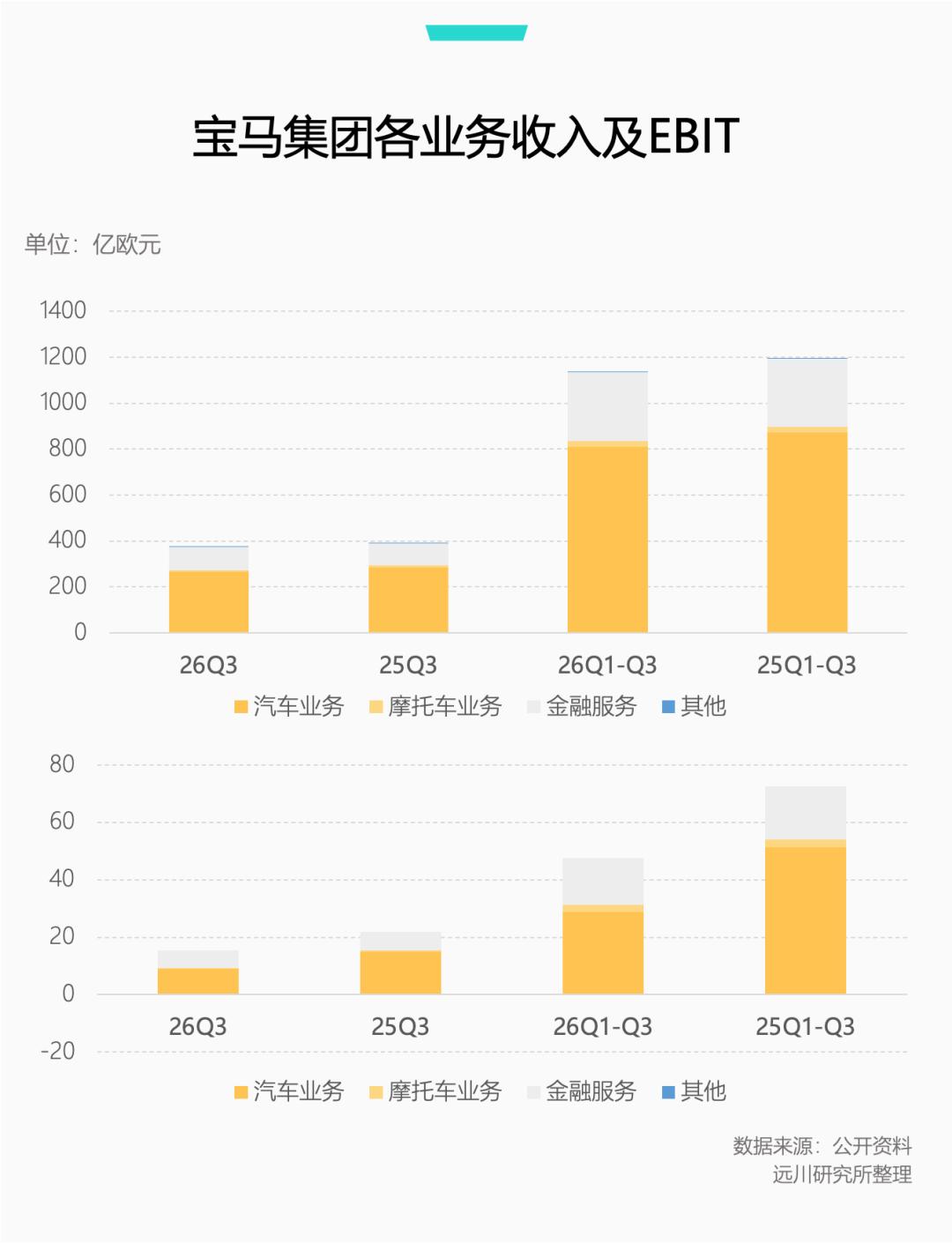
The revenue and profit of each business in the table do not consider the offset of internal transactions
For Mercedes-Benz, the revenue of its passenger car business in Q3 reached 22.374 billion euros, and the adjusted EBIT was 560 million euros, directly cut by half. In the first three quarters, its revenue hit 68.319 billion euros, and the adjusted EBIT fell 40% year on year.
Mercedes-Benz has no one-off expenses, and the main factor is poor vehicle sales. Its free cash flow plummeted by 87% in Q3, partly because the inventory increase occupied 2.06 billion euros in cash.
Mercedes-Benz's management explained that they actively stocked up for the sales surge in Q4, but whether the manufactured vehicles can be sold out will only be known when the Q4 financial report is released.
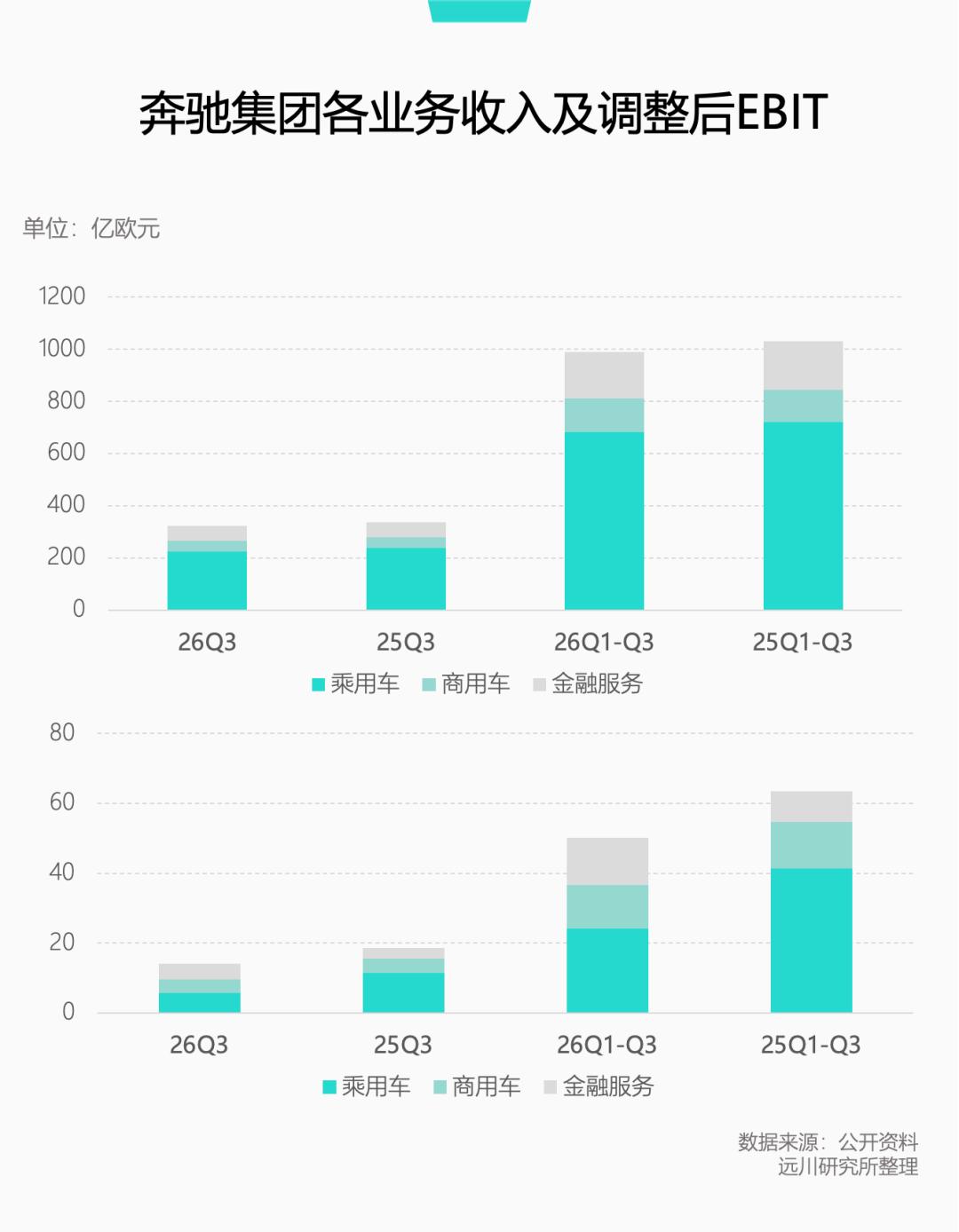
The revenue and profit of each business in the table do not consider the offset of internal transactions
The revenue and profit of each business in the table do not consider the offset of internal transactions. Where is the problem?
The Biggest Variable
The problem lies in the Chinese market.
In Q3, Mercedes-Benz's global car sales fell 6.4% year on year, and its total sales in the first three quarters dropped from 1.6016 million units to 1.5031 million units. BMW delivered 551,000 vehicles in Q3, down 6.3%, and its sales in the first three quarters also fell 4.9% to 1.7078 million units.
However, excluding the China/Asia-Pacific market, Mercedes-Benz's sales in the first three quarters rose 3% year on year, and BMW's sales rose 1.28% year on year.
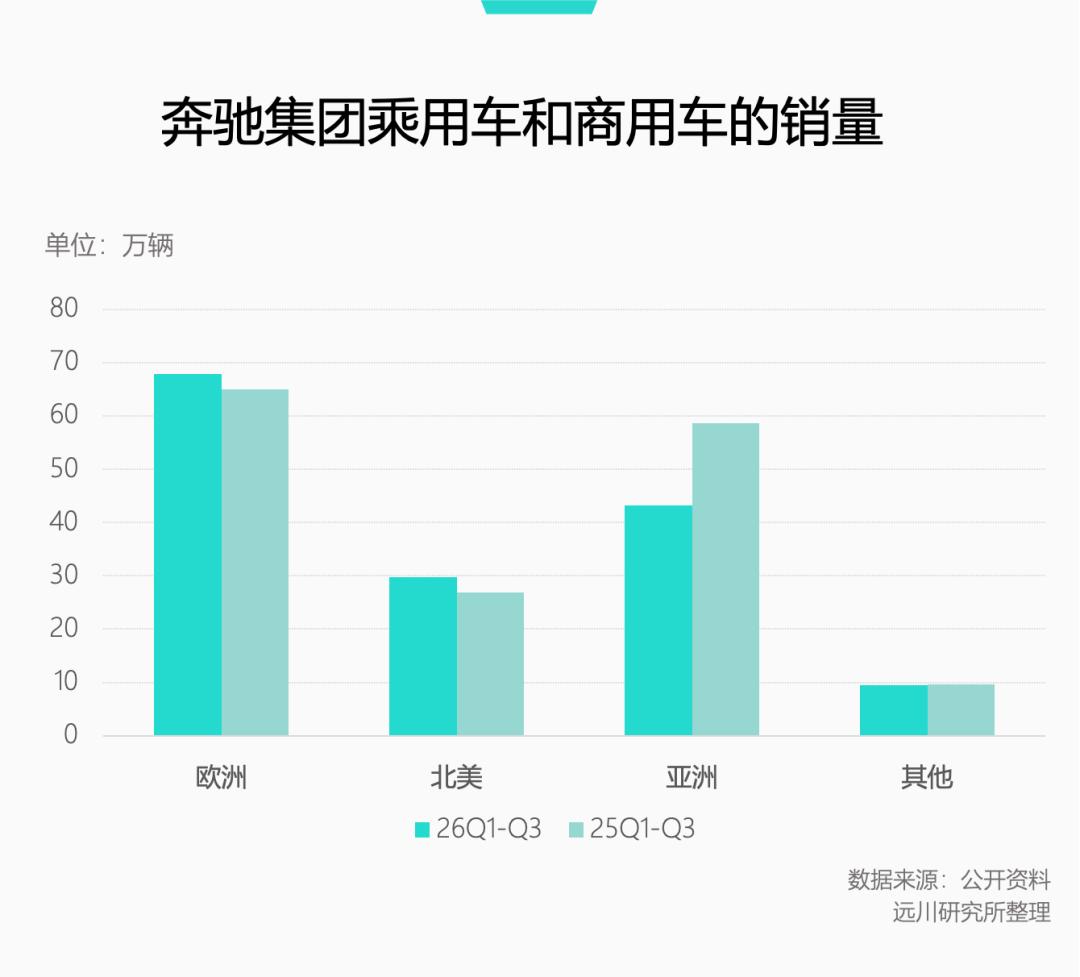
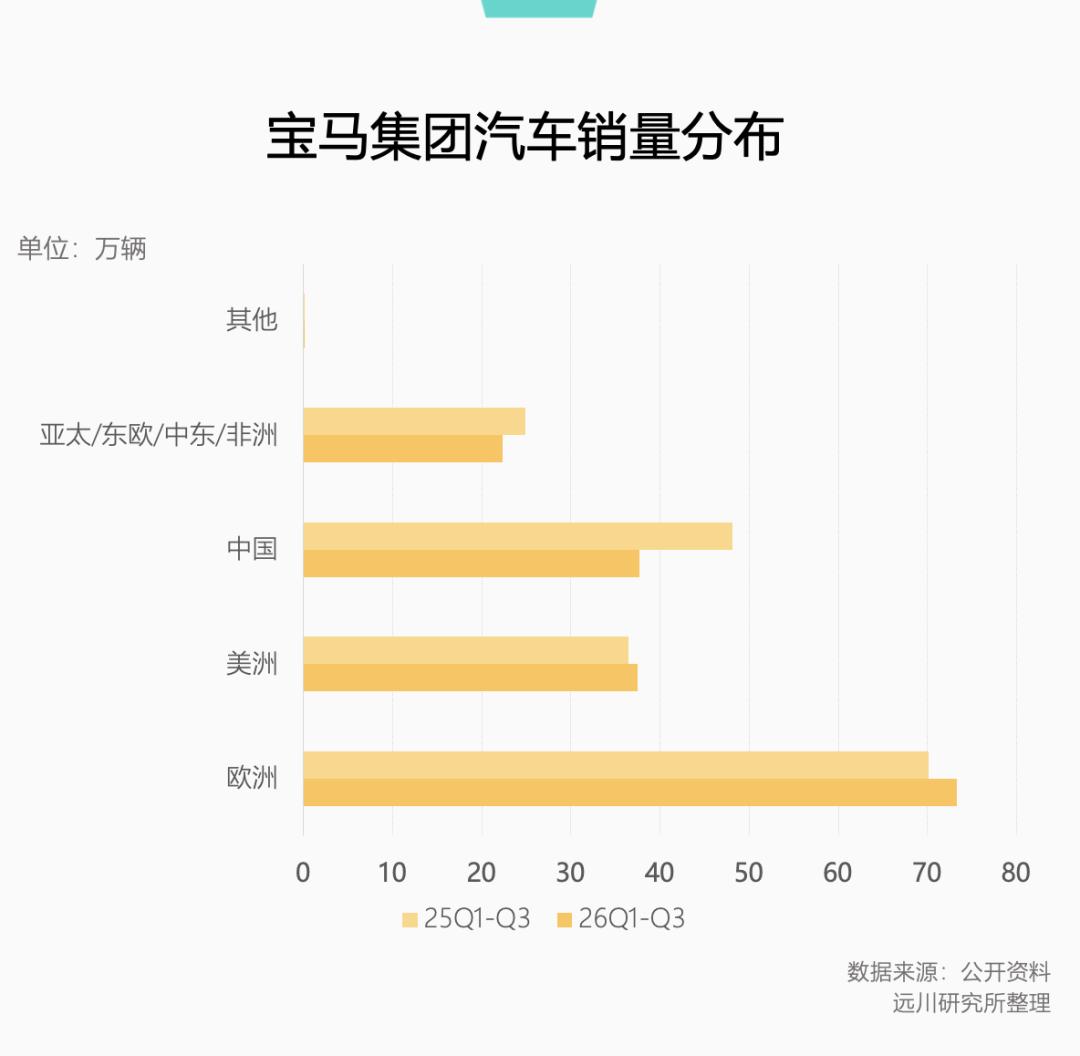
After excluding the Chinese market, Volkswagen's sales still declined, but the situation is much better.
In the first three quarters, Volkswagen's global sales fell 9.3%. After excluding the China/Asia-Pacific market, its sales only dropped by 0.03%, which is almost negligible.
The Progressive Brand Group where Audi is located saw its sales drop by 11.3% in the first three quarters when including the China/Asia-Pacific market. Excluding China, the decline narrowed to 3.7%.
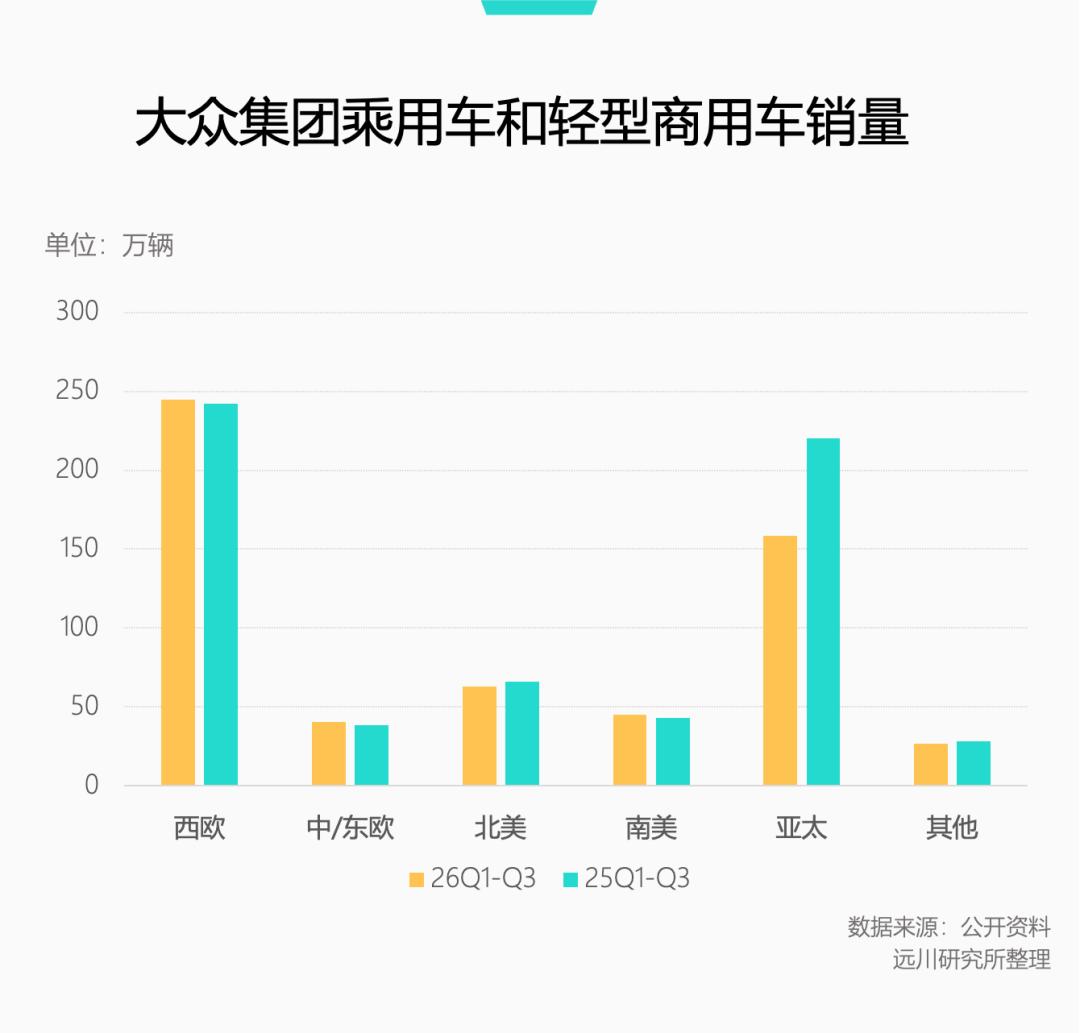
In other words, the global sales of German automakers are all dragged down by the Chinese market without exception, and the reason for this situation lies in the sales structure.
The domestic retail penetration rate of new energy vehicles has exceeded 67%, and the proportion of pure electric vehicles is nearly 70%. But in this world's largest new energy market, German automakers still mainly sell fuel vehicles.
The new energy vehicle sales of Mercedes-Benz and BMW account for about 25% of their total sales. In Q3, the global sales of pure electric vehicles of both brands are growing, but the performance in China is particularly bleak.
According to data from Yiche, in the first three quarters, Mercedes-Benz sold less than 10,000 new energy vehicles in China, while its GLC and E-Class models performed well, with sales exceeding 160,000 units. The monthly average sales volume of BMW's i3 (a fuel-to-electricity converted model) barely exceeds 1,000 units, which is only one tenth of the sales of the fuel-powered 3 Series.
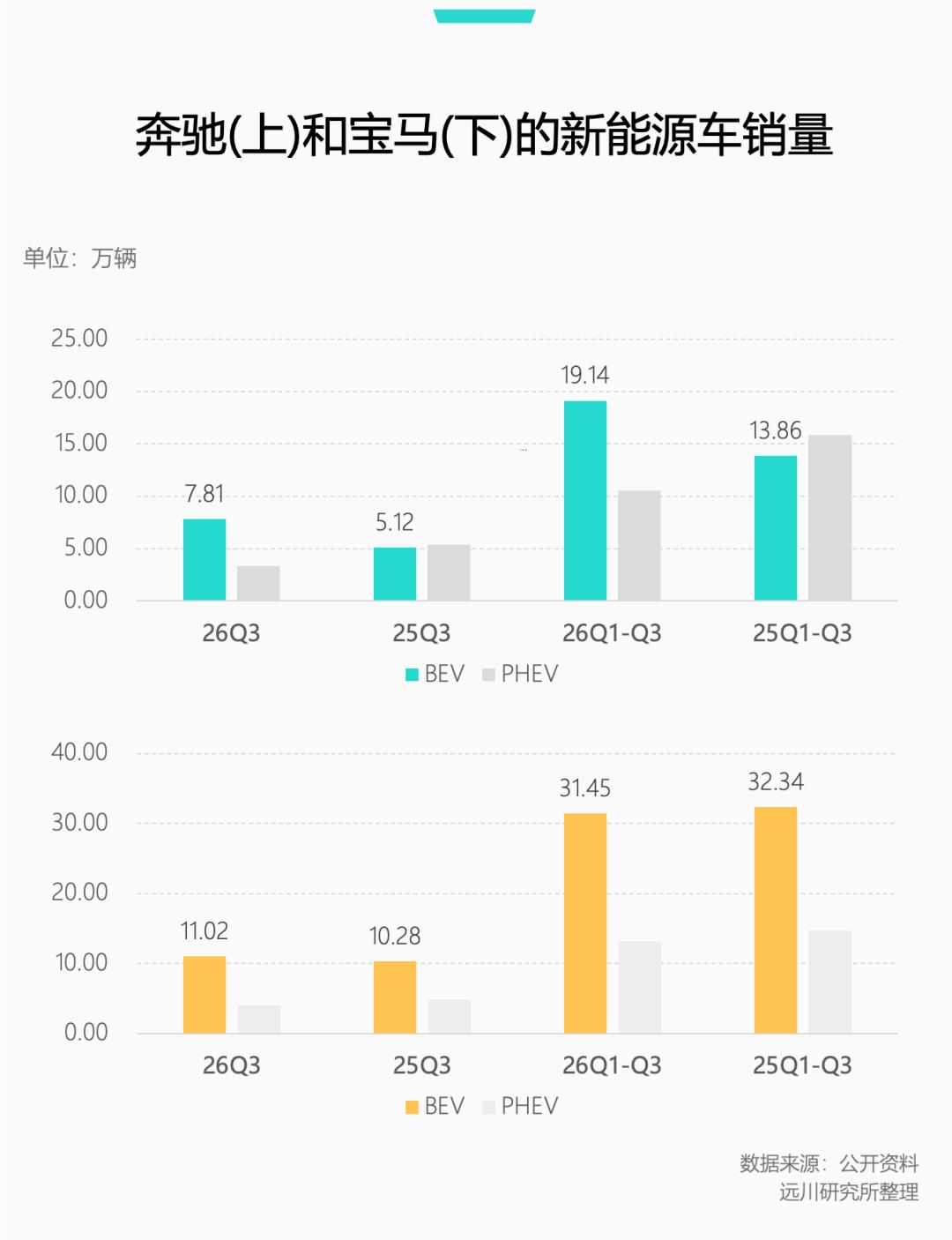
Volkswagen is a more typical case. It has sold a large number of new energy vehicles, but most of them are sold to consumers in Europe and America.
Taking pure electric vehicles as an example, Volkswagen delivered 18,000 units in China in Q3, down 30.1% year on year. In the first three quarters, it delivered 48,900 units, down 42.5% year on year. In China, only 1 out of every 40 vehicles delivered by Volkswagen is pure electric, while in Europe, 1 out of every 5 vehicles delivered is pure electric.
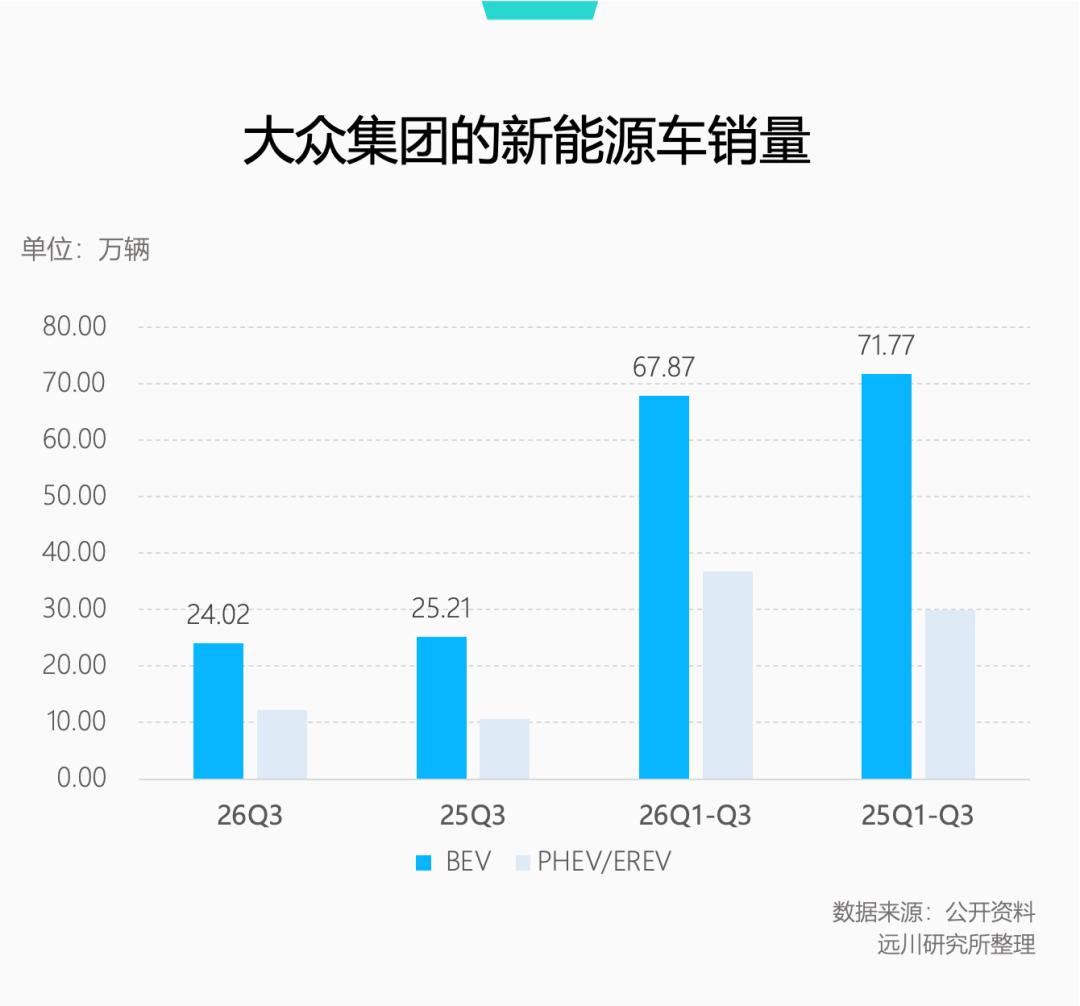
Pure electric vehicles cannot be sold well, and the fuel vehicle market is collapsing at an accelerated pace. The squeeze from both sides has directly pushed German automakers to the door of the ICU.
In the first three quarters, Mercedes-Benz's sales in China dropped from 433,900 units to 300,000 units, almost halved compared with the same period in 2021. BMW's sales in China in the first three quarters reached 376,400 units, nearly half less than the 670,000 units in the same period of 2021.
Volkswagen's decline is even more drastic. Its sales in China in Q3 decreased by 38.7% year on year, and its sales in the first three quarters decreased from 1.9731 million units to 1.3752 million units. The 600,000 units that evaporated out of thin air is enough to support a new EV startup.
It's not that the Germans don't work hard, it's just that the new generation of pure electric vehicles came too late.
Waiting for Pure EVs Till the Hair Turns White
In the year when pure electric models in the Chinese market are advancing by leaps and bounds, German automakers are all in the gap period of pure electric product replacement.
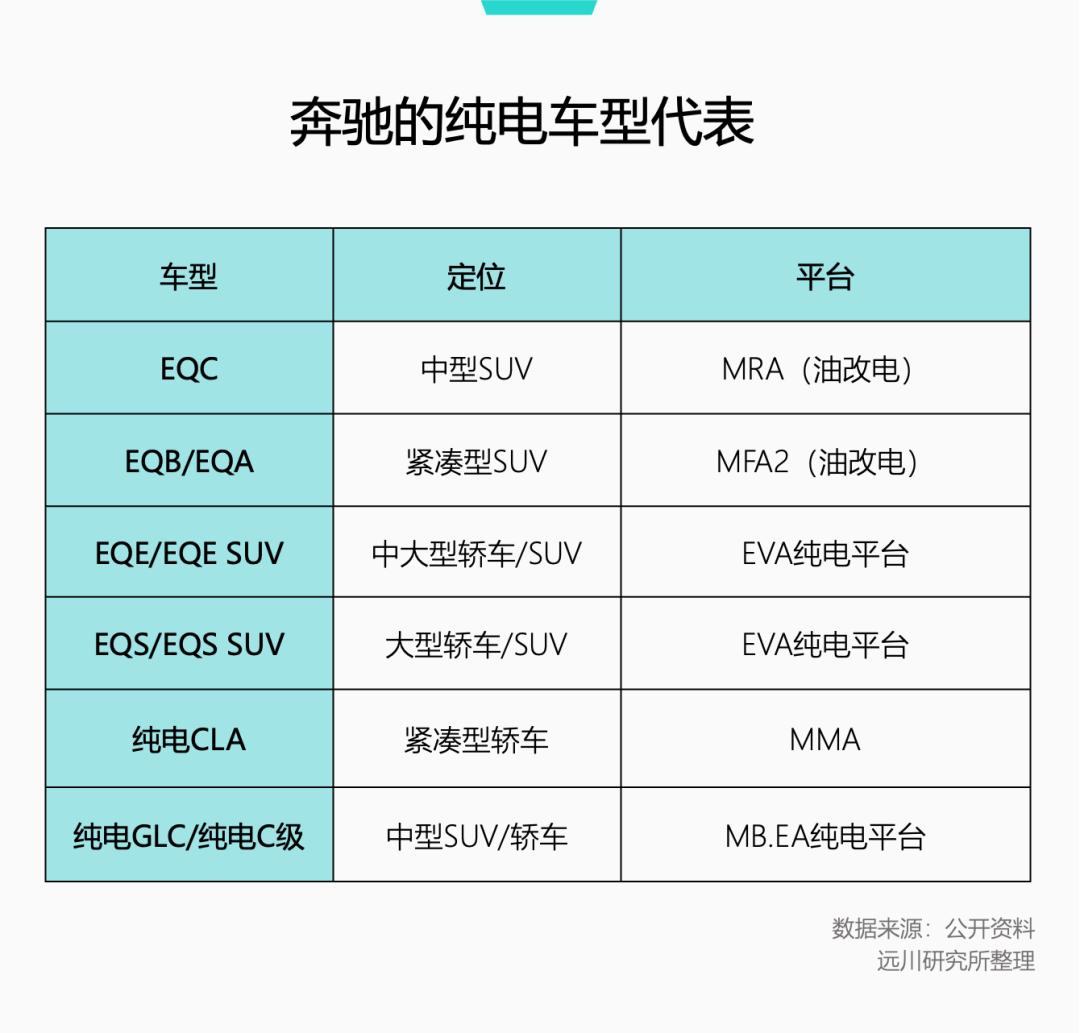
Mercedes-Benz is the most typical case. In 2019, Mercedes-Benz made a hasty trial with the fuel-to-electricity model EQC, and then wanted to stage a comeback with the pure electric platform EVA, but its first model EQS became unsalable as soon as it was launched.
The two native pure electric models EQS and EQE failed one after another, which obviously frustrated Mercedes-Benz. It cut the next-generation pure electric platform MB.EA-Large, and turned to continue to improve the EVA platform. As the EQ series gradually withdrew from the market, Mercedes-Benz's two new platforms came late:
The MMA platform for compact cars and the pure electric platform MB.EA-M for mid-size cars.
In other words, after launching the EQ series intensively in the market from 2019 to 2022, Mercedes-Benz has no new pure electric products. The new generation of pure electric vehicles were launched last year, and large-scale model launches have just started, missing the rapid growth period of pure electric penetration.
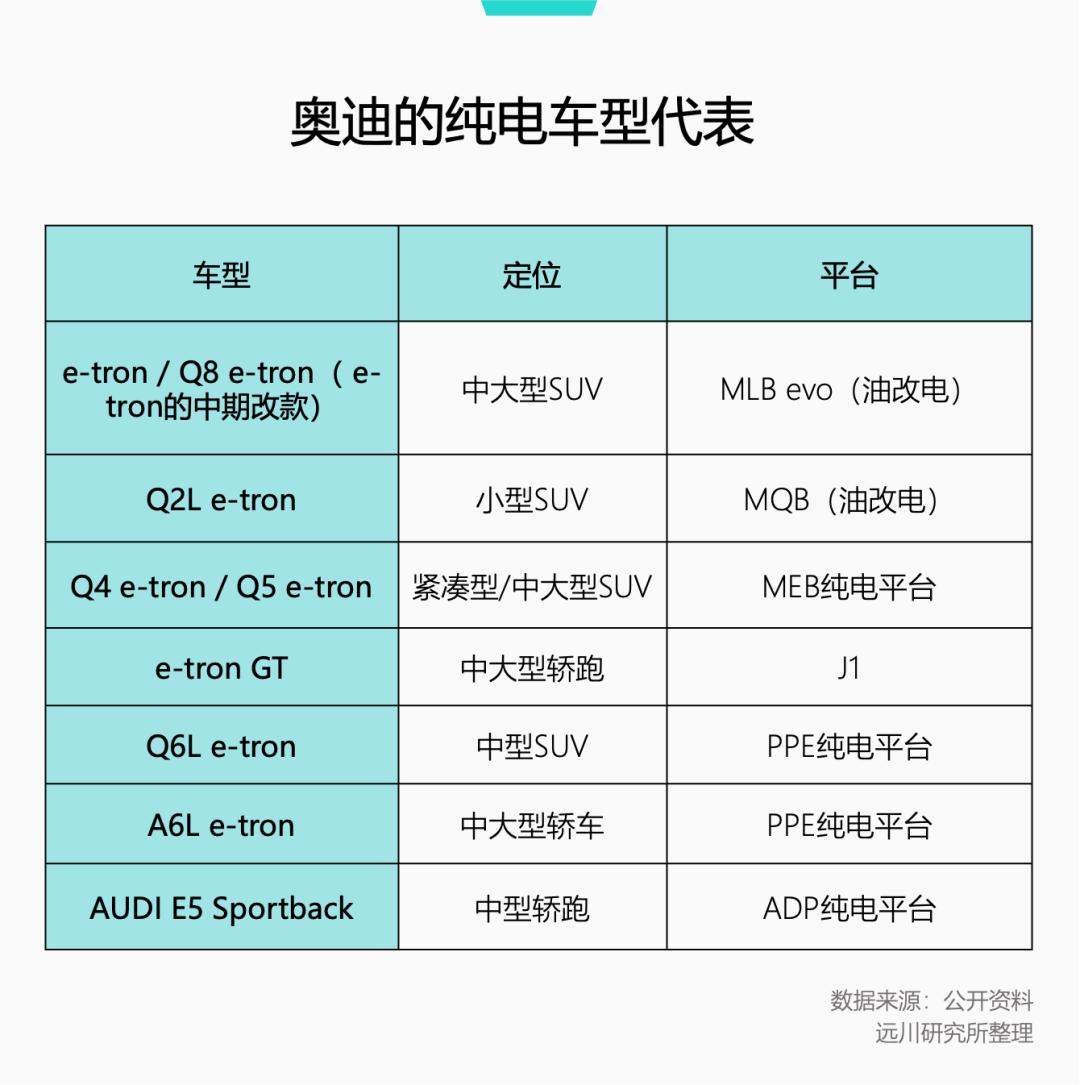
Audi's situation is similar. In 2018, Audi's fuel-to-electricity model e-tron was unveiled, and it announced the joint development of the pure electric platform PPE with Porsche. The first model was originally planned to be released in 2022, but the R&D progress was delayed again and again.
Therefore, Audi built the e-tron GT on Porsche's J1 platform on the one hand, and built the Q4/Q5 e-tron on Volkswagen's MEB platform on the other hand. Throughout 2023, it could only modify and polish these two models.
It was not until last year that the PPE platform was put into mass production, and the ADP platform specially developed for the Chinese market was also launched.
In other words, Audi's real pure electric model replacement has also been separated by nearly three years. The old e-tron series failed to gain a firm foothold, and the new generation of pure electric vehicles has just taken over, which is more inclined to fill the product line.
Volkswagen is a little special. At the end of 2019, Volkswagen took the lead in launching the pure electric platform MEB. Its first car ID.3 sold well in the initial stage, and then ID.4, ID.5 and ID.6 were launched one after another. However, after the ID.7 was launched in 2023, the launch speed of Volkswagen's pure electric models began to slow down, and then it entered a two-year gap period.
The problem Volkswagen faces is more practical: it has a pure electric platform, but its electronic and electrical architecture has inherent deficiencies, and its competitiveness in China is obviously lagging behind. The internal development of CARIAD is not smooth, and the launch time of the ultimate platform SSP has been delayed all the way to 2029.
To fill this gap, Volkswagen has done two things: one is to let the Chinese team lead the development of the new platform CMP, and the other is to abandon the original electronic and electrical architecture and replace it with the CEA electronic and electrical architecture jointly developed with XPeng, resulting in the new platform being launched later than that of Mercedes-Benz and Audi.
Compared with Volkswagen, which got up early but caught up late, BMW is the most conservative and stubborn one.
Since the domestic production of iX3 in 2020, all of BMW's pure electric vehicles in China are built on