Valued at 15 billion yuan, the satellite manufacturer founded by the post-1980s generation has just gone public through an IPO.
Another "first stock" has arrived.
On November 13, Guoxing Aerospace (06935.HK) was officially listed on the Hong Kong Stock Exchange. The company opened at HK$24.44 per share, with a total market value of about HK$15 billion, marking the birth of "the first space AI stock on the Hong Kong Stock Exchange".
The shareholder list of an aerospace company usually includes state-owned platforms, industrial capital and leading VCs, and Guoxing Aerospace is no exception. Well-known investment institutions such as Hongtai Fund, HSG, Galaxy Industrial Group, Shenzhen Venture Capital, Hengkun Development Fund (Guangdong State-owned), Hai Jin Xingyu and Hai Jin Juying (Qingdao State-owned) are all on the list. In this long list of investors, there is a cross-border name — Ye Guofu, founder of MINISO.
What kind of sparks can be generated between the founder of a retail brand that started with 10-yuan stores and a commercial aerospace company that develops AI satellites? Back in April this year, in the last round of financing before Guoxing Aerospace rushed to go public, Ye Guofu invested in the company as an individual and became a shareholder of this satellite company.
However, the cooperative relationship between the two sides is not limited to equity. On October 14, the 02 group constellation of Guoxing Aerospace's "Star Computing Program" was launched, and 8 satellites successfully entered orbit. One of the satellites numbered "Star Era-46" is named "MINISO YOYO".
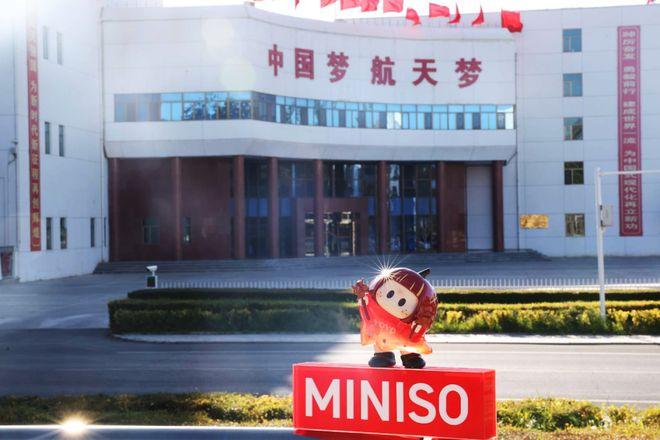
It took only half a year from equity participation to the IP being sent into space. Now that the company has rung the listing bell, this investment in the space sector made by the retail tycoon who started his business with 10-yuan stores has ushered in its first market test.
The 10-yuan store tycoon bets on a satellite
To understand why Ye Guofu appears in the shareholder list of a satellite company, we have to start with his past experience.
Ye Guofu, born in the 1970s, grew up in an ordinary family in Shiyan, Hubei Province. In 1998, 21-year-old Ye Guofu packed his bags and took a train heading south. In Guangdong, Ye Guofu got his first job as a salesman in a steel pipe factory. In order to report the delivery date accurately, he always figured out the production progress of the factory before visiting customers. In just one year, his performance surpassed all other salesmen and ranked first. In that year, he received a sales commission of 120,000 yuan.
At the end of 2001, Ye Guofu met Yang Yunyun, who later became his wife and was engaged in cosmetics sales at that time, in Foshan. The two hit it off after communication: one was good at sales, and the other knew the cosmetics industry very well. Why not open a cosmetics store together? They acted immediately, invested 100,000 yuan, and opened their first cosmetics store in Foshan Baihua Shopping Mall. By 2002, they had operated 4 cosmetics stores in the local area.
It was also during the period of running cosmetics stores that Ye Guofu accidentally learned that the daily income of 10-yuan accessory stores was twice as high as that of his own cosmetics stores. After going to Guangzhou to inspect the 10-yuan accessory stores on the spot, he decisively converted one of his cosmetics stores into a 10-yuan store. After that, Ye Guofu frequently traveled between Guangzhou and Foshan, purchasing goods from Guangzhou and selling them in Foshan. At the end of 2004, he officially named the accessory store "Aiyaya", and the number of stores once reached 3000.
Around 2010, with the consumption upgrading, offline physical stores gradually went downhill. In addition, small accessory stores did not have strong competitive advantages, so Ye Guofu also began to look for new opportunities. Later, when he went to Japan for inspection, he found that there were many high-quality and low-cost household goods specialty stores, and the vast majority of products were "Made in China". He took a fancy to this business.
In 2013, MINISO came into being. Over more than ten years of development, MINISO has grown into a global chain relying on affordable retail. Now it has more than 8500 stores around the world, covering 112 countries and regions.
In Ye Guofu's business philosophy, there has always been a spirit of "daring to bet". When making decisions, he often asks himself: "Dare you? Can you afford to lose?" In 2024, MINISO announced that it would invest 6.27 billion yuan to acquire 29.4% of the shares of Yonghui Supermarket, and became the largest shareholder of this established supermarket after the transaction was completed. However, this cross-border M&A is still in the digestion period: Yonghui lost 2.552 billion yuan in 2025, and MINISO confirmed an investment loss of 813 million yuan according to its shareholding ratio. At the same time, MINISO's own growth rate is also slowing down. Its revenue in the second quarter of 2026 was 5.811 billion yuan, a year-on-year increase of 17%, and the growth rate hit a new low in three years.
Under the pressure of its main business, Ye Guofu has put more chips on IP. MINISO has about 180 IPs in hand, 150 of which are licensed international IPs, and there are only about 30 self-owned IPs. "We didn't realize we needed to develop self-owned IPs before, and we thought it was good to do international IPs, but in 2025 we woke up, we want to have our own IPs," Ye Guofu said. "Self-owned IPs are the 'chips' of MINISO." He even said, "I would rather waste 100 million yuan a year to incubate self-owned IPs", and proposed to drive 100 Chinese IPs to go global in the next ten years, and YOYO is the first one.
YOYO did not disappoint Ye Guofu. This original IP with its main product iconbox priced at 29 yuan launched its first product in June 2025, and its sales exceeded 100 million yuan in half a year. In June and July this year, YOYO's monthly sales in the Chinese market exceeded 100 million yuan for two consecutive months; in August, its global monthly sales exceeded 200 million yuan; in the first three quarters, its global GMV exceeded 1 billion yuan. Ye Guofu even publicly stated that he would build a humanoid robot for YOYO.
From this perspective, the emergence of the "MINISO YOYO" satellite is more like another extension of MINISO's IP narrative to space.

Ye Guofu's investment in Guoxing Aerospace is also his real money input. According to the disclosure of the prospectus, the post-investment valuation of that round of financing in April this year reached 11.554 billion yuan. Ye Guofu personally contributed 160 million yuan to subscribe for about 7.926 million shares at a cost of 20.2 yuan per share, with a shareholding ratio of about 1.38%.
What is the return of this ticket? The offer price of Guoxing Aerospace's global offering this time is HK$24.9. Ye Guofu's cost of 20.2 yuan per share is about HK$23.5 at the current exchange rate, and the book floating profit is about 6% calculated at the offer price. He didn't make much money from this investment in half a year.
What is more noteworthy than the book income is the signal released by this investment. When entrepreneurs in the consumer track begin to allocate their personal wealth to hard technology, the natural gap between retail and aerospace is being quietly filled by capital.
The "Chinese Google" dream of 985 university alumni in Sichuan
Ye Guofu did not enter the market alone.
In the same round of financing, HSG and Jinko-related capitals all made investments; state-owned platforms from Chengdu High-tech Zone, Qingdao, Taizhou, Neijiang and other places have also appeared on the shareholder list of Guoxing Aerospace one after another. Among them, the Jinko-related capitals even "increased their positions for the second time": after investing in the primary market, they also acted as cornerstone investors in the IPO.
Looking at the shareholder structure of Guoxing Aerospace before IPO in detail, founder Lu Chuan controls about 30.77% of the voting rights through multiple shareholding platforms and voting arrangements; Hongtai Fund co-founded by Sheng Yutai holds a total of 8.80% of the shares and is the largest external shareholder; Galaxy Industrial Group holds 5.41%, Jiang Zhenlin, chairman of Zhenyu Technology, holds 3.46%, Shenzhen Venture Capital and HSG hold 2.61% and 2.59% respectively... Behind this Chengdu-based aerospace company, there are retail tycoons, manufacturing business owners, leading VCs and local state-owned assets, which can be described as a star-studded lineup.
The person who brought all these capitals together is Lu Chuan, an alumnus of University of Electronic Science and Technology of China.
Lu Chuan, born in 1983, completed his undergraduate and master's degrees at the University of Electronic Science and Technology of China. He once worked at the university for more than ten years, engaged in long-term research in the fields of artificial intelligence, aerospace and communication engineering, and also served as the dean of the Satellite Industry Technology Research Institute.
The prospectus summarizes his experience in universities as "Dr. Lu successively held multiple positions at the University of Electronic Science and Technology of China from July 2006 to February 2021".
In other words, for a long period of time, Lu Chuan's identity was closer to a scientific researcher than an entrepreneur.
The turning point came with the relaxation of policies. In 2014, the state began to encourage private capital to participate in the construction of civilian space infrastructure, and Lu Chuan had the idea of starting a business. In his own words, "As soon as the industry was opened up, we wanted to get a share of the pie." But at that time, the threshold of satellite development was extremely high, and how to confirm the rights of university scientific research achievements and how to transform them were unavoidable practical problems. In 2016, Sichuan piloted the mixed ownership reform of job-related scientific research achievements, allowing researchers to share the ownership or long-term use right of achievements, and supporting them to start businesses off the post.
Therefore, Lu Chuan chose to walk out of the ivory tower.
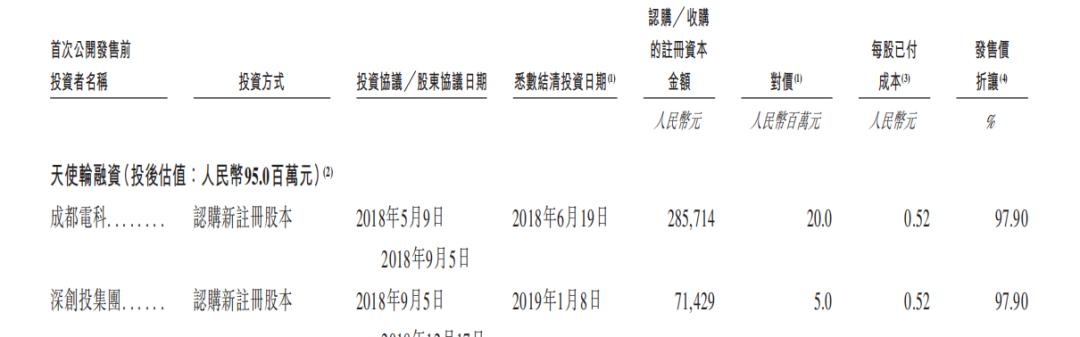
In May 2018, Guoxing Aerospace was established in Chengdu. In the same year, it completed the angel round financing. The money from this first round of financing came from Shenzhen Venture Capital and Chengdu SEARI under the University of Electronic Science and Technology of China, with a post-investment valuation of about 95 million yuan.
However, from the very beginning, Lu Chuan did not intend to just run a "satellite manufacturing factory". He proposed to "build China's Google", regarded satellites as the entrance to obtain data and computing power, and defined the company as an AI Internet enterprise. The external label of the company has gradually changed from "commercial aerospace" to "space AI".
This narrative just caught up with the wave of large models.
In September 2024, Guoxing Aerospace launched its first AI large model intelligent computing satellite; in May 2025, it launched a constellation composed of 12 AI intelligent computing satellites, with a total on-board computing power of about 5 POPS. As disclosed in the prospectus, the company has completed 15 space missions, and launched a total of 35 satellites, 29 of which are AI satellites.
The larger blueprint is called the "Star Computing Program", which is to form a network of 2800 AI intelligent computing satellites to build a global space-based computing power network. The prospectus describes this plan as follows: "Relying on the advanced capabilities of AI intelligent computing satellites, we are promoting the Star Computing Program in an orderly manner. This is our long-term plan, aiming to establish a dynamically maintained space-based computing power network composed of interconnected AI intelligent computing satellites, and each satellite operates as an independent on-orbit computing node."
The changes in business are also reflected in the financial data. From 2023 to 2025, the company's revenue increased from 508 million yuan to 703 million yuan; among them, the proportion of revenue from satellites and related services rose from less than 1% to 36.5%, and the revenue from AI intelligent computing satellites increased from about 77.66 million yuan in 2024 to about 225 million yuan in 2025. In the past three years, the company has invested more than 300 million yuan in R&D. According to Frost & Sullivan data, in terms of revenue, it ranks second among private commercial aerospace companies with full satellite value chain capabilities in China.
From the university laboratory to the Hong Kong Stock Exchange, Guoxing Aerospace has taken a typical path of "alumni fund incubation, local state-owned assets relay, and industrial capital increase".
After ringing the bell, the test of space computing power has just begun
Listing is not only an end point, but also the starting point of a new journey. For Ye Guofu and dozens of institutions behind him, the next thing to see naturally is whether this story about space computing power can stand the scrutiny of the secondary market.
But for the primary market, the listing of Guoxing Aerospace itself is a hard technology incubation sample worth reading carefully.
The starting point of this sample is the University of Electronic Science and Technology of China. In 2016, Sichuan piloted the mixed ownership reform of the ownership of job-related scientific research achievements, allowing researchers to share the ownership or long-term use right of achievements, and solving the problems of difficult right confirmation and difficult transformation of university scientific research achievements. Two years later, Lu Chuan, who had worked at the University of Electronic Science and Technology of China for more than ten years, founded Guoxing Aerospace, and Chengdu SEARI, the alumni fund under the University of Electronic Science and Technology of China, immediately invested in the angel round together with Shenzhen Venture Capital.
In 2019, the University of Electronic Science and Technology of China, together with Guoxing Aerospace and other institutions, initiated the establishment of the Satellite Industry Technology Research Institute, and Lu Chuan served as the dean. In 2020, the "Universiade" AI satellite jointly developed by the two sides was launched into orbit.
It can be seen that from achievement right confirmation to angel investment, and then to the industry-university-research platform, every step of Guoxing Aerospace in the early stage is on the institutional channel of university achievement transformation.
Behind Guoxing Aerospace is a complete set of "around-university innovation" system. Since 2015, Chengdu High-tech Zone and the University of Electronic Science and Technology of China have promoted the construction of "One University, One Belt", and built four levels of carriers: cultivation base, incubator, accelerator and industrial park around the transformation of university achievements. According to the disclosure of the University of Electronic Science and Technology of China, its science park has 560 enterprises in the park, and 27 listed enterprises have been cultivated. According to the "Blue Book of Alumni Economy of University of Electronic Science and Technology of China (2026)", as of August 2026, there are 84 listed companies actually controlled or with core managers from UESTC alumni, with a total market value of 2.71 trillion yuan; there are 20 unicorn enterprises with a total valuation of more than 400 billion yuan; nearly